
 Source:
 White Clips (Campanula carpatica ‘White Clips’) short overview
Campanula carpatica 'White Clips' is a compact Carpathian bellflower cultivar valued for its abundant, pure white, upturned flowers. This hardy herbaceous perennial forms a tidy foliage mound and blooms mainly in summer, sometimes reblooming after cutting back. Give it full sun to partial shade, cool conditions, and soil that drains freely but does not dry excessively. It is especially useful in rock gardens, front-of-border plantings, edging, containers, and pollinator-friendly spaces.
Taxonomic classification
White Clips (Campanula carpatica ‘White Clips’) care guide
Light and placement
Grow in full sun for the strongest flowering, or partial shade where summers are hot. An east- or west-facing position is useful; in hot regions, protect the plant from harsh late-afternoon heat while keeping the foliage open to air movement. Too little light causes fewer flowers and looser stems; excessive heat and drought can scorch foliage and shorten bloom.
Watering and humidity
Water deeply when the upper inch of soil begins to dry, allowing excess water to drain away. Keep plants evenly, moderately moist during establishment and summer flowering, but avoid saturated winter soil. Container plants may need watering more often than in-ground plants. High humidity is not required; good airflow helps prevent foliar disease.
Soil and growing medium
Use fertile, loamy or sandy soil that drains freely while retaining moderate moisture around the roots. A gritty, mineral-rich mix is useful in rock gardens and containers. The plant tolerates acid, neutral, and alkaline conditions, including some calcareous soils, but performs poorly where winter moisture remains stagnant.
Feeding
Apply a modest balanced perennial fertilizer or a thin layer of finished compost in spring as new growth begins. Avoid heavy nitrogen feeding, which can produce soft foliage and reduce flowering. Container plants may receive a diluted balanced fertilizer during active growth, but stop feeding in late summer.
Growth and habit
Forms a tidy, non-running mound with flowering stems rising above the basal foliage. It is naturally compact and manageable in small spaces. Regular deadheading or a post-flowering cutback helps maintain a fresh appearance and may support a second flush, while adequate moisture keeps summer growth from stalling.
Planting and repotting
Plant in spring after the soil can be worked, or in early fall where establishment time remains before winter. Set the crown at soil level rather than burying it. Space plants about 12–14 inches apart for a continuous low planting, and water consistently during the first growing season.
Repot container plants in early spring when growth resumes, using a fresh, free-draining potting mix and a container with drainage holes. Move only one pot size larger; excessive unused soil can stay wet around the crown. Divide congested plants during spring transplanting if necessary.
Propagation and pruning
Propagation
Sow seed indoors 7–9 weeks before the expected last spring frost, pressing seed onto the surface or covering it only very lightly because light supports germination. Maintain about 68–72°F during germination. Established clumps can be divided in spring or early summer; basal cuttings are also documented.
Pruning
Deadhead spent flowers to extend the display. After the main flush, cut flowering stems back close to the crown if a cleaner mound or possible rebloom is desired. Remove dead foliage in late winter or early spring before new growth emerges.
Overwintering
Plants are reliably hardy in cold climates when planted in well-drained soil. Leave healthy basal foliage in place until late winter, then remove it before new growth starts. In containers, protect the root ball from repeated freeze-thaw cycles by moving pots to a sheltered location or insulating them outdoors; do not keep dormant plants warm indoors.
Uses
Useful for rock gardens, gravel gardens, front-of-border beds, edging, wall crevices, containers, balconies, and small-scale groundcover. Its white flowers also contribute to pollinator plantings and can be used as short-lived cut flowers. No culinary or medicinal use is asserted for this cultivar.
Appearance
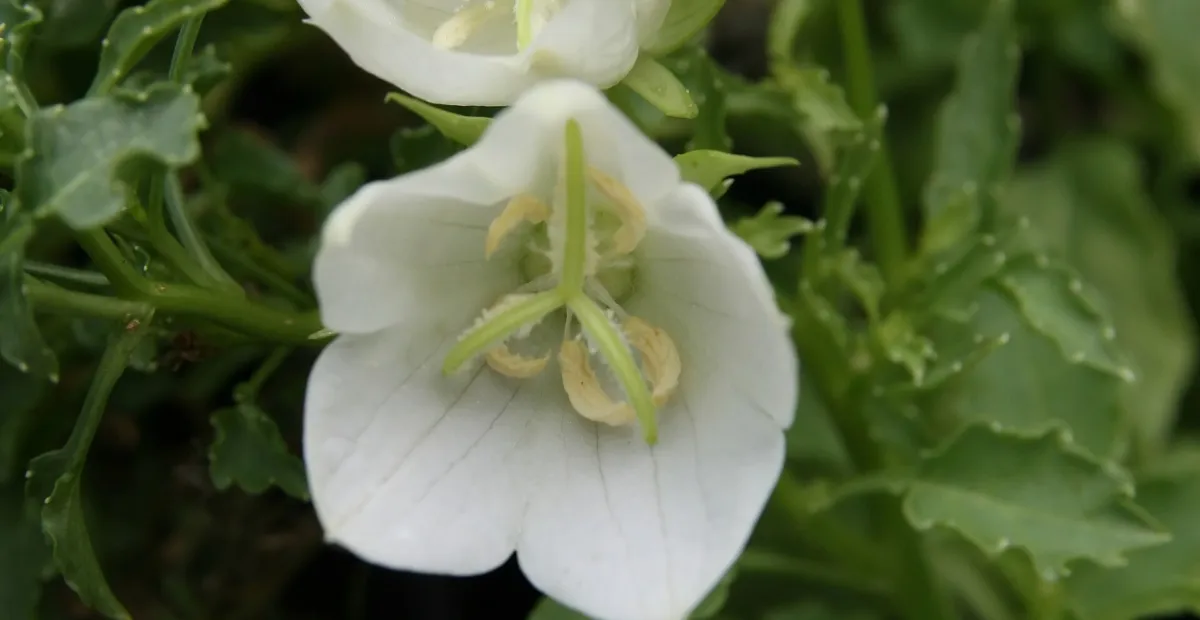
The plant has bright green, rounded to heart-shaped leaves with shallow teeth, larger leaves toward the base, and slender upright flowering stems. Its compact, cushion-like outline and conspicuous white, open bells distinguish it from taller or strongly spreading Campanula species.
Flowering
The cultivar produces numerous solitary, pure white, broadly bell- or bowl-shaped flowers on slender stems held just above the foliage. The main display is in summer and may extend into early fall in favorable conditions. Deadheading or cutting back after the first flush can encourage fresh growth and additional flowering.
Pollination and visitors
Campanula flowers are documented as attractive to pollinating insects, and horticultural references specifically describe C. carpatica as attractive to pollinators. Bees and bumblebees are the best-supported visitor groups for this profile, but no specific pollinator species is assigned to 'White Clips'.
Campanula carpatica 'White Clips' photos
Click any photo for a larger view. Source, author and license are shown separately.
Diseases and pests
Diseases
Generally trouble-free, but leaf spot, rust, and powdery mildew may occur in crowded or persistently damp conditions. Improve air circulation, water at the soil line, remove affected foliage, and avoid overhead irrigation. Do not compost heavily diseased plant material.
Pests
Slugs and snails may chew young foliage. Inspect plants after damp weather, reduce hiding places, hand-pick where practical, and use only locally permitted control products according to label directions. Avoid keeping the crown wet or overcrowded.
Related diseases and pests
Only Plant Doctor profiles whose host data indicate this plant may be affected are shown here.
Toxicity and pollen
No reliable authoritative source located in this review documenting toxic compounds or a cultivar-specific poisoning syndrome for 'White Clips'. Normal plant-handling precautions still apply: avoid deliberate ingestion, supervise children and pets, and seek professional advice after significant ingestion or unusual symptoms.
- Typical season
- Typically June–September in much of the United States, matching the flowering period; cultivar-specific exposure data are unavailable.
- Pollination / pollen
- Insect-borne flower pollen; limited airborne-dispersal evidence
This is an insect-pollinated flowering perennial, so its pollen is generally transferred during flower visits rather than released as a large windborne cloud. That does not prove zero allergy risk; cultivar-specific airborne-pollen measurements and clinical allergy data were not located.
Native habitat
The species is native to the Carpathian Mountains of southeastern Europe, where it is associated with cool temperate mountain conditions. In cultivation it favors sunny, open sites, cool root zones, and porous soils that remain moderately moist in summer but drain sharply during winter.
Interesting fact
The 'Clips' series is commonly propagated from seed and includes several flower colors, including white. Unlike running bellflowers, Campanula carpatica remains a compact clump rather than spreading aggressively by rhizomes. Its flowers face upward, making the white corollas especially visible in low plantings.
Frequently asked questions (FAQ)
The most relevant questions about this plant, with short and direct answers.
🌱Quick care
What is Campanula carpatica 'White Clips'?⌄
Campanula carpatica 'White Clips' is a compact, mound-forming herbaceous perennial bellflower with bright green foliage and upturned, pure white, bell-shaped flowers. It is suited to rock gardens, borders, edging, groundcover plantings, and containers.
How big does Campanula carpatica 'White Clips' get?⌄
Campanula carpatica 'White Clips' typically grows about 6–8 inches tall and spreads roughly 12 inches wide. Growth is compact and relatively slow, although mature size varies with climate, soil, and growing conditions.
Is Campanula carpatica 'White Clips' perennial?⌄
Yes, Campanula carpatica 'White Clips' is a hardy herbaceous perennial. It dies back or becomes less prominent in winter in colder climates, then resumes growth from the crown in spring.
What USDA hardiness zones can grow Campanula carpatica 'White Clips'?⌄
Campanula carpatica 'White Clips' is generally listed as hardy from USDA Zones 3 through 8, with some nurseries extending the range to Zones 2–9. Performance can decline in hot climates with persistently warm nights.
🌤️Environment and placement
Does Campanula carpatica 'White Clips' need full sun or shade?⌄
Grow Campanula carpatica 'White Clips' in full sun to partial shade. Provide afternoon shade in regions with hot summers, while cooler climates generally support more sun and heavier flowering.
What is the best soil for Campanula carpatica 'White Clips'?⌄
The best soil is fertile, moderately moist, and well drained, such as loam or sandy soil. Avoid heavy, waterlogged ground because poor drainage can damage the crown and roots.
Can Campanula carpatica 'White Clips' grow in containers?⌄
Yes, Campanula carpatica 'White Clips' grows well in containers when planted in a potting mix that drains freely. Use a container with drainage holes and water when the upper layer of mix begins to dry.
Is Campanula carpatica 'White Clips' good for rock gardens?⌄
Yes, it is an excellent rock-garden plant because it forms a low, compact mound and prefers well-drained soil. Place it where the crown will not sit in a constantly wet pocket.
How far apart should Campanula carpatica 'White Clips' be planted?⌄
Space Campanula carpatica 'White Clips' about 12–14 inches apart in a bed. This allows the mounds to fill out while maintaining airflow around the foliage.
💧Care and problems
How often should I water Campanula carpatica 'White Clips'?⌄
Water Campanula carpatica 'White Clips' moderately, keeping the soil evenly but not constantly saturated. Established plants tolerate short dry periods, but regular moisture is especially important during hot weather and flowering.
Does Campanula carpatica 'White Clips' tolerate drought?⌄
Campanula carpatica 'White Clips' tolerates brief periods of drought once established, but it is not a desert plant. Extended dryness can reduce flowering and cause foliage to decline, particularly in containers or hot locations.
Should I mulch Campanula carpatica 'White Clips'?⌄
Yes, a light summer mulch can help conserve moisture and keep the root zone cool. Keep mulch away from the crown so moisture does not remain against the plant’s base.
Why is my Campanula carpatica 'White Clips' not flowering?⌄
Insufficient light, excessive heat, drought, or immature growth can reduce flowering in Campanula carpatica 'White Clips'. The plant flowers best with sun or partial shade, regular moisture, good drainage, and relatively cool summer nights.
What pests affect Campanula carpatica 'White Clips'?⌄
Slugs and snails may damage the tender new foliage of Campanula carpatica 'White Clips'. Monitor plants in damp conditions and reduce hiding places around the planting area.
What diseases can affect Campanula carpatica 'White Clips'?⌄
Leaf fungal diseases can occasionally affect Campanula carpatica 'White Clips', especially when foliage stays wet and airflow is poor. Water at the soil line, avoid overcrowding, and remove badly damaged leaves.
Should I deadhead Campanula carpatica 'White Clips'?⌄
Yes, remove spent flowers from Campanula carpatica 'White Clips' to improve its appearance and encourage additional flowering. Deadheading may extend the bloom period, although it can be time-consuming on heavily flowering plants.
When should Campanula carpatica 'White Clips' be cut back?⌄
Cut Campanula carpatica 'White Clips' back to its basal growth when the foliage becomes unattractive or declines during summer. Otherwise, remove old growth in late winter or early spring before new growth begins.
🪴Planting and repotting
When is the best time to plant Campanula carpatica 'White Clips'?⌄
Plant Campanula carpatica 'White Clips' in spring or early fall, allowing roots to establish before extreme summer heat or severe winter conditions. Avoid planting into saturated soil.
Does Campanula carpatica 'White Clips' need repotting?⌄
Repot Campanula carpatica 'White Clips' when roots fill the container, growth becomes crowded, or water runs through the pot unusually quickly. Move it into only a slightly larger container with fresh, well-drained mix.
How often should Campanula carpatica 'White Clips' be divided?⌄
Divide Campanula carpatica 'White Clips' about every 2–4 years if the clump becomes crowded or loses vigor. Spring or early fall is generally suitable, provided the divisions are watered while they establish.
✂️Propagation and pruning
How do you propagate Campanula carpatica 'White Clips' from seed?⌄
Sow the small seeds indoors about 7–9 weeks before the expected last spring frost, pressing them onto the surface or covering them only very lightly because light supports germination. Keep the seed medium evenly moist at about 68–72°F.
Can Campanula carpatica 'White Clips' be propagated by division?⌄
Yes, established clumps of Campanula carpatica 'White Clips' can be propagated by division in spring or early summer, or during suitable early-fall conditions. Replant divisions promptly and keep them moderately moist while roots recover.
⚠️Toxicity and safety
Is Campanula carpatica 'White Clips' toxic to dogs, cats, or people?⌄
Evidence is insufficient to assign a definitive toxicity classification specifically to Campanula carpatica 'White Clips'. Prevent pets and children from eating ornamental plants, and contact a veterinarian or poison-control service if ingestion causes concerning symptoms.
🌸Flowering and special interest
When does Campanula carpatica 'White Clips' bloom?⌄
Campanula carpatica 'White Clips' usually blooms from early or midsummer into late summer or early fall, depending on climate and cultivation. Deadheading can help sustain flowering, and occasional rebloom may occur in cooler summer regions.
What do the flowers of Campanula carpatica 'White Clips' look like?⌄
The flowers are pure white, upward-facing, open bells or cups about 1–2 inches across. They rise slightly above the compact mound on slender, wiry stems.
Does Campanula carpatica 'White Clips' attract pollinators?⌄
Yes, the flowers of Campanula carpatica 'White Clips' are attractive to pollinators, including bees, and some horticultural sources also note hummingbird interest. Its value to wildlife can vary with the surrounding garden.
Is Campanula carpatica 'White Clips' a good cut flower?⌄
Yes, the slender stems and white bell-shaped flowers can be used as small cut flowers. Harvest stems when several blooms are open and place them in clean water promptly.
Similar plants
 Campanula ‘Trachelium’Campanula 'Trachelium'
 Canterbury bells (Campanula ‘Medium’)Campanula 'Medium'
 Dane’s Blood (Campanula glomerata) care guideCampanula glomerata
 Harebell (Campanula rotundifolia) care guideCampanula rotundifolia
 Campanula ‘Purple Sensation’Campanula 'Purple Sensation'
 Peach-leaved Bellflower (Campanula persicifolia) care guideCampanula persicifolia