
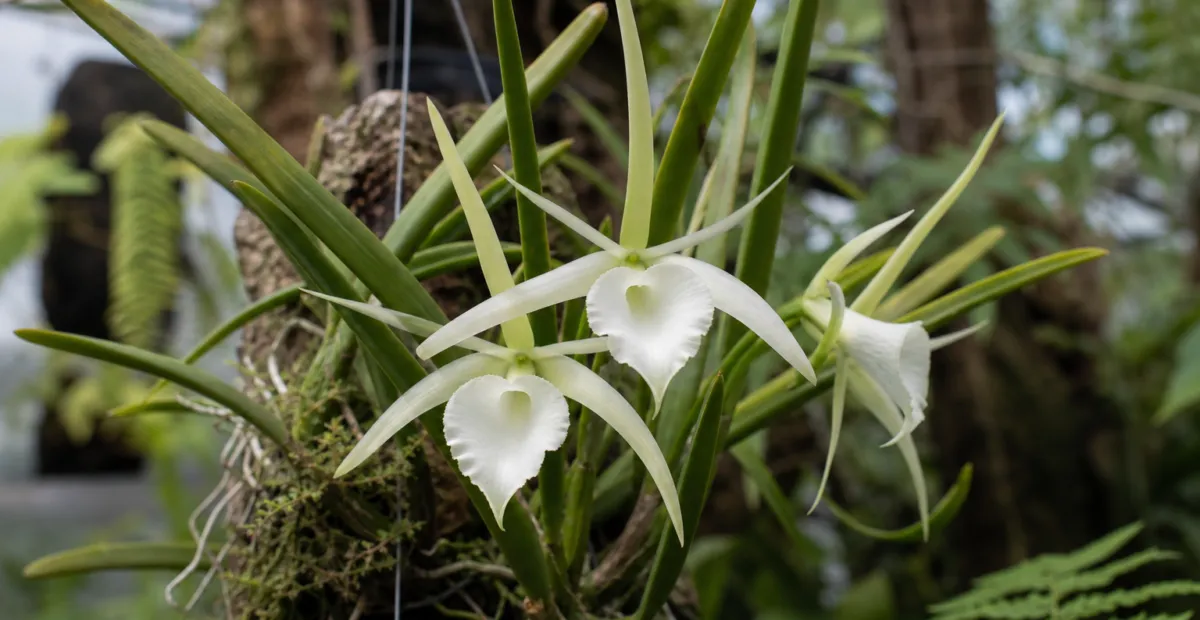
 AI-generated illustration
Lady of the nigh (Brassavola nodosa) short overview
Brassavola nodosa, known here as lady of the nigh, is a warm-growing epiphytic orchid from tropical America and the Caribbean. Its narrow, cylindrical leaves and white to greenish-white flowers give it a distinctive architectural look, while the blooms release a strong fragrance after dark. Grow it in bright filtered light with excellent drainage, regular watering, good air movement, and frost protection.
Taxonomic classification
Lady of the nigh (Brassavola nodosa) care guide
Light and placement
Provide bright filtered light, such as an east, lightly shaded south, or bright west window, or strong greenhouse light softened at midday. Several hours of gentle direct morning or late-afternoon sun can be beneficial. Pale yellowing, reddish stress color, or scorched patches indicate excessive light; very dark leaves and poor flowering suggest insufficient light.
Watering and humidity
Water thoroughly when the medium is nearly dry, then let excess water drain completely. In warm, bright weather, watering may be needed several times weekly; reduce frequency in cool or dim indoor conditions, but do not keep the roots continuously wet. Morning watering is preferred so foliage and the root zone can dry with airflow. Humidity matters only alongside ventilation.
Soil and growing medium
Use a very open epiphytic orchid substrate such as coarse bark, tree fern fiber, charcoal, or a mounted setup with little moisture retention. The root zone should drain rapidly and dry partly between waterings. A slightly acidic to neutral reaction is suitable; avoid dense, fine, waterlogged media.
Feeding
Feed during active growth with a complete orchid fertilizer diluted to about one-quarter to one-half the label strength every 1–2 weeks, applying only to already-moistened roots. Flush the medium periodically with plain water to limit salt accumulation. Reduce or pause feeding after flowering or during cool, dim conditions when growth is inactive.
Growth and habit
This orchid forms upright to spreading clumps of short pseudobulbs connected by a rhizome. New growths emerge progressively and can flower once mature. Keep the rhizome exposed, avoid overpotting, and leave enough space for the clump to expand rather than repeatedly dividing small pieces.
Planting and repotting
Plant or mount during warm weather, positioning the rhizome at the surface rather than burying it. Set the newest growth toward open space so it can expand. Allow generous airflow around the plant and keep the base stable until roots attach.
Repot after flowering or when the medium breaks down, preferably as new roots begin to emerge. Use a small pot or basket rather than an oversized container. Mounted plants can be renewed by securing them to fresh bark or cork without burying the rhizome.
Propagation and pruning
Propagation
Divide large, multi-growth plants after flowering or when fresh roots are starting. Each division should retain several healthy pseudobulbs and active roots. Seed propagation is possible through orchid laboratory culture but is not a practical home method because orchid seeds require specialized symbiotic or asymbiotic germination conditions.
Pruning
Remove only dead, damaged, or diseased tissue with sterilized tools. Do not cut healthy leaves or green pseudobulbs after flowering, because they continue to store resources and support future growth. Cut spent flower stems near their base once fully dry.
Overwintering
Keep above about 50°F for reliable growth and protect from frost. In colder US zones, move the plant indoors or into a heated greenhouse before nighttime temperatures fall. Give the brightest available light, reduce watering to match slower growth, and keep the plant away from cold drafts and heating vents.
Uses
Primarily grown as a fragrant ornamental orchid in homes, greenhouses, conservatories, baskets, and mounted displays. Its night fragrance makes it useful near a sheltered sitting area where evening scent can be appreciated. It has no established culinary or medicinal use supported here.
Appearance
The plant has narrow, cylindrical, pencil-like leaves arising from short pseudobulbs along a creeping rhizome. Mature clumps often appear architectural and somewhat spiky. The flowers have long, spreading sepals and petals surrounding a conspicuous pale lip; the foliage remains green year-round under suitable conditions.
Flowering
Short inflorescences produce one to several starry, white to greenish-white flowers. The flowers are notably fragrant at night, with scent strongest after dark, and plants may bloom more than once as mature growths develop. Exact outdoor flowering months vary across the United States; indoor and greenhouse plants may flower outside a fixed seasonal window.
Pollination and visitors
The flowers are adapted to nocturnal visitation, but the authoritative sources checked did not provide a sufficiently consistent species-level pollinator record for this profile. Animal visitation should therefore be treated as undocumented rather than assigned to a presumed bee, butterfly, or moth group.
Brassavola nodosa photos
Click any photo for a larger view. Source, author and license are shown separately.
Diseases and pests
Diseases
Prevent problems by keeping leaves and roots from staying wet in stagnant air. Watch for bacterial or fungal spotting, especially after cool, prolonged wetness; remove badly affected tissue with sterile tools and improve ventilation. Root loss usually indicates stale, compacted medium or excessive watering.
Pests
Inspect new growth and roots for scale, mealybugs, aphids, and thrips. Remove isolated pests mechanically or with an appropriate labeled horticultural treatment. Avoid spraying oils or soaps during hot, bright conditions, and quarantine new orchids before placing them with the collection.
Related diseases and pests
Only Plant Doctor profiles whose host data indicate this plant may be affected are shown here.
 PestMealy Plum AphidHyalopterus pruni (Geoffroy, 1762)
 PestOnion thripsThrips tabaci Lindeman
 PestMelon thripsThrips palmi Karny
 PestChilli thripsScirtothrips dorsalis Hood
 DiseaseBacterial WiltRalstonia solanacearum species complex
 DiseaseBacterial Fruit BlotchAcidovorax citrulli
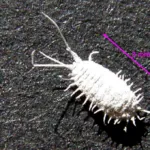 PestObscure mealybugPseudococcus viburni
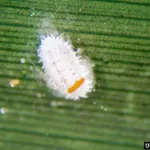 PestCitrus mealybugPlanococcus citri
Toxicity and pollen
No authoritative species-specific toxicity record was located in the sources checked. Do not treat missing evidence as proof of safety: prevent pets and children from chewing plant material, and seek professional advice after ingestion or a concerning reaction.
- Pollination / pollen
- Compact pollinia; not typically wind-dispersed
As an orchid with pollinia, Brassavola nodosa does not typically release large clouds of loose airborne pollen in the way many wind-pollinated plants do. However, species-specific clinical allergy evidence is limited, so a low-risk classification cannot be confirmed.
Native habitat
Native from Mexico through Central America and the Caribbean to northern South America. It grows as an epiphyte on trees or as a lithophyte on rocks, especially in seasonally dry tropical habitats. Fast drainage, periodic drying, bright light, warm temperatures, and airflow reflect those conditions.
Interesting fact
The species is an epiphyte or lithophyte rather than a terrestrial orchid. Its fragrance becomes strongest at night, matching its pale flowers and nocturnal floral display. The pencil-like leaves help distinguish it from many broad-leaved orchids. It is widely regarded by orchid growers as an adaptable species.
Frequently asked questions (FAQ)
The most relevant questions about this plant, with short and direct answers.
🌱Quick care
How do you care for Brassavola nodosa, the lady of the nigh orchid?⌄
Give Brassavola nodosa bright filtered light, warm conditions, regular thorough watering, and an airy orchid medium or mounted setup. Let the roots partially dry between waterings, and provide good air movement to reduce rot.
Is Brassavola nodosa easy to grow indoors?⌄
Brassavola nodosa is relatively easy indoors if it receives strong light, good ventilation, and fast drainage. A bright window, grow light, or humidified orchid cabinet can work, provided the plant is not kept constantly wet.
🌤️Environment and placement
How much light does Brassavola nodosa need?⌄
Brassavola nodosa needs very bright filtered or diffuse light to grow and flower well. Protect it from harsh midday sun behind glass, but gentle morning or late-afternoon sun is often beneficial.
Can Brassavola nodosa grow under LED grow lights?⌄
Yes, Brassavola nodosa can grow under LED lights when the light is bright and provided for a consistent daily period. Keep the foliage from overheating or bleaching, and adjust the distance if leaves become yellow, scorched, or unusually purple.
What temperatures are best for Brassavola nodosa?⌄
Brassavola nodosa prefers warm growing conditions with a modest nighttime drop. Avoid frost and prolonged cold, because this frost-tender orchid can suffer chilling or permanent damage when exposed to near-freezing temperatures.
Can Brassavola nodosa grow outside in the United States?⌄
Brassavola nodosa can grow outdoors year-round only in frost-free parts of the United States, such as suitable areas of southern Florida, Hawaii, and protected tropical locations. Elsewhere, bring it indoors or into a heated greenhouse before cold weather.
What humidity does Brassavola nodosa need?⌄
Brassavola nodosa benefits from moderate to high humidity, especially when air circulation is good. Humidity is safer when paired with moving air and rapid drainage; stagnant, constantly wet conditions can encourage fungal and bacterial problems.
💧Care and problems
How often should you water Brassavola nodosa?⌄
Water Brassavola nodosa thoroughly whenever the growing medium has partially dried, then allow excess water to drain completely. Mounted plants and small pots may need watering more often than plants in larger bark-filled containers.
Should Brassavola nodosa dry out completely between waterings?⌄
Brassavola nodosa should partially dry between waterings but generally should not remain bone-dry for extended periods during active growth. The roots need both moisture and oxygen, so avoid keeping the medium saturated or placing the pot in standing water.
Why are the leaves of my Brassavola nodosa wrinkled?⌄
Wrinkled leaves usually indicate that Brassavola nodosa is not taking up enough water, often because of underwatering, damaged roots, or a severely deteriorated medium. Check the roots and potting mix before simply increasing watering, since root loss can also cause dehydration.
Why is my Brassavola nodosa turning yellow?⌄
Yellowing leaves on Brassavola nodosa may result from excessive light, overwatering, aging foliage, or root damage. Check whether the leaves are scorched, the roots are firm, and the medium is drying appropriately before changing light or watering habits.
🪴Planting and repotting
What potting mix is best for Brassavola nodosa?⌄
Use a very open, fast-draining orchid mix containing coarse bark and other chunky materials that leave air around the roots. Avoid dense standard potting soil and do not use a container much larger than the root system.
Can Brassavola nodosa be grown mounted?⌄
Yes, Brassavola nodosa grows well mounted on cork, tree fern, or another orchid-safe support when the roots can dry quickly and the plant receives regular moisture. Mounted specimens usually need more frequent watering than potted plants.
Does Brassavola nodosa prefer a pot or basket?⌄
Brassavola nodosa can be grown in a shallow pot, basket, or mounted epiphyte setup. Baskets and mounts are useful for its airy root system, while pots are convenient indoors if the medium is coarse and the container drains freely.
When should you repot Brassavola nodosa?⌄
Repot Brassavola nodosa when the medium breaks down, drainage declines, or new roots are beginning to emerge. Repotting as new growth starts usually helps the plant establish quickly, while unnecessary repotting can disturb healthy roots.
✂️Propagation and pruning
Can you divide Brassavola nodosa?⌄
Yes, mature Brassavola nodosa can be divided by separating connected growths, with each division retaining several healthy pseudobulb-like stems or growths and viable roots. Division is best done when the plant is actively producing new roots.
How do you propagate Brassavola nodosa from back bulbs?⌄
Propagate Brassavola nodosa from back bulbs by separating older, healthy growths and placing them in a warm, humid, well-ventilated propagation environment. New shoots may develop slowly, so avoid keeping the dormant material constantly wet.
Can Brassavola nodosa be grown from seed at home?⌄
Brassavola nodosa can produce seed, but orchid seeds usually require sterile flask culture and specialized techniques because they lack the food reserves needed for ordinary soil germination. Division is the practical propagation method for most home growers.
Should you prune Brassavola nodosa roots or flower spikes?⌄
Remove only dead, hollow, or rotten roots from Brassavola nodosa with sterilized tools, and cut spent flower spikes only after they have fully dried or stopped producing. Avoid removing firm green roots or healthy growing tissue.
⚠️Toxicity and safety
Is Brassavola nodosa toxic to cats or dogs?⌄
Species-specific toxicity information for Brassavola nodosa is not well established. Keep the plant and its potting materials away from pets and children, and contact a veterinarian or poison-control service if ingestion causes symptoms or if a large amount was eaten.
Is Brassavola nodosa safe to keep in a bedroom?⌄
Brassavola nodosa is commonly kept indoors, including in bedrooms, and its fragrance is released mainly at night. Because individual sensitivity to strong floral scents varies, move it farther away if the perfume causes headaches, irritation, or breathing discomfort.
🌸Flowering and special interest
Why is my Brassavola nodosa not flowering?⌄
Insufficient light is one of the most common reasons Brassavola nodosa fails to flower, although an immature plant, weak roots, or poor day-to-night temperature change can also contribute. Increase light gradually and maintain steady growth rather than forcing bloom with heavy fertilizer.
How often does Brassavola nodosa bloom?⌄
Brassavola nodosa is considered a free-flowering orchid and may bloom more than once a year when mature and well grown. The exact frequency depends on light, plant size, seasonal growth, and conditions in the home or greenhouse.
Does Brassavola nodosa smell at night?⌄
Yes, Brassavola nodosa is famous for releasing a strong, sweet fragrance after sunset. Its evening scent is associated with pollination by night-active moths, and fragrance intensity can vary with temperature, humidity, flower count, and individual plant genetics.
How long do Brassavola nodosa flowers last?⌄
Brassavola nodosa flowers commonly remain attractive for several weeks, although the exact duration varies with plant health and growing conditions. Warm, dry air, poor hydration, or rapid environmental changes can shorten the display.
Similar plants
 Azure Monkshood (Aconitum carmichaelii) care guideAconitum carmichaelii
 Monkshood (Aconitum ‘Stainless Steel’)Aconitum 'Stainless Steel'
 Monkshood (Aconitum ‘Bressingham Spire’)Aconitum 'Bressingham Spire'
 Golden full moon maple (Acer shirasawanum ‘Aureum’)Acer shirasawanum 'Aureum'
 Globosum (Acer platanoides ‘Globosum’)Acer platanoides 'Globosum'
 Striped maple (Acer pensylvanicum) care guideAcer pensylvanicum