
 Source:
 Black chokeberry (Aronia melanocarpa) short overview
Black chokeberry is a hardy, suckering deciduous shrub native to eastern North America. It forms clusters of small white to pink-tinged flowers in spring, followed by glossy black-purple pomes that persist into late summer and fall. The leaves turn vivid red, burgundy, or purple before dropping. Give it sun for the best fruit crop, steady moisture during establishment, and room for basal shoots to form a broad colony.
Taxonomic classification
Black chokeberry (Aronia melanocarpa) care guide
Light and placement
Plant in full sun for the heaviest fruit crop, best ripening, and strongest fall color; partial shade is tolerated but may reduce flowering and fruit production. An east-, south-, or west-facing position with at least 6 hours of direct sun is suitable. Sparse flowering and stretched growth suggest insufficient light, while scorched foliage usually indicates drought or reflected heat rather than ordinary full sun.
Watering and humidity
Water deeply and slowly when the upper few inches of soil begin to dry, keeping newly planted shrubs consistently moist through the first one to two growing seasons. Mature plants tolerate short dry periods but are not reliably drought-tolerant on hot, sandy sites. Reduce irrigation after leaf drop, but do not allow container plants or exposed root zones to dry completely before winter.
Soil and growing medium
Use fertile, moisture-retentive but well-drained soil. Black chokeberry tolerates clay, sand, wet sites, and occasional dryness, but performs best where roots remain evenly moist without prolonged stagnant water. It generally accepts about pH 5.0–8.0; slightly acidic to neutral soil is a practical target for strong growth and fruiting.
Feeding
Black chokeberry does not need heavy fertilization. Apply compost or a balanced, slow-release fertilizer in early spring if growth is weak or soil is poor. Avoid excessive nitrogen, which can produce lush shoots at the expense of fruiting and may increase disease-prone growth. Do not fertilize drought-stressed, newly transplanted, or late-season plants.
Growth and habit
This multi-stemmed shrub commonly produces basal suckers and can form a broad thicket if shoots are left unmanaged. It establishes readily and usually needs little intervention after the first years. Remove selected older canes periodically to maintain vigor, access, and a more open structure; retain suckers when a naturalized colony is desired.
Planting and repotting
Plant container stock in spring or early fall while soil moisture is reliable. Set it at the same depth as in the nursery container, or with the root flare just above grade; do not bury the crown. Space about 4–8 feet apart for individual shrubs, closer for a managed hedge. Mulch lightly and keep the root zone weed-free during the first two growing seasons.
Container-grown plants can be moved into a larger container or planted out in spring or early fall. Choose a deep, sturdy container and refresh the root zone before the plant becomes tightly root-bound. Because the species suckers, long-term container culture requires periodic division or replacement if the root mass becomes crowded.
Propagation and pruning
Propagation
Propagate from seed, softwood or hardwood cuttings, basal division, or naturally layered shoots. Sow cleaned seed after appropriate cold stratification, or take cuttings during active growth when softwood is firm. Layered shoots and rooted suckers are practical for home gardeners. Propagation is usually straightforward, though seed-grown plants may vary in habit and fruit quality.
Pruning
Prune in late winter or early spring before active growth, removing dead, damaged, crossing, or very old canes at the base. Thin crowded suckers if a single specimen is preferred, or retain them for a hedge or colony. Periodic renewal pruning is more useful than frequent shearing; heavy pruning can reduce the coming flower crop.
Overwintering
Outdoor plants are hardy well into USDA Zone 3 and generally need no special winter covering once established. Apply a modest mulch layer over the root zone after the ground cools, keeping mulch away from stems. Protect young shrubs from browsing with fencing where deer or rabbits are common. Containers are more vulnerable because roots experience colder temperatures than garden soil.
Uses
Use as a native ornamental shrub, informal hedge, rain-garden planting, erosion-control component, wildlife habitat plant, or small fruit crop. The dark pomes are edible but strongly astringent when fresh and are better suited to juice, jelly, sauces, wine, or blended preparations. Do not confuse black chokeberry with chokecherry, Prunus virginiana.
Appearance
Leaves are alternate, simple, glossy, elliptic to obovate, and finely serrated, with a hairless surface. The shrub has upright to spreading stems and often develops a rounded, somewhat open outline. Spring clusters of white flowers, glossy black-purple pomes, and intense red to wine-colored fall foliage provide reliable identification across the growing season.
Flowering
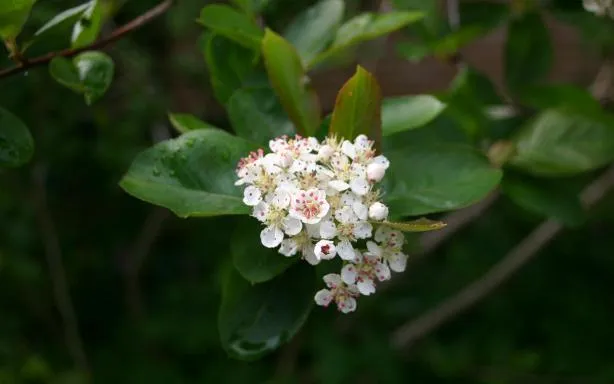
Small, five-petaled flowers are borne in flat-topped clusters on short shoots in spring, usually from April into June depending on region. Flowers may be white to pink-tinged and have conspicuous pink or reddish anthers. Bloom is followed by green fruit that gradually darkens through red-purple to black.
Pollination and visitors
Flowers provide nectar and pollen for native bees, including small bees such as mining and mason bees. The plant is self-fruitful or apomictic in horticultural accounts, so animal visitation is not essential for fruit set, but flower visitors can still use the spring bloom.
Aronia melanocarpa photos
Click any photo for a larger view. Source, author and license are shown separately.
Diseases and pests
Diseases
Generally trouble-free, but leaf spot, rust, scab, and wood rots can occur, especially in humid or poorly ventilated sites. Improve air movement, avoid overhead irrigation, remove diseased leaves and dead wood, and maintain mulch rather than turf competition around the base. Severe recurring disease may justify thinning crowded canes.
Pests
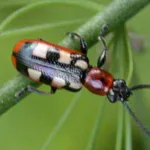
Potential pests include aphids, lace bugs, Japanese beetles, blister beetles, cherry fruit worm, and brown marmorated stink bug. Inspect flower buds and tender shoots, encourage beneficial insects, remove heavily infested material, and use targeted treatment only when damage is significant. Net ripening fruit if birds are removing the crop.
Related diseases and pests
Only Plant Doctor profiles whose host data indicate this plant may be affected are shown here.


Toxicity and pollen
The ripe fruit is widely used as a food after processing, but fresh berries are notably astringent and can cause gastrointestinal upset if large quantities are eaten. Reliable U.S. plant-specific evidence for serious toxicity to people, dogs, cats, or children is limited. Confirm identification, avoid consuming unknown plant material, and contact Poison Control or a veterinarian after a significant ingestion.
- Typical season
- April–June
- Pollination / pollen
- Insect-dispersed pollen
The species is insect-pollinated and its pollen is not typically treated as a major airborne allergen in U.S. gardening references. However, absence of strong published allergy data is not proof of zero risk; people with seasonal allergies should monitor symptoms during spring bloom and avoid handling flowers if sensitive.
Native habitat
Native populations occur across eastern and central North America, including moist woods, wet thickets, boggy margins, clearings, seeps, and some drier rocky or sandy sites. It tolerates a broad moisture range but is most vigorous on moist, well-drained ground. Full sun improves flowering, fruit production, and fall color.
Interesting fact
The fruit is a pome rather than a true berry, although it is commonly called a berry. Basal shoots can expand a single shrub into a broad colony. The species is self-fruitful and one plant can set fruit. The berries are highly astringent fresh but are commonly processed into juice, jam, and other products.
Frequently asked questions (FAQ)
The most relevant questions about this plant, with short and direct answers.
🌱Quick care
What is black chokeberry (Aronia melanocarpa)?⌄
Black chokeberry is a cold-hardy, deciduous shrub in the rose family that produces white spring flowers, dark fruit, and vivid red to purple fall foliage. It is native to eastern North America and commonly grows about 3 to 8 feet tall.
How large does black chokeberry get?⌄
Black chokeberry commonly reaches about 3 to 8 feet tall and 2 to 6 feet wide, depending on the plant and growing conditions. It can form a broader thicket because it spreads by root suckers.
🌤️Environment and placement
How much sun does black chokeberry need?⌄
Black chokeberry grows in full sun to partial shade, but full sun generally produces the best flowering, fruiting, and fall color. Provide at least 6 hours of direct sunlight when possible.
What USDA hardiness zones can grow black chokeberry?⌄
Black chokeberry is generally hardy in USDA Zones 3 through 8. It tolerates very cold winters and is suitable for much of the northern and eastern United States.
Does black chokeberry tolerate wet soil?⌄
Yes, black chokeberry tolerates moist, poorly drained, and occasionally wet soil better than many landscape shrubs. It performs best with consistent moisture while establishing, but avoid permanently stagnant water around the roots.
Can black chokeberry grow in partial shade?⌄
Yes, black chokeberry can grow in partial shade, although it may produce fewer flowers and fruits and weaker fall color than a plant grown in full sun. Morning sun or bright filtered light is preferable to deep shade.
Is black chokeberry a good shrub for a rain garden?⌄
Yes, black chokeberry is well suited to rain gardens, wet borders, pond margins, and other sites with periodic flooding. Choose a location with adequate space because its suckering habit can create a dense planting.
Is black chokeberry native to the United States?⌄
Yes, Aronia melanocarpa is native to eastern North America, including parts of the United States and Canada. It is widely used in native plantings, rain gardens, wildlife gardens, and naturalized landscapes.
💧Care and problems
How often should I water black chokeberry?⌄
Water black chokeberry regularly during its first growing season, keeping the soil evenly moist but not constantly waterlogged. Once established, it usually needs supplemental water only during prolonged heat or drought.
Does black chokeberry spread aggressively?⌄
Black chokeberry can spread substantially by root suckers, especially in cultivated landscapes with good moisture and fertility. Remove unwanted suckers or grow it where a colony or dense planting is acceptable.
Does black chokeberry need fertilizer?⌄
Established black chokeberry usually needs little fertilizer when planted in reasonably fertile soil. If growth is weak, test the soil before applying a balanced, slow-release fertilizer in early spring, and avoid excessive nitrogen.
Is black chokeberry deer resistant?⌄
Black chokeberry is not completely deer-proof, but it is often less preferred than many other shrubs. Deer and rabbits may browse it, particularly when other food is scarce or plants are young.
What pests and diseases affect black chokeberry?⌄
Black chokeberry generally has few serious pest or disease problems. Leaf spots and twig or fruit blights can occur, especially in stressful or poorly ventilated conditions, so remove affected debris and improve plant spacing.
🪴Planting and repotting
What type of soil is best for black chokeberry?⌄
Black chokeberry grows well in moist, well-drained loam but adapts to sandy, clay, compacted, and somewhat boggy soils. Slightly acidic soil is suitable, although the plant tolerates a broader soil range.
When should black chokeberry be planted?⌄
Plant black chokeberry in spring or fall when temperatures are mild and the soil is workable. Fall planting is useful in many U.S. climates, while spring planting is preferable where winter arrives early or the ground freezes quickly.
How far apart should black chokeberry shrubs be planted?⌄
Space black chokeberry about 3 to 6 feet apart for a dense hedge or mass planting, using wider spacing for individual specimens. Allow additional room if you want to limit crowding and manage suckers easily.
Is black chokeberry a good privacy hedge?⌄
Black chokeberry can make an effective informal hedge or screen because it is multi-stemmed, suckering, and capable of forming dense groups. It is less suitable where a narrow, precisely clipped hedge is required.
✂️Propagation and pruning
How do I prune black chokeberry?⌄
Prune black chokeberry after flowering or immediately after fruiting to remove dead, damaged, crossing, and overly old stems. Thin selected stems at ground level to rejuvenate the shrub, and remove root suckers when you want to control spread.
Can black chokeberry be cut back hard?⌄
Yes, an overgrown black chokeberry can be rejuvenated by removing a portion of the oldest stems at ground level over several seasons. Severe all-at-once cutting may reduce flowers and fruit for the following season.
How do you propagate black chokeberry?⌄
Black chokeberry can be propagated from seed, softwood or hardwood cuttings, and root suckers. Root suckers are generally the simplest method for producing a plant like the parent, while seed-grown plants may vary.
Can black chokeberry be grown from seed?⌄
Yes, black chokeberry can be grown from seed, but the seeds commonly require a period of cold, moist stratification before germination. Seedlings may take longer to mature and may not exactly match a named cultivar.
⚠️Toxicity and safety
Can you eat black chokeberries raw?⌄
Ripe black chokeberry fruit is edible, but it is intensely tart, bitter, and astringent when eaten raw. It is more commonly cooked or processed into juice, jam, jelly, syrup, baked goods, or wine.
Are black chokeberries poisonous to people or pets?⌄
The ripe fruit of black chokeberry has established food uses, but its overall toxicity profile should not be treated as fully certain for every person or animal. Do not confuse it with chokecherry, avoid eating large quantities raw, and consult a poison or veterinary professional after a suspected ingestion.
🌸Flowering and special interest
When does black chokeberry bloom?⌄
Black chokeberry usually blooms in mid- to late spring, often around May in much of the United States. Its small white to pinkish flowers appear in clusters on older wood and attract pollinators.
Why is my black chokeberry not flowering?⌄
Insufficient sunlight, excessive shade, severe pruning, young age, or winter damage can reduce flowering. Moving the shrub is usually unnecessary; improve light and avoid removing flowering wood during dormant-season pruning.
When are black chokeberry fruits ripe?⌄
The dark purple-black fruits typically ripen from late summer into fall, often from August through September depending on climate. They may persist into winter if birds and mammals do not consume them.
Does black chokeberry need a pollinator plant?⌄
A single black chokeberry shrub can produce fruit, so a separate pollinator is generally not required. Planting several shrubs may still improve fruit display and provide more flowers for pollinators and wildlife.
Does black chokeberry have good fall color?⌄
Yes, black chokeberry is valued for vivid red, orange, burgundy, or purple fall foliage. Color intensity is usually strongest in full sun and can vary among seedlings and cultivars.
Similar plants
 Azure Monkshood (Aconitum carmichaelii) care guideAconitum carmichaelii
 Monkshood (Aconitum ‘Stainless Steel’)Aconitum 'Stainless Steel'
 Monkshood (Aconitum ‘Bressingham Spire’)Aconitum 'Bressingham Spire'
 Golden full moon maple (Acer shirasawanum ‘Aureum’)Acer shirasawanum 'Aureum'
 Globosum (Acer platanoides ‘Globosum’)Acer platanoides 'Globosum'
 Striped maple (Acer pensylvanicum) care guideAcer pensylvanicum