Bird Cherry-Oat Aphid
Rhopalosiphum padiBird Cherry-Oat Aphid overview
The bird cherry-oat aphid is a small, soft-bodied pest of cereal crops and other grasses. Colonies commonly develop on wheat, barley, oats, rye, triticale, corn, and sorghum, where sap feeding can cause yellow streaking, leaf curling, reduced vigor, and honeydew contamination. It is also an important vector of barley yellow dwarf virus, especially in small grains.
Typical conditions
Overview
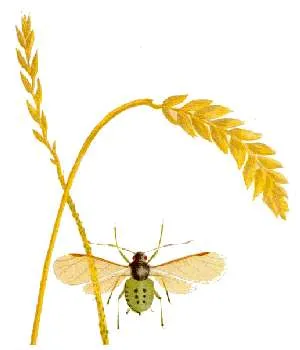
Rhopalosiphum padi, commonly called the bird cherry-oat aphid, is a widespread aphid of cereal crops and grasses in the United States. Adults and nymphs are usually olive green to dark olive green, with a rounded body and tubular cornicles. Wingless colonies may show a reddish-orange area around the cornicle bases.
It is especially important in wheat, barley, oats, rye, triticale, corn, and sorghum. Direct feeding is often tolerated at low density, but heavy infestations can reduce vigor, contaminate foliage with honeydew, and contribute to yield loss. The species is also a vector of barley yellow dwarf virus, so virus risk may be more important than visible feeding injury.
Symptoms and identification
Inspect the lower canopy, leaf sheaths, leaf undersides, tiller bases, and developing heads. Typical signs include:
- Clusters of small olive-green aphids, sometimes with winged individuals.
- Yellow or golden streaking on cereal leaves during heavy feeding.
- Leaf curling, sometimes forming a tight corkscrew shape that can trap awns.
- Sticky honeydew and dark sooty mold on leaves or ears when colonies are abundant.
- Reduced vigor, poor grain filling, or stunting in heavily infested plants.
- Yellowing, reddening, or stunting caused by barley yellow dwarf virus after infected aphids feed; these virus symptoms cannot be diagnosed from aphid presence alone.
Distinguish this aphid from the corn leaf aphid, which is generally more rectangular in profile, and from the Russian wheat aphid, whose feeding commonly produces pale longitudinal streaks and a more upright, tubular leaf curl.
Causes and spread
Populations increase when susceptible grasses remain green and aphid reproduction is favored by mild weather. Winged aphids disperse from infested cereal fields, volunteer cereals, cool-season grasses, or other grass hosts into emerging crops. Volunteer wheat and other cereal plants can act as a continuous “green bridge” between cropping cycles.
Barley yellow dwarf virus is acquired and transmitted during aphid feeding. Infection risk depends on aphid movement, virus prevalence, crop growth stage, and local weather; finding aphids does not prove that plants are infected.
Life cycle and persistence
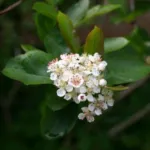
The species has a complex host cycle. The primary host is bird cherry, Prunus padus, where eggs may overwinter and spring generations can develop. Winged forms commonly migrate to grasses, including cereal crops, corn, and sorghum. In many intensively farmed regions, populations may persist mainly on grasses and reproduce without returning to the primary woody host.
On grass hosts, females can produce multiple generations of live nymphs without mating. Winged forms arise when crowding, host aging, plant stress, or seasonal conditions favor dispersal. In autumn, some populations return toward the primary host and produce sexual forms and overwintering eggs, while other populations continue on suitable grasses. Exact timing varies by latitude, crop, weather, and host availability.
Treatment and control
Confirm the aphid where possible and sample multiple field areas. Count aphids per tiller or stem and examine colonies for predators, parasitoid mummies, and fungal infection. Treatment decisions should use current state or university extension thresholds for the specific crop and growth stage, because economic thresholds are not universal and late-season aphids may cause less economic loss than early infestations.
Prioritize measures that protect yield during the crop’s vulnerable stages and that reduce virus transmission risk. Spot treatment may be appropriate where infestations are localized. Avoid treating when natural enemies are actively suppressing colonies or when crop maturity makes treatment unlikely to provide economic benefit. Recheck treated areas and watch for recolonization by winged aphids.
Low-impact and biological control
Conserve naturally occurring predators and parasitoids. Important beneficial organisms include lady beetles, lacewings, syrphid larvae, predatory bugs, and aphid parasitoids that produce characteristic swollen, tan or brown aphid mummies. Aphid-pathogenic fungi may also suppress colonies under humid conditions.
Use physical removal or a strong water spray only for small plantings where practical. In organic production, use only inputs permitted by the USDA National Organic Program and currently labeled for the crop and site. Horticultural oils, insecticidal soaps, or other reduced-risk products may provide contact suppression when thoroughly covering colonies, but they do not provide lasting protection and can injure plants under heat, drought, or other stress.
Prevention
- Destroy volunteer wheat, barley, oats, and other cereal plants before the next crop emerges, where practical and consistent with conservation goals.
- Scout volunteer cereals, field margins, winter cereal seedlings, and corn or sorghum canopies during aphid migration periods.
- Use locally adapted cultivars with available tolerance or resistance to barley yellow dwarf virus when appropriate.
- Avoid unnecessary broad-spectrum insecticide applications that disrupt lady beetles, lacewings, syrphid larvae, parasitoids, and aphid-pathogenic fungi.
- Manage crop stress through appropriate fertility, irrigation, planting date, and residue practices; stressed plants may support more damaging infestations.
- Record aphid density, crop growth stage, natural enemies, and virus symptoms rather than relying on a single visual observation.
Interesting facts
- The bird cherry-oat aphid is named for its primary woody host, bird cherry, and one of its important grass hosts, oat.
- Its rounded body and dark olive coloration help separate it from some other cereal aphids, but reliable identification may require microscopic examination.
- It can feed in concealed locations such as between the stem and leaf sheath, making early colonies easy to miss.
- Barley yellow dwarf virus management depends partly on reducing aphid acquisition and transmission, not merely on preventing visible feeding injury.
- Populations may increase rapidly because several generations can be produced during a growing season.
Use insecticides only when monitoring and the current crop-specific IPM guidance indicate that treatment is justified. Select only products legally authorized and currently labeled in the United States for the specific crop, pest, site, and use pattern. Follow the current label exactly, including rate, timing, personal protective equipment, reentry interval, preharvest interval, resistance-management directions, and pollinator precautions. Do not assume that a product registered on one cereal or state is legal on another crop or in another state.
Affected plants
The plants below are linked to this problem by structured host-plant data. The list updates automatically as new plant profiles are added.