
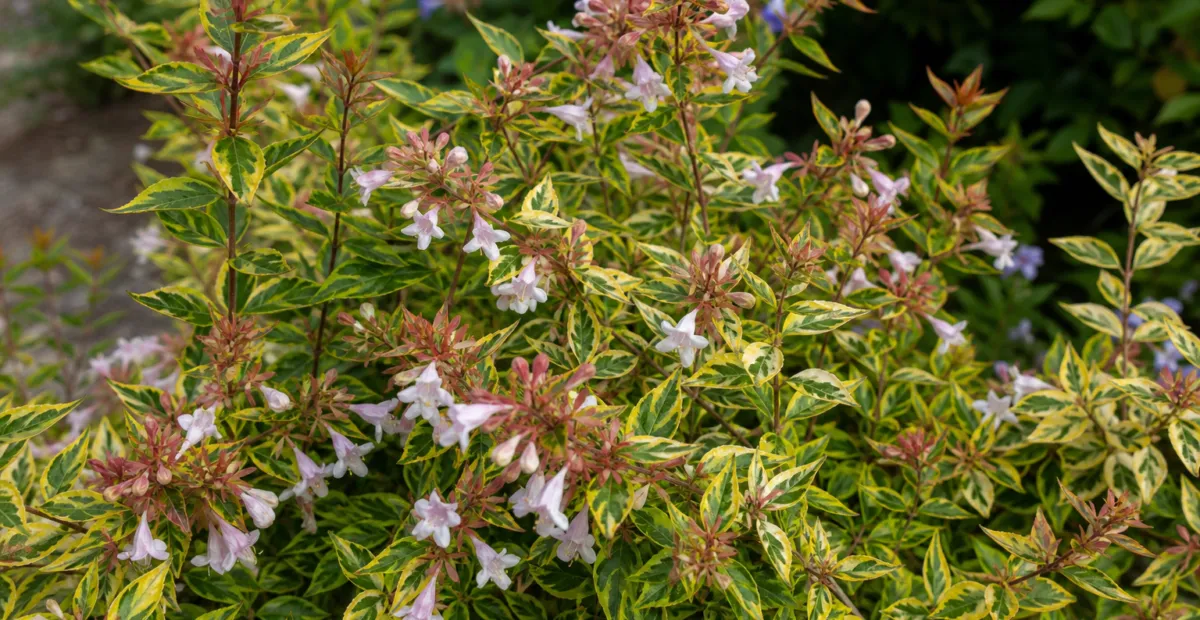
 AI-generated illustration
 Abelia ‘Francis Mason’ short overview
Abelia 'Francis Mason' is a compact glossy abelia cultivar with distinctive yellow-green variegated foliage and coppery new shoots that add color before the flowers appear. Small, lightly fragrant flowers open pale pink to white from summer into fall, often followed by persistent pink calyces. In the United States, give it full sun for the best flowering, well-drained soil, and protection from severe winter cold where stems may die back.
Taxonomic classification
Abelia ‘Francis Mason’ care guide
Light and placement
Grow in full sun to partial shade, with at least 6 hours of direct light preferred for strong flowering and dense growth. A south- or west-facing site is suitable where summer heat is not extreme; provide afternoon protection in very hot climates if foliage scorches. Too little light produces a thin plant with fewer flowers, while excessive reflected heat may dull or burn variegated leaves.
Watering and humidity
Water deeply when the top few inches of soil begin to dry, then allow excess water to drain. Maintain even moisture during establishment and flowering, but avoid constantly wet soil. Once established, the shrub tolerates short dry periods; increase watering during prolonged summer heat and reduce it after leaf drop or during cool winter weather. Average outdoor humidity is sufficient.
Soil and growing medium
Use fertile, well-drained soil that holds moderate moisture without remaining saturated. Loam, sandy loam, or amended clay can work if drainage is improved. The hybrid tolerates a broad pH range, but chlorosis and weaker growth may occur in strongly alkaline soils; slightly acidic to neutral conditions are a practical target.
Feeding
Apply a balanced slow-release shrub fertilizer or a modest layer of compost in spring as new growth begins. Do not overfeed, particularly with high-nitrogen products, because lush growth can weaken the variegated display and produce less balanced form. Avoid fertilizing drought-stressed, newly transplanted, or winter-damaged plants until active growth resumes.
Growth and habit
This cultivar forms a dense, compact, multi-stemmed shrub with gracefully arching branches. It flowers on new wood, so late-winter or early-spring thinning can remove winter-damaged stems without sacrificing the coming season's bloom. In cold climates, stems may die back and regenerate from the base.
Planting and repotting
Plant in spring or fall when soil is workable; in warm USDA zones, container plants can also be installed during mild winter weather. Set the root ball level with the surrounding soil, water deeply, and mulch lightly without touching the stems. Allow roughly 3–5 feet between plants for a relaxed hedge or mass, adjusting for local winter dieback and the desired density.
For container plants, repot in spring when roots fill the pot, moving up one container size. Use a well-drained shrub or all-purpose potting mix amended with bark or other coarse material. Avoid burying the crown and provide drainage holes. Large established plants are better refreshed by removing and replacing the upper mix than by frequent large-pot jumps.
Propagation and pruning
Propagation
Propagate vegetatively from softwood cuttings in early summer or semi-ripe cuttings in late summer. Use clean, healthy shoots, a sterile porous medium, steady moisture, and bright indirect light until roots form. Seed is not a reliable way to preserve this named cultivar because seedlings will not reproduce its selected foliage pattern consistently.
Pruning
Prune in late winter or early spring because flowers form on new growth. Remove dead, damaged, or weak stems first, then thin selected older stems to the base to maintain light and airflow. Light shaping is preferable to frequent shearing, which can spoil the naturally arching form. Delay hard pruning until winter damage is clear.
Overwintering
In Zones 6–7, mulch the root zone before hard freezes and site the shrub away from drying winter winds. Protect young plants with temporary fabric during severe cold. Expect some leaf loss or stem dieback after temperatures near 0°F, especially in exposed sites; wait until spring to remove damaged wood. Containers need sheltered placement or an unheated protected space in cold regions.
Uses
Use as a specimen, foundation shrub, informal hedge, low screen, border accent, mass planting, or container subject. Its variegated leaves provide structure even when flowering pauses, while flowers and calyces extend seasonal interest. In colder regions, use it where winter dieback can be tolerated rather than as a permanently evergreen screen.
Appearance
Leaves are opposite, glossy, elliptical, and yellow-green variegated, often with a darker green central area and brighter margins. New shoots may emerge coppery, bronze, or orange before maturing. The shrub has fine-textured, arching branches and a compact mounded outline. Persistent pink calyces remain visible after the small flowers fall.
Flowering
Flowers are produced on new growth in terminal and upper-axillary clusters. The small tubular blooms open pale pink to white and can continue for much of the warm season, commonly from summer into fall. Pink calyces remain after the petals drop, extending the ornamental display. Heavy shade reduces both flowering and plant density.
Pollination and visitors
The tubular, lightly fragrant flowers are documented as attracting bees, butterflies, hummingbirds, and other pollinating visitors. The cultivar's flowers provide nectar during the extended warm-season bloom period. Visitor abundance depends on local climate, planting density, surrounding floral resources, and exposure.
Diseases and pests
Diseases
Generally trouble-free. Avoid persistently wet soil, which can encourage root problems. Honey fungus is reported as a possible disease issue in some cultivation references; remove badly affected plants and improve drainage rather than relying on routine fungicide use.
Pests
Aphids may occasionally occur, especially on tender new growth. Inspect shoot tips, encourage natural predators, and use a strong water spray for light infestations. Avoid routine broad-spectrum insecticides; use horticultural soap or another labeled treatment only when monitoring shows it is needed.
Related diseases and pests
Only Plant Doctor profiles whose host data indicate this plant may be affected are shown here.
Toxicity and pollen
No authoritative source located in this review documents clinically significant toxicity for Abelia × grandiflora 'Francis Mason'. That absence is not proof that large quantities are edible or harmless. Discourage chewing of ornamental plant material, especially by children and pets, and contact a medical or veterinary professional if a substantial amount is swallowed or symptoms occur.
- Typical season
- Typically summer through fall during flowering
- Pollination / pollen
- Insect-dispersed pollen
Abelia flowers are insect-pollinated, so pollen is generally not released in the large airborne clouds associated with wind-pollinated trees and grasses. The available evidence supports a low airborne-allergy concern rather than zero risk; sensitive individuals may still react to flower contact or nearby plant material.
Native habitat
This is a cultivated hybrid, not a naturally occurring North American species. Abelia × grandiflora arose from Abelia chinensis × A. uniflora and is associated with garden cultivation rather than a single native habitat. In landscapes it performs best in sunny, sheltered sites with fertile, well-drained soil and moderate moisture.
Interesting fact
Raised at Mason's Nurseries in New Zealand around 1950, 'Francis Mason' is regarded as the first and best-known variegated glossy abelia. Its yellow variegation may revert to greener or more completely yellow shoots. The cultivar has contributed parentage to later variegated selections.
Frequently asked questions (FAQ)
The most relevant questions about this plant, with short and direct answers.
🌱Quick care
What is Abelia 'Francis Mason'?⌄
Abelia 'Francis Mason' is a variegated ornamental shrub grown for yellow-green foliage, pinkish-white tubular flowers, and a compact, arching form. It is commonly treated as a cultivar of Abelia × grandiflora.
How large does Abelia 'Francis Mason' get?⌄
Abelia 'Francis Mason' commonly reaches about 4 to 6 feet tall and wide, although mature size varies with climate, pruning, and growing conditions. Some references describe smaller plants in cooler or more heavily managed settings.
Can Abelia 'Francis Mason' be used as a hedge?⌄
Abelia 'Francis Mason' can be used as an informal hedge or foundation shrub when its natural arching habit is allowed to develop. Regular light pruning can maintain a boundary, but tight formal shearing may reduce flowers and variegated character.
🌤️Environment and placement
How much sun does Abelia 'Francis Mason' need?⌄
Grow Abelia 'Francis Mason' in full sun to partial shade, with at least several hours of direct light for the best foliage color and flowering. In hot climates, some afternoon shade can help limit leaf scorch.
Is Abelia 'Francis Mason' evergreen?⌄
Abelia 'Francis Mason' is semi-evergreen to evergreen in mild climates but may lose some or most leaves after cold weather. Its winter foliage retention depends on local temperatures, exposure, and protection.
What USDA zones can grow Abelia 'Francis Mason'?⌄
Abelia 'Francis Mason' is generally listed for about USDA Zones 5 through 9, although winter performance can vary by site and regional climate. Provide shelter from drying winds and severe cold, especially near the colder edge of its range.
Where should I plant Abelia 'Francis Mason' in the landscape?⌄
Choose a sunny to lightly shaded, sheltered location with well-drained soil for Abelia 'Francis Mason'. It works well as a specimen, foundation planting, informal hedge, or mixed shrub border where its yellow-green foliage can contrast with darker plants.
💧Care and problems
How often should I water Abelia 'Francis Mason'?⌄
Water Abelia 'Francis Mason' moderately, keeping the soil evenly moist while the plant establishes. Once established, it tolerates short dry periods but performs best when prolonged drought is avoided.
Why are the leaves of Abelia 'Francis Mason' turning green?⌄
Green leaves or green shoots may result from reduced light, seasonal color changes, or reversion to non-variegated growth. Remove fully green reverted branches at their point of origin because they can outgrow the variegated portions.
Why is my Abelia 'Francis Mason' losing its yellow color?⌄
The yellow-green coloration of Abelia 'Francis Mason' can become less vivid in intense heat, strong shade, or seasonal changes. Bright morning or filtered sunlight usually supports better color than deep shade.
Does Abelia 'Francis Mason' have serious pest or disease problems?⌄
Abelia 'Francis Mason' is generally regarded as a low-maintenance shrub without major recurring pest or disease problems. Poor drainage, drought, overcrowding, and winter injury can still cause stress or cosmetic damage.
Can Abelia 'Francis Mason' tolerate drought?⌄
Established Abelia 'Francis Mason' has some drought tolerance, but it flowers and grows more reliably with moderate moisture. Water deeply during extended hot or dry periods, particularly for plants in containers or exposed sites.
🪴Planting and repotting
What type of soil is best for Abelia 'Francis Mason'?⌄
Plant Abelia 'Francis Mason' in fertile, well-drained loam, clay, or sandy soil. It tolerates acidic, neutral, or alkaline conditions as long as the site does not remain waterlogged.
Can Abelia 'Francis Mason' grow in clay soil?⌄
Abelia 'Francis Mason' can grow in clay soil if drainage is adequate. Amend the planting area with organic matter and avoid locations where heavy clay stays saturated after rain.
When is the best time to plant Abelia 'Francis Mason'?⌄
Plant Abelia 'Francis Mason' in spring or fall when temperatures are moderate and soil moisture is available. Spring planting is especially useful in colder regions because it gives the roots a full growing season to establish.
How should I plant Abelia 'Francis Mason' in the ground?⌄
Set Abelia 'Francis Mason' at the same depth it grew in its nursery container, then water thoroughly and apply a light layer of mulch. Keep mulch away from the stems and allow enough space for its mature spread.
Can Abelia 'Francis Mason' be grown in a container?⌄
Abelia 'Francis Mason' can be grown in a large container with drainage holes and fertile, well-drained potting mix. Container plants need more frequent watering and may require winter protection in cold climates.
✂️Propagation and pruning
How do I prune Abelia 'Francis Mason'?⌄
Prune Abelia 'Francis Mason' after its main flowering period to remove dead, damaged, crowded, or reverted growth. Light renewal pruning is usually preferable to severe shearing because flowers are produced on new growth and the plant naturally has an arching shape.
Can I cut Abelia 'Francis Mason' back hard?⌄
Abelia 'Francis Mason' can tolerate substantial renewal pruning, but hard cutting may temporarily reduce flowering and spoil its natural form. If major reduction is necessary, remove a portion of the oldest stems rather than shearing the entire shrub at once.
How do I propagate Abelia 'Francis Mason'?⌄
Propagate Abelia 'Francis Mason' primarily from stem cuttings because seed will not reliably reproduce the named cultivar’s foliage pattern. Semi-ripe cuttings taken during the growing season are a practical method, although rooting success can vary.
Can Abelia 'Francis Mason' be propagated from seed?⌄
Seed is not the preferred way to reproduce Abelia 'Francis Mason' because seedlings may differ from the parent plant and will not reliably retain its variegation. Use cuttings for a closer genetic copy of the cultivar.
⚠️Toxicity and safety
Is Abelia 'Francis Mason' toxic to dogs, cats, or people?⌄
No documented significant toxicity was located for Abelia 'Francis Mason'. Even so, ornamental plant material should not be eaten, and pets or children that ingest plant parts should be monitored for possible stomach upset.
Is Abelia 'Francis Mason' deer resistant?⌄
Abelia 'Francis Mason' is often considered relatively deer resistant, but no ornamental shrub is completely deer-proof. Deer pressure, available food, and local browsing habits can still lead to damage.
🌸Flowering and special interest
When does Abelia 'Francis Mason' bloom?⌄
Abelia 'Francis Mason' generally blooms from summer into fall, with small pale pink to pinkish-white tubular flowers. In long growing seasons, flowering may continue for several months and the pink calyces can remain ornamental after the petals drop.
Why is my Abelia 'Francis Mason' not flowering?⌄
Poor flowering is most often associated with insufficient sunlight, excessive nitrogen, drought stress, or pruning at the wrong time. Move or improve light where possible, maintain consistent moisture, and prune after flowering rather than just before it.
Are the flowers of Abelia 'Francis Mason' fragrant?⌄
The flowers of Abelia 'Francis Mason' are generally described as slightly fragrant or lightly scented. Fragrance is usually most noticeable in warm, calm conditions when the shrub is in bloom.
Is Abelia 'Francis Mason' good for pollinators?⌄
The tubular flowers of Abelia 'Francis Mason' can provide nectar for bees, butterflies, and other flower-visiting insects. Its long flowering season makes it useful where a continuing supply of late-season blooms is desired.
Similar plants
 Large-flowered Abelia (Abelia uniflora) care guideAbelia uniflora
 Vesalea floribunda care guideVesalea floribunda
 Fragrant Abelia (Zabelia tyaihyoni) care guideZabelia tyaihyoni
 Glossy abelia (Vesalea mexicana grandifolia) care guideVesalea mexicana grandifolia
 Abelia macrotera schumannii care guideAbelia macrotera schumannii
 Zabelia dielsii care guideZabelia dielsii