
 Source:
 Abelia ‘Edward Goucher’ short overview
Abelia 'Edward Goucher' is a compact hybrid shrub valued for its graceful arching form, glossy green leaves, reddish stems, and abundant lavender-pink flowers. The funnel-shaped blooms carry darker throats and stand out against reddish persistent sepals from midsummer into fall. Grow it in full sun for the best flowering, or light partial shade where summers are hot. It is generally easy to maintain in USDA Zones 6–9, though stems may die back after severe winter cold.
Taxonomic classification
Abelia ‘Edward Goucher’ care guide
Light and placement
Give the plant full sun for the heaviest flowering, ideally with at least 6 hours of direct light. In hot climates, morning sun with light afternoon shade can reduce heat and drought stress. Too little light produces a looser shape and fewer flowers; harsh exposed winter sun and wind can worsen stem injury in cold zones.
Watering and humidity
Water deeply and slowly when the upper few inches of soil begin to dry, rather than applying frequent shallow splashes. Keep newly planted shrubs evenly moist through their first growing season; established plants tolerate short dry periods but flower and foliage quality improve with moderate, consistent moisture. Reduce irrigation during cool dormant weather while avoiding prolonged drought.
Soil and growing medium
Use fertile, organically enriched soil that drains reliably but does not dry excessively. A loam-based planting site is ideal; heavy clay should be improved with organic matter and drainage rather than left waterlogged. Slightly acidic to neutral soil is suitable. Maintain a mulch layer without piling it against the stems.
Feeding
Apply compost or a balanced, slow-release shrub fertilizer in early spring as growth begins. Follow the product label and avoid heavy nitrogen applications, which can produce weak, leafy growth at the expense of flowering. Do not fertilize drought-stressed, newly transplanted, or winter-damaged plants until active recovery is visible.
Growth and habit
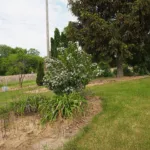
This hybrid forms a dense, multi-stemmed shrub with gracefully arching branches. It may remain compact in cooler regions but become taller and semi-evergreen in warm climates. Cold-weather dieback can alter the seasonal outline, while renewal pruning helps maintain vigor without destroying its natural shape.
Planting and repotting
Plant in spring or fall, setting the root ball level with the surrounding soil. Water deeply after planting and keep the root zone evenly moist during the first growing season. Allow enough room for the natural arching outline; avoid tight spacing that forces repeated shearing.
Container-grown plants can be shifted in spring when roots fill the pot. Use a container with drainage holes and a well-drained, soil-based shrub mix. Move up only one pot size to avoid a permanently wet root zone. Container plants may need more frequent watering and stronger winter protection than plants in the ground.
Propagation and pruning
Propagation
Usually propagated by semi-ripe or softwood cuttings taken during the active growing season. Use clean material from healthy shoots, root under warm, humid conditions, and keep the medium evenly moist but not saturated. Seed is not a reliable way to reproduce the named cultivar true to type.
Pruning
Because flowers form on new wood, prune in late winter or early spring before strong new growth begins. Remove dead, damaged, or winter-killed stems and thin up to about one-third of older branches when renewal is needed. Avoid repeated shearing if you want to preserve the natural arching form.
Overwintering
In Zones 6 and exposed Zone 6b sites, plant in a sheltered location and mulch the root zone after the ground cools. Protect young shrubs from drying winter winds. Expect some stem loss after severe cold; wait until spring to assess damage and prune back only dead wood. Container plants need insulation or a protected unheated location.
Uses
Use as a specimen, foundation shrub, informal hedge, shrub-border grouping, or large container plant. Its long flowering period and arching habit provide late-season ornamental value. It is also suitable for pollinator-oriented plantings where documented insect visitation is desired. Do not present it as an edible or medicinal plant.
Appearance
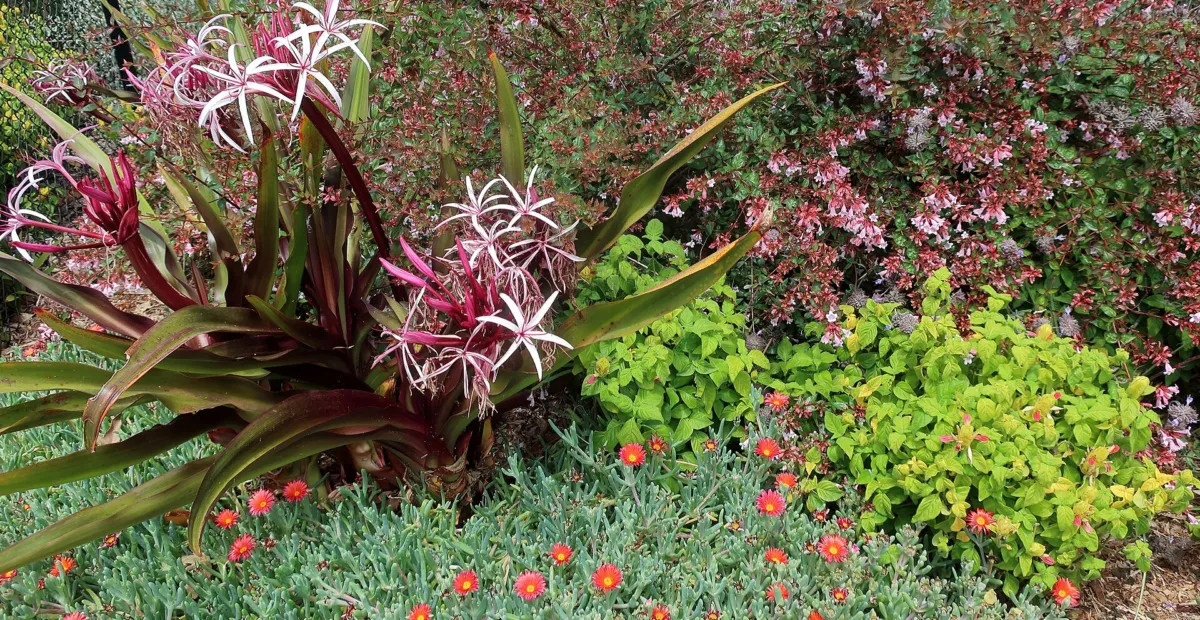
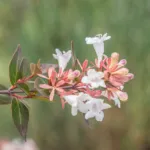
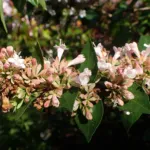
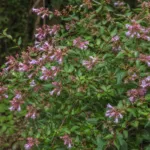
Look for opposite, ovate, glossy dark-green leaves on slender, often reddish arching stems. Cool weather brings bronze to purplish tones. Flower clusters are lavender-pink with darker throats and reddish persistent sepals, giving the plant a distinctive two-tone appearance even after petals drop.
Flowering
Clusters of lavender-pink, funnel-shaped flowers develop on new wood from midsummer into fall. The blooms have darker throats with orange-yellow markings, while reddish persistent sepals remain attractive after the corollas fade. Flowering is strongest in full sun and can continue until autumn frost in favorable climates.
Pollination and visitors
The tubular flowers are visited by bees, bumblebees, and butterflies, with the orange-yellow throat likely acting as a visual nectar guide. Documented visitor records support moderate pollinator value, but a specific primary insect species is not consistently established for this cultivar.
Abelia 'Edward Goucher' photos
Click any photo for a larger view. Source, author and license are shown separately.
Diseases and pests
Diseases
Generally trouble-free. Prevent disease by providing air circulation, avoiding chronically saturated soil, and watering at the base rather than wetting foliage. Remove winter-damaged or dead stems during late winter or early spring. Investigate persistent spotting or dieback before applying any treatment.
Pests
Few serious pest problems are normally reported. Monitor stressed plants for aphids, scale, spider mites, or chewing insects. Improve vigor with correct watering, sunlight, and spacing before using controls. Remove heavily infested shoots when practical and use targeted, label-approved treatment only if damage is significant.
Related diseases and pests
Only Plant Doctor profiles whose host data indicate this plant may be affected are shown here.
Toxicity and pollen
No authoritative source reviewed documented a specific toxic principle for this named cultivar. Do not treat that absence as proof of edibility or guaranteed safety. Prevent children and pets from chewing ornamental plant material, and seek medical or veterinary advice if a substantial amount is eaten or symptoms occur.
- Typical season
- June through October, during flowering
- Pollination / pollen
- Insect-carried pollen
Abelia flowers are insect-pollinated, so pollen is generally less dispersed through the air than pollen from wind-pollinated trees and grasses. Exposure is still possible close to flowering shrubs, and sensitive people should judge tolerance individually rather than assuming zero allergy risk.
Native habitat
The cultivar is a cultivated hybrid rather than a wild native plant. Its parentage links it to East Asian Abelia lineages and cultivated hybrid stock. In gardens it prefers sunny, sheltered sites with fertile, well-drained soil and consistent moisture during establishment.
Interesting fact
Selected by Edward Goucher at the USDA Glenn Dale station in Maryland in 1911. It combines Abelia × grandiflora and Abelia schumannii ancestry. The persistent reddish sepals extend ornamental interest after flowers fade. Cold winters can kill stems to the ground while the crown resprouts.
Frequently asked questions (FAQ)
The most relevant questions about this plant, with short and direct answers.
🌱Quick care
What is Abelia 'Edward Goucher'?⌄
Abelia 'Edward Goucher' is a compact, arching flowering shrub in the honeysuckle family, Caprifoliaceae. It is a hybrid selected in the United States and is commonly grown for its pink-to-lavender summer and fall flowers.
How big does Abelia 'Edward Goucher' get?⌄
Abelia 'Edward Goucher' typically grows about 3 to 5 feet tall and wide, although size varies with climate and pruning. It may stay closer to 2 to 3 feet in colder areas and become semi-evergreen in warm regions.
🌤️Environment and placement
What USDA hardiness zones are suitable for Abelia 'Edward Goucher'?⌄
Abelia 'Edward Goucher' is generally suited to USDA Zones 6 through 9, with the best winter performance usually in Zones 6b and warmer. In colder parts of Zone 6, stems may die back and need winter protection.
Is Abelia 'Edward Goucher' evergreen or deciduous?⌄
Abelia 'Edward Goucher' may be evergreen, semi-evergreen, or deciduous depending on winter temperatures. It commonly loses more foliage in colder climates and may resprout from the base after severe cold.
Does Abelia 'Edward Goucher' grow in full sun or shade?⌄
Abelia 'Edward Goucher' grows best in full sun but tolerates partial shade. Provide at least 6 hours of direct sun when possible for the heaviest flowering and a denser shape.
What type of soil does Abelia 'Edward Goucher' need?⌄
Abelia 'Edward Goucher' prefers fertile, moist, well-drained loam and can adapt to several soil textures if drainage is good. Avoid persistently waterlogged ground, which can increase root problems.
Can Abelia 'Edward Goucher' be grown as a hedge?⌄
Abelia 'Edward Goucher' can be grown as an informal hedge or screening shrub. Its naturally arching habit is usually shown to better advantage with selective thinning rather than frequent shearing into a rigid shape.
💧Care and problems
How often should I water Abelia 'Edward Goucher'?⌄
Water Abelia 'Edward Goucher' moderately, keeping the soil evenly moist while it establishes. After establishment, water during prolonged heat or drought, but allow excess water to drain away between applications.
Can Abelia 'Edward Goucher' tolerate drought?⌄
Established Abelia 'Edward Goucher' can tolerate short periods of dry weather, but it performs best with moderate moisture. Water deeply during extended drought, especially when the plant is young or growing in a container.
How do I protect Abelia 'Edward Goucher' in winter?⌄
Protect Abelia 'Edward Goucher' with a 2- to 3-inch layer of mulch over the root zone and shelter from cold, drying winds. In exposed or borderline locations, temporary frost cloth can protect the stems during severe freezes.
Why is my Abelia 'Edward Goucher' losing its leaves?⌄
Leaf loss is often normal when Abelia 'Edward Goucher' experiences cold weather, because this cultivar is less hardy than some glossy abelias. Sudden or widespread loss during the growing season may instead indicate drought, waterlogged soil, pests, or disease.
What pests affect Abelia 'Edward Goucher'?⌄
Abelia 'Edward Goucher' usually has few serious pest problems, but aphids, scale insects, and occasional mites may occur. Inspect new growth and leaf undersides, and address infestations early with appropriate integrated pest-management methods.
What diseases affect Abelia 'Edward Goucher'?⌄
Major diseases are uncommon, but poorly drained or overcrowded plants may develop root or crown rot, leaf spot, or powdery mildew. Improve drainage and airflow, water at the soil line, and remove badly affected foliage.
Why are the leaves on my Abelia 'Edward Goucher' turning brown?⌄
Brown leaves may result from drought, winter burn, salt exposure, root damage, or excessive wetness. Check soil moisture and drainage first, then protect the shrub from reflected heat, deicing salt, and drying winter wind.
How much fertilizer does Abelia 'Edward Goucher' need?⌄
Abelia 'Edward Goucher' usually needs little fertilizer when planted in fertile soil. If growth is weak, apply a balanced slow-release fertilizer in spring according to the product label, and avoid excessive nitrogen.
🪴Planting and repotting
Where should I plant Abelia 'Edward Goucher'?⌄
Plant Abelia 'Edward Goucher' in a sunny, sheltered location with fertile, moist, well-drained soil. A site protected from drying winter winds is especially useful near the colder edge of its hardiness range.
How far apart should I plant Abelia 'Edward Goucher'?⌄
Space Abelia 'Edward Goucher' about 3 to 5 feet apart, depending on whether you want individual shrubs or a fuller hedge. Use the wider spacing where airflow and the plant’s mature arching form are priorities.
Can Abelia 'Edward Goucher' grow in a container?⌄
Abelia 'Edward Goucher' can grow in a large container with drainage holes and fertile, well-drained potting mix. Container roots are more exposed to freezing and drying, so plants need extra winter and summer moisture protection.
When is the best time to plant Abelia 'Edward Goucher'?⌄
Plant Abelia 'Edward Goucher' in spring or fall when temperatures are moderate and soil moisture is reliable. Spring planting is preferable in colder areas so the root system has a full growing season to establish before winter.
Does Abelia 'Edward Goucher' tolerate clay soil?⌄
Abelia 'Edward Goucher' can tolerate some clay if the soil is amended and drains well. Heavy, compacted clay that stays wet should be improved with organic matter and drainage, or avoided for planting.
Can Abelia 'Edward Goucher' be transplanted?⌄
Abelia 'Edward Goucher' generally transplants successfully when moved during dormancy or mild weather. Replant it at the same depth, preserve as much of the root ball as possible, and keep the soil consistently moist while it reestablishes.
✂️Propagation and pruning
When should I prune Abelia 'Edward Goucher'?⌄
Prune Abelia 'Edward Goucher' in late winter or early spring for general shaping and to remove winter damage. Because it flowers on new wood, light corrective pruning can also be done during the growing season without permanently reducing future bloom.
Can Abelia 'Edward Goucher' be cut back hard?⌄
Abelia 'Edward Goucher' generally tolerates hard rejuvenation pruning, especially in late winter before strong new growth begins. In cold climates, wait until winter damage is visible and remove dead stems back to healthy wood or the base.
How do I keep Abelia 'Edward Goucher' compact?⌄
Keep Abelia 'Edward Goucher' compact by thinning older or overly vigorous stems and shortening selected branches in late winter. Avoid repeatedly shearing only the outer surface, which can create a dense shell and weak interior growth.
Can I propagate Abelia 'Edward Goucher' from cuttings?⌄
Abelia 'Edward Goucher' is normally propagated from stem cuttings rather than seed to preserve its cultivar characteristics. Softwood cuttings in early summer or semi-hardwood cuttings later in summer are commonly used under controlled rooting conditions.
Can Abelia 'Edward Goucher' be grown from seed?⌄
Growing Abelia 'Edward Goucher' from seed is not the preferred method because seedlings may not reproduce the named cultivar. Use stem cuttings from a healthy, correctly identified parent plant when an identical plant is needed.
⚠️Toxicity and safety
Is Abelia 'Edward Goucher' deer resistant?⌄
Abelia 'Edward Goucher' is often considered relatively deer resistant, but no ornamental shrub is reliably deer-proof. Browsing pressure can be higher where deer populations are large or preferred food is scarce.
Is Abelia 'Edward Goucher' toxic to dogs or cats?⌄
No specific toxicity is documented for Abelia 'Edward Goucher', and it is not considered an edible plant. Prevent pets and children from chewing ornamental plants, and contact a veterinarian or poison-control service if a significant amount is ingested.
Is Abelia 'Edward Goucher' edible?⌄
Abelia 'Edward Goucher' is an ornamental shrub and should not be treated as an edible plant. There is no established food use or reliable safety guidance supporting consumption of its leaves, flowers, fruit, or other parts.
🌸Flowering and special interest
Why is my Abelia 'Edward Goucher' not flowering?⌄
Poor flowering is most commonly associated with insufficient sunlight, excessive shade, severe winter damage, drought stress, or pruning that removes developing new growth. Move or prune only as needed, and avoid heavy nitrogen fertilization that favors foliage over flowers.
When does Abelia 'Edward Goucher' bloom?⌄
Abelia 'Edward Goucher' usually blooms from summer into fall, often beginning in late spring or early summer in warm climates. The exact season and duration depend on temperature, sunlight, moisture, and winter damage.
What color are the flowers on Abelia 'Edward Goucher'?⌄
The flowers of Abelia 'Edward Goucher' are typically pink, lilac, or purplish-pink with darker throats and reddish sepals. The small funnel-shaped flowers appear in clusters along new growth.
Are Abelia 'Edward Goucher' flowers fragrant?⌄
Abelia 'Edward Goucher' flowers may have a light fragrance, but fragrance intensity can vary with weather and growing conditions. The cultivar is valued more consistently for its flower color, long bloom period, and persistent reddish sepals.
Does Abelia 'Edward Goucher' attract bees and butterflies?⌄
Abelia 'Edward Goucher' attracts bees, butterflies, and other flower-visiting insects with its tubular summer-to-fall flowers. It can be useful in a pollinator-friendly mixed border or foundation planting.
Similar plants
 Glossy abelia (Vesalea mexicana grandifolia) care guideVesalea mexicana grandifolia
 Large-flowered Abelia (Abelia uniflora) care guideAbelia uniflora
 Vesalea floribunda care guideVesalea floribunda
 Fragrant Abelia (Zabelia tyaihyoni) care guideZabelia tyaihyoni
 Abelia chinensis care guideAbelia chinensis
 Abelia macrotera schumannii care guideAbelia macrotera schumannii