
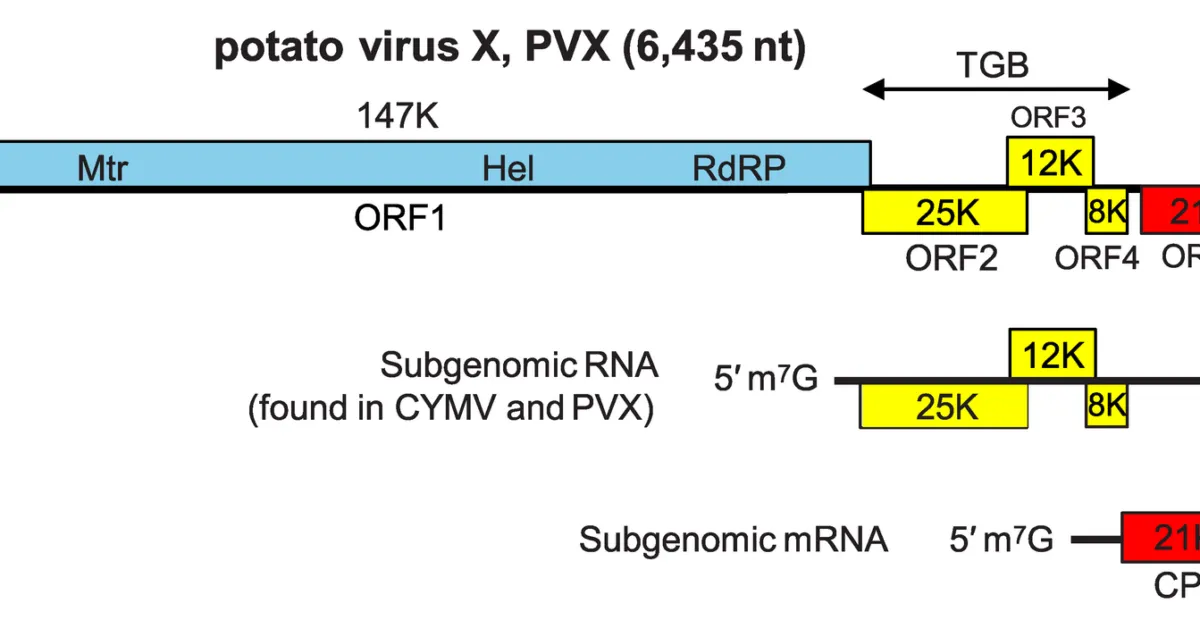
 Source:
 Potato virus X
Potato virus XPotato virus X overview
Potato virus X (PVX) is a widespread viral disease of potato that may remain completely symptomless while reducing yield and tuber quality. When symptoms develop, infected plants can show pale green mosaic, leaf roughening, crinkling, stunting, or localized necrosis. PVX is primarily spread in infected seed tubers and by contact with contaminated sap, tools, machinery, and handling practices.
Typical conditions
Overview
Potato virus X is caused by Potato virus X, a positive-sense single-stranded RNA virus in the genus Potexvirus. It is one of the most widely distributed potato viruses. Infected plants may appear healthy, so visual scouting alone cannot reliably determine whether a planting is virus-free.
In susceptible cultivars or under favorable symptom-expression conditions, PVX produces a mild yellow-green mosaic, leaf roughening, crinkling, reduced plant size, and sometimes necrosis. Mixed infections can greatly intensify symptoms and yield loss. Laboratory testing, such as ELISA or RT-PCR through a qualified plant diagnostic laboratory, is needed for reliable identification.
Symptoms and identification
- Often no visible symptoms, especially in tolerant potato cultivars.
- Pale yellow-green mosaic or mottling of potato leaves.
- Leaf roughening, crinkling, distortion, or reduced leaflet size.
- Stunting and reduced canopy growth.
- Some virus–cultivar combinations produce localized necrotic spots, death of shoot tips, or severe foliage collapse.
- Yield reduction may occur even when foliage appears normal. Symptoms can be more apparent during cool, cloudy conditions and may diminish in bright, warm weather.
These signs overlap with other potato viruses and physiological problems. Symptoms alone should not be used to distinguish PVX from Potato virus Y, Potato virus A, Potato virus S, or mixed infections.
Causes and spread
PVX is commonly introduced through infected seed tubers and vegetatively propagated planting material. The virus moves from an infected mother tuber into new shoots and daughter tubers.
It is readily transmitted mechanically when infected sap is moved between plants by cutting knives, pruning tools, machinery, clothing, hands, spray equipment, root contact, plant-to-plant rubbing, or wounds. PVX is not generally considered to have a routine insect-vector cycle, and it is not known to be transmitted through true potato seed or pollen. Contaminated volunteer potatoes, cull piles, and saved tubers can maintain the virus between seasons.
Life cycle and persistence
PVX survives between production cycles mainly in infected tubers and vegetative plant material. After an infected tuber is planted, the virus replicates in growing tissues and moves systemically through the plant. Sap from infected foliage can infect wounded or mechanically injured tissue on neighboring plants.
Infected plants can produce infected daughter tubers, creating a continuing cycle of tuber-to-plant-to-tuber transmission. The apparent severity depends on the virus isolate, potato cultivar, plant age, environmental conditions, and whether other viruses are present. PVX is not known to persist as a free-living soil organism.
Treatment and control
There is no curative treatment that eliminates PVX from an infected field plant or tuber. Remove infected plants and do not use their tubers as seed. In small plantings, remove the entire plant, including tubers, and discard it in a way that prevents sprouting.
For valuable cultivars or clean-stock production, specialized laboratories may use meristem culture, thermotherapy, indexing, and repeated testing to produce virus-free plant material. These are propagation and sanitation procedures, not homeowner cures. Do not rely on fungicides or insecticides to cure PVX.
If a diagnosis is uncertain, submit symptomatic leaves or plant material to a university or state plant diagnostic laboratory. Mixed infections are common and can change the symptom pattern.
Low-impact and biological control
No organic spray cures an established PVX infection. The most effective nonchemical approach is exclusion and sanitation: certified clean planting stock, removal of volunteer and infected plants, careful handling, and disinfection of tools and equipment between plants or seed lots.
Reduce mechanical spread by working in healthy portions of a planting before suspect areas, avoiding work when foliage is wet, and limiting cutting, pruning, or handling. Because PVX is not normally controlled through an insect-vector program, broad-spectrum insecticide applications are not an appropriate substitute for clean seed and sanitation.
Prevention
- Plant only certified seed potatoes or tested, virus-free tissue-culture material obtained from reputable suppliers.
- Do not save tubers from symptomatic or untested plants for replanting.
- Clean and disinfect seed-cutting knives, planters, harvest equipment, stakes, and other tools between lots or plantings.
- Minimize unnecessary contact, rubbing, and wounding of potato foliage.
- Remove volunteer potatoes and manage cull piles so they cannot sprout.
- Rogue plants with suspicious symptoms when practical, placing them in a sealed bag and disposing of them according to local guidance rather than composting live infected tissue.
- Use cultivars with documented resistance or tolerance where appropriate, while recognizing that resistance and symptom expression vary by cultivar and PVX isolate.
- Use diagnostic testing when maintaining valuable breeding material, seed stock, or a planting with unexplained mosaic symptoms.
Interesting facts
- PVX can reduce potato yield even when infected plants show no obvious symptoms.
- Cool, cloudy weather can make mild PVX mosaic easier to see, while bright weather may mask it.
- Mixed infection with other potato viruses can produce symptoms much more severe than PVX alone.
- Mechanical transmission makes routine handling and seed-cutting sanitation especially important.
- PVX is a virus, not a fungus; fungicides cannot cure it.
- Symptom expression is strongly influenced by potato cultivar, virus isolate, environment, and plant age.
No pesticide treatment reliably cures Potato virus X or eradicates the virus from infected plants. Use only products legally authorized for the specific crop and problem in the United States, and follow the current product label exactly. Chemical applications should not replace certified seed, sanitation, removal of infected material, and diagnostic testing.