Yellow leaves, soft stems, sudden wilting and soil that never seems to dry are four common clues that your houseplant may be getting too much water. The important detail is that none of these symptoms proves overwatering by itself. Light, temperature, pot size, pests and natural leaf aging can create similar problems, so the best diagnosis combines the plant’s appearance with a quick check of the soil, pot and roots.
Most houseplants do not need a rigid watering schedule. They respond to changing conditions: a bright south-facing window in July can dry a pot quickly, while a dim room in January may leave the same pot wet for days. Plants also differ widely. A snake plant or jade plant stores water and prefers the mix to dry more thoroughly; a peace lily or fern generally appreciates more even moisture, although neither wants to sit in stagnant water.
Here are four signs to watch for, followed by a practical rescue plan that works well for many common indoor plants.
1. Leaves turn yellow, especially from the bottom up
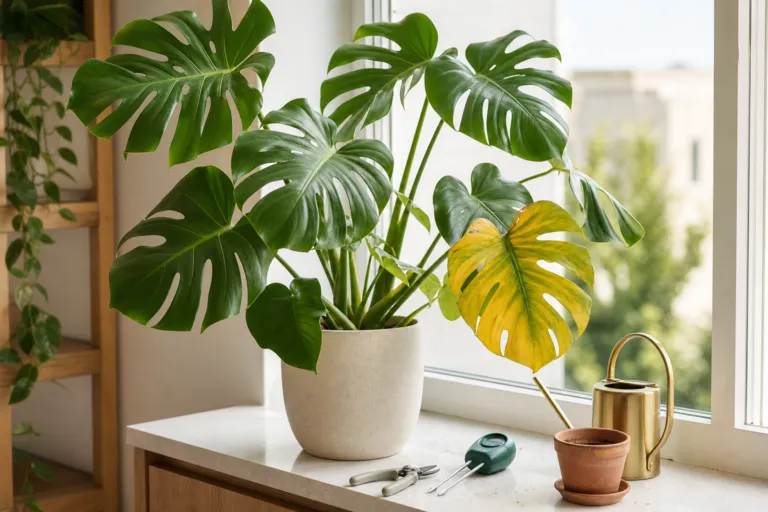
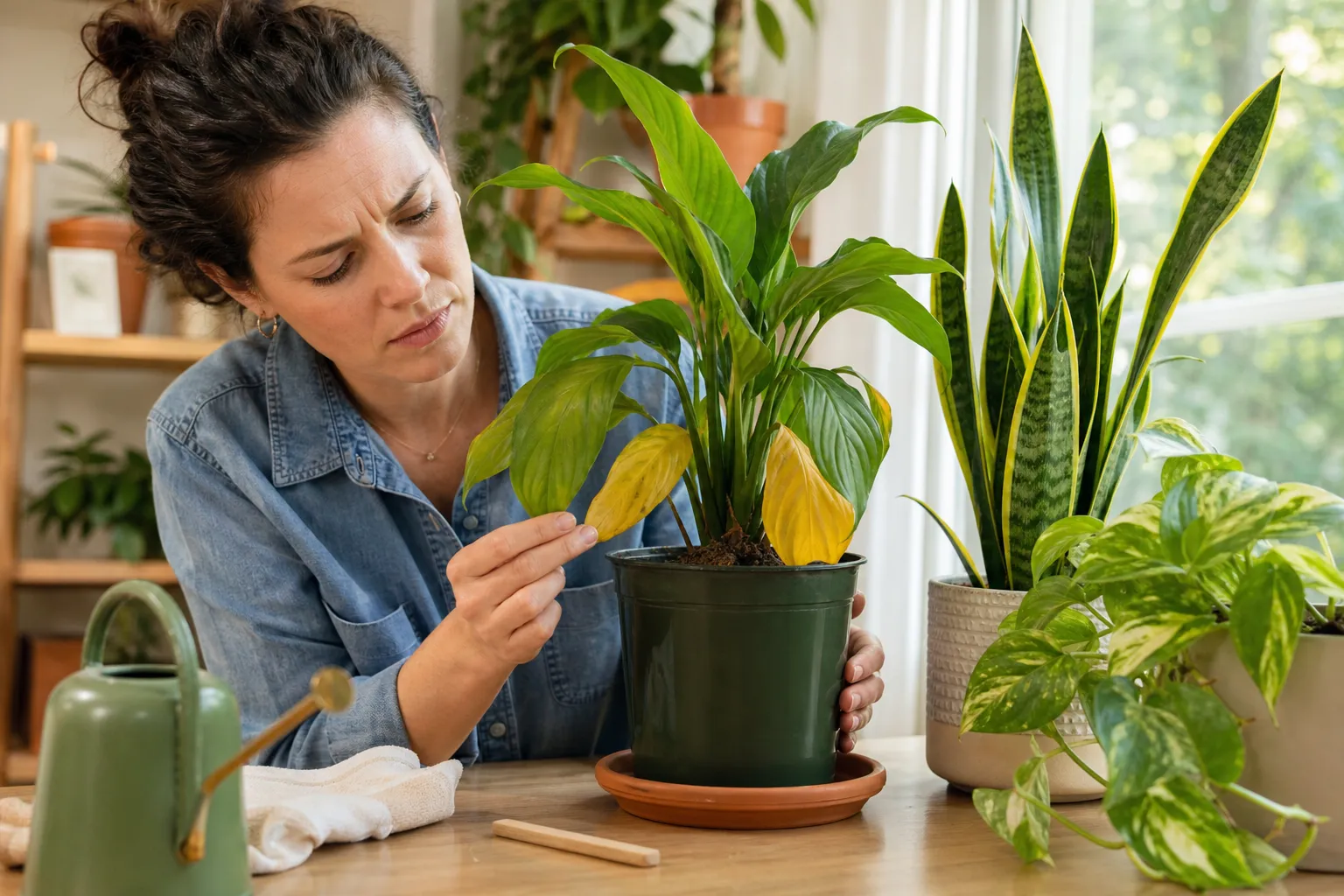
One of the first signs of consistently wet soil is a flush of yellowing leaves. You may notice older, lower leaves losing their green color while the potting mix remains damp. In more advanced cases, several leaves turn yellow at once, or green leaves drop without much warning.
Why does this happen? Roots need both water and air. When every pore in the potting mix stays filled with water, less oxygen reaches the roots. The plant may then struggle to take up water and nutrients even though the pot is saturated. That can produce the frustrating combination of wet soil and a wilted-looking plant.
Still, yellow leaves are not an overwatering diagnosis on their own. A single old lower leaf can yellow naturally. Low light, a sudden move indoors, cold drafts, an oversized pot or a nutrient problem can also play a role. Look for a pattern rather than one isolated leaf.
What to check
- Feel the soil 1 to 2 inches below the surface, rather than judging by color alone.
- Check whether the pot feels unusually heavy several days after watering.
- Look for multiple yellow leaves appearing over a short period.
- Make sure the plant is not sitting in water inside a saucer or decorative cachepot.
If the plant is in bright light but the soil remains wet for a week or longer, excess moisture becomes more likely. If the room is dim and the pot is large, slow drying may be the main problem rather than the amount of water you added on any single day.
2. The leaves wilt even though the soil is wet
Wilting usually makes people reach for the watering can, but a drooping plant can be overwatered as well as underwatered. When roots are stressed or damaged by persistently wet conditions, they may no longer absorb water effectively. The leaves then lose firmness even though the soil feels soggy.
Overwatered leaves often feel soft, limp or unusually tender. Some may become pale, translucent or water-soaked before they collapse. Underwatered leaves are more likely to feel thin, dry or crisp, and the potting mix may pull away from the sides of the container.
Compare a few plants rather than relying on one symptom. A thirsty peperomia in a small pot may wilt quickly when the top layer dries. A waterlogged peace lily may also droop, but its soil will remain heavy and wet. The visual cue is similar; the remedy is completely different.
A simple moisture test
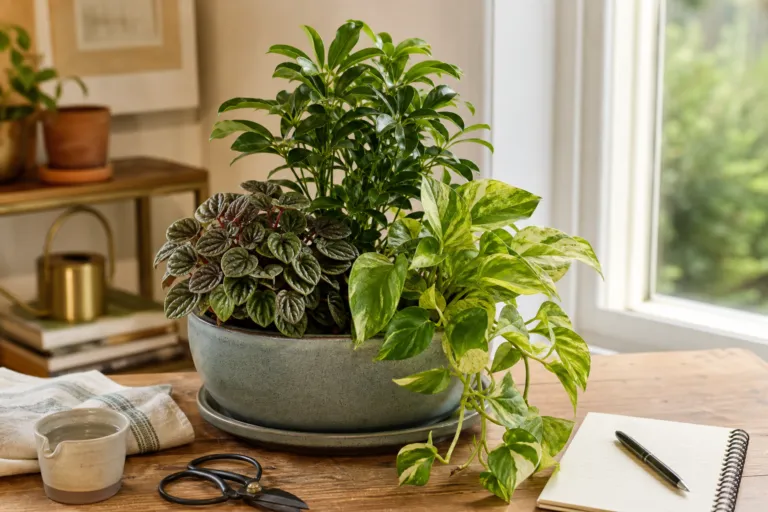
Try this seven-day check the next time you water. Record the date, the plant, the pot diameter and the depth at which the soil feels dry. For example, you might note: “6-inch pothos pot, watered until a little drained from the bottom; after three days, the top inch is still wet; after seven days, the top 2 inches are damp.” The exact numbers are not a universal rule, but they reveal how quickly that particular pot dries in your home.
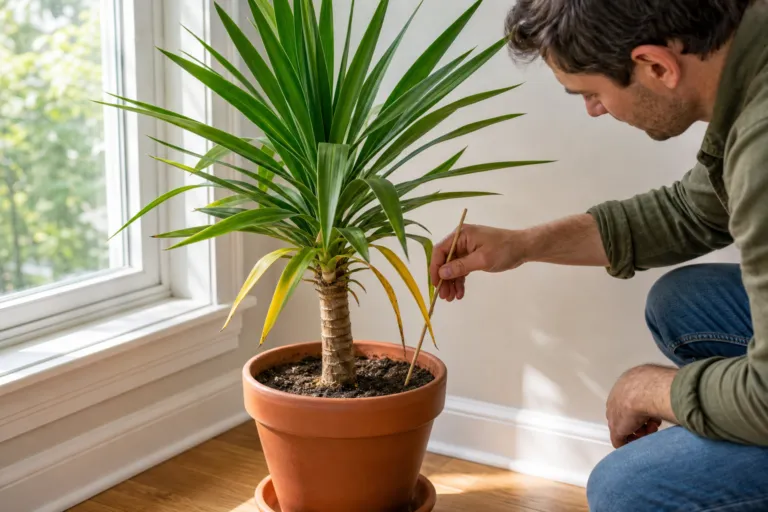
Use a wooden chopstick or your finger to check deeper than the surface. A dry-looking crust can hide wet soil below, while a dry top layer can be normal for a plant that prefers the lower root zone to remain lightly moist. Water according to the plant and its growing conditions, not the calendar.
3. Stems, crowns or roots become soft and dark
Soft tissue is a more serious warning than a few yellow leaves. A stem may turn brown or black near the soil line, a crown may feel mushy, or leaves may detach with very little resistance. These signs can indicate that prolonged wetness has weakened plant tissue and that rot is developing.
If you suspect a root problem, slide the plant gently from its container. Healthy roots vary by species, but they are generally firm and not slimy. Damaged roots may be dark, limp, mushy or unpleasant-smelling. Do not assume every dark root is diseased: some plants naturally have darker roots, and potting mix can stain them. Texture matters as much as color.
Root damage is more likely when several factors combine:
- The container has no drainage hole.
- Water collects in an outer pot or saucer.
- The pot is much larger than the root ball.
- The mix is compacted and slow to drain.
- The plant sits in low light, cool temperatures or both.
A large container can be especially deceptive. Extra mix holds extra moisture around a relatively small root system, so the pot may stay wet long after the plant has used what it needs. When repotting, choose a container only modestly larger than the current one and use a mix suited to the plant.
What to do if roots are damaged
Remove the plant from the pot and inspect the root ball. If only a few roots are soft, trim those sections with clean, sharp scissors. Repot into fresh, appropriately draining mix and a clean container with a drainage hole. If the stem base is mushy or most roots have collapsed, recovery is less certain; taking healthy cuttings may be the best way to preserve the plant, depending on the species.
After repotting, do not automatically keep the mix constantly wet. Let the plant settle in bright, indirect light and adjust watering to the condition of the new root system. A plant with fewer roots uses less water than it did before the damage.
4. Fungus gnats, algae or a perpetually wet surface appear
Tiny black flies that lift off when you move a pot are often fungus gnats. Their presence does not prove that a plant is overwatered, but adults are commonly associated with moist potting mix, and a recurring cloud of them is a useful signal to review your watering habits.
You may also see green algae on the soil surface, a sour or stale smell, or water sitting on top of the mix instead of soaking in. These clues suggest that the surface is staying wet for too long or that the mix has become compacted. They are especially common in containers placed in low light, where evaporation is slow.
Start with cultural changes rather than adding more products:
- Allow the appropriate portion of the potting mix to dry before watering again.
- Empty saucers and decorative outer pots after watering.
- Improve airflow gently, while avoiding cold drafts.
- Move the plant to brighter, suitable light if its species can tolerate it.
- Check that the drainage hole is open and not blocked by roots or compacted mix.
Do not cover a wet surface with a thick decorative layer and assume the problem is solved. It may hide the moisture without improving conditions around the roots.
How much water does a houseplant actually need?
There is no reliable “one cup per week” rule for all houseplants. Water use changes with pot size, plant size, light intensity, room temperature, humidity, season and the texture of the potting mix.
As a practical starting point, water thoroughly when the plant’s soil has reached the dryness level appropriate for that species. Add water slowly enough that the mix becomes evenly moist, then allow excess water to drain. For many foliage plants, checking the top inch or two is useful. Drought-tolerant plants such as snake plants, haworthias and many succulents usually need a longer dry period; moisture-loving plants may need watering sooner, but they still benefit from oxygen around their roots.
In winter, indoor light levels often drop and growth slows, so a plant may use water more slowly. In spring and summer, brighter windows and active growth can increase demand. That does not mean every plant needs a fixed seasonal increase. Check the pot each time.
Four habits that prevent overwatering
1. Match the pot to the root ball
Choose a pot with a drainage hole and avoid moving a small plant into a very large container. A pot only one size larger is often a safer step than a dramatic upgrade. Decorative cachepots are fine, but pour out any water that collects beneath the nursery pot.
2. Match the light to the plant
Light drives growth and water use. A plant in a bright window may dry faster than the same species in a dim corner. If a plant is struggling in low light, simply watering more often usually makes the root environment worse. Try improving the light gradually while protecting sensitive foliage from sudden, intense sun.
3. Use the potting mix as a tool
Most houseplants perform better in a lightweight mix that drains while still holding some moisture. Succulents and cacti generally need a faster-draining blend than tropical foliage plants. Avoid using dense garden soil in indoor containers; it can compact and limit air movement around roots.
4. Track the plant, not the date
A short watering log can reveal patterns quickly. Record the date, the soil depth that felt dry, the amount of drainage and any weather or indoor changes. After two or three weeks, you may discover that a plant near a sunny window needs checking every four days, while one across the room needs checking only every ten days.
What to do today if you think you overwatered
- Pause before watering again. Check the soil below the surface and confirm that it is actually too wet.
- Empty standing water. Remove water from the saucer or outer container immediately.
- Assess the light and pot. A dim location or oversized container may be slowing evaporation.
- Inspect the roots if symptoms continue. Look for soft, limp or decaying roots and a mushy stem base.
- Repot only when needed. If the mix is persistently soggy or roots are damaged, fresh mix and a properly sized pot can help.
- Give the plant time. Yellow leaves will not turn green again, and stressed roots may need weeks to produce healthy new growth.
The encouraging part: plants can adapt
Houseplants adjust to the conditions you provide. A plant growing in bright light may use water quickly, while the same variety in a cooler, darker room may need much less. Some species evolved for periodic drought, while others come from consistently moist forest habitats. Your job is not to keep every pot equally wet; it is to learn the rhythm of each plant.
When you see yellow leaves or drooping foliage, resist the urge to water automatically. Feel the soil, inspect the pot and consider the light. With a drainage hole, a suitable mix and a simple observation routine, you can catch overwatering early and give your houseplants a much better chance to recover.