
 Source:
 Tall False-buck’s-beard (Astilbe rubra) short overview
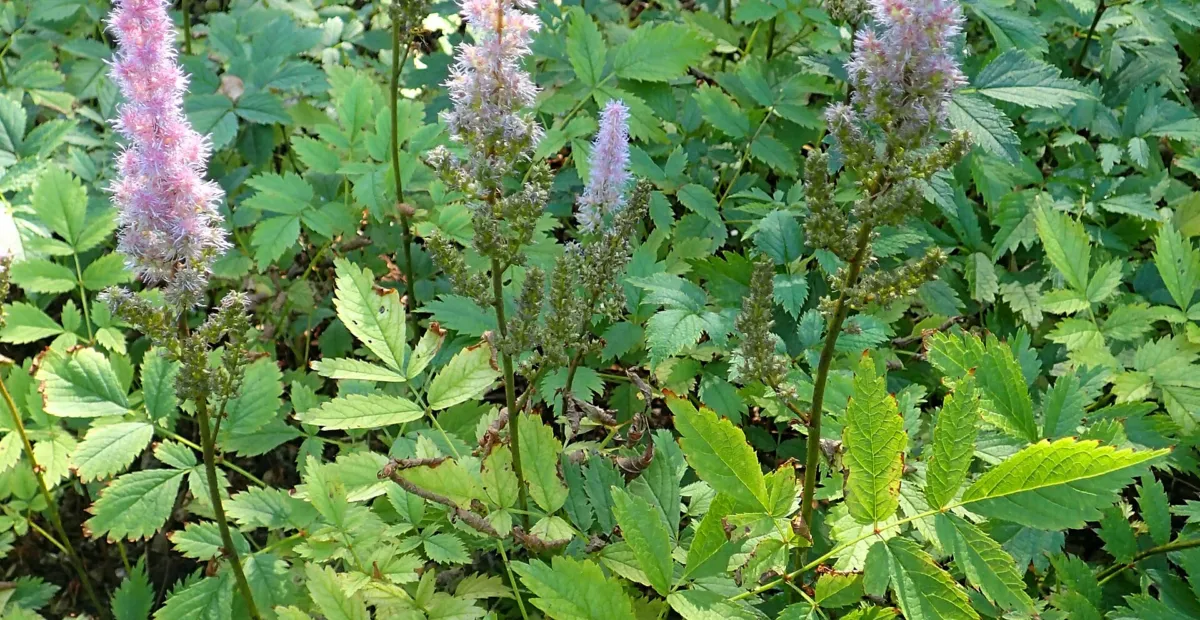
Tall False-buck's-beard, Astilbe rubra, is an accepted Asian astilbe species in the saxifrage family. It is a rhizomatous perennial herb associated with temperate mountain forests, ravines, and other moist habitats from the eastern Himalaya through parts of China and Myanmar. Its upright reddish-hairy stems carry finely divided foliage and terminal panicles of pale pink flowers. In U.S. gardens, it is best treated as a shade-loving plant for cool, consistently moist, humus-rich soil.
Taxonomic classification
Tall False-buck’s-beard (Astilbe rubra) care guide
Light and placement
Give filtered light, morning sun with afternoon shade, or bright woodland shade. An east-facing bed or the north side of a building is usually safer than a hot west-facing site. Strong midday sun can scorch leaflets and fade flowers; excessive darkness may produce weak, stretched stems and sparse flowering. In warmer U.S. regions, increase shade and protect the plant from reflected heat.
Watering and humidity
Water deeply when the upper inch of soil begins to dry, keeping the root zone consistently moist rather than alternating between saturation and drought. Mulch with leaf mold or fine compost to reduce evaporation, but keep mulch off the crown. Check more often during summer heat, in containers, and beneath trees that intercept rainfall. Good air movement matters even where humidity is high.
Soil and growing medium
Use fertile soil with abundant organic matter and reliable moisture retention, while avoiding stagnant, waterlogged conditions. A loam amended with compost or leaf mold is suitable. The species is associated with moist forest habitats, so sharply drying sandy beds are poor choices unless irrigation is dependable. Slightly acidic to neutral soil is a reasonable target; avoid excessive lime unless a soil test indicates a need.
Feeding
Top-dress in early spring with compost or leaf mold as growth resumes. If using granular fertilizer, choose a balanced slow-release product and apply only at the label rate; excessive nitrogen can produce lush foliage with weaker flowering stems. Do not feed drought-stressed or newly divided plants until they have resumed active growth. A second light application is optional in poor soil but usually unnecessary in fertile beds.
Growth and habit
This is a clumping, rhizomatous perennial that sends up seasonal flowering stems from underground growth. Mature clumps can gradually broaden and become crowded, reducing vigor in the center. Divide established plants when flowering declines or the crown becomes congested. Consistent moisture is more important for performance than frequent feeding.
Planting and repotting
Plant into thoroughly prepared, organic-rich soil in spring or early fall. Set the crown at the same depth at which it was growing, with buds just at or slightly below the soil surface. Water deeply after planting and maintain even moisture through the first growing season. Mulch lightly with compost or shredded leaves, leaving a small gap around the crown.
For container culture, use a moisture-retentive but aerated potting mix and a container with drainage holes. Repot or divide in early spring before vigorous growth, or in early fall after flowering. Move the plant into only a slightly larger container, since excess wet mix around a small root system can remain cold and saturated.
Propagation and pruning
Propagation
Divide established clumps in early spring or early fall, ensuring each division has healthy roots and viable buds. Seed propagation is possible but slower and less predictable for garden production; sow fresh seed and expect variable germination. Keep divisions evenly moist while they re-establish.
Pruning
Cut flower stems after bloom if you want a cleaner appearance, or leave them for winter texture. Cut the old foliage to the ground in late fall after it has yellowed and died back, or in early spring before new growth emerges. Avoid cutting healthy foliage during the growing season because it supports the rhizome.
Overwintering
In USDA Zones 5–8, established plants can generally remain outdoors. After the foliage dies back, apply a light mulch of shredded leaves or compost in exposed sites, especially during the first winter after planting. Do not keep the crown waterlogged under heavy winter mulch. Container plants have less root insulation and should be sheltered from repeated freeze-thaw cycles.
Uses
Useful as an ornamental perennial for shaded beds, woodland-style borders, stream edges, and moist containers. Its divided foliage provides texture before and after bloom, while the panicles add vertical color. It is not a U.S. native plant, and no culinary or medicinal use should be assumed from the name or genus.
Appearance
The plant has erect reddish-brown, hairy stems and finely divided leaves that are typically 2- to 3-pinnate. Leaflets are ovate, sharply pointed, and doubly serrated, with a somewhat rough texture along the veins. Terminal panicles rise above the foliage and give the plant the feathery appearance typical of astilbes. Stem color and the combination of divided foliage with pale pink panicles help distinguish it from unrelated false-goat's-beard plants.
Flowering
Small flowers are arranged in showy terminal panicles rather than solitary blooms. Regional botanical records describe pale pink flowers and a July–September flowering period in parts of the native range; U.S. garden timing will usually shift earlier or later with latitude and local temperature. Remove spent panicles for tidiness, or leave them for seasonal structure and seed development.
Pollination and visitors
Astilbe flowers are insect-pollinated and offer accessible pollen to small flower visitors. The available species-level evidence is limited, so a particular pollinator species cannot be assigned confidently. Bees, hoverflies, and other small insects may visit the panicles; visitor abundance will depend on the surrounding garden and local insect community.
Astilbe rubra photos
Click any photo for a larger view. Source, author and license are shown separately.
Diseases and pests
Diseases
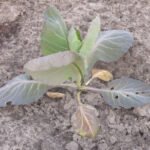
Reduce disease pressure by planting in well-drained soil, spacing clumps adequately, and watering the soil rather than repeatedly wetting foliage. Remove badly spotted or collapsed leaves and clear debris at season's end. Root or crown problems are more likely where soil stays saturated. Correct drainage and avoid excessive nitrogen before considering treatments.
Pests
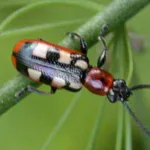
Watch for chewing damage from beetles, earwigs, and other generalist insects, along with occasional sap-feeding pests. Inspect new growth and the undersides of leaves. Hand-pick visible pests, rinse foliage with water, and use a labeled horticultural soap only when damage is persistent and the product is approved for ornamental plants. Avoid broad-spectrum insecticides during bloom.
Related diseases and pests
Only Plant Doctor profiles whose host data indicate this plant may be affected are shown here.
Toxicity and pollen
Reliable species-specific human and pet toxicity information was not located. Absence from a toxicity list is not proof of safety, and ordinary plant material may still cause gastrointestinal upset if eaten. Prevent children and pets from ingesting the plant, and seek medical or veterinary advice after a substantial or symptomatic exposure.
- Typical season
- During summer bloom, usually June–September depending on climate
- Pollination / pollen
- Pollen presented within insect-visited flowers
The flowers are primarily insect-pollinated, so pollen is generally presented within the inflorescences rather than released in large windborne clouds. This suggests low airborne exposure for most people, but it does not establish that the plant is allergy-proof. Sensitive gardeners should avoid rubbing the flowers and monitor their own response.
Native habitat
Astilbe rubra is native to temperate regions from the eastern Himalaya through south-central China and northern Myanmar. It is associated with forested, cool and moist environments, including mountain habitats. The species favors soils that retain moisture but remain aerated, conditions often found near ravines, forest margins, and other sheltered sites.
Interesting fact
The name is accepted in major modern taxonomic backbones despite a history of synonymy involving names connected with Astilbe chinensis and related taxa. Botanical descriptions emphasize reddish-brown hairy stems and rough-veined leaflets, features that are useful when separating the species from generalized garden astilbe forms. In U.S. cultivation, the exact species is less commonly encountered than named hybrid astilbes.
Frequently asked questions (FAQ)
The most relevant questions about this plant, with short and direct answers.
🌱Quick care
What is Astilbe rubra commonly called in the United States?⌄
Astilbe rubra is commonly documented in English as Tall False-buck's-beard. It is a cold-hardy, herbaceous perennial in the Saxifragaceae family.
Is Astilbe rubra a perennial?⌄
Yes, Astilbe rubra is a cold-hardy perennial that dies back in winter and regrows from underground crowns or rhizomes in spring.
How much light does Astilbe rubra need?⌄
Grow Astilbe rubra in part shade to shade. It may tolerate brighter conditions only when the soil remains consistently moist and summer heat is moderate.
How often should I water Astilbe rubra?⌄
Water Astilbe rubra whenever the soil surface begins to dry, keeping the root zone evenly moist. Do not allow the plant to experience repeated drought stress.
What soil is best for Astilbe rubra?⌄
Use humus-rich, moisture-retentive but well-drained soil. Incorporating compost or leaf mold can improve moisture retention without creating stagnant winter conditions.
🌤️Environment and placement
Can Astilbe rubra grow in full shade?⌄
Yes, Astilbe rubra can grow in full shade, although flowering may be reduced compared with a location receiving filtered light or gentle morning sun.
Can Astilbe rubra grow in full sun?⌄
Astilbe rubra is not a reliable full-sun plant. It can handle more sun in a cool, moist site, but hot afternoon exposure and drying soil can scorch foliage and reduce flowering.
Where should I plant Astilbe rubra in the garden?⌄
Plant Astilbe rubra in a shaded woodland border, rain garden edge, or other sheltered location with consistently moist, rich soil. Avoid exposed, dry sites and areas with intense afternoon heat.
Does Astilbe rubra tolerate wet soil?⌄
Astilbe rubra prefers moisture but still needs drainage around its crown and roots. It may tolerate periodically wet soil, but continuously waterlogged ground can cause root or crown problems.
Is Astilbe rubra cold hardy?⌄
Yes, Astilbe rubra is considered a cold-hardy perennial. Its winter survival is best when the soil drains adequately and the crown is protected from repeated freezing and thawing.
Can Astilbe rubra grow under trees?⌄
Yes, Astilbe rubra can grow beneath trees in filtered shade if competition from tree roots is limited. Supplement water during dry periods because tree roots can rapidly remove soil moisture.
💧Care and problems
Why are the leaves of my Astilbe rubra turning brown?⌄
Brown Astilbe rubra foliage is most often caused by drought, excessive sun, heat, or low humidity. Restore even soil moisture and provide afternoon shade, but remove severely damaged leaves if needed.
Why is my Astilbe rubra wilting even though the soil is wet?⌄
Wilting in wet soil can indicate poor drainage, root or crown damage, or heat stress rather than a lack of water. Check whether the planting site stays saturated and improve drainage if necessary.
Why is Astilbe rubra not blooming?⌄
Astilbe rubra may fail to bloom because of insufficient light, drought, transplant stress, excessive nitrogen, or immature growth. Keep it evenly moist and provide bright shade or filtered light for the best chance of flowering.
Does Astilbe rubra need fertilizer?⌄
Astilbe rubra usually benefits more from compost-rich soil and consistent moisture than from heavy feeding. If growth is weak, apply a balanced, slow-release perennial fertilizer in spring according to the product label.
What pests commonly affect Astilbe rubra?⌄
Slugs and snails may chew Astilbe rubra foliage, especially in damp, shaded gardens. Good spacing, removal of hiding places, and a labeled slug-control method can reduce damage.
Should I mulch Astilbe rubra?⌄
Yes, apply about 2 to 3 inches of organic mulch around Astilbe rubra to conserve moisture and moderate soil temperature. Keep mulch slightly away from the crown to reduce rot risk.
🪴Planting and repotting
When is the best time to plant Astilbe rubra?⌄
Plant Astilbe rubra in spring or early fall when temperatures are moderate and soil moisture is dependable. Water thoroughly after planting and maintain even moisture while roots establish.
How deep should I plant Astilbe rubra?⌄
Plant Astilbe rubra with the crown at or just slightly below the soil surface, following the depth of the nursery container or divided clump. Planting too deeply can encourage crown problems.
Can Astilbe rubra be grown in containers?⌄
Yes, Astilbe rubra can be grown in a container large enough to hold its root system, provided the pot has drainage and the mix stays evenly moist. Containers dry out faster than garden soil and need frequent monitoring.
How often should I repot Astilbe rubra?⌄
Repot Astilbe rubra when roots fill the container, the crown becomes crowded, or watering becomes difficult to manage. Refresh the potting mix and move the plant into a slightly larger container rather than an excessively large one.
✂️Propagation and pruning
How do I propagate Astilbe rubra?⌄
The most practical way to propagate Astilbe rubra is by dividing established clumps. Divide in early spring or early fall, making sure each section has healthy roots and at least one crown bud.
Can Astilbe rubra be grown from seed?⌄
Astilbe rubra can be grown from seed, but seed propagation is slower and less predictable than division. Keep the seed medium consistently moist and expect seedlings to require time before reaching flowering size.
When should I divide Astilbe rubra?⌄
Divide Astilbe rubra in early spring as growth begins or in early fall after the hottest weather has passed. Avoid dividing during drought, extreme heat, or immediately before hard freezing.
Should I cut back Astilbe rubra after flowering?⌄
Cut back Astilbe rubra flower stems after flowering if you want a tidier appearance or wish to prevent seed development. Leaving the stems in place can provide winter texture until spring cleanup.
When should I cut back Astilbe rubra for winter?⌄
Remove dead Astilbe rubra foliage in late winter or early spring before new shoots expand. In areas with harsh winters, leaving foliage in place until spring can offer modest crown protection.
⚠️Toxicity and safety
Is Astilbe rubra toxic to humans or pets?⌄
Toxicity for Astilbe rubra is not established. Because plant-specific safety data are limited, prevent children and pets from ingesting it and contact a poison-control or veterinary professional if ingestion occurs.
Is Astilbe rubra safe to eat?⌄
No part of Astilbe rubra should be considered edible. Its toxicity has not been established, so avoid consuming the foliage, flowers, roots, or seeds.
🌸Flowering and special interest
When does Astilbe rubra bloom?⌄
Astilbe rubra generally flowers in summer, although the exact timing varies with climate, latitude, spring temperatures, and growing conditions. Consistent moisture and adequate filtered light support better bloom.
What color are Astilbe rubra flowers?⌄
Astilbe rubra is associated with reddish or pink-red plume-like flower clusters. Color intensity can vary with the plant’s genetics, maturity, light, and growing conditions.
Do Astilbe rubra flowers attract pollinators?⌄
Astilbe rubra flowers can provide resources for visiting insects when in bloom. Their value is greatest in a diverse, pesticide-conscious shade garden with other plants flowering across the season.
Similar plants
 Azure Monkshood (Aconitum carmichaelii) care guideAconitum carmichaelii
 Monkshood (Aconitum ‘Stainless Steel’)Aconitum 'Stainless Steel'
 Monkshood (Aconitum ‘Bressingham Spire’)Aconitum 'Bressingham Spire'
 Golden full moon maple (Acer shirasawanum ‘Aureum’)Acer shirasawanum 'Aureum'
 Globosum (Acer platanoides ‘Globosum’)Acer platanoides 'Globosum'
 Striped maple (Acer pensylvanicum) care guideAcer pensylvanicum