
 Source:
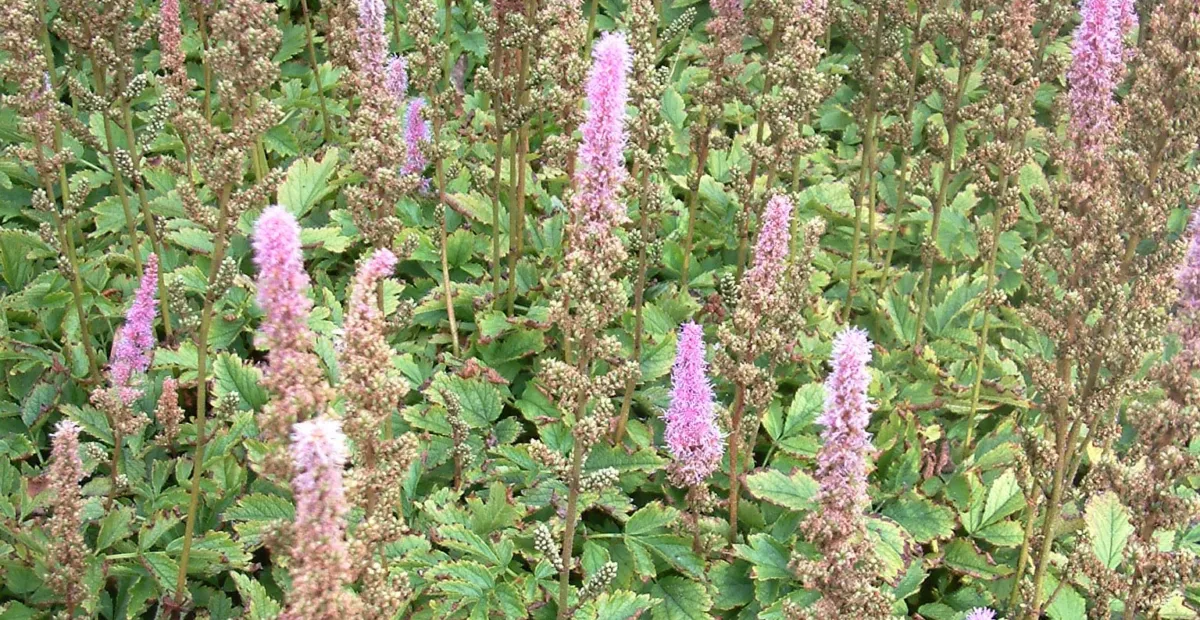
 Dwarf Chinese astilbe (Astilbe chinensis ‘Pumila’) short overview
Astilbe chinensis 'Pumila' is a compact, spreading Chinese astilbe valued for its finely divided dark green foliage and dense lilac-pink flower plumes. It performs best in consistently moist, humus-rich soil and partial to full shade, although this cultivar tolerates more sun and short dry periods than many astilbes. Its small stature makes it useful as a shady border edging, groundcover, woodland accent or container perennial.
Taxonomic classification
Dwarf Chinese astilbe (Astilbe chinensis ‘Pumila’) care guide
Light and placement
Grow in partial shade to full shade, ideally with bright morning light or dappled exposure and protection from hot afternoon sun. In cooler, consistently moist regions it can tolerate more sun, but intense exposure may cause leaf scorch and faded foliage. Too little light can reduce flowering and produce a looser mound; too much light combined with dry soil causes browning.
Watering and humidity
Water deeply when the upper inch of soil begins to dry, keeping the root zone evenly moist rather than alternating between drought and saturation. Increase frequency during hot or windy weather and reduce only when autumn temperatures cool. Mulch with compost or shredded leaves to slow evaporation, but keep mulch off the crown.
Soil and growing medium
Use moisture-retentive, humus-rich loam or clay-loam with good structure. Astilbe tolerates acidic, neutral and mildly alkaline soils, but performs poorly when the root zone repeatedly dries. Improve compacted ground with compost rather than relying on coarse, rapidly drying amendments. Good drainage is still important in containers and winter-wet sites.
Feeding
Apply a thin layer of compost in spring as growth resumes, then renew the mulch after planting. If growth is weak, use a balanced slow-release perennial fertilizer at the label rate. Avoid heavy nitrogen feeding, which can produce soft foliage and does not compensate for drought, poor soil or inadequate shade.
Growth and habit
Forms a low, clumping perennial with slowly spreading rhizomes. It fills space more readily than many taller astilbes, making it suitable for edging and groundcover. Divide when the center becomes crowded or flowering declines; maintain even moisture to prevent summer foliage browning.
Planting and repotting
Plant in spring or early fall when soil is workable. Set the crown at soil level, with the buds just covered rather than deeply buried. Space plants about 8–12 inches apart for a connected groundcover effect, or farther apart for individual clumps. Water thoroughly after planting and mulch with compost or fine organic matter.
Repot container plants in early spring as new growth begins, moving them into a pot only slightly larger than the root mass. Refresh part of the moisture-retentive mix and keep the crown at its original level. Divide crowded plants at the same time if needed.
Propagation and pruning
Propagation
Divide established clumps in early spring or early fall when temperatures are moderate. Separate rhizomatous sections with healthy buds and roots, then replant immediately. Seed is possible but is less reliable for preserving the named cultivar’s traits.
Pruning
Cut flower stems after bloom if a tidier appearance is wanted, or leave the dry panicles standing for fall and winter interest. Cut the entire plant back to the ground in late winter or early spring before new shoots emerge.
Overwintering
Leave dried flower stems in place through winter if desired, then cut them back before spring growth. A 2–3 inch mulch layer helps protect crowns in cold climates, especially after the ground freezes. Remove excess wet mulch in spring to reduce crown-rot risk.
Uses
Useful as a low edging plant, shady groundcover, woodland-garden perennial, pond- or stream-bank accent, shaded container plant and cut flower. It is especially valuable where a compact late-summer flowering perennial is needed. Keep soil moisture consistent in containers and hot sites.
Appearance
The plant makes a low mound of mostly basal, fern-like leaves divided into sharply toothed leaflets. Stiff stems carry narrow, branched panicles packed with tiny lilac-pink flowers. The dark foliage contrasts strongly with the pale plumes, while the compact habit helps distinguish this cultivar from taller astilbes.
Flowering
Dense, fluffy panicles of very small flowers rise above the foliage on stiff stems. In U.S. gardens, flowering is usually concentrated from July into September, making this one of the later-blooming astilbes. The dried panicles can remain attractive after flowering and provide winter structure.
Pollination and visitors
The open, densely flowered panicles are reported as attractive to butterflies and hummingbirds, and astilbe flowers can be visited by bees and other small insects. Visitor activity is strongest during the summer flowering period. No single pollinator species is sufficiently documented here to name with confidence.
Astilbe chinensis 'Pumila' photos
Click any photo for a larger view. Source, author and license are shown separately.
Diseases and pests
Diseases
Usually trouble-free, but persistently wet crowns may develop root or crown rots. Leaf scorch and browning more often indicate drought, heat or excessive sun than a disease. Provide steady moisture, improve air circulation, remove badly affected foliage and avoid overhead watering late in the day.
Pests
Rabbits and deer generally avoid it, and serious insect problems are uncommon. Slugs and snails may rasp young foliage in cool, damp beds. Reduce hiding places, water at the soil surface and use hand-picking or an appropriate labeled control if damage becomes persistent.
Related diseases and pests
Only Plant Doctor profiles whose host data indicate this plant may be affected are shown here.

Toxicity and pollen
No authoritative source reviewed identified a significant toxicity hazard for Astilbe chinensis 'Pumila'. Normal garden hygiene is still appropriate: discourage children and pets from chewing ornamental plants, and seek medical or veterinary advice if a large amount is eaten or symptoms occur.
- Typical season
- Summer flowering period
- Pollination / pollen
- Insect-carried pollen
Astilbe is insect-pollinated and does not usually produce the large, wind-dispersed pollen clouds associated with highly allergenic wind-pollinated trees and grasses. Sensitive people can still react to individual flowers or plant material, so avoid handling blooms when symptomatic and wash hands after gardening.
Native habitat
The species complex is associated with moist, humus-rich woodland, streamside and mountain environments in East Asia. In cultivation, the plant prefers cool root conditions, organic soil and shade, but the Chinese astilbe lineage is generally more tolerant of sun and moderate drought than many other astilbes.
Interesting fact
This is a dwarf form that spreads faster than many Chinese astilbes. Its flower plumes are made of densely packed tiny flowers rather than large individual blooms. The cultivar is among the later-blooming astilbes and can retain ornamental dried seedheads after flowering.
Frequently asked questions (FAQ)
The most relevant questions about this plant, with short and direct answers.
🌱Quick care
What is Astilbe chinensis 'Pumila' commonly called?⌄
Astilbe chinensis 'Pumila' is commonly called dwarf Chinese astilbe. It is a compact, clump-forming perennial valued for feathery foliage and pink to lilac flower plumes.
How tall does Astilbe chinensis 'Pumila' get?⌄
Astilbe chinensis 'Pumila' typically grows about 8–12 inches tall and 8–16 inches wide. Its rhizomes can gradually form a low groundcover-like planting.
Is Astilbe chinensis 'Pumila' a perennial?⌄
Yes, Astilbe chinensis 'Pumila' is a herbaceous perennial that dies back in winter and regrows from its crown in spring. It is generally hardy outdoors in USDA Zones 4–9.
🌤️Environment and placement
Where should I plant Astilbe chinensis 'Pumila'?⌄
Plant it in partial shade to shade with consistently moist, humus-rich soil. A woodland border, shaded bed, pond edge, or underplanting location is suitable.
Can Astilbe chinensis 'Pumila' grow in full shade?⌄
Yes, it can grow in full shade, but flowering may be less abundant. Bright filtered light or morning sun with afternoon shade usually produces better blooms.
Can Astilbe chinensis 'Pumila' tolerate morning sun?⌄
Yes, Astilbe chinensis 'Pumila' generally tolerates morning sun when the soil stays moist. Protect it from hot afternoon sun, especially in warmer U.S. climates.
Does Astilbe chinensis 'Pumila' tolerate heat?⌄
It can tolerate summer heat when supplied with shade and dependable moisture. Heat stress is more likely when the soil dries or the plant receives strong afternoon sun.
What type of soil does Astilbe chinensis 'Pumila' need?⌄
It grows best in moist, humus-rich loam or clay-loam that drains reasonably well. Incorporating compost or other organic matter can improve moisture retention and soil structure.
💧Care and problems
How often should I water Astilbe chinensis 'Pumila'?⌄
Water whenever the soil surface begins to dry so the root zone remains evenly moist. Do not let the plant dry out, particularly during flowering, heat, or its first growing season.
Why are the leaves of my Astilbe chinensis 'Pumila' turning brown?⌄
Brown, crispy leaf margins usually indicate insufficient moisture or excessive sun and heat. Water deeply, mulch the soil, and move or shade the plant if afternoon exposure is intense.
Can Astilbe chinensis 'Pumila' grow in wet soil?⌄
It prefers moist soil but should not remain in stagnant, waterlogged conditions. Choose soil that retains moisture while still allowing excess water to drain.
Should I mulch Astilbe chinensis 'Pumila'?⌄
Yes, apply about 2 inches of organic mulch around the plant while keeping it away from the crown. Mulch helps stabilize soil moisture and protects the roots from temperature swings.
Does Astilbe chinensis 'Pumila' need fertilizer?⌄
A yearly application of balanced fertilizer or compost in spring is usually sufficient. Avoid excessive fertilizer, especially in poor-draining soil or when the plant is already growing vigorously.
Is Astilbe chinensis 'Pumila' deer resistant?⌄
Astilbe chinensis 'Pumila' is often considered relatively deer resistant, although deer may browse it when preferred food is scarce. No plant should be treated as completely deer-proof.
Does Astilbe chinensis 'Pumila' need winter protection?⌄
It is frost hardy outdoors in suitable USDA Zones and usually needs only a light organic mulch in exposed or very cold sites. Avoid burying the crown under a thick, permanently wet layer.
🪴Planting and repotting
When is the best time to plant Astilbe chinensis 'Pumila'?⌄
Plant it in spring or early fall while temperatures are moderate and soil moisture is reliable. Water newly planted divisions or nursery plants regularly until they are established.
How far apart should I plant Astilbe chinensis 'Pumila'?⌄
Space plants about 12–18 inches apart, depending on whether you want individual clumps or a faster-forming mass. Allow extra room for the rhizomes to spread gradually.
How deep should I plant Astilbe chinensis 'Pumila'?⌄
Plant the crown or top of the division just below the soil surface, with the growing eyes covered by a thin layer of soil. Planting too deeply can delay growth or encourage crown problems.
Can Astilbe chinensis 'Pumila' be grown in containers?⌄
Yes, it can grow in a container with drainage holes, moisture-retentive potting mix, and partial shade. Containers dry faster than garden beds, so check moisture frequently during warm weather.
✂️Propagation and pruning
When should I divide Astilbe chinensis 'Pumila'?⌄
Divide established clumps in early spring, generally every 3–4 years or when growth becomes crowded. Replant divisions promptly and keep them evenly moist while they reestablish.
How do I propagate Astilbe chinensis 'Pumila'?⌄
The most reliable method is division of the rhizomatous crown in early spring. Seed propagation is possible but may not produce plants identical to the named cultivar.
Should I cut back Astilbe chinensis 'Pumila' in fall?⌄
You can remove spent flower stems in late summer or fall, but leaving the foliage until spring can provide winter protection. Cut the old foliage to the ground before new spring growth begins.
⚠️Toxicity and safety
Is Astilbe chinensis 'Pumila' toxic to dogs or cats?⌄
No significant toxicity is documented for Astilbe chinensis 'Pumila'. Pets may still experience stomach upset after eating large amounts of any ornamental plant, so discourage grazing.
Is Astilbe chinensis 'Pumila' safe to plant around children?⌄
No significant toxicity is documented, making it generally suitable for family gardens. Children should still be taught not to eat ornamental plants or potting materials.
🌸Flowering and special interest
When does Astilbe chinensis 'Pumila' bloom?⌄
Astilbe chinensis 'Pumila' usually blooms in mid to late summer, often from July into August depending on local conditions. The flower plumes may persist as attractive dried seedheads into fall.
What color are the flowers of Astilbe chinensis 'Pumila'?⌄
The flowers are generally pink, lilac-pink, or lavender-pink. Individual tiny flowers are held in upright, feathery panicles above the foliage.
Why is my Astilbe chinensis 'Pumila' not blooming?⌄
Insufficient light, drought stress, recently divided crowns, or excessive nitrogen can reduce flowering. Provide bright shade, consistent moisture, and time for the plant to establish.
Can Astilbe chinensis 'Pumila' rebloom?⌄
It is not reliably remontant, so a second major flush of flowers should not be expected. Removing spent plumes improves appearance but usually does not induce substantial rebloom.
Similar plants
 Azure Monkshood (Aconitum carmichaelii) care guideAconitum carmichaelii
 Monkshood (Aconitum ‘Stainless Steel’)Aconitum 'Stainless Steel'
 Monkshood (Aconitum ‘Bressingham Spire’)Aconitum 'Bressingham Spire'
 Golden full moon maple (Acer shirasawanum ‘Aureum’)Acer shirasawanum 'Aureum'
 Globosum (Acer platanoides ‘Globosum’)Acer platanoides 'Globosum'
 Striped maple (Acer pensylvanicum) care guideAcer pensylvanicum