
 Source:
 Aloe polyphylla short overview
Aloe polyphylla is a distinctive, stemless succulent from the high Maluti Mountains of Lesotho. Its blue-gray, toothed leaves form a remarkably regular spiral that may turn clockwise or counterclockwise. In cultivation it prefers bright sun, cool conditions, excellent drainage, and careful watering rather than prolonged heat or soggy soil. It is best grown as a specimen container plant or in a sheltered, sharply drained rock garden in the United States.
Taxonomic classification
Aloe polyphylla care guide
Light and placement
Provide several hours of direct sun, ideally in a south- or west-facing position with shelter from reflected summer heat. In containers, acclimate gradually to intense sun to prevent scorch. Too little light can produce a looser, less symmetrical rosette; excessive heat combined with stagnant air and wet roots can cause stress or rot.
Watering and humidity
Water thoroughly only after the mix has dried substantially, then allow excess water to drain completely. During cool or dormant periods, reduce frequency sharply and keep the crown dry. In active growth, do not keep the plant permanently dry, but avoid repeated shallow watering that leaves the roots inconsistently damp. Good airflow matters more than high humidity.
Soil and growing medium
Use a very open, mineral-rich succulent mix with abundant pumice, grit, or coarse perlite. The root zone should drain immediately yet retain a little moisture around the roots. Rocky, thin mountain soils are more representative than rich compost. A mildly acidic to mildly alkaline reaction is tolerated, provided drainage and aeration remain excellent.
Feeding
Feed sparingly during active growth with a balanced succulent fertilizer diluted to about one-quarter strength, no more than once monthly. Do not fertilize newly repotted, dormant, cold-stressed, or recently root-damaged plants. Excess fertility can weaken the compact form and increase salt buildup in the potting mix.
Growth and habit
This is a slow-growing, stemless rosette-forming succulent that is valued more for its foliage than dependable flowering. Keep the growing point dry and maintain strong drainage. Avoid forcing rapid growth with heavy feeding or frequent watering, as soft, crowded growth is less resilient.
Planting and repotting
Plant in spring after the main risk of hard frost has passed, or keep it container-grown where winters are severe. Set the crown at soil level rather than deeply. Give each specimen enough room for the rosette to spread without crowding; establishment is slow, so disturb the roots as little as possible.
Repot only when roots have filled the container or the mix has degraded. Work in spring or early summer, use a broad, stable pot with generous drainage, and avoid burying the crown. Let damaged roots dry briefly before watering.
Propagation and pruning
Propagation
Propagation is primarily by fresh seed, sown in a sterile, sharply drained medium. Germination and seedling growth can be slow, and seedlings need careful moisture control. Offset production is not reliably characteristic of this species, so do not assume vegetative propagation will be available.
Pruning
Little pruning is needed. Remove only dead or damaged leaves at the base using clean tools, taking care not to injure the crown. Do not cut healthy leaves to reshape the spiral, and handle the marginal and terminal spines carefully.
Overwintering
Move container plants to a bright, cool, frost-free space before prolonged hard freezes. Keep them nearly dry in winter, provide ventilation, and avoid placing the rosette against a cold, wet window. In mild climates, use rain protection and a sharply drained site rather than saturated winter soil.
Uses
Best used as a specimen succulent in a container, alpine-style display, conservatory, or sharply drained rock garden. Its geometric rosette provides architectural foliage interest. It is not recommended for culinary or medicinal use because species-specific safety evidence is insufficient.
Appearance
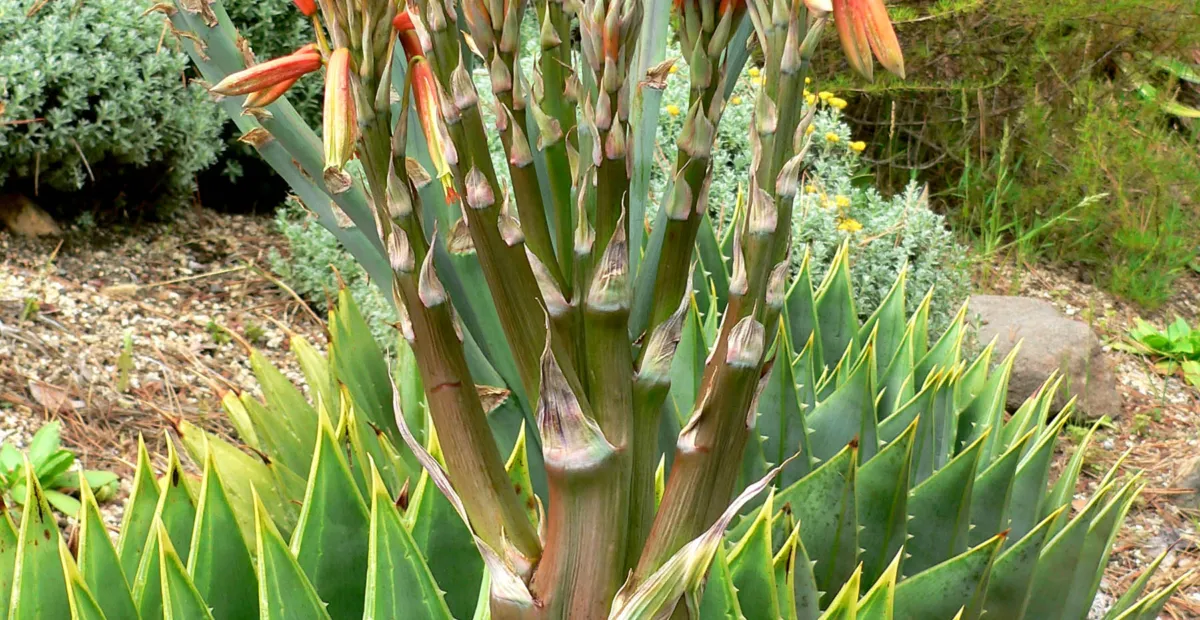
The plant is stemless, with thick, lance-shaped gray-green leaves arranged in a conspicuous geometric spiral. Marginal teeth are pale to whitish, while each leaf typically ends in a darker brown to purplish spine. The rosette may spiral in either direction, and the regular phyllotaxis is the principal identification feature.
Flowering
Mature plants may produce a branched, upright inflorescence above the rosette, but flowering is not dependable in cultivation. Tubular blooms are generally red to salmon-pink, sometimes with greenish-yellow tips; yellow forms or color variants are reported. Plants grown for foliage may remain nonflowering for years, particularly when stressed or kept too warm.
Pollination and visitors
No reliable species-specific pollinator record was located in the reviewed sources. Aloe flowers are commonly visited by animals, but a visitor group should not be assigned to Aloe polyphylla without direct documentation.
Aloe polyphylla photos
Click any photo for a larger view. Source, author and license are shown separately.
Diseases and pests
Diseases
The main risk is crown and root rot caused by wet media, poor drainage, or watering during cold conditions. Remove affected tissue, replace contaminated mix, improve airflow, and allow the root zone to dry more thoroughly. Avoid routine preventive fungicide use when cultural correction is sufficient.
Pests
Watch for mealybugs, scale, and root-feeding pests, especially in sheltered containers. Inspect leaf bases and roots regularly. Remove small infestations with a cotton swab or targeted horticultural treatment, isolate affected plants, and avoid excessive nitrogen that encourages soft growth.
Toxicity and pollen
Reliable species-specific human and pet toxicity data for Aloe polyphylla are limited. Because related Aloe species can contain irritating or laxative compounds, prevent chewing or ingestion and wear gloves when handling toothed leaves. Do not use this species medicinally or as food without authoritative identification and safety evidence.
- Pollination / pollen
- Flower pollen; dispersal relevance not established
Aloe polyphylla produces pollen when it flowers, but reliable data on airborne dispersal and allergy incidence for this exact species were not located. Its tubular flowers are likely to present less freely airborne pollen than wind-pollinated plants, but this is an inference rather than a documented safety finding.
Native habitat
Native to high-elevation mountain grasslands and rocky crevices of the Maluti Mountains in Lesotho, where plants experience cool summers, winter freezing and snow, frequent mist, intense light, and seasonal moisture. It is associated with thin, fast-draining rocky substrates rather than deep fertile soil.
Interesting fact
The leaves can spiral clockwise or counterclockwise.
Frequently asked questions (FAQ)
The most relevant questions about this plant, with short and direct answers.
🌱Quick care
What is Aloe polyphylla commonly called?⌄
Aloe polyphylla is commonly called spiral aloe because its gray-green leaves form a distinctive clockwise or counterclockwise spiral. No verified US-local common name is required here, so the scientific name remains the preferred title name.
Is Aloe polyphylla difficult to grow?⌄
Yes, Aloe polyphylla is considered one of the more difficult aloes to cultivate. It needs conditions that resemble its cool, high-elevation habitat: strong light, excellent drainage, airflow, and carefully timed moisture.
How much light does Aloe polyphylla need?⌄
Give Aloe polyphylla full sun when it is acclimated, ideally with strong morning or all-day light. In very hot US climates, some protection from intense afternoon heat can reduce leaf scorch while preserving compact growth.
How often should you water Aloe polyphylla?⌄
Water Aloe polyphylla thoroughly when its growing mix is nearly dry, then let excess water drain completely. It tolerates more summer moisture than many desert aloes, but constantly wet soil or poor drainage can quickly cause root rot.
What soil is best for Aloe polyphylla?⌄
Use a rocky, mineral-rich mix that drains extremely quickly, such as gritty succulent soil amended with pumice, perlite, or small gravel. The pot and growing medium should not retain water around the crown.
🌤️Environment and placement
Where does Aloe polyphylla grow naturally?⌄
Aloe polyphylla is endemic to the high Maluti Mountains of Lesotho, where it grows around 6,500 to 8,200 feet in elevation on rocky, steep slopes. Its native climate is cool, seasonally wet, misty, and exposed to freezing conditions and snow.
Can Aloe polyphylla grow outdoors in the United States?⌄
Aloe polyphylla can grow outdoors in a protected site where summers are relatively cool, drainage is exceptional, and winter conditions are not persistently wet. In much of the United States, container culture or a cool greenhouse is safer than year-round outdoor planting.
Is Aloe polyphylla cold hardy?⌄
Aloe polyphylla is more cold-tolerant than many commonly grown aloes because its native habitat experiences freezing temperatures and snow. However, cold combined with saturated soil is especially dangerous, so protect it from hard freezes, prolonged wetness, and sudden temperature changes.
Can Aloe polyphylla grow indoors?⌄
Aloe polyphylla can be grown indoors only in a very bright, cool, well-ventilated location. A sunny window or grow light may support survival, but weak light, stagnant air, and warm indoor conditions can cause poor form and watering problems.
Does Aloe polyphylla need humidity?⌄
Aloe polyphylla appreciates cool atmospheric moisture and airflow, reflecting its misty mountain habitat. Do not compensate for dry air by keeping the soil wet; drainage and root aeration are more important than high humidity.
💧Care and problems
Why is my Aloe polyphylla losing its spiral shape?⌄
Aloe polyphylla may lose a tight, symmetrical appearance when light is insufficient, growth is stressed, or the plant is still young. Increase light gradually and keep conditions stable, but do not expect every immature plant to display a perfect spiral immediately.
Why are Aloe polyphylla leaf tips turning brown or purple?⌄
Brown or purplish leaf tips can be a normal feature of Aloe polyphylla, especially as older tips age or the plant experiences bright light and cool conditions. Crispy spreading damage, soft tissue, or discoloration at the crown indicates a possible environmental or root problem.
What causes root rot in Aloe polyphylla?⌄
Root rot is usually caused by wet, poorly aerated soil, especially during cool or low-light periods. Repot into a dry, sharply drained mineral mix, remove damaged roots, and delay watering until the plant has recovered.
Should Aloe polyphylla be fertilized?⌄
Fertilize Aloe polyphylla sparingly during active growth with a diluted, balanced fertilizer. Avoid heavy feeding because excessive nutrients can produce weak growth and are unnecessary for this slow-growing, specialized mountain aloe.
How big does Aloe polyphylla get?⌄
A mature Aloe polyphylla forms a broad, stemless rosette that can reach roughly 1 to 2 feet across under good cultivation. Individual plants may remain solitary, while older specimens can sometimes form small clumps.
🪴Planting and repotting
What type of pot is best for Aloe polyphylla?⌄
Use a pot with a large drainage hole and enough depth for the root system, but avoid an oversized container that stays wet for too long. Unglazed clay can improve evaporation, particularly in humid or rainy US regions.
When should Aloe polyphylla be repotted?⌄
Repot Aloe polyphylla when the container is crowded, the mix has decomposed, or drainage has declined, preferably during active growth. Handle the roots gently and allow any damaged roots or wounds to dry before watering.
Can Aloe polyphylla be planted in the ground?⌄
Aloe polyphylla can be planted in the ground only where the site has exceptional drainage and a cool, suitable climate. A raised rock garden, slope, or mineral bed is safer than a flat area that collects rainwater.
✂️Propagation and pruning
How is Aloe polyphylla propagated?⌄
Aloe polyphylla is propagated mainly from seed because it rarely produces offsets. Seed-grown plants require patience and careful moisture management, while specialized tissue-culture methods are used by some conservation and horticultural programs.
Does Aloe polyphylla produce pups or offsets?⌄
Aloe polyphylla usually does not produce pups readily, unlike many common aloe species. Occasional clumping or vegetative propagation may occur, but offsets should not be expected as the normal propagation method.
Can Aloe polyphylla be grown from seed?⌄
Yes, Aloe polyphylla can be grown from seed, although seed availability and viability may be inconsistent. Use fresh, legally obtained seed in a sterile, sharply drained medium and keep it lightly and evenly moist during germination without waterlogging it.
Should Aloe polyphylla be pruned?⌄
Aloe polyphylla generally needs little pruning beyond removing dead or damaged outer leaves. Use clean tools, avoid cutting into the central crown, and do not remove healthy leaves merely to make the spiral more visible.
⚠️Toxicity and safety
Is Aloe polyphylla toxic to dogs or cats?⌄
Species-specific toxicity information for Aloe polyphylla is not well established, so treat it as potentially unsafe for pets and children. Keep the plant away from chewing animals, and contact a veterinarian or poison-control service if ingestion occurs.
Is Aloe polyphylla safe to use like Aloe vera?⌄
No, Aloe polyphylla should not be harvested or used medicinally as a substitute for Aloe vera. Its species-specific medicinal safety has not been established, and rare plants should be purchased only from reputable cultivated sources.
Can Aloe polyphylla be collected from the wild?⌄
No, Aloe polyphylla should never be collected from the wild. It is an endangered species endemic to Lesotho, and plants or seed should be obtained only through lawful, cultivated, traceable sources.
🌸Flowering and special interest
When does Aloe polyphylla bloom?⌄
Aloe polyphylla usually blooms in spring or early summer, producing branched flower stalks with compact clusters of salmon-pink to reddish flowers. Flowering is less reliable in cultivation than foliage growth and may require a mature, healthy plant.
What color are Aloe polyphylla flowers?⌄
Aloe polyphylla flowers are typically salmon-pink, pink, or dull red, with occasional yellow flowers reported. The plant is primarily grown for its spiraling foliage rather than dependable flowering.
Why is my Aloe polyphylla not flowering?⌄
Aloe polyphylla may fail to flower if it is immature, stressed, grown in weak light, or kept in conditions that are too warm and stagnant. Provide strong light, excellent drainage, seasonal growth conditions, and patience rather than forcing it with heavy fertilizer.
Similar plants
 Soap aloe (Aloe maculata) care guideAloe maculata
 He tree aloe (Aloidendron barberae) care guideAloidendron barberae
 Coral Aloe (Aloe striata) care guideAloe striata
 Aloe brevifolia care guideAloe brevifolia
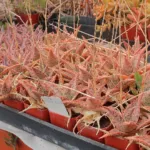 Aloe ‘Pink Blush’Aloe 'Pink Blush'
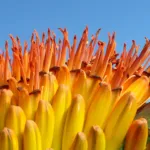 He mountain aloe or the flat-flowered aloe) is a large (Aloe marlothii) care guideAloe marlothii