
 Source:
 Thompson’s Redveined Flowering Maple (Abutilon pictum ‘Thompsonii’) short overview
Abutilon pictum 'Thompsonii' is a tender flowering maple grown for the unusual contrast between its yellow-mottled, maple-like leaves and its pendent orange to salmon-pink bell-shaped flowers. This upright evergreen shrub performs best in bright light, sheltered from harsh wind, with evenly moist but well-drained soil. In most U.S. gardens it belongs in a container, greenhouse, or protected summer display, then should be overwintered indoors before freezing weather.
Taxonomic classification
Thompson’s Redveined Flowering Maple (Abutilon pictum ‘Thompsonii’) care guide
Light and placement
Provide full sun to bright filtered light, ideally with morning or gentle afternoon sun and protection from harsh wind. A south- or east-facing window, bright conservatory, or sheltered patio is suitable. Too little light produces weak, stretched growth and fewer flowers; harsh reflected heat or sudden intense sun can scorch leaves, especially after indoor wintering.
Watering and humidity
Water thoroughly when the surface of the mix begins to dry, then allow excess water to drain fully. Keep the root zone evenly moist during active growth, reducing frequency in winter while avoiding complete, prolonged drought. Humidity is helpful indoors, but good airflow matters more than constantly wet foliage or saturated soil.
Soil and growing medium
Use a fertile, porous, well-drained mix with good moisture retention but no standing water. A loam-based container medium amended with compost or fine bark works well. The plant tolerates acidic, neutral, and mildly alkaline conditions, provided drainage remains reliable; avoid dense, waterlogged clay.
Feeding
Feed during active spring and summer growth with a balanced, water-soluble fertilizer at half strength every 2–4 weeks, or use a controlled-release product according to its label. Reduce or stop feeding in late fall and winter when growth and light levels decline. Do not fertilize severely wilted, freshly repotted, or dormant plants.
Growth and habit
A fast-growing, upright woody plant with a naturally bushy habit. It can become leggy in insufficient light, especially indoors, and responds well to selective pruning after flowering or in early spring. Container culture makes height, winter protection, and root-zone moisture easier to manage.
Planting and repotting
Set outdoors after the danger of frost has passed and nighttime temperatures are reliably mild. Plant at the same depth as the root ball, firm the soil gently, water thoroughly, and maintain even moisture during establishment. Space roughly 18–36 inches apart for seasonal bedding, depending on the desired fullness.
Repot container plants in spring when roots have filled the pot, moving up only one pot size. Refresh part of the mix annually for large specimens that are difficult to shift. Ensure the container has generous drainage holes and do not bury the stem crown.
Propagation and pruning
Propagation
Take softwood cuttings in spring or semi-ripe cuttings in summer. Use clean material, remove lower leaves, and root in a sterile, free-draining medium under bright indirect light and high humidity. Seed propagation is possible but may not preserve the cultivar's distinctive foliage pattern.
Pruning
Prune in late winter or early spring, or trim lightly after a flowering flush, to maintain a compact framework and encourage branching. Remove weak, damaged, or crossing shoots first. Avoid severe pruning during cold, low-light periods, when recovery indoors may be slow.
Overwintering
Move containers indoors before frost or when nights approach 45°F. Place in the brightest available window, water less often, and maintain good airflow. Growth may slow substantially in winter. Check regularly for spider mites, whiteflies, scale, and mealybugs before returning the plant outdoors in spring.
Uses
Use as a flowering container specimen, conservatory plant, sheltered patio accent, seasonal bedding plant, or warm-climate shrub. Its mottled foliage provides ornamental interest even between flowering flushes. In regions where it can escape cultivation, monitor outdoor plantings and avoid allowing unwanted spread.
Appearance
The plant has smooth, maple-like palmate leaves with three to nine toothed lobes and a distinctive yellow-green mottled pattern. Flowers hang singly from leaf axils and branch tips on slender stalks. The upright woody framework can resemble a small tree when trained to one main stem, or remain bushier when pinched.
Flowering
Solitary, pendent flowers arise from the leaf axils and branch tips. The five-part, bell-shaped corollas hang on long stalks and show orange to salmon-pink coloring with darker veining. Blooming is most reliable from spring through fall when plants receive strong light, warmth, regular water, and periodic feeding.
Pollination and visitors
The pendent, nectar-bearing flowers are documented as attractive to hummingbirds and butterflies, with broader flowering-maple references also noting insect visitors. Specific pollinator species for this cultivar were not established. Flower visitors may be most frequent in warm, bright conditions when blooms are abundant.
Abutilon pictum 'Thompsonii' photos
Click any photo for a larger view. Source, author and license are shown separately.
Diseases and pests
Diseases
Watch for virus symptoms beyond the characteristic cultivar mottling, root problems in persistently wet soil, and occasional honey fungus in susceptible outdoor settings. Reduce disease pressure with clean tools, good air circulation, sterile propagation material, and careful watering. Remove severely declining plants rather than composting diseased tissue.
Pests
Inspect leaf undersides and new growth for whiteflies, spider mites, mealybugs, scale, and aphids. Isolate infested container plants, rinse foliage when appropriate, and improve airflow. Use insecticidal soap or horticultural oil according to the product label, avoiding treatment during high heat or when pollinators are actively visiting flowers.
Related diseases and pests
Only Plant Doctor profiles whose host data indicate this plant may be affected are shown here.
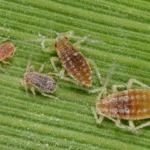 PestMealy Plum AphidHyalopterus pruni (Geoffroy, 1762)
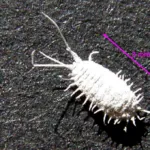 PestObscure mealybugPseudococcus viburni
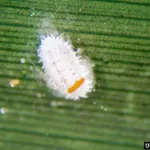 PestCitrus mealybugPlanococcus citri
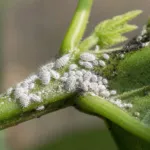 PestCotton mealybugPhenacoccus solenopsis Tinsley
 DiseasePear Decline‘Candidatus Phytoplasma pyri’
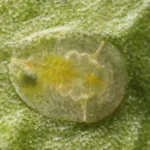 PestCitrus whiteflyDialeurodes citri
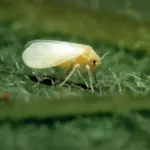 PestSweetpotato whiteflyBemisia tabaci species complex
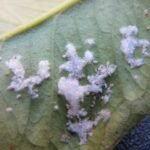 PestWoolly whiteflyAleurothrixus floccosus
Toxicity and pollen
No authoritative, cultivar-specific toxicology record was located for Abutilon pictum 'Thompsonii'. Major companion-animal poison lists do not identify it as a commonly reported toxic plant, but absence from a database is not proof of complete safety. Prevent children and pets from chewing ornamental plant material, and seek professional advice after significant ingestion.
- Typical season
- Spring through fall where grown outdoors
- Pollination / pollen
- Heavy, animal-transferred pollen
This is an insect-pollinated flowering shrub rather than a wind-pollinated plant, so its pollen is not typically released in large airborne clouds. Direct allergy data for this exact cultivar were not located; people with strong pollen sensitivity should still avoid rubbing flowering parts and should monitor personal reactions.
Native habitat
The species complex is associated with warm South American environments, particularly Brazil and neighboring regions, and is cultivated widely in tropical, subtropical, and protected temperate settings. It prefers bright conditions, fertile soils, regular moisture, and shelter from freezing temperatures and drying winds.
Interesting fact
The cultivar's yellow-green leaf pattern is associated with Abutilon mosaic virus.
Frequently asked questions (FAQ)
The most relevant questions about this plant, with short and direct answers.
🌱Quick care
What is Abutilon pictum 'Thompsonii' commonly called?⌄
Abutilon pictum 'Thompsonii' is commonly called Thompson's Redveined Flowering Maple. It is an evergreen, frost-tender ornamental shrub grown for its yellow-mottled maple-like leaves and hanging salmon-pink to orange flowers.
How much light does Abutilon pictum 'Thompsonii' need?⌄
Give Abutilon pictum 'Thompsonii' full sun to bright filtered light. In very hot climates, protect it from intense afternoon sun if the leaves scorch or the plant wilts.
How often should I water Abutilon pictum 'Thompsonii'?⌄
Water Abutilon pictum 'Thompsonii' when the surface of the soil begins to dry, keeping the root zone moderately and evenly moist. Avoid both prolonged drought and waterlogged soil.
Is Abutilon pictum 'Thompsonii' frost hardy?⌄
No, Abutilon pictum 'Thompsonii' is frost tender and should be protected from freezing temperatures. In colder parts of the United States, grow it in a container so it can be moved indoors or into a protected structure.
🌤️Environment and placement
Can Abutilon pictum 'Thompsonii' grow outdoors in the United States?⌄
Abutilon pictum 'Thompsonii' can grow outdoors year-round only in mild, frost-free or nearly frost-free areas. Elsewhere, treat it as a seasonal patio plant or overwinter it indoors in bright light.
Can Abutilon pictum 'Thompsonii' grow in a container?⌄
Yes, Abutilon pictum 'Thompsonii' performs well in containers. Use a pot with drainage holes and a fertile, well-drained loam-based mix, and expect to repot when roots fill the container.
Can Abutilon pictum 'Thompsonii' grow indoors?⌄
Yes, Abutilon pictum 'Thompsonii' can be overwintered indoors near a bright window or under strong grow lights. Keep it away from cold drafts and reduce watering during the darker winter period without letting the root ball become completely dry.
Does Abutilon pictum 'Thompsonii' prefer full sun or shade?⌄
It prefers full sun to bright filtered light, although light afternoon shade can be useful in hot U.S. climates. Too little light may produce lanky growth and fewer flowers.
What USDA zones can grow Abutilon pictum 'Thompsonii'?⌄
Abutilon pictum 'Thompsonii' is generally best suited to warm USDA Zones 8 through 10, with some protected Zone 8 locations possible. Zone performance varies with winter exposure, wind, soil moisture, and the duration of freezing weather.
What soil is best for Abutilon pictum 'Thompsonii'?⌄
Use fertile, well-drained loam or a loam-based container mix for Abutilon pictum 'Thompsonii'. The soil should retain moderate moisture while allowing excess water to drain freely from the roots.
💧Care and problems
Why are the leaves of my Abutilon pictum 'Thompsonii' turning brown?⌄
Brown leaves usually indicate drought stress, excessive sun or heat, cold injury, or root problems caused by poor drainage. Check soil moisture, protect the plant from freezing and harsh reflected heat, and remove badly damaged foliage.
Why is my Abutilon pictum 'Thompsonii' dropping leaves?⌄
Leaf drop can follow underwatering, sudden temperature changes, inadequate winter light, cold exposure, or overwatering. Check the roots and soil before watering again, and keep overwintered plants in stable, bright conditions.
Why is Abutilon pictum 'Thompsonii' not blooming?⌄
Common causes of poor flowering are insufficient light, excessive nitrogen, drought stress, or hard pruning at the wrong time. Give the plant bright light, even moisture, and balanced feeding during active growth.
What pests attack Abutilon pictum 'Thompsonii'?⌄
Abutilon pictum 'Thompsonii' may attract whiteflies, spider mites, mealybugs, and scale insects, especially indoors or in a greenhouse. Inspect leaf undersides and stems regularly, isolate infested plants, and treat promptly with an appropriate labeled control.
How should I fertilize Abutilon pictum 'Thompsonii'?⌄
Feed Abutilon pictum 'Thompsonii' with a balanced fertilizer during active spring and summer growth. Follow the product label, and reduce or stop feeding during cool, low-light winter conditions.
Does Abutilon pictum 'Thompsonii' need protection from wind?⌄
Yes, shelter Abutilon pictum 'Thompsonii' from strong wind because its branches can be brittle and its foliage dries quickly. A protected wall, patio, greenhouse, or screened location is preferable.
🪴Planting and repotting
When should I plant Abutilon pictum 'Thompsonii' outdoors?⌄
Plant Abutilon pictum 'Thompsonii' outdoors after the danger of frost has passed and nighttime temperatures are reliably mild. In cold regions, wait until the plant has acclimated to outdoor light and temperatures.
How do I repot Abutilon pictum 'Thompsonii'?⌄
Repot it in spring when roots circle the container or water runs rapidly through the pot. Move it into a container only modestly larger than the current one, using fresh fertile mix and excellent drainage.
Can Abutilon pictum 'Thompsonii' be planted in the ground?⌄
Yes, it can be planted in the ground in warm, protected climates where freezing is uncommon. Choose a sunny or brightly filtered site with fertile, well-drained soil and reliable summer moisture.
✂️Propagation and pruning
How do you propagate Abutilon pictum 'Thompsonii'?⌄
Propagate Abutilon pictum 'Thompsonii' most reliably from softwood cuttings in spring or semi-ripe cuttings in summer. Use clean tools, a free-draining propagation medium, bright indirect light, and consistently moderate moisture.
When should I prune Abutilon pictum 'Thompsonii'?⌄
Prune Abutilon pictum 'Thompsonii' in late winter or early spring, or lightly after a flowering flush, to shape the plant and control size. Avoid severe pruning immediately before its main blooming period.
How do I make Abutilon pictum 'Thompsonii' bushier?⌄
Pinch or lightly trim the growing tips of Abutilon pictum 'Thompsonii' to encourage branching. Make cuts just above a leaf node and avoid removing too much foliage at once.
⚠️Toxicity and safety
Is Abutilon pictum 'Thompsonii' toxic to dogs or cats?⌄
No confirmed toxicity classification was located specifically for Abutilon pictum 'Thompsonii'. Because plant identification and animal sensitivity can vary, prevent pets from chewing it and contact a veterinarian or poison service if ingestion causes symptoms.
🌸Flowering and special interest
When does Abutilon pictum 'Thompsonii' bloom?⌄
Abutilon pictum 'Thompsonii' commonly blooms from spring through fall, and it may flower longer in warm, frost-free climates. Blooming slows when light, temperatures, or moisture are inadequate.
What do Abutilon pictum 'Thompsonii' flowers look like?⌄
The flowers are pendent, bell-shaped blooms in salmon-pink, orange, and red-veined tones. They hang from the branches and create a lantern-like display against the plant's mottled green-and-yellow foliage.
Does Abutilon pictum 'Thompsonii' attract hummingbirds?⌄
Yes, the hanging tubular flowers of Abutilon pictum 'Thompsonii' can attract hummingbirds and other pollinators. Flowering is usually strongest when the plant receives bright light and consistent moisture.
Is Abutilon pictum 'Thompsonii' evergreen?⌄
Yes, Abutilon pictum 'Thompsonii' is generally evergreen in warm, frost-free conditions. It may shed leaves after cold damage, drought, or indoor winter stress.
Similar plants
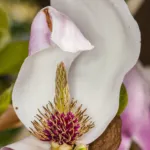 Saucer Magnolia (Magnolia soulangeana) care guideMagnolia soulangeana
 Magnolia × loebneri ‘Merrill’Magnolia × loebneri 'Merrill'
 Magnolia loebneri care guideMagnolia loebneri
 Sweetbay magnolia (Magnolia virginiana) care guideMagnolia virginiana
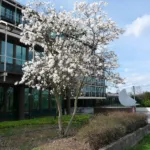 Star magnolia (Magnolia stellata) care guideMagnolia stellata
 Magnolia sprengeri care guideMagnolia sprengeri