
 Source:
 Pilosocereus pachycladus short overview
Pilosocereus pachycladus is an accepted Brazilian cactus valued for its upright, blue-green stems, waxy surface, ribbed architecture, and conspicuous areoles. In the United States it is best treated as a frost-tender container or greenhouse plant, with strong light, very sharp drainage, restrained winter watering, and protection from temperatures near freezing. Its mature size and spines suit spacious, carefully positioned displays rather than cramped indoor shelves.
Taxonomic classification
Pilosocereus pachycladus care guide
Light and placement
Give the strongest practical light: a south- or west-facing window, greenhouse, or sheltered full-sun patio. Acclimate gradually when moving from filtered light to direct sun, especially after shipping or winter indoors. Pale, stretched growth indicates insufficient light; bleached patches or corking after a sudden exposure indicate sun stress. Rotate containers periodically for even growth.
Watering and humidity
Water deeply, then allow the mix to dry substantially before watering again. During warm, bright growth, check the pot regularly but do not keep the roots continuously damp. In fall and winter, water sparingly and only when the plant is dry, particularly if temperatures are below about 60°F. Never leave the container standing in water.
Soil and growing medium
Use a porous cactus substrate dominated by mineral grit, coarse sand, pumice, perlite, or other drainage-promoting material. Avoid dense organic potting soil, which can remain wet around the roots. A slightly acidic to neutral reaction is suitable; exact species-specific pH limits are not well documented.
Feeding
Feed only during active spring and summer growth, using a cactus fertilizer at reduced strength. Avoid high-nitrogen products, which can promote weak, overly soft growth. Do not fertilize newly rooted cuttings, freshly repotted plants, visibly stressed plants, or plants kept cool and nearly dry in winter.
Growth and habit
A vigorous, upright cactus that can become branched and tree-like with age. Warmth, intense light, and a long growing season encourage stronger extension growth, while cool, dim conditions produce weaker stems and increase rot risk. Mature plants need stable support and enough floor space for their columnar habit.
Planting and repotting
Plant outdoors only after the danger of frost has passed and nighttime temperatures remain reliably warm. Set the root crown at the original soil level; do not bury the stem. Allow generous clearance from paths and windows, and establish gradually in direct sun to reduce scorch.
Repot in spring or early summer, using a pot with a drainage hole and only one size larger than the root ball. Let any disturbed roots dry briefly before watering. Handle with thick gloves or folded cardboard because the areoles and spines can cause punctures.
Propagation and pruning
Propagation
Propagate from seed or stem cuttings. Sow seed in spring or during warm, bright conditions using a sterile, gritty medium and careful moisture control. For cuttings, allow the cut surface to callus fully before placing it in barely moist, sharply draining substrate.
Pruning
Routine pruning is generally unnecessary. Remove damaged, diseased, or badly positioned branches with a clean, dry tool during warm active growth. Allow cuts to dry and callus before exposure to water. Wear protective gloves and keep removed pieces away from pets and children.
Overwintering
Move the plant indoors or into a heated greenhouse before temperatures approach freezing. Keep it very bright, dry, and well ventilated, with minimal watering. Avoid placing it directly beside a cold window or heater. Inspect for pests before bringing it indoors and acclimate gradually when returning it outside in spring.
Uses
Primarily an architectural ornamental for cactus collections, conservatories, greenhouses, xeric displays, and large containers. Its upright form and blue-green stems provide strong structural contrast. It is not presented here as an edible or medicinal plant, and spines require careful placement.
Appearance
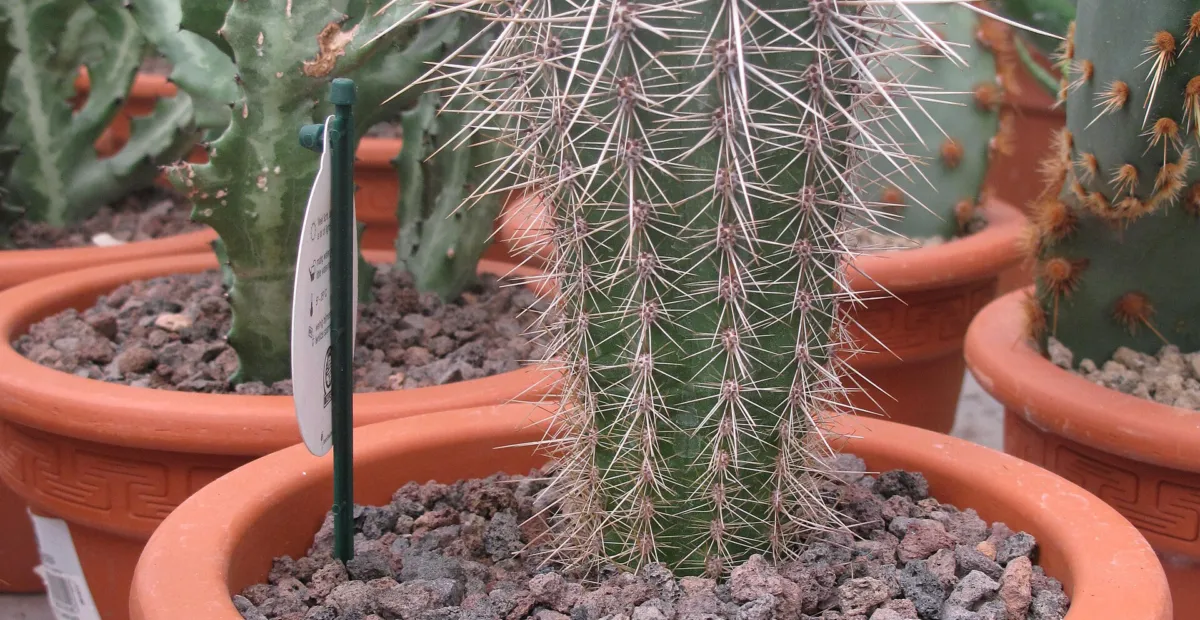
The plant forms upright, ribbed, blue-green to gray-green cylindrical stems with a powdery or waxy surface. Areoles carry spines and may develop contrasting hair or wool, especially on mature growth. The combination of glaucous stems, columnar architecture, ribs, and persistent areoles is useful for identification within cultivated Pilosocereus.
Flowering
This is a true flowering cactus. Mature plants can produce funnel-shaped flowers, generally associated with the upper or older portions of the stems. Exact flowering timing and floral measurements for this species are not consistently reported across accessible sources, so a precise U.S. month range is left unspecified.
Pollination and visitors
Species-specific pollinator studies were not located. The nocturnal floral presentation typical of many columnar cacti supports moth as a cautious visitor-group entry, but attraction should be treated as uncertain for this exact species.
Pilosocereus pachycladus photos
Click any photo for a larger view. Source, author and license are shown separately.
Diseases and pests
Diseases
The main preventable problem is root or stem rot caused by excessive moisture, poor drainage, or watering during cool conditions. Use a porous mix, a ventilated placement, and a dry rest during winter. Remove diseased tissue only with sterile tools and correct the cultural cause before rewatering.
Pests
Mealybugs may hide in areoles or at the stem base. Inspect regularly, isolate affected plants, and remove small infestations with a careful targeted treatment. Ant activity outdoors can accompany sap-feeding pests. Avoid repeatedly wetting the stem or using harsh treatments in intense sun.
Related diseases and pests
Only Plant Doctor profiles whose host data indicate this plant may be affected are shown here.
Toxicity and pollen
No authoritative species-specific toxicology evidence was located. The principal documented practical hazard is mechanical injury from spines rather than established poisoning. Keep the plant away from children and pets, prevent chewing, and seek medical advice for puncture wounds or ingestion symptoms.
- Typical season
- No reliable U.S. exposure season documented
- Pollination / pollen
- Flower pollen; airborne-allergy relevance undocumented
This cactus produces pollen when it flowers, but the amount of airborne pollen and its importance in U.S. allergy exposure are not well documented. Do not equate insect pollination with zero allergy risk; people with known pollen sensitivity should avoid handling open flowers closely.
Native habitat
Native to northeastern and southeastern Brazil, where it occurs in seasonally dry tropical environments. The species is associated with warm climates that alternate between wet growth periods and drier intervals, making rapid drainage and a pronounced winter reduction in watering important in cultivation.
Interesting fact
Kew accepts the species name Pilosocereus pachycladus.
Frequently asked questions (FAQ)
The most relevant questions about this plant, with short and direct answers.
🌱Quick care
How do you care for Pilosocereus pachycladus indoors?⌄
Give Pilosocereus pachycladus the brightest light available, use gritty cactus soil, and water thoroughly only after the mix dries completely. Keep it warm, provide good airflow, and reduce watering sharply during cool, low-light winters.
How much light does Pilosocereus pachycladus need?⌄
Pilosocereus pachycladus prefers full sun or several hours of direct sunlight daily. Bright filtered light can work indoors, but insufficient light may cause thin growth and a less blue appearance.
How often should I water Pilosocereus pachycladus?⌄
Water Pilosocereus pachycladus deeply when its soil is completely dry, then let excess water drain away. The interval may range from about 1–3 weeks during active growth and much longer in winter, depending on light, heat, pot size, and humidity.
Is Pilosocereus pachycladus easy to grow?⌄
Pilosocereus pachycladus is relatively easy to grow when given strong light, fast-draining soil, and careful watering. The main risk is root or stem rot from staying wet.
🌤️Environment and placement
Can Pilosocereus pachycladus grow outdoors in the United States?⌄
Pilosocereus pachycladus can grow outdoors year-round only in warm, frost-free parts of the United States. In colder areas, grow it in a container and move it indoors before freezing weather.
What USDA hardiness zone is suitable for Pilosocereus pachycladus?⌄
Pilosocereus pachycladus is best treated as a frost-tender cactus, generally suitable for outdoor culture only in warm USDA zones with reliable protection from freezing. Zone suitability also depends on winter moisture, shelter, and local microclimate.
What temperature is too cold for Pilosocereus pachycladus?⌄
Freezing temperatures are unsafe for Pilosocereus pachycladus, especially when the plant is wet. Keep it warm and dry in winter; brief exposure to temperatures near 40°F may be tolerated by a completely dry plant, but it should not be relied upon.
Can Pilosocereus pachycladus grow in low light?⌄
Pilosocereus pachycladus may survive in bright filtered light, but it does not perform well in a dim room. Use a strong grow light or a sunny window to reduce stretching and preserve its blue coloration.
Why is my Pilosocereus pachycladus turning green?⌄
Pilosocereus pachycladus may look greener when it receives less intense light because its blue surface coating is less pronounced. Gradually increase exposure to direct sun, avoiding an abrupt change that could cause sunburn.
Can Pilosocereus pachycladus tolerate humidity?⌄
Pilosocereus pachycladus can tolerate ordinary household humidity if its soil drains quickly and the plant has good airflow. High humidity combined with wet soil or poor ventilation substantially increases rot risk.
💧Care and problems
What soil is best for Pilosocereus pachycladus?⌄
Use a gritty, sharply drained cactus mix containing a substantial mineral component such as pumice, perlite, or coarse grit. The soil should drain rapidly and dry fully between waterings rather than remain moisture-retentive.
Why is my Pilosocereus pachycladus turning soft or brown?⌄
Soft, dark, or rapidly browning tissue usually indicates overwatering, poor drainage, or rot rather than normal aging. Remove the plant from wet soil, inspect the roots and stem, and keep healthy tissue dry while correcting the growing conditions.
How do I know when Pilosocereus pachycladus needs water?⌄
Check that the potting mix is dry throughout the container before watering Pilosocereus pachycladus. A dry surface alone is not always enough, particularly in a large pot or dense soil.
Should I fertilize Pilosocereus pachycladus?⌄
Fertilize Pilosocereus pachycladus sparingly during spring and summer with a diluted, balanced cactus fertilizer. Do not fertilize a dormant, cold, recently repotted, or stressed plant.
What pests affect Pilosocereus pachycladus?⌄
Mealybugs and scale are the most relevant pests to watch for on Pilosocereus pachycladus, with mites also possible in hot, dry conditions. Inspect areoles and crevices regularly and isolate affected plants promptly.
Does Pilosocereus pachycladus need winter dormancy?⌄
A cool, bright, dry winter rest is beneficial for Pilosocereus pachycladus, particularly for mature plants that may flower. Reduce or withhold water as growth slows, but do not expose the plant to freezing temperatures.
🪴Planting and repotting
What type of pot is best for Pilosocereus pachycladus?⌄
Choose a pot with a drainage hole that is only slightly larger than the root system. Unglazed terracotta can help the mix dry faster, but any well-drained container is suitable if watering is adjusted accordingly.
When should I repot Pilosocereus pachycladus?⌄
Repot Pilosocereus pachycladus in spring or early summer when it is actively growing, or when roots fill the container or the soil has degraded. Allow damaged roots to dry before replanting and delay watering briefly after repotting.
How often should I repot Pilosocereus pachycladus?⌄
Repot Pilosocereus pachycladus when it becomes root-bound or the mix no longer drains well, often every 2–3 years for container plants. Large established specimens may need repotting less frequently.
✂️Propagation and pruning
How do you propagate Pilosocereus pachycladus?⌄
Pilosocereus pachycladus can be propagated from seeds or stem cuttings. Cuttings are usually faster, while seeds are useful for producing new plants but require more time and consistent warmth.
How do I root a Pilosocereus pachycladus cutting?⌄
Let a healthy Pilosocereus pachycladus cutting callus in a dry, shaded place for several days or longer depending on its size, then place it in barely moist, gritty soil. Keep it warm and bright, and begin normal watering only after roots have formed.
Can I remove offsets from Pilosocereus pachycladus?⌄
Remove a Pilosocereus pachycladus offset only after it is large enough to handle and has a firm attachment point. Let the cut surface callus before planting, and do not keep the unrooted offset constantly wet.
Does Pilosocereus pachycladus need pruning?⌄
Pilosocereus pachycladus generally does not need routine pruning. Remove only damaged, diseased, or unwanted stems with a clean tool, allowing cut surfaces to dry before rewatering.
⚠️Toxicity and safety
Is Pilosocereus pachycladus toxic to cats or dogs?⌄
There is no confirmed species-specific toxicity classification for Pilosocereus pachycladus, so its ingestion safety is uncertain. Keep it away from pets because the spines can cause painful injuries and swallowed plant material may still cause irritation or stomach upset.
Are Pilosocereus pachycladus spines dangerous?⌄
The spines of Pilosocereus pachycladus are a genuine mechanical hazard and can puncture skin or injure eyes. Wear thick gloves, use tongs when necessary, and place the plant away from children, pets, and high-traffic areas.
How should I handle Pilosocereus pachycladus safely?⌄
Handle Pilosocereus pachycladus with thick gloves, folded cardboard, or cactus tongs rather than bare hands. If a spine penetrates the skin or eye, remove it carefully when possible and seek medical attention for persistent pain, swelling, or eye injury.
🌸Flowering and special interest
Does Pilosocereus pachycladus flower?⌄
Yes, mature Pilosocereus pachycladus can produce white, typically nocturnal flowers from specialized woolly or bristly flowering areas near the upper stem. Young indoor plants may not flower for many years.
How can I get Pilosocereus pachycladus to flower?⌄
Provide strong summer light, active-season growth, excellent drainage, and a cooler, much drier winter rest to encourage flowering. Flowering also depends on maturity, plant size, genetics, and whether the plant receives enough light indoors.
Why is my Pilosocereus pachycladus not flowering?⌄
The most common reasons are insufficient maturity, inadequate direct light, excessive winter watering, or a lack of seasonal rest. Improve light and winter conditions, but recognize that a young specimen may simply be too immature to bloom.
Similar plants
 Azure Monkshood (Aconitum carmichaelii) care guideAconitum carmichaelii
 Monkshood (Aconitum ‘Stainless Steel’)Aconitum 'Stainless Steel'
 Monkshood (Aconitum ‘Bressingham Spire’)Aconitum 'Bressingham Spire'
 Golden full moon maple (Acer shirasawanum ‘Aureum’)Acer shirasawanum 'Aureum'
 Globosum (Acer platanoides ‘Globosum’)Acer platanoides 'Globosum'
 Striped maple (Acer pensylvanicum) care guideAcer pensylvanicum