
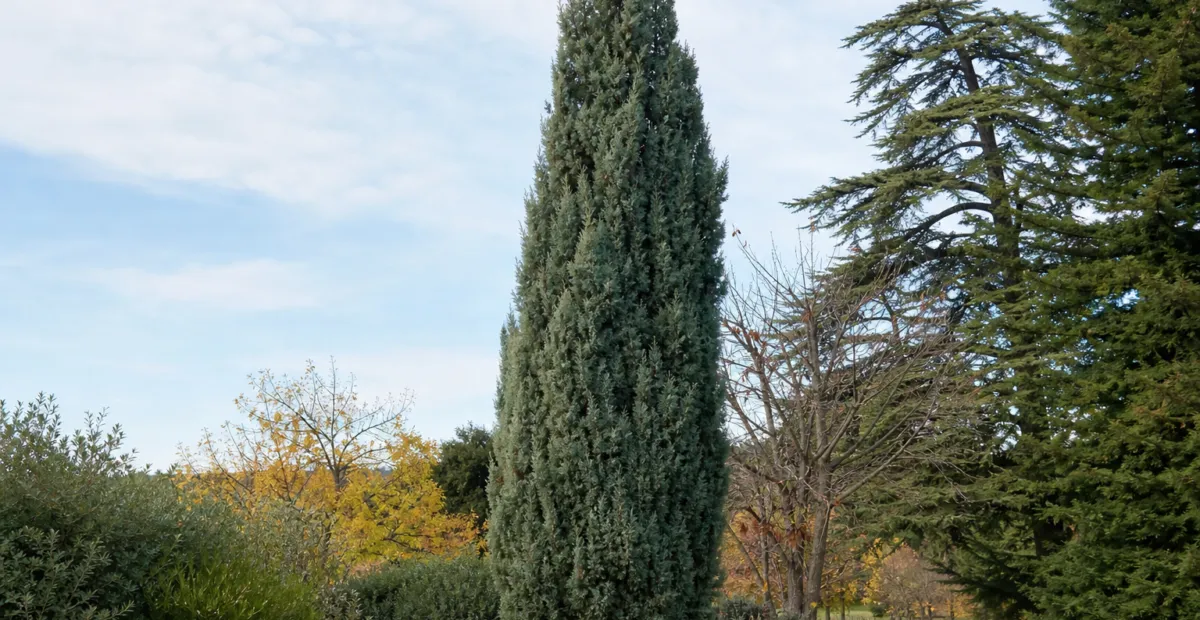
 AI-generated illustration
Hesperotropsis leylandii short overview
Hesperotropsis leylandii is a cultivated hybrid conifer in the cypress family, valued in the United States for rapid growth, dense evergreen foliage and dependable screening. It develops a narrow pyramidal to columnar outline and can become a very large tree if left untrimmed. Full sun, good drainage and adequate moisture support the best growth, while regular early pruning is essential for hedges because old brown wood may not regrow. It is not native to North America.
Taxonomic classification
Hesperotropsis leylandii care guide
Light and placement
Choose an open position with full sun for dense branching and balanced growth; light partial shade is tolerated, but shade reduces density and can encourage lower-branch loss. In the Northern Hemisphere, an unobstructed south- or west-facing exposure usually gives the strongest growth. Sparse, stretched foliage suggests inadequate light, while winter browning or scorch can indicate drought, exposed wind or root stress rather than excessive light alone.
Watering and humidity
Water deeply and slowly when the upper several inches of soil begin to dry, concentrating moisture over the developing root zone rather than sprinkling the foliage. Water regularly during the first two growing seasons and during drought, then reduce frequency after establishment while preventing prolonged root-zone dryness. Good drainage is important because repeated saturation increases disease risk. Humidity is generally not a limiting factor outdoors.
Soil and growing medium
Use a well-drained loam, sandy loam or clay soil; the hybrid tolerates a broad pH range, approximately 5.5–8.0. Avoid sites that remain waterlogged, especially during establishment. Improve compacted ground before planting rather than relying on frequent surface amendments. Mulch over the root zone, but keep mulch away from the trunk.
Feeding
Begin with a soil test rather than routine heavy fertilization. If nutrients are deficient, apply a complete slow-release fertilizer in early spring at the label rate, keeping granules off the trunk and watering afterward. Avoid late-season high-nitrogen feeding, which can stimulate tender growth and increase water demand. Established trees on reasonably fertile soil often need little supplemental fertilizer.
Growth and habit
Young plants can grow very rapidly, often several feet annually on suitable sites. Left untrimmed, the hybrid develops a dense, narrow pyramidal or columnar crown and can quickly exceed residential scale. Its strong apical growth is useful for screening, but hedge plants need planned height control from an early age because cuts into old brown wood may leave permanent bare patches.
Planting and repotting
Plant container-grown stock in spring after severe freezes or in early fall where establishment weather remains mild. Set the root flare level with or slightly above surrounding soil, water deeply, and maintain a weed-free mulch ring. For screens, spacing depends on the desired density; allow roughly 10–15 feet between trees for healthier long-term air circulation.
Not generally suitable for long-term container culture because of its eventual size. If temporarily grown in a container, shift it before roots circle densely and plant out while the root ball remains intact.
Propagation and pruning
Propagation
Propagate commercially and horticulturally from semi-hardwood or firm side-shoot cuttings, usually taken during the active growing season and rooted under humid conditions. Seed is not the usual method for maintaining named selections and may not reproduce the parent plant consistently.
Pruning
Begin formative pruning while the plant is young. For hedges, trim lightly two or three times during the growing season, keeping cuts within green shoots because old brown wood may not resprout. Do not routinely top mature trees; plan the final height and width before planting. Remove dead, diseased or crossing branches with clean tools.
Overwintering
Plants in Zone 6 should be placed in sheltered sites and watered before the ground freezes. Protect young trees from drying winter winds with a temporary windbreak, not airtight wrapping. Avoid late-summer nitrogen that can delay hardening. In marginal climates, cultivar choice and local exposure matter; exceptional cold can injure trees even where the published zone range includes Zone 6.
Uses
Primarily used for tall privacy screens, hedges, windbreaks, specimen planting and, in some regions, Christmas-tree production. Its rapid growth makes it useful for establishing a screen, but the mature size and disease risk make it unsuitable for many small lots. It can provide dense evergreen cover for birds, although it is not grown for edible or medicinal use.
Appearance
The hybrid has evergreen, scale-like leaves arranged in dense, flattened sprays on slender branchlets. Foliage ranges from medium green to blue-green, and young shoots are often brighter green. Branches may be slightly pendulous, while the overall crown is typically symmetrical, pyramidal or columnar. Small rounded brown cones are inconspicuous, and mature bark becomes fibrous and brown-gray.
Pollination and visitors
As a wind-pollinated conifer, this hybrid is not primarily dependent on animal pollinators and its inconspicuous cones are not documented as a significant nectar or pollen resource for garden insects.
Diseases and pests
Diseases
Stress-related canker, including Seiridium-type canker, can cause resinous lesions, dieback and branch death, especially after drought or injury. Improve irrigation and airflow, remove infected branches well below symptoms during dry weather, disinfect tools and avoid planting where recurring canker has caused losses. Root and foliage diseases are more likely on poorly drained or chronically stressed sites.
Pests
Bagworms can rapidly strip foliage. Conifer aphids, scale insects, spider mites and other sap-feeding pests may occur, particularly on stressed trees. Inspect branch interiors and new growth, encourage natural enemies, prune lightly affected material when practical, and use targeted treatments only when monitoring shows they are warranted.
Related diseases and pests
Only Plant Doctor profiles whose host data indicate this plant may be affected are shown here.
 Environmental stressDrought stress
 DiseaseBotryosphaeria canker and diebackBotryosphaeria dothidea (Moug. ex Fr.) Ces. & De Not.
 DiseaseAsh diebackHymenoscyphus fraxineus
 DiseaseScleroderris CankerGremmeniella abietina (Lagerberg) Morelet
 DiseaseCytospora CankerCytospora chrysosperma
 Environmental stressSalt stress
 Environmental stressFreeze injury
 Environmental stressFrost injury
Toxicity and pollen
Reliable authoritative evidence for serious human or companion-animal poisoning from this exact hybrid is limited. The foliage contains aromatic resins, so chewing may cause mouth or stomach irritation in sensitive individuals. Do not use it as food, keep clippings away from children and pets, and seek professional advice after substantial ingestion or concerning symptoms.
- Typical season
- Late winter to spring, varying by region and weather
- Pollination / pollen
- Wind-dispersed conifer pollen
Male cones release airborne pollen rather than offering insect-accessible flowers. Seasonal exposure is typically greatest from late winter into spring, but timing varies across the United States. People with conifer-pollen sensitivity should monitor local pollen reports and limit exposure during release periods; the exact allergy burden of this hybrid is not well quantified.
Native habitat
This is an artificial hybrid rather than a naturally distributed wild species. It performs in open, sunny landscapes across a broad range of well-drained soils and climates corresponding roughly to USDA Zones 6–10. Its two parent lineages originate in western North America, while the hybrid itself arose in English cultivation.
Interesting fact
This hybrid originated from accidental cross-pollination in cultivation in England. Its parents are North American conifers now placed in Callitropsis and Hesperocyparis. The modern nothogenus name reflects the changing classification of those parent genera. Named cultivars are commonly maintained by cuttings rather than seed.
Frequently asked questions (FAQ)
The most relevant questions about this plant, with short and direct answers.
🌱Quick care
What is Hesperotropsis leylandii?⌄
Hesperotropsis leylandii is the accepted botanical name for Leyland cypress, a fast-growing evergreen hybrid in the Cupressaceae family. It is a cross involving Monterey cypress and Nootka cypress.
How fast does Hesperotropsis leylandii grow?⌄
Hesperotropsis leylandii can grow about 3 feet per year when young under favorable conditions. Growth is usually slower with drought, poor root establishment, heat stress, or heavy competition.
How tall does Hesperotropsis leylandii get?⌄
Hesperotropsis leylandii can eventually exceed 50 feet tall, with some specimens reaching approximately 60–70 feet. It can also become 8–15 feet wide, so it is not a small-space tree.
Is Hesperotropsis leylandii evergreen?⌄
Yes, Hesperotropsis leylandii is a needled evergreen that retains its blue-green to dark green foliage year-round. Older foliage may brown and shed naturally, especially after stress.
🌤️Environment and placement
How much sun does Hesperotropsis leylandii need?⌄
Plant Hesperotropsis leylandii in full sun for the best growth and density, although it tolerates light partial shade. Dense hedges may become thinner when grown with insufficient direct light.
What USDA hardiness zones can grow Hesperotropsis leylandii?⌄
Hesperotropsis leylandii is generally suited to USDA Zones 6 through 10, although exact performance depends on cultivar, exposure, winter winds, and summer heat. Protect young trees where severe cold or drying winds are common.
Can Hesperotropsis leylandii tolerate clay soil?⌄
Yes, Hesperotropsis leylandii can grow in clay, loam, and sandy loam if drainage is reasonably good. Do not plant it where water remains saturated for long periods.
What soil pH is best for Hesperotropsis leylandii?⌄
Hesperotropsis leylandii is adaptable to moderately acidic, neutral, and alkaline soils. Well-drained soil and consistent root moisture are generally more important than achieving a narrowly specific pH.
Is Hesperotropsis leylandii drought tolerant?⌄
Established Hesperotropsis leylandii has moderate drought tolerance, but young trees need regular deep watering while their roots develop. Drought stress can increase susceptibility to canker and foliage problems.
Is Hesperotropsis leylandii suitable for a privacy screen?⌄
Yes, Hesperotropsis leylandii is widely used for tall privacy screens, windbreaks, and hedges because it grows rapidly and develops dense evergreen foliage. Its mature size makes it unsuitable for many narrow residential sites unless maintained regularly.
How far apart should Hesperotropsis leylandii be planted for a hedge?⌄
For a dense screen, spacing is commonly about 8–12 feet apart, depending on the desired planting height and maintenance plan. Wider spacing reduces crowding, while very close spacing increases competition and disease risk.
💧Care and problems
How often should I water Hesperotropsis leylandii?⌄
Water Hesperotropsis leylandii deeply when the upper several inches of soil become dry, especially during the first two growing seasons. Established trees need supplemental irrigation mainly during prolonged drought or unusually hot weather.
Why is my Hesperotropsis leylandii turning brown?⌄
Brown foliage on Hesperotropsis leylandii can result from drought, root stress, winter injury, canker, foliage disease, or insect damage. Check soil moisture, inspect branches for sunken lesions or resin, and look for bagworms or scale before treating.
What pests attack Hesperotropsis leylandii?⌄
Bagworms can seriously defoliate Hesperotropsis leylandii, and scale insects or conifer aphids may also occur. Remove small bagworm infestations by hand when practical and identify the pest before applying a control.
What diseases affect Hesperotropsis leylandii?⌄
Hesperotropsis leylandii can suffer from canker, particularly after drought stress, as well as occasional foliage diseases and root problems. Good spacing, adequate irrigation during drought, and avoiding wounds can reduce risk.
Does Hesperotropsis leylandii need fertilizer?⌄
Hesperotropsis leylandii usually does not need routine fertilizer when planted in reasonably fertile soil. Consider a soil test before feeding, and correct drainage or watering problems before adding nutrients.
🪴Planting and repotting
When is the best time to plant Hesperotropsis leylandii?⌄
Plant Hesperotropsis leylandii in fall or early spring when temperatures are moderate and soil moisture is dependable. In cold regions, early spring planting gives roots time to establish before winter.
How do I plant Hesperotropsis leylandii?⌄
Plant Hesperotropsis leylandii with the root flare at or slightly above soil level in a hole two to three times wider than the root ball. Backfill with native soil, water thoroughly, and apply a 2–3 inch mulch layer without touching the trunk.
Can Hesperotropsis leylandii be grown in a container?⌄
Hesperotropsis leylandii is generally a poor long-term container plant because it becomes a very large, fast-growing tree with substantial root and water requirements. A container may be suitable temporarily for a young plant, but it will eventually need planting outdoors.
✂️Propagation and pruning
How is Hesperotropsis leylandii propagated?⌄
Hesperotropsis leylandii is usually propagated from stem cuttings, especially semi-hardwood or side-growth cuttings. Seed is not the preferred method because hybrid seedlings may not reproduce the parent plant consistently.
Can Hesperotropsis leylandii be grown from seed?⌄
It may produce viable cones and seed, but seedlings can vary from the parent because this is a hybrid. Use cuttings when you need a plant with predictable form, foliage color, or screening characteristics.
When should Hesperotropsis leylandii be pruned?⌄
Prune Hesperotropsis leylandii during the growing season while new shoots are still young and green. For hedges, light trimming two or three times during the growing season is generally more effective than severe periodic cuts.
Can Hesperotropsis leylandii be cut back hard?⌄
Hesperotropsis leylandii tolerates substantial pruning, but cuts should not routinely be made into old brown wood because bare interior branches may not resprout. Avoid topping when possible, since it can create weak structure and an unnatural form.
⚠️Toxicity and safety
Is Hesperotropsis leylandii poisonous to people or pets?⌄
A well-established serious toxicity classification is not available for this exact hybrid, so do not assume the foliage or cones are safe to eat. The plant is reported as a potential skin allergen; wear gloves when pruning and keep plant material away from children and pets.
Can Hesperotropsis leylandii cause skin irritation?⌄
Yes, contact with Hesperotropsis leylandii may irritate sensitive skin or cause contact dermatitis. Wear gloves, long sleeves, and eye protection when trimming, and wash exposed skin after handling.
🌸Flowering and special interest
Does Hesperotropsis leylandii flower?⌄
Hesperotropsis leylandii does not produce showy flowers; it is a conifer that forms small brown, rounded cones instead. Its ornamental value comes mainly from evergreen foliage, upright form, and rapid screening growth.
Does Hesperotropsis leylandii produce cones?⌄
Yes, Hesperotropsis leylandii can produce small rounded brown cones, although cone production may be sparse. The cones are typically less than 1 inch across and are not the tree’s main ornamental feature.
Similar plants
 Yellow lantern chili (Capsicum chinense) care guideCapsicum chinense
 Capsicum baccatum care guideCapsicum baccatum
 Serrano (Capsicum annuum ‘Serrano’)Capsicum annuum 'Serrano'
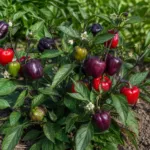 Purple Beauty (Capsicum annuum ‘Purple Beauty’)Capsicum annuum 'Purple Beauty'
 Numex Twilight (Capsicum annuum ‘Numex Twilight’)Capsicum annuum 'Numex Twilight'
 Explosive Ember Chili Pepper (Capsicum annuum ‘Explosive Ember’)Capsicum annuum 'Explosive Ember'