
 AI-generated illustration
Fuchsia ‘Border Queen’ short overview
Fuchsia 'Border Queen' is a vigorous, self-branching fuchsia cultivar valued for its freely produced, single pendant flowers. Pale pink tubes and sepals, often tipped apple green, surround pink-veined violet to amethyst corollas above dark green foliage and reddish stems. It forms a compact, bushy shrub for borders, patios, and containers, flowering from summer into fall. In colder U.S. gardens, mulch and shelter help protect the crown.
Taxonomic classification
Fuchsia ‘Border Queen’ care guide
Light and placement
Grow in full sun to partial shade, ideally with morning sun and shelter from intense afternoon heat in hot U.S. regions. A south- or west-facing site is suitable only where summer heat is moderated; east-facing exposure is often safer. Too little light causes sparse, weak growth and fewer flowers, while excessive hot sun can scorch leaves and wilt the plant.
Watering and humidity
Water deeply when the surface begins to dry, keeping the root zone evenly moist but never saturated. Containers may need frequent watering during hot weather, while established garden plants usually need less in cool or rainy periods. Check moisture manually rather than following a fixed calendar, and provide drainage so roots do not remain in standing water.
Soil and growing medium
Use fertile soil or a quality container mix that retains even moisture without becoming waterlogged. Good drainage is essential, especially in containers. The cultivar tolerates acid, neutral, and alkaline soils according to horticultural references, so structure and moisture management are more important than fine pH adjustment.
Feeding
Feed container plants with a balanced liquid fertilizer at half strength every 2–4 weeks during active growth, following the product label. Garden-grown plants benefit from compost or a controlled-release fertilizer in spring. Stop routine feeding in early fall or whenever the plant is entering dormancy; do not fertilize drought-stressed or freshly transplanted plants.
Growth and habit
This is a vigorous, self-branching, upright-to-bushy shrub. It flowers on current-season growth, so maintaining a strong framework and cutting back old flowering stems in spring helps produce a fuller, more floriferous plant. In mild climates it may remain partly evergreen and become larger than in cold-winter regions.
Planting and repotting
Plant in spring after the danger of hard frost has passed, or in early summer while the soil is warming. Set the base of the stems about 2 inches below soil level where hardy-fuchsia culture is intended, then water deeply. Space plants about 24–36 inches apart, allowing airflow and room for branching.
Repot container plants in spring when roots fill the pot or growth becomes crowded. Move up only one pot size, refresh the mix, and avoid burying the crown deeper than it was established. Water thoroughly after repotting and keep the plant shaded from intense afternoon sun while it re-establishes.
Propagation and pruning
Propagation
Take softwood cuttings in late spring or semi-hardwood cuttings later in the growing season. Use clean material from healthy, non-flowering shoots, root in a porous medium with even moisture, and protect young plants from drying out. Cuttings preserve the cultivar exactly; seed will not reliably reproduce 'Border Queen'.
Pruning
Prune in early to mid-spring after the risk of severe frost has passed. Cut the previous season's flowering stems back to one or two buds above the older woody framework, and remove dead, weak, or damaged growth. In frost-prone areas, delay final pruning until new growth shows which stems survived winter.
Overwintering
In Zones 7–8, mulch the root crown with several inches of organic material after the top growth begins to die back, and shelter the plant from cold, drying winds. Container plants in colder regions should be moved to a cool, bright, frost-free location after leaf fall; water sparingly during dormancy and resume more regular watering as growth restarts.
Uses
Useful as a flowering border shrub, patio or balcony container plant, cottage-garden accent, wall-side planting, or standard-trained specimen. Tubular flowers can contribute nectar to hummingbird-friendly plantings, although this cultivar is not a native U.S. plant and should complement rather than replace regionally native nectar plants.
Appearance
The plant has dark green opposite leaves, reddish stems, and a compact, upright-to-bushy outline. Its most diagnostic feature is the contrast between pale pink floral tubes and sepals, apple-green sepal tips, and violet-amethyst corollas veined in pink. Free branching makes it suitable for a rounded shrub or standard form.
Flowering
Single, pendant, tubular flowers are produced freely from summer into fall, with flowering often continuing until frost in suitable climates. The pale pink tube and sepals contrast with a violet to amethyst corolla marked by pink veins. Flowering is strongest on healthy new growth and improves with regular moisture and light feeding.
Pollination and visitors
Tubular fuchsia flowers are characteristic nectar resources for hummingbirds, and horticultural references also report bee visitation. The exact visitor mix depends on local species, flower access, and surrounding habitat; no specific pollinator species was sufficiently documented for this cultivar.
Diseases and pests
Diseases
Watch for fuchsia rust, gray mold, and, less commonly, honey fungus. Reduce disease pressure with good air circulation, careful watering at the soil line, removal of spent or infected foliage, and avoidance of prolonged leaf wetness. Dispose of badly affected material rather than composting it.
Pests
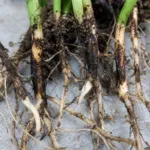
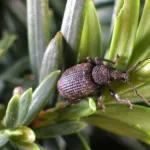
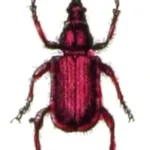
Aphids, fuchsia gall mite, capsid bugs, vine weevil, and caterpillars may occur. Inspect tender shoots and leaf undersides regularly. Improve plant vigor with consistent watering and avoid unnecessary broad-spectrum insecticides; use targeted control only when pests are confirmed and damaging growth.
Related diseases and pests
Only Plant Doctor profiles whose host data indicate this plant may be affected are shown here.


Toxicity and pollen
No cultivar-specific human toxicity evidence was located. Fuchsia is generally grown ornamentally, and the berries of many fuchsias are reported as edible but variable in quality. Avoid encouraging children or pets to eat plant material, and seek medical or veterinary advice after substantial ingestion or if symptoms occur.
- Typical season
- During flowering, generally June through October in much of the United States
- Pollination / pollen
- Mostly retained within insect- or bird-visited flowers
Fuchsia flowers are insect- or bird-visited rather than wind-pollinated, so pollen is not typically released in large airborne clouds. This supports a low airborne-pollen concern, but it is not proof that sensitive individuals cannot react to flower pollen or plant contact.
Native habitat
Fuchsia 'Border Queen' is a cultivated hybrid selection rather than a wild native plant. It performs best in sheltered, fertile, moisture-retentive but well-drained conditions, reflecting the general preference of cultivated fuchsias for cool roots, steady water, and protection from drying winds.
Interesting fact
Introduced by Dr. Matthew Ryle and registered in 1974. The cultivar received the Royal Horticultural Society Award of Garden Merit in 1993. Its flowers combine pale pink and violet tones with apple-green sepal tips. It is noted for vigorous self-branching growth and can be trained as a standard.
Frequently asked questions (FAQ)
The most relevant questions about this plant, with short and direct answers.
🌱Quick care
What is Fuchsia 'Border Queen'?⌄
Fuchsia 'Border Queen' is a bushy, deciduous ornamental fuchsia with single, pendant flowers in pale pink and violet-purple. It is a vigorous, free-flowering cultivar that can be grown in garden borders or containers.
How much sun does Fuchsia 'Border Queen' need?⌄
Fuchsia 'Border Queen' grows in full sun to partial shade. In hot climates, morning sun or filtered afternoon light can help prevent heat and moisture stress.
How often should I water Fuchsia 'Border Queen'?⌄
Water Fuchsia 'Border Queen' whenever the soil surface begins to dry, keeping the root zone evenly moist. Container plants may need water daily during hot, dry weather, but the soil should never remain waterlogged.
What soil is best for Fuchsia 'Border Queen'?⌄
Use fertile, moist but well-drained soil or a quality container mix for Fuchsia 'Border Queen'. Improve heavy or compacted soil with organic matter while preserving good drainage.
Is Fuchsia 'Border Queen' hardy?⌄
Fuchsia 'Border Queen' is considered half-hardy and should be protected from hard freezes. Its winter survival depends on local temperatures, shelter, mulch, and whether it is planted in the ground or kept in a container.
🌤️Environment and placement
Can Fuchsia 'Border Queen' grow in full sun?⌄
Yes, Fuchsia 'Border Queen' can grow in full sun if the soil stays consistently moist. In regions with intense summer heat, partial shade is usually safer, especially during the afternoon.
Can Fuchsia 'Border Queen' grow in shade?⌄
Fuchsia 'Border Queen' tolerates partial shade but may flower less heavily in deep shade. Bright filtered light or several hours of gentle direct sun generally produces better growth and blooming.
Can Fuchsia 'Border Queen' grow in a container?⌄
Yes, Fuchsia 'Border Queen' grows well in containers filled with a fertile, well-drained potting mix. Choose a container with drainage holes and monitor moisture closely because pots dry out faster than garden soil.
How large does Fuchsia 'Border Queen' get?⌄
Fuchsia 'Border Queen' commonly reaches about 2 to 3 feet tall and wide under favorable conditions. Size can vary with pruning, climate, winter damage, and whether it is grown in the ground or a container.
Where should I plant Fuchsia 'Border Queen' outdoors?⌄
Plant Fuchsia 'Border Queen' in a sheltered location with full sun to partial shade and protection from drying winds. A border, patio container, or wall-side planting can work well if the soil remains moist but drains freely.
💧Care and problems
Why are the leaves on my Fuchsia 'Border Queen' turning yellow?⌄
Yellow leaves on Fuchsia 'Border Queen' are often caused by overly wet soil, poor drainage, or natural aging. Check the roots and soil moisture first, then correct watering or drainage problems before adding fertilizer.
Why is my Fuchsia 'Border Queen' wilting?⌄
Fuchsia 'Border Queen' may wilt when the soil is too dry, the roots are waterlogged, or the plant is exposed to excessive heat. Check soil moisture several inches below the surface and provide shade during the hottest part of the day if needed.
Does Fuchsia 'Border Queen' need fertilizer?⌄
Fuchsia 'Border Queen' benefits from regular feeding during active growth and flowering. Apply a balanced, water-soluble fertilizer according to the label, and reduce or stop feeding when the plant is dormant or overwintering.
What pests attack Fuchsia 'Border Queen'?⌄
Fuchsia 'Border Queen' can be affected by aphids, capsid bugs, fuchsia gall mites, caterpillars, and vine weevils. Inspect new growth and the undersides of leaves regularly, and use the least-toxic suitable control if pests appear.
What diseases affect Fuchsia 'Border Queen'?⌄
Fuchsia 'Border Queen' may develop rust, gray mold, or root problems in persistently wet conditions. Improve air circulation, avoid wetting the foliage late in the day, remove affected material, and correct drainage issues.
🪴Planting and repotting
When should I plant Fuchsia 'Border Queen' outdoors?⌄
Plant Fuchsia 'Border Queen' outdoors after the threat of hard freezes has passed and the soil has begun to warm. Avoid late-season planting in cold climates because the roots may not establish before winter.
How do I plant Fuchsia 'Border Queen' in the ground?⌄
Plant Fuchsia 'Border Queen' in fertile, well-drained soil, water it thoroughly, and apply a deep organic mulch while keeping mulch away from the stems. In cold areas, planting slightly deeper and mulching the crown can provide additional winter protection.
How do I repot Fuchsia 'Border Queen'?⌄
Repot Fuchsia 'Border Queen' when roots fill the container or growth becomes weak, moving it into a pot only one size larger. Use fresh, well-drained container mix, water thoroughly, and keep the plant out of harsh sun until it recovers.
✂️Propagation and pruning
How can I propagate Fuchsia 'Border Queen'?⌄
Propagate Fuchsia 'Border Queen' from softwood or semi-hardwood cuttings. Take healthy nonflowering shoots, place them in a moist, sterile rooting medium, and keep them warm with bright indirect light until roots form.
How should I prune Fuchsia 'Border Queen'?⌄
Prune Fuchsia 'Border Queen' in early to mid-spring by cutting back the previous season’s flowering stems to one or two buds on the older framework. Remove dead, weak, or damaged growth to encourage strong new flowering shoots.
Can Fuchsia 'Border Queen' be trained as a standard?⌄
Yes, Fuchsia 'Border Queen' has a vigorous, self-branching habit and can be trained as a standard. Training requires selecting one strong central stem and regularly removing unwanted lower shoots as the trunk develops.
⚠️Toxicity and safety
Is Fuchsia 'Border Queen' poisonous to dogs or cats?⌄
No significant toxicity is documented for Fuchsia 'Border Queen', but pets should not be encouraged to eat it. Any plant material can cause stomach upset, and a veterinarian should be contacted if a pet shows concerning symptoms after ingestion.
Is Fuchsia 'Border Queen' poisonous to humans?⌄
No significant human toxicity is documented for Fuchsia 'Border Queen', but it should not be eaten as an ornamental plant. Avoid ingesting leaves, flowers, berries, or potting material, particularly if the plant has been treated with pesticides.
🌸Flowering and special interest
When does Fuchsia 'Border Queen' bloom?⌄
Fuchsia 'Border Queen' generally blooms from summer into fall, often continuing until frost in suitable conditions. Consistent moisture, adequate light, regular feeding, and removal of fading flowers can support longer flowering.
What do the flowers of Fuchsia 'Border Queen' look like?⌄
The flowers of Fuchsia 'Border Queen' are single and pendant, with pale-pink tubes and sepals and violet to amethyst corollas marked with pink veining. The sepals may have contrasting apple-green tips.
Why is my Fuchsia 'Border Queen' not flowering?⌄
Fuchsia 'Border Queen' may fail to flower because of insufficient light, drought stress, excessive nitrogen, root problems, or hard pruning at the wrong time. Provide bright light, even moisture, balanced nutrition, and prune in early to mid-spring rather than during active bud formation.
Does Fuchsia 'Border Queen' attract hummingbirds?⌄
Fuchsia 'Border Queen' can attract hummingbirds and other flower-visiting pollinators because its pendant tubular flowers provide accessible nectar. Results vary with local wildlife, surrounding plants, and the availability of food and shelter.
Similar plants
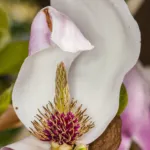 Saucer Magnolia (Magnolia soulangeana) care guideMagnolia soulangeana
 Magnolia × loebneri ‘Merrill’Magnolia × loebneri 'Merrill'
 Magnolia loebneri care guideMagnolia loebneri
 Sweetbay magnolia (Magnolia virginiana) care guideMagnolia virginiana
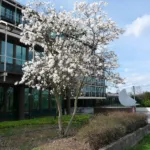 Star magnolia (Magnolia stellata) care guideMagnolia stellata
 Magnolia sprengeri care guideMagnolia sprengeri