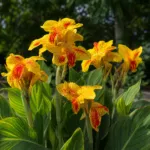
Source:
 Canna ‘Bronze Scarlet’ short overview
Canna 'Bronze Scarlet' is a compact Cannova® F1 hybrid prized for its bold contrast of deep bronze foliage and vivid scarlet-red, lily-like flowers. It grows upright from rhizomes, blooms over a long summer-to-fall season, and suits sunny borders, patio containers, poolside plantings, and water edges. Keep the soil evenly moist but well drained; in colder parts of the United States, grow it as a seasonal annual or overwinter the rhizomes frost-free.
Taxonomic classification
Canna ‘Bronze Scarlet’ care guide
Light and placement
Give full sun, ideally 6 or more hours of direct light, with the strongest exposure in the morning through afternoon. South- or west-facing beds and open patios encourage sturdy stems, darker foliage, and abundant flowering. Too little light causes weaker, greener growth and fewer flowers; intense reflected heat with inadequate water can scorch leaf margins.
Watering and humidity
Keep the root zone evenly moist during establishment and active flowering, watering deeply when the surface begins to dry rather than giving frequent shallow splashes. Containers may need water daily during hot weather, while beds usually need less frequent but thorough irrigation. Do not leave containers standing in stagnant water.
Soil and growing medium
Use a fertile, moisture-retentive but well-drained loam or quality container mix. Sand or perlite can improve drainage in containers, while compost helps hold moisture in beds. The Cannova production guidance uses a mildly acidic substrate around pH 5.5–6.2, but established garden plants tolerate a broader range from mildly acidic through mildly alkaline soils.
Feeding
Feed after active growth begins, using a balanced or bloom-oriented fertilizer at label strength. During sustained flowering, a high-potassium feed every 2–3 weeks is commonly recommended for container plants. Avoid fertilizing dry, wilted, newly transplanted, or dormant plants; water first and reduce feeding in late season.
Growth and habit
This cultivar forms an upright, clumping display from rhizomes and branches well enough to fill containers and beds. It is vigorous in warmth and responds to regular moisture and feeding. In climates with winter freezing, foliage dies back and the rhizomes require protection or lifting.
Planting and repotting
Plant outdoors after the danger of frost has passed and soil has warmed. Set rhizomes about 4–6 inches deep with shoots oriented upward; container-grown plants should sit at the same depth as in their nursery pot. Allow about 18–24 inches between plants for a substantial display and water thoroughly during establishment.
Move container plants into a pot only modestly larger than the root mass when roots fill the container. Use fresh, well-drained potting mix and repot in spring as growth resumes. Large mature plants may be divided rather than repeatedly shifted into larger pots.
Propagation and pruning
Propagation
Commercially, this cultivar is notable as an F1 hybrid raised from seed. Garden plants can also be propagated by dividing healthy rhizomes in spring after growth begins. Seed-grown offspring may not reproduce the named cultivar exactly, while division preserves the selected plant.
Pruning
Remove spent flower stalks and badly tattered leaves to keep plants presentable and support continued flowering. After frost blackens the foliage, cut the plant back near ground level before lifting or mulching the rhizomes.
Overwintering
In USDA Zones 7–11, plants may overwinter outdoors where rhizomes remain reliably insulated, though local conditions matter. After frost damages the foliage, cut stems back and mulch heavily. In colder areas, lift rhizomes after frost, let them dry briefly, and store them barely moist in a cool, frost-free place; restart indoors or plant out after spring warmth.
Uses
Use as a dramatic thriller in large containers, a sunny border accent, mass planting, poolside feature, or focal plant near a water edge. Its bold foliage provides ornamental interest even between flower flushes. It is not included here as a food or medicinal plant, and the named F1 cultivar should not be assumed to breed true from saved seed.
Appearance
The plant is recognized by broad, banana-like leaves with a deep bronze to copper-burgundy cast, upright stems, and strong scarlet-red flower clusters. The foliage creates the main ornamental contrast and may show some green variation, especially under different growing conditions. Its upright, clumping presentation suits the center of mixed containers.
Flowering
The Cannova series is early and free-flowering, producing scarlet-red, lily-like blooms on upright stems from summer into fall, often continuing until the first frost. Removing finished flower stalks can improve neatness and encourage continued flowering, although plants may keep blooming without deadheading.
Pollination and visitors
Cannas produce nectar and can be visited by hummingbirds and butterflies in gardens. For this exact cultivar, commercial and horticultural descriptions support pollinator value, but a specific insect species is not consistently documented; no species-level Latin visitor name is supplied.
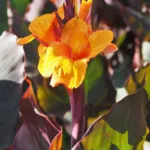
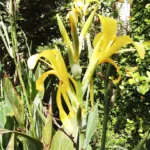
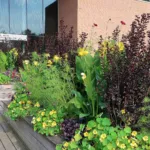
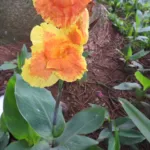
Canna 'Bronze Scarlet' photos
Click any photo for a larger view. Source, author and license are shown separately.
Diseases and pests
Diseases
Canna viruses can cause streaking, mottling, distorted leaves, and reduced vigor. Remove and discard clearly infected plants rather than propagating them. Reduce prolonged leaf wetness, provide air circulation, and avoid moving contaminated tools between plants.
Pests
Slugs and snails may chew young foliage. Under glass or in hot sheltered conditions, spider mites can occur. Inspect leaf undersides, remove hiding places, keep plants growing vigorously, and use targeted controls only when damage is significant.
Related diseases and pests
Only Plant Doctor profiles whose host data indicate this plant may be affected are shown here.
Toxicity and pollen
ASPCA lists canna lily as non-toxic to dogs and cats. That does not guarantee that eating large amounts will cause no stomach upset, and plant material should not be deliberately consumed. Supervise young children around any ornamental plant and seek medical advice after a concerning ingestion.
- Typical season
- Flowering season, generally summer to fall
- Pollination / pollen
- Heavy, animal-transferred pollen; not characteristically wind-dispersed
Canna pollen is associated with animal-mediated flower pollination rather than routine wind dispersal, so it is unlikely to behave like a major windborne seasonal pollen source. Direct allergy data for this named cultivar are limited; sensitive people should still avoid rubbing flowers or handling pollen unnecessarily.
Native habitat
The cultivar is a garden hybrid, not a wild habitat plant. Its Canna background is associated with warm, humid regions of Central and South America and with moist soils, stream margins, wetlands, and disturbed sunny ground. In cultivation it performs best in warm, moisture-retentive conditions without stagnant container drainage.
Interesting fact
Cannova® Bronze Scarlet is an F1 seed-propagated hybrid rather than a typical rhizome-sold canna selection. The cultivar combines unusually dark bronze foliage with scarlet flowers. It was bred for earlier, compact, well-branched production and has been recognized in ornamental plant trials and awards.
Frequently asked questions (FAQ)
The most relevant questions about this plant, with short and direct answers.
🌱Quick care
What is Canna 'Bronze Scarlet'?⌄
Canna 'Bronze Scarlet' is a Cannova-series canna with bronze foliage and scarlet-red flowers. It is grown as a tender perennial in warm climates and as a seasonal annual or overwintered rhizome in colder areas.
How much sun does Canna 'Bronze Scarlet' need?⌄
Give Canna 'Bronze Scarlet' full sun, ideally at least 6 hours of direct light daily. It may tolerate some afternoon shade, but reduced light can produce fewer flowers and less intense foliage color.
How often should I water Canna 'Bronze Scarlet'?⌄
Keep the soil evenly moist throughout active growth. Water whenever the surface begins to dry, especially during hot weather or when the plant is growing in a container, but do not leave the rhizome in stagnant water.
Is Canna 'Bronze Scarlet' easy to grow?⌄
Yes, Canna 'Bronze Scarlet' is generally easy to grow when planted in full sun, fertile soil, and consistent moisture. It is vigorous in warm weather but needs frost protection in cold regions.
🌤️Environment and placement
Can Canna 'Bronze Scarlet' grow in containers?⌄
Yes, Canna 'Bronze Scarlet' performs well in large containers. Use a fertile, well-drained container mix and choose a pot with drainage holes that is heavy enough to support its upright growth.
Where should I plant Canna 'Bronze Scarlet' in the garden?⌄
Plant it in a sunny border, patio bed, rain garden edge, or other location with fertile, moist but well-drained soil. Its bronze foliage and red flowers work especially well as a tropical-looking accent or mass planting.
How tall does Canna 'Bronze Scarlet' get?⌄
Canna 'Bronze Scarlet' commonly reaches about 30 to 48 inches tall and about 14 to 24 inches wide. Height varies with climate, fertility, moisture, and whether it is grown in the ground or a container.
Can Canna 'Bronze Scarlet' grow in wet soil?⌄
It tolerates consistently moist soil and can grow near water features, but the soil should still drain adequately. Prolonged stagnant conditions can encourage rhizome rot and fungal problems.
What USDA Hardiness Zones can grow Canna 'Bronze Scarlet' outdoors year-round?⌄
Canna 'Bronze Scarlet' is most reliably perennial outdoors in USDA Zones 8 through 11, although sheltered locations may extend its performance slightly. In colder zones, lift and store the rhizomes before hard frost.
💧Care and problems
What type of soil does Canna 'Bronze Scarlet' need?⌄
Use fertile, moisture-retentive but well-drained loam or a quality container mix. Incorporating compost can improve fertility and moisture retention without making the planting site waterlogged.
Does Canna 'Bronze Scarlet' need fertilizer?⌄
Yes, feed Canna 'Bronze Scarlet' during active growth with a balanced fertilizer according to the product label. Container plants may need more regular feeding because watering can leach nutrients from the potting mix.
Why are the leaves on my Canna 'Bronze Scarlet' turning brown?⌄
Brown leaves are commonly caused by drought, heat stress, wind, salt buildup, or frost damage. Keep the soil evenly moist, flush container soil occasionally, and remove foliage that is badly damaged.
Why is my Canna 'Bronze Scarlet' not blooming?⌄
Insufficient sunlight, cool temperatures, drought, or excessive nitrogen can reduce flowering. Move container plants to full sun, maintain consistent moisture, and avoid high-nitrogen feeding that produces foliage at the expense of flowers.
What pests commonly affect Canna 'Bronze Scarlet'?⌄
Canna leafrollers, caterpillars, aphids, thrips, spider mites, and Japanese beetles may damage the foliage. Inspect leaf folds and undersides regularly, remove pests by hand when practical, and use a labeled treatment only when necessary.
What causes orange spots on Canna 'Bronze Scarlet' leaves?⌄
Orange or rust-colored spots can indicate canna rust, a fungal disease favored by prolonged leaf wetness and poor airflow. Remove badly affected leaves, avoid overhead watering, improve spacing, and discard heavily infected plant material.
🪴Planting and repotting
When should I plant Canna 'Bronze Scarlet' outdoors?⌄
Plant it outdoors in spring after the danger of frost has passed and the soil has warmed. In colder parts of the United States, start rhizomes indoors several weeks early or plant nursery-grown specimens after nighttime temperatures moderate.
How deep should I plant Canna 'Bronze Scarlet' rhizomes?⌄
Plant the rhizomes about 2 to 4 inches deep with the growing points facing upward. Space plants roughly 12 to 24 inches apart, using wider spacing where maximum spread and airflow are desired.
How do I repot Canna 'Bronze Scarlet'?⌄
Repot it into a container only slightly larger than the current root mass, using fresh fertile mix and a drainage hole. Set the plant at the same depth it was growing and water thoroughly after repotting.
Can I grow Canna 'Bronze Scarlet' indoors?⌄
It can be kept indoors temporarily in a very bright, warm location, but it is primarily an outdoor summer plant. Indoors, provide strong light, good airflow, careful watering, and regular inspection for spider mites.
✂️Propagation and pruning
How do I propagate Canna 'Bronze Scarlet'?⌄
Propagate it primarily by dividing healthy rhizomes when the plant is dormant or before spring growth begins. Each division should have at least one viable growing point and a firm, undamaged section of rhizome.
Can Canna 'Bronze Scarlet' be grown from seed?⌄
Cannova 'Bronze Scarlet' is a seed-grown hybrid, but seedlings may not reproduce the parent plant exactly. Division is preferred when you want to preserve the cultivar's characteristic bronze foliage and scarlet flowers.
Should I deadhead Canna 'Bronze Scarlet'?⌄
Deadheading is not essential because Canna 'Bronze Scarlet' can continue flowering without it. Removing spent flower clusters can improve its appearance and may help redirect energy toward continued bloom production.
Should I cut back Canna 'Bronze Scarlet' in fall?⌄
Cut the foliage back after frost has blackened it or when the plant is entering dormancy. In frost-free climates, remove declining leaves and flower stems as needed while leaving healthy foliage to support continued growth.
How do I overwinter Canna 'Bronze Scarlet' rhizomes?⌄
After the first killing frost, cut the stems back, dig the rhizomes carefully, and let them dry briefly before storing them in a cool, dark, frost-free place. Pack them in barely moist peat moss, vermiculite, or similar material and inspect them periodically for rot.
Can I overwinter Canna 'Bronze Scarlet' in a container?⌄
Yes, container-grown plants can be moved indoors before frost and kept nearly dormant in a cool, frost-free location. Reduce watering substantially, but do not allow the rhizomes to remain saturated or dry out completely.
⚠️Toxicity and safety
Is Canna 'Bronze Scarlet' toxic to dogs?⌄
Canna 'Bronze Scarlet' is considered non-toxic to dogs. Even non-toxic plants can cause mild stomach upset if eaten in large quantities, so contact a veterinarian if your dog shows persistent symptoms.
Is Canna 'Bronze Scarlet' toxic to cats?⌄
Canna 'Bronze Scarlet' is considered non-toxic to cats and is not a true lily. Prevent excessive chewing, because ingesting any large amount of plant material may still cause digestive upset.
Is Canna 'Bronze Scarlet' a true lily?⌄
No, Canna 'Bronze Scarlet' is not a true lily. It belongs to the family Cannaceae, whereas true lilies belong to the genus Lilium and have different toxicity concerns for cats.
🌸Flowering and special interest
When does Canna 'Bronze Scarlet' bloom?⌄
Canna 'Bronze Scarlet' typically blooms from late spring or summer into fall, often continuing until the first frost. Flowering begins earlier when plants receive warmth, full sun, adequate moisture, and regular nutrition.
What color are the flowers of Canna 'Bronze Scarlet'?⌄
The flowers are vivid scarlet to red, creating a strong contrast with the plant's bronze to burgundy foliage. The exact color intensity can vary with light, temperature, and growing conditions.
Does Canna 'Bronze Scarlet' attract pollinators?⌄
Yes, its flowers can attract hummingbirds, butterflies, and bees. Planting it in full sun with other nectar-producing flowers can make the area more useful to pollinators.