
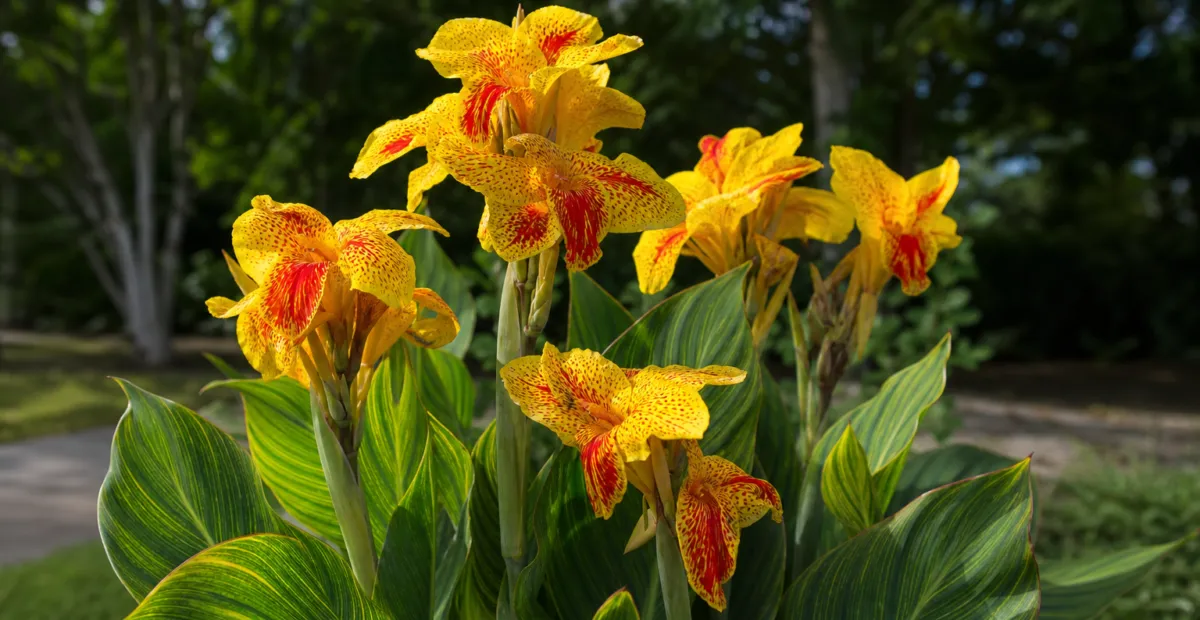
 AI-generated illustration
Canna lily (Canna ‘Picasso’) short overview
Canna 'Picasso' is a distinctive garden canna with upright green leaves and large, open yellow flowers boldly marked with red spots. This tender rhizomatous perennial reaches about 5 feet tall in favorable conditions and flowers through the warm season when given full sun, steady moisture, and fertile soil. Use it as a dramatic border plant, container specimen, or seasonal tropical accent; in colder parts of the United States, lift the rhizomes before hard frost.
Taxonomic classification
Canna lily (Canna ‘Picasso’) care guide
Light and placement
Give full sun, ideally with at least 6 hours of direct light and a warm southern or western exposure. A sheltered position near a wall or patio helps the rhizomes build heat and flower well. Too little light produces stretched stems and reduced bloom; extreme reflected heat or drought can scorch leaf edges.
Watering and humidity
Water deeply when the upper surface begins to dry, keeping the root zone consistently moist during active growth. Containers may need frequent watering in summer, sometimes daily during heat waves. Reduce watering after foliage dies back and keep stored rhizomes only slightly moist so they do not shrivel or rot.
Soil and growing medium
Use fertile, humus-rich soil that holds moisture without remaining waterlogged. A loam amended with compost is suitable for beds; containers need a moisture-retentive but well-drained potting mix. Cannas generally tolerate slightly acidic to slightly alkaline conditions, with a near-neutral soil preferred for vigorous growth.
Feeding
Mix compost into the planting area before growth begins. Once shoots are actively growing, feed container plants with a balanced controlled-release fertilizer or a diluted liquid fertilizer according to the label. A potassium-forward feed during midsummer can support flowering. Do not fertilize dormant, lifted rhizomes or waterlogged plants.
Growth and habit
This cultivar forms an upright clump from thick rhizomes and grows rapidly during warm weather. Regular moisture and feeding promote strong flowering stems. Deadheading improves the display, while exposed plants may need support in windy sites. Growth stops after frost and the underground rhizomes enter dormancy.
Planting and repotting
Plant rhizomes outdoors after the danger of hard frost has passed and the soil has warmed. Set them about 4 inches deep with the growing points facing upward, then water thoroughly. Allow roughly 18–30 inches between plants depending on the desired density and cultivar vigor. Begin with evenly moist soil while shoots establish.
Repot container-grown plants in spring as growth resumes, moving them into a pot only modestly larger than the rhizome mass. Refresh depleted mix and ensure drainage holes are open. Large clumps can be divided during repotting rather than kept increasingly crowded.
Propagation and pruning
Propagation
Propagate vegetatively by dividing the rhizome clump in spring, ensuring each division has at least one healthy growing point. Allow cut surfaces to dry briefly before planting if they are damaged. Seed propagation is not recommended for maintaining 'Picasso' because seedlings may not reproduce the cultivar exactly.
Pruning
Deadhead spent flower clusters to encourage continued flowering. When a flowering stem has finished producing buds, cut it back to a strong side shoot or remove it near the base after flowering. Cut stems and foliage down after frost when preparing rhizomes for storage.
Overwintering
In USDA Zones 8–10, plants may remain outdoors in a sheltered, well-drained position with mulch where winters are mild. Elsewhere, dig rhizomes after frost blackens the foliage, let them dry briefly, and store them cool but frost-free in barely moist peat, vermiculite, or similar medium. Replant in spring.
Uses
Use 'Picasso' for sunny summer borders, mass bedding, large containers, patio displays, and cut-flower arrangements. Its bold spotted flowers and tropical foliage make it useful as a focal plant. Rhizomes should not be treated as edible without verified identification and appropriate food-use guidance.
Appearance
The plant has broad, paddle-shaped green leaves carried on stout upright stems. Flower spikes rise above the foliage and bear large yellow blooms with dramatic red spotting. The rhizomatous clump expands underground and produces successive leafy shoots, giving the plant a bold tropical appearance.
Flowering
Large, open canna flowers are borne on upright terminal spikes. The yellow blooms are conspicuously spotted with red, and flowering can continue from midsummer until frost in a long warm season when spent flowers are removed. The cultivar is listed as reaching approximately 5 feet in height, although performance varies with climate and culture.
Pollination and visitors
The showy, colorful flowers are consistent with insect visitation, and horticultural references report butterfly interest; birds may also visit the display. Exact pollinator species for this cultivar were not established in the reviewed sources, so no species-level visitor is assigned.
Diseases and pests
Diseases
Provide good air circulation, avoid chronically waterlogged soil, and remove badly affected foliage. Watch for canna virus symptoms such as mosaic patterning, streaking, distortion, or stunting; there is no reliable cure for infected plants, so remove and discard affected material rather than propagating it.
Pests
Inspect new growth for aphids and foliage for spider mites, especially in hot, dry conditions. Slugs and snails may chew emerging leaves. Use hand removal, water sprays, or targeted controls appropriate to the pest and label directions; avoid routine broad-spectrum insecticides during bloom.
Related diseases and pests
Only Plant Doctor profiles whose host data indicate this plant may be affected are shown here.
 PestCitrus mealybugPlanococcus citri
 PestBroad mitePolyphagotarsonemus latus (Banks)
 DiseaseTomato mosaic virusTobamovirus tomatotessellati
 DiseaseTobacco mosaic virusTobamovirus tabaci
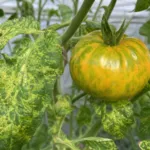 DiseasePepino mosaic virusPepino mosaic virus (PepMV)
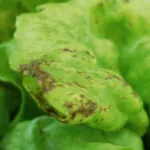 DiseaseLettuce mosaicLettuce mosaic virus
 Environmental stressWaterlogging
 DiseaseCucumber mosaic virusCucumber mosaic virus
Toxicity and pollen
ASPCA lists Canna indica and common garden canna under its plant information, but cultivar-specific clinical toxicity data for Canna 'Picasso' are limited. Avoid deliberate ingestion, prevent pets and children from chewing plant parts, and contact a medical or veterinary professional if substantial material is eaten or symptoms occur.
- Typical season
- During flowering, usually July–October in much of the United States
- Pollination / pollen
- Heavy, insect-associated pollen; limited airborne dispersal expected
Canna 'Picasso' is a conspicuous, animal-pollinated flowering plant rather than a typical wind-pollinated allergen source. Its pollen is generally less likely to become abundant airborne pollen, but no cultivar-specific allergy testing was found. People with unusual plant allergies should avoid rubbing flowers or handling pollen directly.
Native habitat
Canna 'Picasso' is a cultivated garden hybrid rather than a wild North American native. Cannas are warm-climate rhizomatous plants associated with fertile, moist soils and long growing seasons. In the United States, the cultivar is best treated as a summer perennial outside its reliably mild winter range.
Interesting fact
RHS trials recorded large individual yellow flowers with striking red spotting. The cultivar received the RHS Award of Garden Merit after trial evaluation. Its rhizomes are modified underground stems that produce roots, leaves, and flowering shoots. Deadheading can extend the flowering display until frost.
Frequently asked questions (FAQ)
The most relevant questions about this plant, with short and direct answers.
🌱Quick care
What is Canna 'Picasso' commonly called?⌄
Canna 'Picasso' is commonly sold as a canna lily or Picasso canna. It is a rhizomatous ornamental perennial grown for yellow flowers marked with red spots.
How much sun does Canna 'Picasso' need?⌄
Canna 'Picasso' performs best in full sun, ideally with at least 6 hours of direct sunlight daily. Some afternoon shade is acceptable in very hot climates, but too much shade can reduce flowering.
How often should I water Canna 'Picasso'?⌄
Water Canna 'Picasso' whenever the soil surface begins to dry so the root zone stays evenly moist. Do not let the container or planting bed remain waterlogged, especially in poorly drained soil.
How tall does Canna 'Picasso' grow?⌄
Canna 'Picasso' commonly grows about 3 to 5 feet tall, although height varies with climate, fertility, and growing conditions. Some nursery listings describe it as a dwarf canna, but mature size is not completely consistent among sources.
What color are Canna 'Picasso' flowers?⌄
Canna 'Picasso' produces bright yellow flowers marked or spotted with red, giving the blooms a leopard-spotted appearance. The green, paddle-shaped foliage provides a contrasting tropical look.
🌤️Environment and placement
Can Canna 'Picasso' grow in containers?⌄
Yes, Canna 'Picasso' grows well in a large container with fertile, moisture-retentive but well-drained potting mix. Choose a heavy pot with drainage holes because mature plants can become top-heavy.
Is Canna 'Picasso' suitable for a wet area or pond edge?⌄
Canna 'Picasso' tolerates consistently moist soil and can suit a pond edge or other wet garden location if the rhizomes are not permanently submerged. Good drainage remains important in ordinary beds and containers.
What soil is best for Canna 'Picasso'?⌄
Use fertile, humus-rich soil that holds moisture but drains excess water. Incorporating compost into ordinary garden soil can improve both fertility and moisture retention.
What USDA hardiness zone is Canna 'Picasso'?⌄
Published hardiness information for Canna 'Picasso' varies, but it is generally treated as a permanent outdoor perennial in warm USDA Zones 8 through 10 and sometimes Zone 7 with protection. In colder zones, lift and store the rhizomes before hard freezing.
Can Canna 'Picasso' tolerate afternoon shade?⌄
Yes, Canna 'Picasso' can tolerate some afternoon shade, particularly in hot climates. However, full sun generally produces stronger growth and more flowers.
💧Care and problems
Why is my Canna 'Picasso' not flowering?⌄
Late planting, insufficient sunlight, dry soil, or low soil fertility can delay or reduce flowering in Canna 'Picasso'. Keep it evenly moist, feed during active growth, and give it a warm, sunny position.
Should I fertilize Canna 'Picasso'?⌄
Yes, fertilize Canna 'Picasso' in spring and during active growth according to the label directions for a balanced garden fertilizer. Avoid excessive nitrogen, which can encourage leaves at the expense of flowers.
Should I deadhead Canna 'Picasso'?⌄
Deadhead faded flowers and developing seed pods to keep Canna 'Picasso' looking tidy and encourage continued blooming. Cut each spent flower stalk back after its flowering has finished.
What pests affect Canna 'Picasso'?⌄
Canna 'Picasso' may be affected by aphids, caterpillars, slugs, snails, thrips, or spider mites. Inspect the undersides of leaves regularly and address infestations early with an appropriate control method.
What causes yellow streaks or mosaic patterns on Canna 'Picasso' leaves?⌄
Yellow streaking, mottling, distortion, or mosaic patterns may indicate a canna virus. There is no reliable cure for infected plants, so remove and dispose of severely affected plants rather than propagating them.
Why are the leaves of my Canna 'Picasso' turning brown?⌄
Brown leaves on Canna 'Picasso' commonly result from drought stress, scorching sun after transplanting, wind, frost, or excessive fertilizer. Check soil moisture and roots, and remove leaves that are fully damaged.
🪴Planting and repotting
When should I plant Canna 'Picasso' outdoors?⌄
Plant Canna 'Picasso' outdoors in spring after the danger of frost has passed and the soil has warmed. In colder parts of the United States, start the rhizomes indoors and transplant them after nighttime temperatures are reliably mild.
How deep should I plant Canna 'Picasso' rhizomes?⌄
Plant Canna 'Picasso' rhizomes about 2 to 4 inches deep with the growing points facing upward. Space them roughly 12 to 18 inches apart, allowing additional room for the clump to expand.
Can I start Canna 'Picasso' indoors before spring?⌄
Yes, start Canna 'Picasso' rhizomes indoors several weeks before the last expected frost. Use a warm, bright location and transplant them outdoors only after frost risk has passed.
How do I overwinter Canna 'Picasso' in a cold climate?⌄
After frost damages the foliage, cut it back, dig the rhizomes, and let them dry briefly before storing them in a cool, dark, frost-free place. Pack them in barely moist peat, vermiculite, or similar material and check periodically for rot or shriveling.
Can Canna 'Picasso' stay in the ground over winter?⌄
Canna 'Picasso' can remain in the ground year-round where winters are mild and the soil does not freeze deeply. In colder areas, mulch alone may be unreliable, so lift the rhizomes or move the container indoors before hard frost.
✂️Propagation and pruning
How do I propagate Canna 'Picasso'?⌄
Propagate Canna 'Picasso' primarily by dividing its rhizomes in spring. Each division should retain at least one healthy growing eye, and divisions should be planted promptly in warm, moist soil.
Can Canna 'Picasso' be grown from seed?⌄
Canna 'Picasso' can produce seeds, but seedlings may not reproduce the named cultivar's flower pattern exactly. Division is the preferred method when you want plants identical to the parent.
When should I divide Canna 'Picasso' rhizomes?⌄
Divide Canna 'Picasso' rhizomes in spring just before active growth begins or when new shoots are visible. This makes it easier to identify healthy eyes and gives divisions a full growing season to establish.
Should I cut Canna 'Picasso' back after flowering?⌄
Cut Canna 'Picasso' flower stalks back after blooming and remove frost-damaged foliage. In frost-free climates, leave healthy leaves until they naturally decline; in freezing climates, cut the plant down before lifting the rhizomes.
⚠️Toxicity and safety
Is Canna 'Picasso' toxic to dogs or cats?⌄
Cultivar-specific toxicity information for Canna 'Picasso' is not well established. Keep the plant and rhizomes away from pets and children, and avoid ingestion of any plant material.
Can you eat Canna 'Picasso' flowers or rhizomes?⌄
Do not eat Canna 'Picasso' flowers, leaves, or rhizomes because culinary safety for this named cultivar is not established. Grow it strictly as an ornamental plant.
🌸Flowering and special interest
When does Canna 'Picasso' bloom?⌄
Canna 'Picasso' generally blooms from summer into fall, often continuing until frost when conditions are favorable. Early planting, full sun, steady moisture, and deadheading can extend the display.
How can I make Canna 'Picasso' bloom longer?⌄
Give Canna 'Picasso' full sun, fertile evenly moist soil, regular feeding during active growth, and prompt deadheading. Protecting it from drought and frost is especially important for a long flowering season.
Does Canna 'Picasso' attract pollinators?⌄
Canna 'Picasso' flowers can attract visiting pollinators such as butterflies and hummingbirds, although wildlife interest may vary by region. Its primary value is its showy, long-lasting ornamental display.
Similar plants
 Yellow lantern chili (Capsicum chinense) care guideCapsicum chinense
 Capsicum baccatum care guideCapsicum baccatum
 Serrano (Capsicum annuum ‘Serrano’)Capsicum annuum 'Serrano'
 Purple Beauty (Capsicum annuum ‘Purple Beauty’)Capsicum annuum 'Purple Beauty'
 Numex Twilight (Capsicum annuum ‘Numex Twilight’)Capsicum annuum 'Numex Twilight'
 Explosive Ember Chili Pepper (Capsicum annuum ‘Explosive Ember’)Capsicum annuum 'Explosive Ember'