
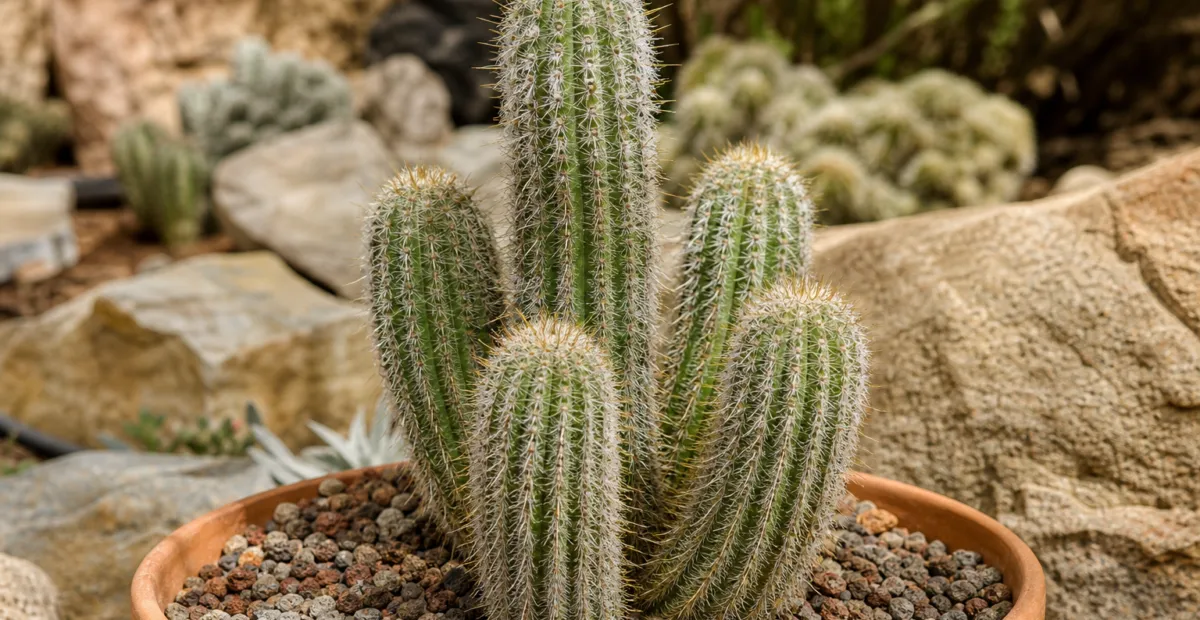
 AI-generated illustration
Borzicactus strausii short overview
Borzicactus strausii is a tall, silvery columnar cactus from high-elevation regions of Bolivia and northern Argentina. Its upright stems branch from the base and are densely covered with white bristles, giving the plant a striking woolly appearance. In bright sun and sharply drained soil, it makes a durable container or dry-garden specimen. Mature plants may produce narrow burgundy flowers that project horizontally from the upper stems.
Taxonomic classification
Borzicactus strausii care guide
Light and placement
Give the brightest practical exposure, ideally several hours of direct sun from a south- or west-facing window, greenhouse glazing, or an acclimated outdoor site. Increase outdoor sun gradually to prevent scorch. Insufficient light causes weak, greener, elongated growth and reduces flowering; sudden intense sun can bleach or scorch previously shaded tissue.
Watering and humidity
Water thoroughly only after the mix has dried completely, then allow excess water to drain away. During spring and summer, the interval may be roughly every two to three weeks indoors, adjusted for pot size, heat, and airflow. In fall and winter, reduce sharply or keep dry when cool. Never water cold, dormant plants in saturated soil.
Soil and growing medium
Use a very porous cactus mix with substantial mineral material such as pumice, coarse sand, lava rock, or perlite. The container must drain freely and should never sit in a saucer of water. A slightly acidic to slightly alkaline reaction is tolerated; structure and drainage matter more than exact pH.
Feeding
Feed only during active growth, typically from late spring through summer. Use a balanced or low-nitrogen cactus fertilizer diluted to about one-quarter to one-half the label strength every four to six weeks. Do not fertilize a dry, dormant, recently repotted, diseased, or cold-stressed plant.
Growth and habit
This perennial forms a narrow, upright clump by branching from the base. It remains strongly vertical rather than spreading across the ground, making it useful where height is desired in a small footprint. Mature specimens become top-heavy, so use a stable container and protect tall stems from strong winds.
Planting and repotting
Plant outdoors only after cold, wet weather has passed and the soil is warm. Set the root ball at its original depth; do not bury the stem. Space plants far enough apart for basal branching and airflow, and establish with light watering followed by a dry interval.
Repot in spring when active growth is beginning, using a heavy, stable pot and fresh sharply drained cactus mix. Protect the stems with thick gloves, folded cardboard, or a sling because the fine bristles detach easily. Allow damaged roots to dry before watering.
Propagation and pruning
Propagation
Sow fresh seed in a sterile, mineral-lean cactus medium with warmth, light, and restrained moisture. Stem cuttings are possible: cut a healthy basal segment, allow the wound to callus thoroughly, then root it in dry, fast-draining medium before cautious watering. Seed is generally the more dependable method.
Pruning
Routine pruning is generally unnecessary. Remove only dead, damaged, diseased, or dangerously misplaced stems with sterilized tools. Let cut surfaces dry fully before exposing them to water. Wear thick gloves and eye protection because the fine bristles can lodge in skin.
Overwintering
Keep the plant bright, cool, and nearly or completely dry in winter. A frost-free space is safest in most of the United States. Outdoor plants in borderline climates need protection from prolonged rain, freezing temperatures, and freeze-thaw cycles; move containers indoors before hard freezes.
Uses
Primarily grown as an architectural ornamental for containers, conservatories, dry gardens, rock gardens, and xeriscapes. Its upright habit suits narrow planting spaces, but the bristles and spines make it unsuitable beside walkways, play areas, or places frequented by pets.
Appearance
The stems are slender, cylindrical, ribbed, gray-green, and densely clothed in white wool and hair-like radial bristles. Longer pale yellow to yellow-brown central spines may project beyond the white covering. Basal branching creates a silver, torch-like clump, while the flowers emerge laterally near the upper stem.
Flowering
Mature plants produce narrow tubular rose-red to burgundy flowers near the upper stems. The flowers remain mostly closed, with the stamens and style projecting from the opening. Flowering generally follows a bright growing season and is more reliable after a cool, dry winter rest.
Pollination and visitors
The tubular, mostly closed flowers are associated with hummingbird pollination. In the United States, hummingbirds may visit outdoor specimens where the plant flowers during their local active season; indoor plants generally receive no regular pollination service.
Diseases and pests
Diseases
The main risk is root or basal rot caused by persistently wet soil, poor drainage, or watering during cold conditions. Remove rotted tissue, let cuts dry, and re-root healthy material only if the damage is localized. Keep good airflow and avoid overhead irrigation in cool weather.
Pests
Mealybugs and spider mites may occur, especially on stressed plants or in poorly ventilated indoor conditions. Inspect areoles and stem bases regularly. Isolate affected plants, remove light infestations with a cotton swab, and use an appropriate insecticidal soap or labeled treatment according to directions.
Related diseases and pests
Only Plant Doctor profiles whose host data indicate this plant may be affected are shown here.
Toxicity and pollen
No species-specific toxic principle was identified in the reviewed authoritative horticultural references. The principal practical hazards are sharp spines and detachable hair-like bristles, which can irritate skin and eyes. Prevent chewing and handle with gloves; seek medical or veterinary advice after eye injury or ingestion.
- Typical season
- Late spring through summer during flowering
- Pollination / pollen
- Heavy pollen retained within tubular flowers
This is an insect- or bird-visited flowering cactus, not a major wind-pollen source. Individual flowers can still release pollen, but the reviewed sources do not support a precise human allergy rating or a claim of zero risk. People with severe pollen sensitivity should avoid handling flowers closely and monitor personal reactions.
Native habitat
The species is associated with mountainous, dry to semi-arid Andean environments of Bolivia and northern Argentina. It grows in bright exposures and porous, rapidly draining substrates, including rocky slopes and cliff habitats where seasonal moisture is followed by pronounced dryness.
Interesting fact
The species was first described under a different genus and has been moved among several cactus genera. Its flowers are cleistogamous-looking, remaining narrowly closed rather than opening like many familiar cactus blooms. The specific epithet honors Leopold Straus, a German cactus enthusiast.
Frequently asked questions (FAQ)
The most relevant questions about this plant, with short and direct answers.
🌱Quick care
What is Borzicactus strausii?⌄
Borzicactus strausii is a columnar cactus in the Cactaceae family, commonly treated in current references as a synonym of Cleistocactus strausii. It forms upright, gray-green stems densely covered with white spines and bristles.
How much sunlight does Borzicactus strausii need?⌄
Borzicactus strausii needs full sun, ideally with several hours of direct light daily. Indoor plants should be placed at the brightest available south- or west-facing window and acclimated gradually to intense sun.
How often should I water Borzicactus strausii?⌄
Water Borzicactus strausii only when its soil has dried out completely, then soak the mix and let excess water drain away. Water much less often during winter or other cool, low-light periods.
Is Borzicactus strausii easy to grow?⌄
Borzicactus strausii is relatively easy to grow when given strong light, fast drainage and restrained watering. The most common failures are overwatering, poor light and cold, wet soil.
🌤️Environment and placement
Can Borzicactus strausii grow indoors?⌄
Yes, Borzicactus strausii can grow indoors beside a very bright window. Because it becomes tall and light-demanding, it may need supplemental grow lighting if natural sunlight is weak.
Can Borzicactus strausii grow outdoors in the United States?⌄
Borzicactus strausii can grow outdoors year-round only in warm, dry locations where it is protected from prolonged freezing temperatures. In colder parts of the United States, grow it in a container that can be moved under cover.
What USDA hardiness zone is suitable for Borzicactus strausii?⌄
Borzicactus strausii is best treated as a frost-tender cactus in the United States rather than assigned a guaranteed hardiness zone. Brief, completely dry exposure near 14°F may be tolerated, but tissue damage becomes increasingly likely below about 25°F.
Can Borzicactus strausii tolerate frost?⌄
Borzicactus strausii tolerates only brief, dry cold exposure and should be protected from frost whenever possible. Cold becomes substantially more dangerous when the plant or its soil is wet.
What temperature is too cold for Borzicactus strausii?⌄
Temperatures below about 25°F can damage Borzicactus strausii, especially if exposure is prolonged or the plant is damp. Keep it protected before freezing weather and avoid watering during cold spells.
Where should I place Borzicactus strausii outdoors?⌄
Place Borzicactus strausii in a full-sun location with excellent air circulation and protection from prolonged rain. A raised bed, rock garden or covered patio can help keep the root zone dry.
💧Care and problems
Why is my Borzicactus strausii turning soft or brown?⌄
Soft, dark or brown tissue usually indicates overwatering, root rot, cold injury or a combination of these problems. Stop watering, inspect the roots and move the plant to warmer, brighter conditions with dry, sharply draining soil.
Why is my Borzicactus strausii leaning?⌄
Borzicactus strausii usually leans because it is stretching toward insufficient light or has become top-heavy. Increase light gradually and provide a stable, well-draining pot; do not compensate for weak light with more water.
Why is Borzicactus strausii losing its white covering?⌄
The white appearance comes from dense spines and hair-like bristles, which can become less prominent with age, abrasion or poor growth conditions. Avoid rubbing the stems and provide strong light without sudden exposure that could scorch the plant.
Does Borzicactus strausii need fertilizer?⌄
Borzicactus strausii needs little fertilizer and can grow well in a lean cactus mix. If feeding, use a diluted cactus fertilizer during active growth and avoid fertilizing during winter dormancy or after repotting.
How do I prevent root rot in Borzicactus strausii?⌄
Prevent root rot by using a sharp-draining cactus mix, a pot with drainage holes and a watering cycle that allows the soil to dry completely. Never leave the container standing in a saucer of water.
🪴Planting and repotting
What soil is best for Borzicactus strausii?⌄
Use a gritty, sharp-draining cactus mix that contains substantial mineral material such as pumice, perlite or coarse grit. The soil should drain rapidly and should not remain wet for long after watering.
What type of pot is best for Borzicactus strausii?⌄
Choose a pot with a drainage hole that is only slightly larger than the root system. Unglazed clay can help the mix dry faster, while a heavy container is useful for supporting a tall, top-heavy plant.
When should I repot Borzicactus strausii?⌄
Repot Borzicactus strausii in spring or early summer when active growth is beginning. Move it into fresh, dry cactus mix and wait several days before watering so any disturbed roots can callus.
How often should Borzicactus strausii be repotted?⌄
Repot Borzicactus strausii when the roots fill the container, the soil breaks down or drainage slows, rather than strictly by calendar. For a healthy container plant, checking every two to three years is reasonable.
Can Borzicactus strausii be planted in the ground?⌄
Borzicactus strausii can be planted in the ground where winters are mild and the site has exceptionally fast drainage. In areas with freezing weather or wet winters, container culture offers safer protection.
✂️Propagation and pruning
How is Borzicactus strausii propagated?⌄
Borzicactus strausii is propagated mainly from seed or stem cuttings. Cuttings must be allowed to dry and callus before being planted in a dry, gritty medium.
Can I grow Borzicactus strausii from cuttings?⌄
Yes, healthy stem cuttings can produce new Borzicactus strausii plants. Make a clean cut, let the cutting callus fully, then place it in dry, porous mix and water sparingly after roots begin to form.
Can Borzicactus strausii be grown from seed?⌄
Yes, Borzicactus strausii can be grown from seed, although seedlings develop slowly compared with established plants. Sow on a sterile, well-draining medium and provide warmth, bright filtered light and careful moisture.
Can Borzicactus strausii be pruned?⌄
Borzicactus strausii generally does not need routine pruning. Remove only damaged, diseased or unwanted stems with a sterile tool, and allow cut surfaces to dry before resuming normal care.
⚠️Toxicity and safety
Is Borzicactus strausii poisonous to humans or pets?⌄
No documented systemic toxicity is established for Borzicactus strausii, but it should still be kept away from children and pets. Its sharp spines and fine bristles can cause painful punctures and skin or eye irritation.
How should I handle Borzicactus strausii safely?⌄
Handle Borzicactus strausii with thick gloves, tongs or folded cardboard, and consider eye protection when repotting. Fine bristles may detach easily, so avoid brushing the stems or handling them with bare hands.
Are the white hairs on Borzicactus strausii dangerous?⌄
The white hairs and spines are not known for systemic poisoning, but they can penetrate skin and may be difficult to remove. Keep the plant away from walkways, pets and children, and use protective equipment during maintenance.
🌸Flowering and special interest
Does Borzicactus strausii flower?⌄
Yes, mature Borzicactus strausii can produce narrow tubular flowers, typically in shades of red to burgundy. Flowering is more likely when the plant receives strong light and experiences a cooler, drier winter rest.
Why is my Borzicactus strausii not flowering?⌄
A young plant, insufficient sunlight, excessive winter watering or the absence of a cool dry rest can delay flowering. Provide strong light, excellent drainage and restrained winter care, but do not force flowers with extra fertilizer or water.
How old does Borzicactus strausii need to be before flowering?⌄
Borzicactus strausii usually needs to reach maturity and sufficient size before flowering, so young seedlings may take several years. Exact timing varies with light, growing conditions and the plant’s individual genetics.
Similar plants
 Azure Monkshood (Aconitum carmichaelii) care guideAconitum carmichaelii
 Monkshood (Aconitum ‘Stainless Steel’)Aconitum 'Stainless Steel'
 Monkshood (Aconitum ‘Bressingham Spire’)Aconitum 'Bressingham Spire'
 Golden full moon maple (Acer shirasawanum ‘Aureum’)Acer shirasawanum 'Aureum'
 Globosum (Acer platanoides ‘Globosum’)Acer platanoides 'Globosum'
 Striped maple (Acer pensylvanicum) care guideAcer pensylvanicum