
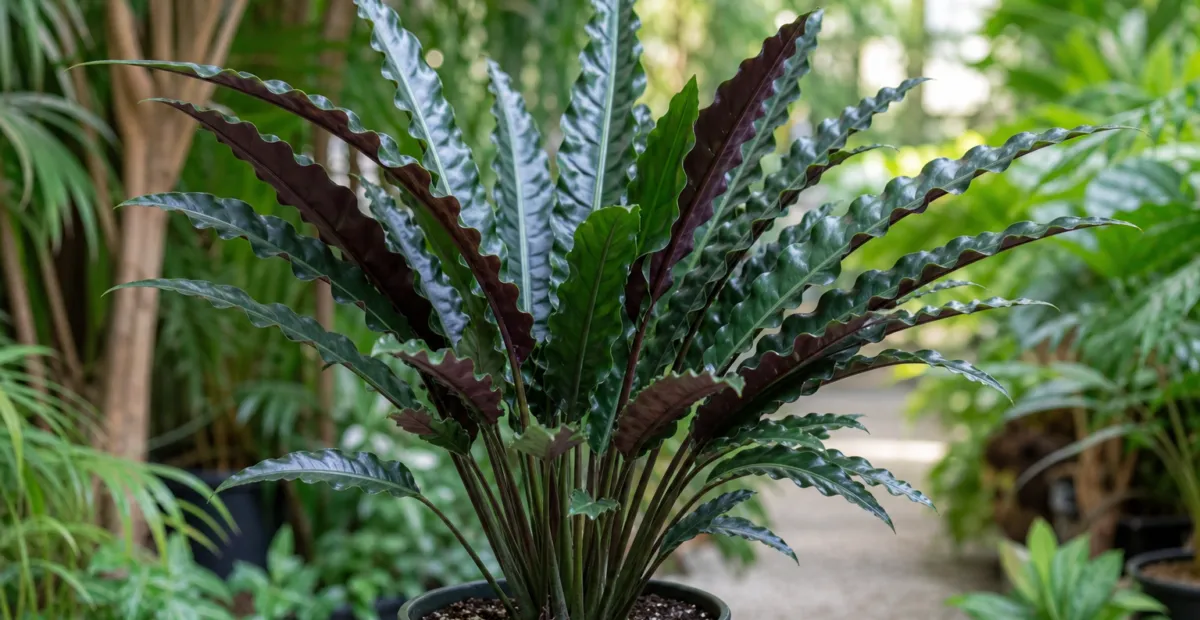
 AI-generated illustration
Alocasia lauterbachiana short overview
Alocasia lauterbachiana is an upright tropical aroid from New Guinea and the Bismarck Archipelago, grown primarily for its narrow, sword-shaped leaves with pronounced waves and deep green to purplish coloring. In the United States it is best treated as a warm indoor, conservatory or greenhouse plant. Give it bright filtered light, high humidity, evenly moist but well-drained soil and winter temperatures above 60°F. All parts are toxic if eaten.
Taxonomic classification
Alocasia lauterbachiana care guide
Light and placement
Provide bright, filtered light with gentle morning sun or a few feet back from a bright south- or west-facing window. East-facing exposure is often easiest indoors. Too much direct afternoon sun can bleach or scorch leaves; too little light produces slower growth, smaller leaves and stretched petioles. Rotate the container periodically for balanced growth.
Watering and humidity
Water thoroughly when the upper inch of mix begins to dry, then let excess drain fully. Keep the root zone evenly moist during warm active growth without leaving the pot in standing water. In fall and winter, water less often as growth and evaporation slow, but do not allow the corm to remain bone-dry for extended periods. High humidity helps limit crispy edges but does not replace proper drainage.
Soil and growing medium
Use a loose, airy aroid mix that retains some moisture without staying saturated. A practical blend can combine peat-free houseplant compost or coco coir with orchid bark and perlite. Slightly acidic to neutral conditions are suitable. Poor drainage and compacted soil increase the risk of root and corm rot.
Feeding
Feed during active growth with a balanced liquid houseplant fertilizer diluted to about half the label strength every 2–3 weeks. Apply only to already-moist soil. Reduce or stop feeding during cool, dark winter conditions and after repotting until new growth resumes; excess fertilizer can damage roots and cause leaf-edge browning.
Growth and habit
This evergreen perennial forms an upright clump from a short rhizomatous or tuberous underground structure. New leaves emerge from the central crown, and growth can slow sharply after cold stress, root disturbance or prolonged dryness. Stable warmth, high humidity and a consistently airy root zone help maintain active growth and reduce sudden leaf loss.
Planting and repotting
Plant container specimens at the same depth as previously grown, with the corm or crown just at or slightly above the surface. Establish plants during the warmest part of the growing season. Leave enough space for the upright leaf cluster and avoid placing the pot where cold drafts or hot midday glass can damage foliage.
Repot in spring or early summer when roots or offsets fill the container, moving up only one pot size. Handle the corm and roots gently, use a container with drainage holes, and keep the plant warm after transplanting. Avoid repotting during a cool, low-light winter unless the existing mix is failing.
Propagation and pruning
Propagation
Propagate by separating offsets or dividing the rhizomatous underground structure during warm active growth. Seed propagation is possible from fresh seed but is uncommon in home cultivation and requires immediate sowing in warm, humid conditions. Use clean tools and keep divisions warm and lightly moist while they re-establish.
Pruning
No routine pruning is required. Remove yellowing or badly damaged leaves at the base with clean, sharp tools. Do not cut healthy leaves merely to shape the plant, and wear gloves because cut surfaces may release irritating sap.
Overwintering
Move outdoors-grown plants inside before nighttime temperatures approach 60°F. Keep them warm, bright and away from drafts or heat vents. Growth may slow in winter, so reduce watering and stop routine fertilizing if light is weak. A substantial leaf drop after cold or dryness can indicate stress rather than normal outdoor hardiness.
Uses
Used as an ornamental foliage specimen for indoor collections, conservatories, shaded patios in frost-free areas and heated greenhouses. It is valued for its upright, sculptural leaves rather than edible or medicinal properties. Do not consume any part, and use gloves during handling because the sap and tissues can irritate.
Appearance
The plant is recognized by its stiffly upright, narrow, sword-like leaves, pronounced waviness and contrasting dark coloration. Mature foliage may show deep green blades with purple to maroon undersides, carried on sturdy dark petioles. The overall effect is architectural and columnar, with the crown producing leaves in a compact upright cluster.
Flowering
Like other Alocasia, this species produces a small aroid inflorescence consisting of a spathe surrounding a spadix rather than a showy ornamental bloom. Flowering is sporadic and most likely when a mature plant receives strong warmth, adequate light and consistent moisture. Reliable United States flowering months have not been established for this species.
Pollination and visitors
No species-specific animal pollinator record was sufficiently reliable for a confident visitor listing. Alocasia inflorescences are structurally associated with insect pollination in the genus, but that broader pattern should not be presented as a confirmed attraction record for this species.
Diseases and pests
Diseases
Root or corm rot is the main risk when the mix remains waterlogged or temperatures fall. Prevent problems with drainage, warm conditions, clean tools and reasonable airflow. Remove badly damaged tissue with sterile tools and correct the watering or substrate problem before treating any secondary infection.
Pests
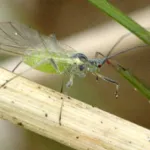
Watch for spider mites, mealybugs and scale, especially in dry indoor air. Inspect leaf undersides and petiole joints regularly. Isolate affected plants, wipe or rinse foliage when practical, and use an appropriately labeled horticultural treatment if infestations persist. Avoid stressing the plant with severe dryness or cold while managing pests.
Related diseases and pests
Only Plant Doctor profiles whose host data indicate this plant may be affected are shown here.

Toxicity and pollen
Alocasia tissues contain insoluble calcium oxalate crystals and are considered toxic if eaten; sap can irritate the mouth, skin and eyes. Keep the plant away from children and pets, wear gloves when dividing or cutting it, and wash exposed skin. Seek medical or veterinary advice after ingestion or significant eye exposure.
- Pollination / pollen
- Inaperturate pollen released from fertile male flowers
This is a flowering aroid and therefore produces pollen when it forms fertile male flowers, but evidence for clinically important airborne pollen exposure from cultivated Alocasia lauterbachiana is limited. Its inflorescences are generally enclosed by a spathe, so routine household exposure is expected to be low, not necessarily zero.
Native habitat
Kew records the species from northern New Guinea to the Bismarck Archipelago, where it occurs in wet tropical conditions. The natural setting implies warmth, abundant atmospheric moisture, filtered light and soils that remain moist but drain effectively. It is not suited to exposed temperate winters or prolonged dry, cold conditions.
Interesting fact
The species is native from northern New Guinea to the Bismarck Archipelago. Its accepted botanical name commemorates Lauterbach, and older botanical literature has treated Alocasia wayriniana as a synonym. The narrow, upright, wavy foliage gives it a more architectural appearance than broad-leaved elephant ears.
Frequently asked questions (FAQ)
The most relevant questions about this plant, with short and direct answers.
🌱Quick care
What is Alocasia lauterbachiana?⌄
Alocasia lauterbachiana is a tropical elephant’s-ear plant in the Araceae family, commonly sold as Purple Sword. It is grown primarily for its long, dark, sword-shaped leaves and is usually kept as a houseplant in the United States.
How much light does Alocasia lauterbachiana need?⌄
Give Alocasia lauterbachiana bright, filtered or indirect light. Protect it from harsh afternoon sun, which can scorch the leaves, while avoiding very dim locations that encourage weak growth and overwatering problems.
How often should I water Alocasia lauterbachiana?⌄
Water when the upper 1–2 inches of potting mix begin to dry, then let excess water drain fully. Keep the mix evenly moist but never continuously soggy, and reduce watering when growth slows in winter.
What is the best soil for Alocasia lauterbachiana?⌄
Use an airy, humus-rich, well-drained aroid mix containing materials such as coco coir or peat, orchid bark, and perlite or pumice. The mix should retain some moisture while allowing air to reach the roots.
Is Alocasia lauterbachiana easy to grow indoors?⌄
Alocasia lauterbachiana is moderately demanding indoors because it reacts to inconsistent moisture, low humidity, cold drafts, and poor light. Stable warmth, bright filtered light, and a fast-draining mix make it much easier to maintain.
🌤️Environment and placement
Where should I place Alocasia lauterbachiana in my home?⌄
Place it near a bright east- or north-facing window, or a filtered south- or west-facing window. Keep it away from heating vents, air-conditioning outlets, cold glass, and sudden temperature changes.
What temperature is best for Alocasia lauterbachiana?⌄
Keep Alocasia lauterbachiana warm, ideally around 65–80°F. Protect it from temperatures below about 55°F and from frost, because this tropical plant is frost tender.
Does Alocasia lauterbachiana need high humidity?⌄
It grows best with moderate to high humidity, especially during dry indoor winters. A humidifier is generally more effective than misting, but good air circulation is still important to reduce the risk of leaf and root problems.
Can Alocasia lauterbachiana grow outside in the United States?⌄
It can grow outdoors year-round only in warm, frost-free climates, generally USDA Zones 10–11 with suitable protection. In colder areas, grow it in a container and bring it indoors before temperatures approach 55°F.
Can Alocasia lauterbachiana tolerate direct sunlight?⌄
It may tolerate gentle early-morning sun, but strong midday or afternoon sunlight can burn its foliage. Bright filtered light is the safer choice, particularly behind a sheer curtain or beneath light shade outdoors.
💧Care and problems
Why are Alocasia lauterbachiana leaves turning yellow?⌄
Yellow leaves can result from overwatering, poor drainage, cold stress, inconsistent moisture, or normal aging of an older leaf. One older leaf yellowing while new growth remains healthy is less concerning than several leaves yellowing together.
Why is my Alocasia lauterbachiana drooping?⌄
Drooping usually indicates dry soil, root damage, cold stress, insufficient light, or a recent change in conditions. Check the root-zone moisture and temperature before watering, because adding water to already wet soil can worsen root rot.
Why is my Alocasia lauterbachiana losing one leaf when a new leaf appears?⌄
Alocasias sometimes shed an older leaf while redirecting energy toward new growth, particularly after acclimation or repotting. If multiple leaves decline or the soil stays wet, also inspect the roots and drainage.
How can I tell if Alocasia lauterbachiana has root rot?⌄
Root rot is suggested by persistently wet soil, a foul smell, mushy dark roots or corm tissue, yellowing leaves, and a loose or collapsing plant. Remove damaged roots, repot into fresh airy mix, and correct the watering or drainage problem.
Why are the leaf tips of Alocasia lauterbachiana turning brown?⌄
Brown tips commonly result from dry air, underwatering, inconsistent moisture, salt buildup, or excessive fertilizer. Keep moisture more consistent, increase humidity, and occasionally flush the pot with plain water if drainage is good.
Why are Alocasia lauterbachiana leaves curling?⌄
Leaves may curl from underwatering, dry air, heat, cold drafts, root stress, or pest damage. Examine the undersides for spider mites and check both soil moisture and temperature before changing several care factors at once.
Does Alocasia lauterbachiana produce guttation droplets?⌄
Yes, it may release water droplets from leaf edges through guttation, especially after watering or overnight in humid conditions. This is usually harmless, but wipe moisture from nearby surfaces and check the plant if droplets are accompanied by spotting or decay.
What pests commonly affect Alocasia lauterbachiana?⌄
Spider mites, thrips, mealybugs, scale, and fungus gnats can affect it indoors. Inspect leaf undersides and stems regularly, isolate affected plants, and treat early with a product labeled for the pest and plant.
Should I fertilize Alocasia lauterbachiana?⌄
Fertilize during active growth with a balanced houseplant fertilizer diluted to half strength about once a month. Do not fertilize dry, recently repotted, dormant, or visibly stressed plants, and avoid repeated heavy applications that can burn roots.
🪴Planting and repotting
When should I repot Alocasia lauterbachiana?⌄
Repot when roots circle the container, emerge from drainage holes, the plant repeatedly dries out very quickly, or the mix has broken down. Spring or early summer is usually the least stressful time, but a serious drainage or root-rot problem should be addressed promptly.
What size pot does Alocasia lauterbachiana need?⌄
Choose a pot only about 1–2 inches wider than the current root ball and make sure it has drainage holes. An oversized pot holds excess moisture and increases the risk of root rot.
Should I remove all the old soil when repotting Alocasia lauterbachiana?⌄
For a routine repot, avoid unnecessary root disturbance and remove only loose or clearly degraded soil. Wash away all soil only when treating root rot, pests, or a major mismatch between the existing mix and the new growing system.
Can Alocasia lauterbachiana grow in a self-watering pot?⌄
It can adapt to a self-watering setup, but the transition must be gradual and the root zone must not remain stagnant or waterlogged. A loose, well-aerated medium and careful monitoring are more important than the pot style itself.
✂️Propagation and pruning
How do you propagate Alocasia lauterbachiana?⌄
The most reliable method is division of offsets or rhizomatous growth during repotting. Separate sections only when each has viable roots and a growth point, then pot them in a moist but well-drained mix.
Can you propagate Alocasia lauterbachiana from a leaf cutting?⌄
A leaf or petiole cutting alone generally cannot produce a new Alocasia lauterbachiana plant because it lacks the necessary growth tissue. Propagation requires a corm, rhizome section, or offset with a viable bud.
Can Alocasia lauterbachiana be grown from corms?⌄
Yes, corms can produce new plants when they are firm and contain a viable growth point. Keep them warm in a lightly moist, airy medium with high humidity, and avoid burying them deeply or keeping them saturated.
Should I prune Alocasia lauterbachiana leaves?⌄
Remove leaves only when they are fully yellow, badly damaged, or diseased, using clean scissors at the base of the petiole. Do not remove healthy green leaves unnecessarily because they still contribute energy to the plant.
⚠️Toxicity and safety
Is Alocasia lauterbachiana toxic to humans?⌄
Yes, Alocasia lauterbachiana is toxic if eaten and its sap can irritate skin and eyes. Keep it away from children, and wear gloves and wash your hands when pruning or repotting.
Is Alocasia lauterbachiana toxic to cats and dogs?⌄
Yes, it should be treated as toxic to cats and dogs if chewed or swallowed. Calcium oxalate crystals in Alocasia tissue can cause intense mouth irritation, drooling, vomiting, and difficulty swallowing; contact a veterinarian if ingestion occurs.
🌸Flowering and special interest
Does Alocasia lauterbachiana flower indoors?⌄
It can flower indoors when mature and growing strongly, although flowering is less common than attractive foliage. The bloom is a typical aroid inflorescence with a spathe surrounding a spadix and may appear inconspicuous among the leaves.
Should I cut off an Alocasia lauterbachiana flower?⌄
You may remove the flower if the plant is small or stressed, but it is not necessary when the plant is healthy. Cut the inflorescence at its base with clean scissors after it fades if you prefer to direct energy toward foliage.
Similar plants
 Foxtail Palm (Wodyetia bifurcata) care guideWodyetia bifurcata
 He Mexican fan palm (Washingtonia robusta) care guideWashingtonia robusta
 He California fan palm (Washingtonia filifera) care guideWashingtonia filifera
 Veitchia arecina care guideVeitchia arecina
 Trachycarpus latisectus care guideTrachycarpus latisectus
 He Chusan palm (Trachycarpus fortunei) care guideTrachycarpus fortunei