
 Source:
 Abelia chinensis ionandra short overview
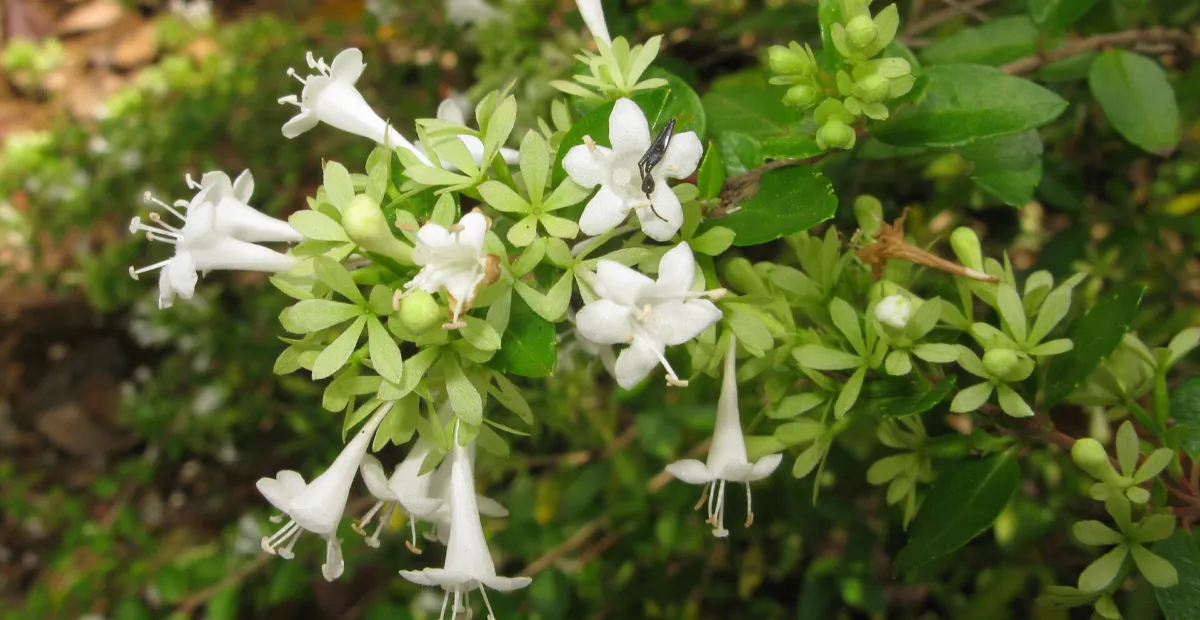
Abelia chinensis ionandra is an accepted variety of Chinese abelia native to Taiwan and the Nansei-shotō, including the Ryukyu Islands. It is a relatively low, branched shrub with softly hairy young twigs, small toothed leaves, and fragrant white to pink, funnel-shaped flowers. Persistent sepals extend the ornamental display after flowering. In the United States, it is best treated as a specialty woody plant for warm, sheltered gardens rather than a commonly available landscape shrub.
Taxonomic classification
Abelia chinensis ionandra care guide
Light and placement
Give full sun for the strongest flowering, especially in the United States where summers may be shorter or cooler. A south- or southeast-facing position with protection from drying winter wind is suitable; light afternoon shade is useful in hot inland climates. Sparse flowering and stretched growth suggest insufficient light, while scorched leaf margins or bleached foliage suggest excessive reflected heat or drought.
Watering and humidity
Water deeply when the upper few inches of soil begin to dry during establishment, then lengthen the interval once the shrub is rooted. Maintain even moisture through the growing season without leaving the root zone saturated. Reduce watering in cool weather, but do not allow newly planted specimens to become completely dry. Humid conditions are generally acceptable if drainage and air movement are good.
Soil and growing medium
Use fertile soil that drains freely yet retains moderate moisture. Loam enriched with compost is suitable, while dense clay should be amended by improving the planting area rather than creating a small isolated pocket. A slightly acidic to neutral reaction is the safest general target. Avoid permanently waterlogged sites and heavy, compacted ground.
Feeding
Apply a thin layer of compost or a balanced slow-release shrub fertilizer in spring as growth begins. Use label rates rather than heavy feeding, because excessive nitrogen can produce soft, leafy growth with weaker flowering. Do not fertilize drought-stressed, newly transplanted, or dormant plants; water first and resume feeding only after active growth is evident.
Growth and habit
This taxon is a multistemmed shrub with branched, sometimes arching growth. Available botanical descriptions indicate a smaller habit than many commonly sold hybrid abelias, but cultivated size can vary with climate and pruning. Its flowers form on current-season growth, so maintenance is easiest when the plant is allowed to develop naturally and selectively thinned in early spring.
Planting and repotting
Plant after the soil has warmed in spring, or in early fall where winters are reliably mild. Dig a broad planting hole and set the root flare at the same level as in the container. Backfill with native soil, water thoroughly, and mulch lightly without touching the stems. Protect young plants from winter wind and maintain regular moisture during the first growing season.
For container culture, repot in spring when roots fill the container or growth slows. Move into a pot only modestly larger, using a fertile, well-drained shrub mix. Preserve the original planting depth, water thoroughly after transplanting, and keep the plant evenly moist while it re-establishes. Container roots are more vulnerable to winter cold than roots in the ground.
Propagation and pruning
Propagation
Propagation may be attempted from seed or softwood and semi-ripe cuttings. Sow fresh seed in a well-drained medium and protect seedlings from drying. Take cuttings during active growth, use a clean sharp blade, and provide high humidity with bright indirect light until roots form. Exact variety fidelity is best maintained from cuttings rather than seed.
Pruning
Because flowering occurs on new growth, prune in early spring before vigorous shoots develop. Remove dead, damaged, crossing, or weak stems first, then thin older wood at the base if needed. Avoid repeated hard shearing, which can produce a dense outer shell and reduce the shrub’s natural branching character. In cold areas, wait until new growth reveals which stems survived winter.
Overwintering
Grow outdoors only in a sheltered site appropriate to the local winter climate. In colder areas, expect possible top dieback and protect the root zone with a mulch layer after the ground cools. Shield young plants from desiccating wind. Container specimens should be moved to a cool, bright, frost-protected location before hard freezes; avoid warm, dark indoor rooms.
Uses
Use as a specimen, informal hedge, mixed shrub-border plant, or sheltered woodland-edge accent where its fragrance and late-season flowers can be observed. It may also suit a large container in a protected courtyard, provided winter temperatures are managed. The exact variety is infrequently encountered in United States commerce, so plant identity should be confirmed before using it in a collection or conservation display.
Appearance
Young branchlets are reddish brown and softly hairy; older branches develop longitudinally cracked bark. Leaves are opposite and may occasionally occur in threes, with ovate to elliptic shapes, small teeth or rounded crenations, and a paler, hairier underside along the veins. Flowers are borne in clustered inflorescences toward the upper stems, followed by small fruits crowned by persistent sepals.
Flowering
The flowers are tubular to funnel-shaped, white to pink, and arranged in clustered cymose inflorescences near the ends and upper leaf axils. The corolla is five-lobed and the four stamens project beyond it. In Taiwan, flowering is documented around September, while related Chinese abelia plants may flower over a longer late-summer period in cultivation. Sepals persist and become more conspicuous as flowers fade.
Pollination and visitors
The species-level horticultural record for Abelia chinensis documents butterfly visitation to its fragrant tubular flowers. Evidence located for the exact variety does not establish a particular insect species, so the visitor record is kept at group level rather than naming a specific pollinator.
Abelia chinensis ionandra photos
Click any photo for a larger view. Source, author and license are shown separately.
Diseases and pests
Diseases
No serious disease problems are consistently documented for the parent species in standard horticultural references. Prevent stress by improving drainage, spacing plants for airflow, watering at the soil line, and removing dead foliage. Investigate persistent leaf spots, cankers, or dieback for site or winter injury before applying treatments.
Pests
Serious pest problems are not consistently documented. Monitor new shoots for aphids, scale, or mites, particularly on stressed container plants. Begin with pruning of heavily infested tips, a strong water spray, or horticultural oil when label conditions are suitable. Avoid unnecessary broad-spectrum insecticides during flowering to reduce harm to visiting insects.
Related diseases and pests
Only Plant Doctor profiles whose host data indicate this plant may be affected are shown here.
 PestStrawberry foliar nematodeAphelenchoides fragariae
 PestBroad mitePolyphagotarsonemus latus (Banks)
 DiseaseCoral Spot CankerNectria cinnabarina
 DiseaseBotryosphaeria canker and diebackBotryosphaeria dothidea (Moug. ex Fr.) Ces. & De Not.
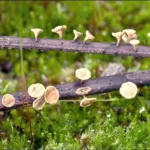 DiseaseAsh diebackHymenoscyphus fraxineus
 DiseaseScleroderris CankerGremmeniella abietina (Lagerberg) Morelet
 Environmental stressSalt stress
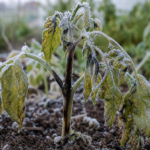 Environmental stressFreeze injury
Toxicity and pollen
Reliable plant-safety references located for this exact taxon did not establish a confirmed toxicity classification for people or pets. Do not treat the absence of evidence as proof of edibility or safety. Prevent ingestion of leaves, flowers, fruit, and concentrated plant material, and seek medical or veterinary advice if a significant amount is consumed or symptoms occur.
- Typical season
- Late summer to early fall when flowering
- Pollination / pollen
- Insect-transferred pollen; airborne exposure is not well characterized
This is an insect-pollinated flowering shrub, but reliable sources did not provide an airborne-pollen measurement or a validated allergy rating for the exact variety. Insect pollination may reduce routine airborne pollen compared with wind-pollinated plants, but it does not demonstrate zero allergy risk. People with strong pollen sensitivity should avoid handling flowers closely during bloom if symptoms occur.
Native habitat
The variety is native to Taiwan and the Nansei-shotō and occurs in temperate vegetation contexts. It is associated with warm, humid climates and shrub habitats, including island and lower-montane settings. In cultivation, it should have moisture-retentive but freely draining soil and protection from severe continental winter exposure.
Interesting fact
The accepted variety was published in 1938 by Masamune. Its basionym, Abelia ionandra, was published by Hayata in 1918. Botanical descriptions record flowers with four exserted stamens and fruits retaining enlarged sepals. The exact taxon is much less common in horticultural trade than hybrid abelias.
Frequently asked questions (FAQ)
The most relevant questions about this plant, with short and direct answers.
🌱Quick care
What is Abelia chinensis ionandra?⌄
Abelia chinensis ionandra is a shrub variety in the honeysuckle family, Caprifoliaceae. It is also treated in current taxonomic references as Abelia chinensis var. ionandra, with Abelia ionandra as a synonym.
Is Abelia chinensis ionandra easy to grow?⌄
It should be moderately easy to grow when given full sun to partial shade, consistent moisture, and well-drained soil. Its exact performance in the United States is less documented than that of the broader species Abelia chinensis.
How much sunlight does Abelia chinensis ionandra need?⌄
Provide full sun to partial shade, ideally with several hours of direct sunlight each day. In hot climates, afternoon shade can help reduce heat and moisture stress.
How often should I water Abelia chinensis ionandra?⌄
Water moderately, keeping the soil evenly moist but not waterlogged. Established shrubs may need less frequent irrigation, while newly planted specimens require watering whenever the upper soil begins to dry.
What soil is best for Abelia chinensis ionandra?⌄
Plant it in moist, well-drained loam, preferably with good organic matter. Avoid persistently soggy or poorly drained locations, which can damage the roots.
🌤️Environment and placement
Where is Abelia chinensis ionandra native?⌄
Abelia chinensis ionandra is native to Taiwan and the Nansei, or Ryukyu, Islands of Japan. It is associated with temperate environments and is best suited to sheltered, relatively warm garden conditions.
Can Abelia chinensis ionandra grow in full shade?⌄
It may survive in bright shade, but full shade is unlikely to support the best flowering or compact growth. A site with morning sun or filtered light is a better low-light option.
Is Abelia chinensis ionandra cold hardy?⌄
Its exact USDA hardiness range is not well established for this variety, so treat it as a plant for sheltered warm climates. Protection from winter wind and severe freezes is especially important in colder parts of the United States.
Can I grow Abelia chinensis ionandra in a container?⌄
Container culture is possible if the plant is kept in a pot with drainage holes and a moisture-retentive but well-drained mix. Container roots are more exposed to freezing, so move the pot to a protected location before severe winter weather.
How large does Abelia chinensis ionandra get?⌄
Available descriptions place this variety around 3 to 5 feet tall, although size can vary with climate and cultivation. Some broader Abelia chinensis references report larger plants, so allow room for a naturally branching shrub.
Is Abelia chinensis ionandra evergreen?⌄
It may be semi-evergreen in warm climates but can lose its leaves or die back after cold weather. In a colder location, regrowth from the base is possible, but this behavior is not specifically documented for every planting of the variety.
💧Care and problems
Does Abelia chinensis ionandra need fertilizer?⌄
It generally does not require heavy feeding when planted in reasonably fertile soil. Apply a light, balanced slow-release fertilizer in spring only if growth is weak or the soil is poor.
What problems affect Abelia chinensis ionandra?⌄
No serious insect or disease problems are widely reported for Abelia chinensis. Poor drainage, drought stress, and winter injury are more practical concerns for this relatively uncommon plant.
Why are the leaves of my Abelia chinensis ionandra turning brown?⌄
Brown leaves most often indicate drought, hot drying conditions, root damage from waterlogged soil, or cold injury. Check soil moisture and drainage first, then protect the shrub from harsh afternoon exposure or winter wind if needed.
Is Abelia chinensis ionandra deer resistant?⌄
The broader species Abelia chinensis is described as deer and rabbit resistant, but resistance is not guaranteed for this particular variety. Use protection when browsing pressure is high, especially while the plant is young.
🪴Planting and repotting
When should I plant Abelia chinensis ionandra?⌄
Plant it in spring after the danger of hard frost has passed or in early fall while the soil is still workable. Spring is the safer choice in regions with severe winters or uncertain cold tolerance.
How do I plant Abelia chinensis ionandra in the ground?⌄
Set it at the same depth it was growing in its nursery container, backfill with native soil amended only as needed, and water thoroughly. Add a 2- to 3-inch mulch layer without piling mulch against the stems.
Does Abelia chinensis ionandra need pruning?⌄
Pruning is usually limited to removing dead, damaged, or awkward branches and lightly shaping the shrub. Because Abelia chinensis flowers on new wood, substantial pruning is best done in early spring.
✂️Propagation and pruning
How can I propagate Abelia chinensis ionandra?⌄
Stem cuttings are the most practical propagation method reported for Abelia. Take healthy cuttings during active growth, use a sterile, well-drained rooting medium, and maintain steady humidity until roots form.
Can Abelia chinensis ionandra be grown from seed?⌄
It may be possible to grow the plant from seed, but seed-specific propagation information for this variety is limited. Cuttings are generally more dependable when maintaining the characteristics of a selected plant.
⚠️Toxicity and safety
Is Abelia chinensis ionandra toxic to people or pets?⌄
The toxicity of Abelia chinensis ionandra has not been established in the available references. Do not allow people or pets to consume it, and contact a poison-control or veterinary professional if ingestion occurs.
🌸Flowering and special interest
When does Abelia chinensis ionandra bloom?⌄
Taiwanese botanical descriptions record flowering around September, while broader Abelia chinensis references report flowering from summer into early fall. Bloom timing can shift with climate, temperature, and the length of the growing season.
What do the flowers of Abelia chinensis ionandra look like?⌄
The flowers are fragrant, funnel-shaped, and white to pink, with four stamens extending beyond the corolla. The small flowers occur in clusters toward the ends and upper leaf axils of the branches.
Why is my Abelia chinensis ionandra not flowering?⌄
Insufficient sunlight, excessive shade, drought, severe winter damage, or pruning at the wrong time can reduce flowering. Give the plant adequate light and avoid heavy pruning after spring growth begins.
Does Abelia chinensis ionandra attract pollinators?⌄
The flowers of Abelia chinensis are fragrant and attract nectar-seeking butterflies and other insects, so this variety may provide similar value. Specific pollinator observations for Abelia chinensis ionandra are limited.
Similar plants
 Yellow lantern chili (Capsicum chinense) care guideCapsicum chinense
 Capsicum baccatum care guideCapsicum baccatum
 Serrano (Capsicum annuum ‘Serrano’)Capsicum annuum 'Serrano'
 Purple Beauty (Capsicum annuum ‘Purple Beauty’)Capsicum annuum 'Purple Beauty'
 Numex Twilight (Capsicum annuum ‘Numex Twilight’)Capsicum annuum 'Numex Twilight'
 Explosive Ember Chili Pepper (Capsicum annuum ‘Explosive Ember’)Capsicum annuum 'Explosive Ember'