
 Source:
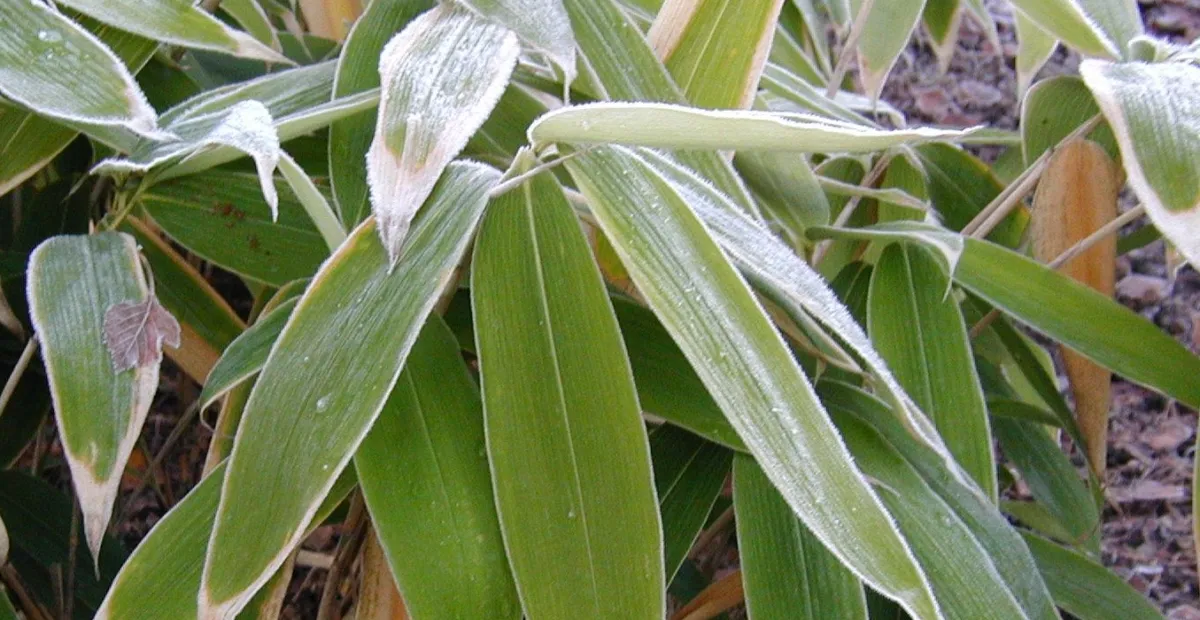
 Palmate Bamboo (Sasa palmata) short overview
Palmate Bamboo is an evergreen, broad-leaved bamboo valued for its lush foliage and strong architectural presence in shaded or partly shaded gardens. Native to Japan, Korea, Sakhalin and the Kuril Islands, it spreads by vigorous rhizomes and can form a dense thicket in moist, fertile soil. Plant it with a root barrier or in a substantial container where containment matters, and protect foliage from drying winter winds.
Taxonomic classification
Palmate Bamboo (Sasa palmata) care guide
Light and placement
Grow in partial shade to shade, ideally with bright filtered light or gentle morning sun and protection from hot afternoon exposure. Shelter the foliage from drying winter winds. Scorched leaf margins, bleached foliage or rapid wilting suggest excessive sun, heat or drought; sparse, elongated growth can indicate insufficient light.
Watering and humidity
Water deeply when the upper inch of soil begins to dry, then maintain steady moisture rather than alternating drought and saturation. Increase irrigation during hot, dry weather and reduce it during cool periods, while never allowing containers to stand in water. Mulching helps moderate root-zone moisture.
Soil and growing medium
Use fertile, humus-rich soil that stays evenly moist but drains freely. Loam amended with compost is suitable. Avoid chronically waterlogged ground, although the plant performs best where summer moisture is dependable. A slightly acidic to neutral soil reaction is appropriate; exact species-specific pH limits are not well documented.
Feeding
Top-dress with compost in spring, or apply a balanced slow-release fertilizer according to the product label as growth begins. Feed only when the plant is actively growing and soil moisture is adequate. Avoid heavy late-season nitrogen, which can encourage soft growth before winter.
Growth and habit
This is a clump-forming bamboo with vigorous, creeping rhizomes that can spread well beyond the original planting. Growth is usually strongest in moist, fertile soil and partial shade. Rhizome control is an essential maintenance task, especially in warm, favorable conditions.
Planting and repotting
Plant in spring or early fall while soil is workable. Set the root ball at the same depth it was growing, water thoroughly, and mulch with compost or leaf mold. Install a robust rhizome barrier before planting in open ground, or choose a large container for easier control.
Container-grown plants should be shifted or divided when the root mass becomes crowded, preferably in spring. Use a heavy, wide container with drainage and refresh part of the growing medium rather than allowing rhizomes to circle densely.
Propagation and pruning
Propagation
Divide established clumps or use young rhizome sections in spring. Keep divisions evenly moist while they re-establish. Rhizome propagation is practical but should be done with containment in mind.
Pruning
In spring, remove dead, weak, damaged or spindly culms at ground level. Thin selected stems to improve the display and maintain access. If flowering occurs, removing flowering shoots promptly may help preserve the planting’s appearance and can discourage additional flowering shoots, although flowering behavior remains unpredictable.
Overwintering
In colder or exposed sites, mulch the root zone with several inches of leaves, compost or bark after the ground cools. Protect foliage from desiccating wind with a sheltered placement or temporary windbreak. Containers are more vulnerable to root freezing and should be insulated or moved to a protected location.
Uses
Useful as a bold foliage specimen, shaded groundcover, informal screen or architectural container plant. It can help fill woodland-style plantings where moisture is reliable. Because rhizomes spread vigorously, use a root barrier, raised bed or container when escape into adjacent beds or natural areas would be undesirable.
Appearance
The plant is recognized by upright bamboo culms carrying notably broad, evergreen, lance-shaped leaves. Dense foliage creates a lush, layered texture, while the creeping rhizome system produces new culms away from the original crown. Remove old culms selectively to reveal the stems and prevent the clump from becoming visually congested.
Flowering
Like many bamboos, this species flowers irregularly and may produce inflorescences sporadically or in broader flowering events. Flowering is not a dependable seasonal ornamental display, and timing is not sufficiently standardized for a reliable US month range.
Pollination and visitors
Documented ecological observations associate flowering and seed production in Sasa palmata with insect activity, but a dependable species-specific pollinator is not established in the available horticultural sources. The flowers are not a consistently abundant garden nectar display.
Sasa palmata photos
Click any photo for a larger view. Source, author and license are shown separately.
Diseases and pests
Diseases
Generally regarded as relatively disease-free in cultivation. Improve air movement, avoid chronically saturated soil, and remove weak or damaged culms. Investigate persistent dieback at the crown or basal rot rather than treating symptoms automatically.
Pests
Slugs may damage young foliage. Monitor new growth, reduce hiding places and use proportionate controls suited to the garden. Rhizome spread is the more significant management issue than insect pests.
Toxicity and pollen
No reliable species-specific evidence establishing significant toxicity to people or pets was found. Do not treat the lack of reports as proof of safety: prevent children and animals from chewing unfamiliar plant material, and seek professional advice after ingestion or a significant exposure.
- Typical season
- Not reliably documented for the United States; flowering is irregular.
- Pollination / pollen
- Grass pollen released during rare flowering events
Bamboos are grasses and release pollen when they flower, but Sasa palmata flowers irregularly and species-specific US airborne-pollen data are limited. A low concern rating is used cautiously rather than claiming zero allergy risk; people with grass-pollen sensitivity should monitor symptoms during any local flowering event.
Native habitat
In its native range, it occurs in temperate East Asian environments including Japan, Korea, Sakhalin and the Kuril Islands. It favors moist, fertile, humus-rich ground and commonly suits woodland-edge or sheltered conditions rather than exposed, drought-prone sites.
Interesting fact
The species is accepted by current major taxonomic databases and has a native range extending from Japan and Korea to Sakhalin and the Kuril Islands. Its broad leaves are unusually prominent for a small bamboo, while its vigorous creeping rhizomes can turn a planting into a dense thicket. Bamboo flowering may be highly irregular, so an individual’s flowering schedule is difficult to predict.
Frequently asked questions (FAQ)
The most relevant questions about this plant, with short and direct answers.
🌱Quick care
What is Sasa palmata?⌄
Sasa palmata is a running, broad-leaved bamboo in the grass family Poaceae, commonly documented as Palmate Bamboo. It forms an evergreen-to-semi-evergreen screen or groundcover with large, tropical-looking leaves.
How much light does Palmate Bamboo need?⌄
Palmate Bamboo grows best in partial shade to shade. It can tolerate brighter light in cool, moist conditions, but hot afternoon sun may scorch or tatter its broad leaves.
How often should I water Sasa palmata?⌄
Water Sasa palmata whenever the soil surface begins to dry, keeping the root zone evenly moist. Do not let it stand in stagnant water, because the soil should remain moist but well drained.
What soil is best for Palmate Bamboo?⌄
Use fertile, humus-rich soil that holds moisture while draining excess water. Incorporating compost or leaf mold before planting can improve both moisture retention and soil structure.
Is Sasa palmata evergreen?⌄
Sasa palmata is generally evergreen or semi-evergreen in mild climates, but foliage can brown or shed after severe cold, wind, or winter exposure. Damaged leaves can be removed in spring.
🌤️Environment and placement
Where should I plant Palmate Bamboo?⌄
Plant Palmate Bamboo in partial shade or shade with consistent moisture and protection from drying winds. It is especially suited to woodland edges, shaded borders, water-side plantings, and screening locations.
Can Sasa palmata grow in full shade?⌄
Yes, Sasa palmata can grow in full shade, although growth may be less dense than in bright, filtered light. Avoid locations where competing tree roots leave the soil persistently dry.
Can Palmate Bamboo grow in full sun?⌄
Palmate Bamboo may tolerate morning sun or cool-climate sun when soil stays evenly moist, but full afternoon sun is usually less suitable. Leaf scorch and drought stress are more likely in hot summer locations.
Is Sasa palmata hardy in the United States?⌄
Sasa palmata is cold hardy in many moderate U.S. climates, but winter protection may be needed in colder sites. Local exposure, wind, snow cover, and soil moisture can affect survival more than a zone number alone.
How large does Palmate Bamboo get?⌄
In favorable landscapes, Palmate Bamboo can reach roughly 6 to 10 feet tall and spread several feet or more. Its final size depends on climate, moisture, soil fertility, cultivar, and how its rhizomes are managed.
Does Sasa palmata spread aggressively?⌄
Yes, Sasa palmata is a running bamboo with vigorous rhizomes that can spread well beyond the original planting area. Install a suitable rhizome barrier or grow it in a large container if containment is important.
💧Care and problems
How do I fertilize Palmate Bamboo?⌄
Feed Palmate Bamboo lightly in spring with compost or a balanced fertilizer if growth is weak. Avoid heavy fertilization, especially after flowering, because stressed flowering plants may be weakened further.
Why are the leaves on my Sasa palmata turning brown?⌄
Brown leaves commonly result from drought, winter burn, hot sun, drying wind, or cold damage. Check soil moisture and exposure first, then remove badly damaged foliage after new growth begins.
Why is my Palmate Bamboo losing leaves?⌄
Leaf loss can follow winter injury, drought, transplant shock, or natural aging of older foliage. Keep the plant evenly watered, protect it from harsh wind, and wait until spring before judging whether the rhizomes survived.
What pests or diseases affect Sasa palmata?⌄
Sasa palmata is generally resilient, but stressed plants can develop problems associated with dry conditions, poor drainage, or common bamboo pests such as mites and scale. Inspect foliage regularly and correct cultural stress before using treatments.
Should I mulch around Palmate Bamboo?⌄
Yes, apply a 2- to 3-inch layer of organic mulch around Palmate Bamboo, keeping it away from the stems. Mulch helps conserve moisture, moderate soil temperatures, and protect rhizomes from winter fluctuations.
🪴Planting and repotting
When is the best time to plant Sasa palmata?⌄
Plant Sasa palmata in spring or early fall, when temperatures are moderate and soil moisture is reliable. Spring planting is preferable in colder areas because it gives the rhizomes more time to establish before winter.
Can Palmate Bamboo be grown in a container?⌄
Yes, Palmate Bamboo can be grown in a large, sturdy container with drainage holes and fertile, moisture-retentive potting soil. Containers restrict spread but require more frequent watering and occasional root division.
How do I contain Sasa palmata in the garden?⌄
Contain Sasa palmata with a properly installed rhizome barrier, a contained bed, or a large planter. Check annually for rhizomes escaping over or under the barrier, because small fragments can establish new shoots.
Can I use Palmate Bamboo as a privacy screen?⌄
Yes, Palmate Bamboo can form an attractive shaded screen or understory hedge because of its dense, broad foliage. Control its running rhizomes during installation so the screen does not spread into unwanted areas.
✂️Propagation and pruning
How do you propagate Sasa palmata?⌄
The most practical way to propagate Sasa palmata is by dividing established rhizome sections with several healthy shoots. Seed propagation is possible when viable seed is available, but bamboo flowering and seed production are infrequent.
When should I divide Palmate Bamboo?⌄
Divide Palmate Bamboo in late spring as new shoots begin developing, using large divisions and minimizing root disturbance. Pot or replant divisions immediately and keep them evenly moist while they establish.
Can Sasa palmata be propagated from cuttings?⌄
Sasa palmata is more reliably propagated by rhizome division than by ordinary stem cuttings. Specialized bamboo propagation methods may work, but they are less practical for most home gardeners.
Can I cut Palmate Bamboo back to the ground?⌄
Yes, Palmate Bamboo can be cut back near ground level in late spring or after winter damage, taking care not to remove emerging shoots. A hard cutback can refresh old, battered foliage and encourage a cleaner new display.
How do I prune Sasa palmata?⌄
Remove dead, damaged, or unattractive culms at ground level with clean loppers. For an overgrown planting, selectively thin or perform a spring rejuvenation cut rather than shearing repeatedly throughout the growing season.
⚠️Toxicity and safety
Is Sasa palmata toxic to people or pets?⌄
There is no established species-specific toxicity classification for Sasa palmata, but it should not be eaten. Keep plant material away from children and pets, and contact a medical or veterinary professional if ingestion causes symptoms.
Is Palmate Bamboo safe to plant around dogs and cats?⌄
Palmate Bamboo has no established species-specific toxicity classification, but chewing ornamental plant material can still cause choking or stomach upset. Prevent pets from eating it and remove sharp, dry foliage from accessible areas.
Is Sasa palmata invasive in the United States?⌄
Sasa palmata has running rhizomes and should be treated as a potentially difficult-to-contain bamboo, even where formal invasive status varies by state. Check local regulations and use a barrier or container before planting.
🌸Flowering and special interest
Does Palmate Bamboo flower?⌄
Yes, Palmate Bamboo flowers very infrequently, often after many years. Flowering can greatly weaken the plant, and some bamboo plants may die afterward, although recovery is possible if the rhizome remains healthy.
What should I do if Sasa palmata flowers?⌄
Keep a flowering Sasa palmata evenly watered and avoid aggressive feeding or unnecessary disturbance. Remove spent flowering stems if desired, but allow the rhizome to recover before deciding whether the entire plant has failed.
Does Sasa palmata die after flowering?⌄
It may die back after flowering because flowering consumes substantial resources, but death is not inevitable in every plant. Leave the rhizome in place and maintain moderate moisture because new growth may emerge later.
Similar plants
 Umbrella Bamboo (Fargesia murielae) care guideFargesia murielae
  Scabrida bamboo (Fargesia scabrida) care guideFargesia scabrida
  Large-leaved variegated bamboo (Shibataea kumasaca) care guideShibataea kumasaca
  Monk’s belly bamboo (Phyllostachys aurea) care guidePhyllostachys aurea
  Chusquea culeou care guideChusquea culeou
  Fargesia ʽRufa’ (Fargesia rufa) care guideFargesia rufa