
 Source:
 Phalaenopsis stuartiana short overview
Phalaenopsis stuartiana is a warm-growing epiphytic orchid endemic to Mindanao in the Philippines. It forms a compact rosette of fleshy, often gray-mottled leaves and produces arching, branching spikes that may carry many white flowers marked with yellow and red-purple. In the United States it is best grown as a protected indoor or greenhouse plant with bright filtered light, steady warmth, high humidity, and an airy orchid medium.
Taxonomic classification
Phalaenopsis stuartiana care guide
Light and placement
Give bright filtered light, such as an east-facing window or a shaded south- or west-facing window with a sheer curtain. A little gentle morning sun can be useful, but harsh midday or afternoon sun may bleach or scorch leaves. Too little light produces dark green, weak leaves and poor flowering; too much causes yellowing, reddish stress color, or dry patches.
Watering and humidity
Water thoroughly with tepid water when the medium is mostly dry and the roots look silvery, then let the pot drain completely. Do not leave the container standing in water and keep the crown dry. Water more often during active warm growth and less often in cool, low-light winter conditions, while maintaining moderate-to-high humidity and good air circulation.
Soil and growing medium
Use a very airy epiphytic orchid medium based on medium-grade fir bark, with optional sphagnum, perlite, or charcoal according to the growing environment. The roots need rapid drainage and abundant air exchange rather than garden soil. A slightly acidic root-zone reaction is suitable; avoid dense, water-retentive mixes that remain wet around the crown.
Feeding
Feed during active root and leaf growth with a complete orchid fertilizer at the label’s dilute rate, commonly every 2–4 waterings. Flush the medium periodically to reduce salt buildup. Reduce or pause feeding when roots are damaged, the plant is severely stressed, or the medium is completely dry; never fertilize a dehydrated plant.
Growth and habit
This is a monopodial orchid: it grows upward from a short central stem rather than forming pseudobulbs. New leaves emerge from the crown while older lower leaves age out. Long branched spikes can become pendant, so a stable pot and unobstructed space are useful. Maintain airflow around the crown and avoid standing water.
Planting and repotting
In the United States, pot it year-round indoors or in a warm greenhouse rather than planting outdoors. Set the plant at the same depth as before, with the crown completely above the medium. Anchor recently potted plants until roots establish; do not bury aerial roots or pack the medium tightly.
Repot when the medium decomposes, drainage slows, or roots outgrow the container, preferably just after flowering or when new roots begin. Remove dead roots, retain healthy green or firm pale roots, and use a pot only slightly larger than the root mass. Keep the crown above the medium and provide strong drainage.
Propagation and pruning
Propagation
Propagation is most reliably done from seed through sterile flask culture, a specialized and difficult method. Occasional basal keikis or plantlets may be separated only after they have several roots and leaves. Division is not usually practical because the plant has a short monopodial stem.
Pruning
After flowering, remove a completely dry spike at its base with sterilized shears. A still-green spike may be retained, but cutting it back is reasonable if it is weak, damaged, or interfering with repotting. Remove only dead or diseased leaves; do not cut healthy roots or the crown.
Overwintering
Keep indoors or in a heated greenhouse; protect from temperatures below about 60°F, cold windows, drafts, and chilling from wet roots. Provide bright filtered light, reduce watering frequency when growth slows, and maintain ventilation. Do not expose it to frost or prolonged outdoor cold.
Uses
Primarily grown as a specimen orchid for its patterned foliage and distinctive flowers in homes, conservatories, orchid collections, and warm greenhouses. It is not a culinary or medicinal plant, and no unsupported therapeutic use should be inferred.
Appearance
The plant has a short stem enclosed by overlapping leaf bases and a compact, monopodial rosette. Its fleshy elliptic-oblong leaves are distinctive for transverse gray-green mottling, which may become less obvious with age; the undersides can be purplish. Arching to pendant branched spikes carry many relatively large, open flowers.
Flowering
The species produces an arching to pendant, usually branched inflorescence that can become long and carry numerous flowers. Blooms are mostly white, with pale yellow and red-purple markings, and may be faintly fragrant. Cultivation references commonly place flowering in winter into spring, but timing varies with plant maturity, temperature, light, and culture.
Pollination and visitors
Reliable species-specific pollinator records were not found in the reviewed sources. The flowers possess typical orchid pollination structures, but a particular visitor should not be assigned without direct evidence.
Phalaenopsis stuartiana photos
Click any photo for a larger view. Source, author and license are shown separately.
Diseases and pests
Diseases
Watch for crown or root rot, bacterial soft rot, and fungal spotting when foliage stays wet or air movement is poor. Keep water out of the crown, sterilize cutting tools, improve ventilation, and isolate symptomatic plants. Remove badly affected tissue with a sterile blade and correct the cultural cause before considering a labeled orchid treatment.
Pests
Common problems include scale, mealybugs, thrips, spider mites, and fungus gnats. Inspect leaf undersides, crowns, roots, and flower spikes regularly. Remove pests manually where practical, improve sanitation and airflow, and use only products labeled for orchids, following the label and avoiding treatment during open blooms.
Related diseases and pests
Only Plant Doctor profiles whose host data indicate this plant may be affected are shown here.
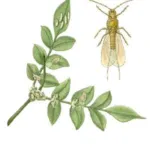 PestLong-tailed mealybugPseudococcus longispinus
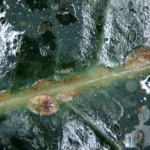 PestBrown Soft ScaleCoccus hesperidum
 DiseaseBacterial soft rotPectobacterium carotovorum
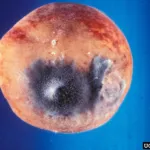 DiseaseRhizopus soft rotRhizopus stolonifer
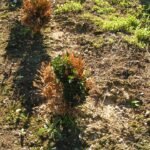 DiseasePhytophthora root and crown rotPhytophthora nicotianae
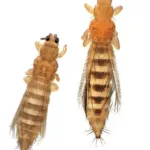 PestOnion thripsThrips tabaci Lindeman
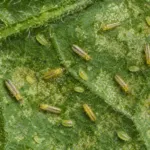 PestMelon thripsThrips palmi Karny
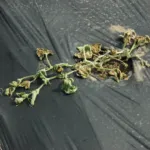 DiseaseBacterial WiltRalstonia solanacearum species complex
Toxicity and pollen
ASPCA lists Phalaenopsis orchids as non-toxic to dogs and cats. Exact species-specific human toxicity data are limited, but no established toxicity concern is documented for ordinary household exposure. Avoid ingestion of any ornamental plant and seek medical advice if symptoms occur.
- Typical season
- Not meaningfully documented for US airborne exposure
- Pollination / pollen
- Pollinia; not freely wind-dispersed
Orchid pollen is packaged into pollinia rather than released as abundant wind-borne dust. Phalaenopsis is insect-associated, but this does not prove zero allergy risk. Species-specific clinical allergy data for P. stuartiana were not located; sensitive people should avoid handling flowers if symptoms occur.
Native habitat
Native to Mindanao in the Philippines, where it is an epiphyte of wet tropical environments and is reported from low elevations, including areas near the seashore. It grows attached to trees rather than rooted in soil, with exposed roots adapted to alternating wetting, drying, and rapid aeration.
Interesting fact
The species was described in 1881 and named for Stuart Low and Co. Its mottled leaf pattern can fade as leaves age. A mature branched spike may carry many flowers. It is endemic to Mindanao and is recorded from low-elevation wet tropical habitat.
Frequently asked questions (FAQ)
The most relevant questions about this plant, with short and direct answers.
🌱Quick care
How do you care for Phalaenopsis stuartiana indoors?⌄
Give Phalaenopsis stuartiana bright filtered light, warm temperatures, moderate watering, good humidity, and a chunky, airy orchid mix. Let the medium become nearly dry before watering again, while keeping strong air movement around the roots.
Is Phalaenopsis stuartiana easy to grow?⌄
Phalaenopsis stuartiana is moderately manageable indoors when its warm, humid, well-ventilated conditions are consistent. It is less forgiving of cold, stagnant air, and constantly wet roots than many commercial Phalaenopsis hybrids.
🌤️Environment and placement
What kind of light does Phalaenopsis stuartiana need?⌄
Phalaenopsis stuartiana needs bright filtered or indirect light. An east-facing window or a bright spot near a shaded south- or west-facing window usually works well; protect the leaves from intense midday sun.
Can Phalaenopsis stuartiana grow under LED lights?⌄
Yes, Phalaenopsis stuartiana can grow under LED lights that provide bright, diffuse illumination for about 12–14 hours daily. Keep the fixture far enough away to prevent leaf heating or bleaching.
What temperature is best for Phalaenopsis stuartiana?⌄
Warm conditions are best, with daytime temperatures around 75–86°F and nights generally above 65°F. Avoid cold drafts, sudden temperature changes, and exposure to temperatures near freezing.
How much humidity does Phalaenopsis stuartiana need?⌄
Aim for approximately 50–70% relative humidity with good air circulation. Higher humidity can help in dry homes, but stagnant, constantly wet conditions increase the risk of crown and root problems.
Can Phalaenopsis stuartiana grow in a bathroom?⌄
It can grow well in a bright, warm bathroom if the room has adequate light and ventilation. A dark bathroom or one with prolonged condensation is unsuitable because insufficient light and stagnant moisture can weaken the plant.
Can Phalaenopsis stuartiana survive outdoors in the United States?⌄
It can grow outdoors year-round only in frost-free, warm, humid areas with filtered light and shelter. In most of the United States, grow it indoors or move it inside before temperatures become cool.
What USDA hardiness zone is suitable for Phalaenopsis stuartiana?⌄
Phalaenopsis stuartiana is primarily a warm tropical orchid and is not reliably frost hardy outdoors. In the United States, it is generally best treated as an indoor or greenhouse plant except in the warmest frost-free climates.
Can Phalaenopsis stuartiana tolerate direct sunlight?⌄
It can tolerate gentle early-morning sunlight, but strong midday or afternoon sun may scorch the leaves. Filter direct light with a sheer curtain or provide shade during the brightest part of the day.
💧Care and problems
How often should you water Phalaenopsis stuartiana?⌄
Water when the orchid mix is nearly dry, rather than following a fixed weekly schedule. Frequency may range from about once a week in warm, bright conditions to less often during cool, low-light periods.
How can you tell when Phalaenopsis stuartiana needs water?⌄
Pale or silvery roots, a dry potting mix, and a noticeably lighter container indicate that watering is needed. Green roots usually mean they still contain moisture, so wait until the mix has nearly dried.
Should you mist Phalaenopsis stuartiana?⌄
Misting is optional and does not replace thorough watering or room humidity. If you mist, do so lightly in the morning and keep water out of the leaf crown to reduce the risk of rot.
Why are Phalaenopsis stuartiana leaves wrinkled?⌄
Wrinkled leaves usually indicate inadequate water uptake caused by underwatering, damaged roots, or root rot. Check the roots and potting mix before simply watering more, because soggy media can produce the same symptom through root loss.
Why are Phalaenopsis stuartiana roots turning brown or mushy?⌄
Brown, mushy roots usually indicate excess moisture or decomposed potting media. Remove dead roots with sterilized tools, repot into fresh airy orchid mix, and allow the medium to approach dryness between waterings.
Can you water Phalaenopsis stuartiana with tap water?⌄
Phalaenopsis stuartiana may tolerate ordinary tap water if it is not excessively hard or chemically treated. If white mineral deposits accumulate or leaf tips decline, use filtered, rain, or low-mineral water instead.
How often should you fertilize Phalaenopsis stuartiana?⌄
Fertilize during active growth with a balanced orchid fertilizer at the label dilution, commonly every third or fourth watering. Water first when the roots are very dry, and reduce feeding when growth and light levels decline.
Are spotted leaves normal on Phalaenopsis stuartiana?⌄
Yes, silver-gray or mottled spotting on the leaves is a normal characteristic of Phalaenopsis stuartiana. New spots that look wet, sunken, yellowing, or rapidly spreading may instead indicate disease or environmental injury.
🪴Planting and repotting
What potting mix is best for Phalaenopsis stuartiana?⌄
Use a chunky, airy orchid bark mix that drains quickly and leaves air around the roots. Medium or coarse bark with optional perlite or charcoal is generally preferable to dense potting soil or permanently wet moss.
Can Phalaenopsis stuartiana grow mounted on cork bark?⌄
Yes, it can grow mounted on cork bark when humidity is consistently high and the plant can be watered frequently enough to avoid prolonged root dryness. Mounted plants usually require more frequent watering than potted plants.
What type of pot is best for Phalaenopsis stuartiana?⌄
Use a small pot with abundant drainage and ventilation, such as a clear orchid pot with side openings. Choose a container that fits the root system closely rather than one that leaves a large volume of wet mix around the roots.
When should you repot Phalaenopsis stuartiana?⌄
Repot when the bark has decomposed, drainage has declined, the roots have outgrown the container, or the plant needs root cleanup. Repotting is usually least stressful when new root growth is beginning, although urgent root rot should be addressed immediately.
How do you repot Phalaenopsis stuartiana?⌄
Remove the old mix, trim only dead or rotted roots with sterilized tools, and place the plant in fresh, airy orchid bark with the crown above the medium. Do not bury the stem or pack the mix tightly around the roots.
✂️Propagation and pruning
Does Phalaenopsis stuartiana need pruning?⌄
Routine pruning is not necessary. After flowering, leave a green spike if it is healthy and you want to encourage a side branch, but remove a spike once it turns fully yellow or brown.
How do you propagate Phalaenopsis stuartiana?⌄
The most practical home propagation method is separating a mature keiki after it has developed several roots at least about 1 inch long. Seed propagation requires sterile laboratory conditions and is not a practical household method.
Can Phalaenopsis stuartiana produce keikis?⌄
Yes, mature plants may produce keikis, or small plantlets, on a flower spike. Leave the keiki attached until it has developed its own healthy roots and leaves before potting it separately.
⚠️Toxicity and safety
Is Phalaenopsis stuartiana safe for dogs and cats?⌄
Phalaenopsis stuartiana is considered non-toxic to dogs and cats. Human ingestion is not recommended, and normal plant-care precautions should still be used around children and pets.
🌸Flowering and special interest
Why is my Phalaenopsis stuartiana not flowering?⌄
Insufficient light, immature size, weak roots, or unsuitable temperatures can prevent flowering. Improve bright filtered light and overall plant health, and a modest nighttime temperature reduction may help trigger a spike in a mature plant.
When does Phalaenopsis stuartiana bloom?⌄
Phalaenopsis stuartiana commonly flowers from late winter into spring, although indoor plants may vary with light, temperature, and growth cycle. A healthy mature plant can flower outside that period under controlled conditions.
How long do Phalaenopsis stuartiana flowers last?⌄
The flowers can remain attractive for several weeks and may last longer under stable indoor conditions. Keep the plant away from heat vents, cold drafts, abrupt temperature changes, and ripening fruit while it is in bloom.
Why are the buds falling off my Phalaenopsis stuartiana?⌄
Bud drop, or bud blast, is commonly caused by sudden changes in temperature, humidity, watering, light, or location. Keep the plant stable and avoid moving it or exposing it to drafts while the buds develop.
Similar plants
 Yellow lantern chili (Capsicum chinense) care guideCapsicum chinense
 Capsicum baccatum care guideCapsicum baccatum
 Serrano (Capsicum annuum ‘Serrano’)Capsicum annuum 'Serrano'
 Purple Beauty (Capsicum annuum ‘Purple Beauty’)Capsicum annuum 'Purple Beauty'
 Numex Twilight (Capsicum annuum ‘Numex Twilight’)Capsicum annuum 'Numex Twilight'
 Explosive Ember Chili Pepper (Capsicum annuum ‘Explosive Ember’)Capsicum annuum 'Explosive Ember'