
 Source:
 Bergenia stracheyi short overview
Bergenia stracheyi is a compact, evergreen Himalayan saxifrage with leathery, finely toothed leaves that can flush red during cold weather. In spring, or during the longer flowering period reported for its native range, it produces short clusters of pink, reddish, white, or yellowish bell-shaped flowers. Grow it in cool, moisture-retentive but well-drained soil, from sun to shade, especially in rock gardens, containers, woodland borders, or other sheltered settings.
Taxonomic classification
Bergenia stracheyi care guide
Light and placement
Grow in full sun, partial shade, or shade, choosing the position according to climate. In cool northern areas, morning or all-day sun can improve flowering; in hot-summer parts of the United States, bright shade or morning sun with afternoon protection is safer. Pale, stretched growth suggests insufficient light, while scorched margins, bleaching, or rapid wilting indicate excessive heat or sun.
Watering and humidity
Water deeply when the upper surface begins to dry, then allow excess water to drain. Keep the root zone evenly moist during establishment, spring growth, and flowering; reduce frequency in cool winter weather but do not let container plants dry completely. Avoid standing water around the rhizome. Extra misting is generally unnecessary.
Soil and growing medium
Use a humus-rich, moisture-retentive soil that still drains freely around the rhizome. Loam, sandy loam, clay improved with organic matter, and gritty rock-garden soils can work if they do not stay waterlogged. Published guidance accepts acid, neutral, and alkaline soils, so drainage and consistent moisture are more important than a narrow pH target.
Feeding
Apply a thin layer of compost or a balanced, slow-release perennial fertilizer in early spring as growth begins. Use label rates rather than heavy feeding; excessive nitrogen can produce soft foliage and reduce compactness. Do not fertilize drought-stressed, newly divided, or waterlogged plants until they recover.
Growth and habit
A compact, clump-forming perennial spreads gradually through thick rhizomes and keeps its leaves in a basal rosette. It is naturally adapted to cool rocky slopes and can suffer in hot, dry summers. Divide congested clumps periodically and keep the rhizome crown exposed rather than deeply buried.
Planting and repotting
Plant in spring or fall while temperatures are moderate. Set the rhizome with its crown at or just above soil level; burying it deeply can encourage rot. Space plants about 8–16 inches apart, allowing the compact clumps to knit together without crowding. Water regularly during establishment, especially in the first growing season.
Repot container plants in early spring or fall when the clump has filled the pot. Lift carefully, retain the rhizome near the soil surface, refresh the medium, and water thoroughly after replanting. Choose a wide, stable container rather than a deep one.
Propagation and pruning
Propagation
Divide established rhizomes in early spring or fall, ensuring each section has healthy roots and a growing point. Replant divisions immediately and keep them evenly moist. Seed propagation is possible but slower and less predictable; sow fresh seed on the surface or barely cover it, then provide cool, bright conditions.
Pruning
Remove faded flower stalks after bloom and cut away damaged or winter-blackened leaves as needed. Leave healthy evergreen foliage in place through winter because it protects the crown and contributes to seasonal color.
Overwintering
The species is considered very cold hardy in European horticultural guidance, but late frosts can damage early flower spikes. In colder US gardens, mulch lightly after the ground freezes while keeping mulch off the crown. Container plants are more exposed to root freezing and should be placed in a sheltered location or overwintered dormant in an unheated protected space.
Uses
Use as a compact evergreen foliage plant, edging, groundcover, container subject, or accent in rock and woodland gardens. Its cold-season leaf coloration adds seasonal interest, and its flowers can contribute to wildlife-oriented planting, although species-specific visitor records are insufficient to rate pollinator attraction confidently. Traditional medicinal uses are documented in its native region, but no medicinal advice is provided.
Appearance
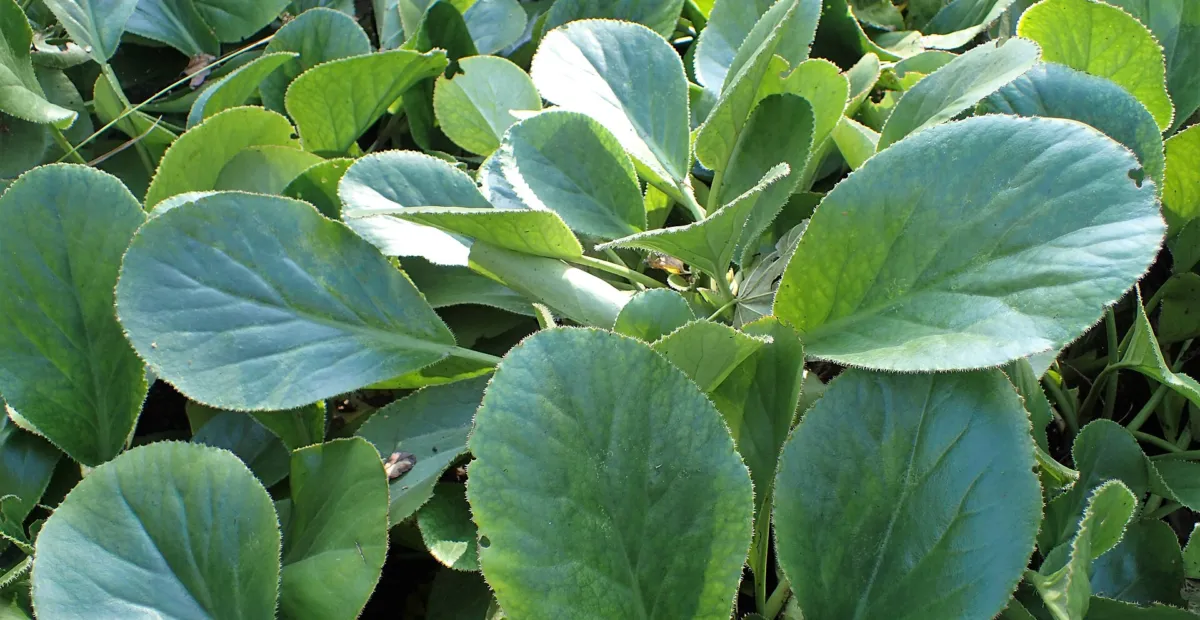
The plant has thick rhizomes and a basal rosette of spoon-shaped to obovate leaves. Leaf surfaces are generally smooth, while the margins are finely toothed or crenate and conspicuously ciliate. Short petioles have enlarged sheathing bases. Flower scapes may be pink-tinged, and compact clusters rise above the foliage.
Flowering
This species forms a compact cyme of small, five-petaled, bell-shaped flowers on a short to moderately short scape. Sources describe pink to red flowers, while regional floras also record white and yellowish forms. Spring bloom is typical in cultivation; native-range records extend from May through October, reflecting a broad Himalayan climate range.
Pollination and visitors
The flowers are insect-pollinated in the general floral biology of Bergenia, but a species-specific visitor list or well-supported pollinator study for Bergenia stracheyi was not located. Attraction is therefore left unrated rather than inferred from flower color alone.
Bergenia stracheyi photos
Click any photo for a larger view. Source, author and license are shown separately.
Diseases and pests
Diseases
Watch for leaf spot, especially where foliage stays damp and air circulation is poor. Remove spotted leaves, water at the base, thin congested growth, and avoid overhead irrigation. Dispose of badly affected foliage rather than composting it. Rhizome rot is more likely in persistently saturated soil.
Pests
Slugs and snails may rasp young foliage; vine weevil can notch leaf margins or damage roots. Reduce hiding places, inspect plants at night, and use proportionate controls. Avoid chronic overwatering, which weakens roots and complicates pest diagnosis.
Related diseases and pests
Only Plant Doctor profiles whose host data indicate this plant may be affected are shown here.



Toxicity and pollen
No reliable species-specific human or companion-animal toxicity assessment was located in the authoritative sources reviewed. Do not treat the plant as proven edible or proven pet-safe solely because toxicity information is sparse. Prevent ingestion of rhizomes or foliage, and seek medical or veterinary advice if a substantial amount is eaten or symptoms occur.
- Pollination / pollen
- Pollen produced by insect-associated flowers; airborne allergy relevance not established
Bergenia stracheyi is a flowering seed plant and produces pollen, but reliable evidence quantifying airborne pollen, pollen season, or allergenic importance for United States exposure was not found. Keep the allergy rating unknown rather than assuming insect pollination eliminates risk.
Native habitat
Native populations occur from eastern Afghanistan through the western Himalaya to southwestern Tibet and Nepal, mainly in subalpine or subarctic settings. Regional accounts place it on moist rocky slopes, rock crevices, screes, and glacial-moraine habitats at roughly 8,200–14,800 feet. The combination of cool temperatures, sharp drainage, and dependable moisture is central to its ecology.
Interesting fact
The species is a high-elevation Himalayan perennial from subalpine and subarctic environments. Its leaves are basal, obovate, glabrous on the surfaces, and bordered by rigid cilia. It has a chromosome number reported as 2n = 34. Bergenia stracheyi is also used in the parentage of some cultivated Bergenia hybrids.
Frequently asked questions (FAQ)
The most relevant questions about this plant, with short and direct answers.
🌱Quick care
What is Bergenia stracheyi?⌄
Bergenia stracheyi is a cold-hardy perennial in the Saxifragaceae family, native to high-elevation regions from eastern Afghanistan through Nepal and southwestern Tibet. It forms a low clump of leathery leaves and produces spring flowers.
Is Bergenia stracheyi an indoor or outdoor plant?⌄
Bergenia stracheyi is primarily an outdoor garden perennial. It can be grown in a container outdoors, but it generally needs seasonal temperature changes and is not well suited to typical warm, dry indoor conditions.
How much light does Bergenia stracheyi need?⌄
Bergenia stracheyi grows in sun to shade, with partial shade usually providing the best balance of foliage quality and flowering. In hot summer regions, protect it from intense afternoon sun.
How often should you water Bergenia stracheyi?⌄
Water Bergenia stracheyi whenever the soil surface begins to dry, keeping the root zone evenly moist but not waterlogged. Established plants tolerate short dry periods better than prolonged drought.
Is Bergenia stracheyi easy to grow?⌄
Bergenia stracheyi is generally easy to grow when planted in humus-rich soil that retains moisture without staying saturated. Its main challenges are poor drainage, severe exposure, and hot, dry conditions.
🌤️Environment and placement
Where should I plant Bergenia stracheyi?⌄
Plant Bergenia stracheyi in a partially shaded border, woodland garden, rock garden, or cool container location. Choose a site with moist, well-drained soil and shelter from drying winds.
Can Bergenia stracheyi grow in full sun?⌄
Bergenia stracheyi can grow in full sun if the soil remains consistently moist and summers are not excessively hot. In much of the United States, morning sun or filtered light is safer than harsh afternoon exposure.
Can Bergenia stracheyi grow in shade?⌄
Bergenia stracheyi tolerates shade, especially bright or dappled shade. Dense shade may produce fewer flowers and looser growth, so some indirect light is beneficial.
What USDA zones can grow Bergenia stracheyi?⌄
Bergenia stracheyi is best treated as a cold-hardy perennial, but a definitive species-specific USDA hardiness range is not consistently documented. Its high-elevation origin suggests good cold tolerance, while severe wind and winter exposure may still require protection.
Does Bergenia stracheyi tolerate heat?⌄
Bergenia stracheyi tolerates moderate summer warmth when its roots stay cool and evenly moist. In hot regions, use afternoon shade, mulch, and protection from reflected heat.
Does Bergenia stracheyi tolerate frost?⌄
Bergenia stracheyi is cold-hardy, although severe exposure can damage evergreen foliage and flower buds. A layer of mulch and shelter from strong winter winds can improve survival and appearance.
What type of soil does Bergenia stracheyi need?⌄
Bergenia stracheyi prefers humus-rich, moisture-retentive but well-drained soil. Improve poor soil with compost or leaf mold, but avoid sites where water remains around the crown.
Does Bergenia stracheyi need acidic soil?⌄
Bergenia stracheyi does not require strongly acidic soil and usually grows well in ordinary fertile garden soil. The more important requirements are organic matter, steady moisture, and reliable drainage.
💧Care and problems
Why are Bergenia stracheyi leaves turning brown?⌄
Brown leaves on Bergenia stracheyi commonly result from drought, scorching sun, winter wind, or cold exposure. Check soil moisture and light levels, then remove badly damaged foliage once conditions improve.
Why is my Bergenia stracheyi not flowering?⌄
Bergenia stracheyi may fail to flower because of insufficient light, young age, drought stress, or excessive nitrogen fertilizer. Move it toward brighter filtered light and maintain even moisture without forcing lush growth.
Should Bergenia stracheyi be fertilized?⌄
Bergenia stracheyi usually needs only modest feeding in fertile soil. Apply a balanced slow-release fertilizer in spring if growth is weak, and avoid heavy nitrogen applications that can reduce flowering.
How do I keep Bergenia stracheyi from becoming too wet?⌄
Prevent waterlogging by planting Bergenia stracheyi in well-drained soil and avoiding low spots that collect runoff. In heavy clay, raise the planting area or amend the soil with organic matter and coarse material.
What pests affect Bergenia stracheyi?⌄
Bergenia stracheyi is generally trouble-free, but slugs, snails, and vine weevil may damage the foliage or roots. Inspect leaves and the soil around the crown, especially where plants are shaded and consistently moist.
Can Bergenia stracheyi be grown in a container?⌄
Bergenia stracheyi can be grown in a container with drainage holes, moisture-retentive potting mix, and partial shade. Choose a wide pot because the plant spreads by thick rhizomes, and protect the container from extreme winter exposure.
🪴Planting and repotting
When is the best time to plant Bergenia stracheyi?⌄
Plant Bergenia stracheyi in spring or early fall, giving the roots time to establish before extreme heat or freezing weather. Fall planting is best completed several weeks before the ground typically freezes.
How deep should Bergenia stracheyi be planted?⌄
Plant Bergenia stracheyi with the rhizome at or just slightly below the soil surface, keeping the crown from being buried deeply. Deep planting can encourage crown rot and weaken growth.
How far apart should Bergenia stracheyi be planted?⌄
Space Bergenia stracheyi about 12 to 18 inches apart, adjusting the distance for the mature size of the plant and the desired coverage. Wider spacing improves airflow and reduces crowding.
Should Bergenia stracheyi be mulched?⌄
Bergenia stracheyi benefits from a thin layer of organic mulch that helps conserve moisture and moderate soil temperature. Keep mulch away from the crown to reduce the risk of rot.
✂️Propagation and pruning
How do you propagate Bergenia stracheyi?⌄
Propagate Bergenia stracheyi most reliably by dividing established rhizomes or offsets. Seed propagation is possible but slower and less predictable for reproducing desirable garden characteristics.
When should Bergenia stracheyi be divided?⌄
Divide Bergenia stracheyi in early spring or early fall when temperatures are moderate and soil moisture is dependable. Replant divisions promptly so the rhizomes do not dry out.
How do you divide Bergenia stracheyi?⌄
Lift the clump, separate healthy rhizome sections with roots and several leaf bases, and replant them at the original depth. Water thoroughly and keep the divisions evenly moist while they establish.
Should Bergenia stracheyi be pruned?⌄
Bergenia stracheyi needs little pruning. Remove dead, damaged, or badly weathered leaves at the base, and cut spent flower stalks after flowering if you want a tidier appearance.
⚠️Toxicity and safety
Is Bergenia stracheyi toxic to dogs or cats?⌄
No reliable species-specific toxicity classification was found for Bergenia stracheyi. Because it is sometimes confused with other Bergenia species and ornamental plants, prevent pets from chewing it and consult a veterinarian if ingestion causes symptoms.
Is Bergenia stracheyi safe for people to touch?⌄
Bergenia stracheyi is not known for causing routine skin irritation from ordinary handling. Wash hands after gardening, and avoid consuming the plant unless an appropriately identified specimen has been confirmed safe for that use.
🌸Flowering and special interest
When does Bergenia stracheyi bloom?⌄
Bergenia stracheyi typically flowers in spring, although the exact timing depends on local climate, winter conditions, and the plant's maturity. Flowering may occur later in cold regions or after a harsh winter.
What color are Bergenia stracheyi flowers?⌄
Bergenia stracheyi is generally grown for clusters of pink to purplish-pink flowers held above the foliage. Flower color can vary somewhat with plant source and identification, so mislabeled Bergenia cultivars may look different.
Does Bergenia stracheyi have evergreen foliage?⌄
Bergenia stracheyi can retain foliage through winter in mild climates, but leaves may become damaged, bronze, or partially die back in colder or more exposed locations. Remove only foliage that is fully dead.
Similar plants
 Yellow lantern chili (Capsicum chinense) care guideCapsicum chinense
 Capsicum baccatum care guideCapsicum baccatum
 Serrano (Capsicum annuum ‘Serrano’)Capsicum annuum 'Serrano'
 Purple Beauty (Capsicum annuum ‘Purple Beauty’)Capsicum annuum 'Purple Beauty'
 Numex Twilight (Capsicum annuum ‘Numex Twilight’)Capsicum annuum 'Numex Twilight'
 Explosive Ember Chili Pepper (Capsicum annuum ‘Explosive Ember’)Capsicum annuum 'Explosive Ember'