
 Source:
 Anemone ‘Whirlwind’ short overview
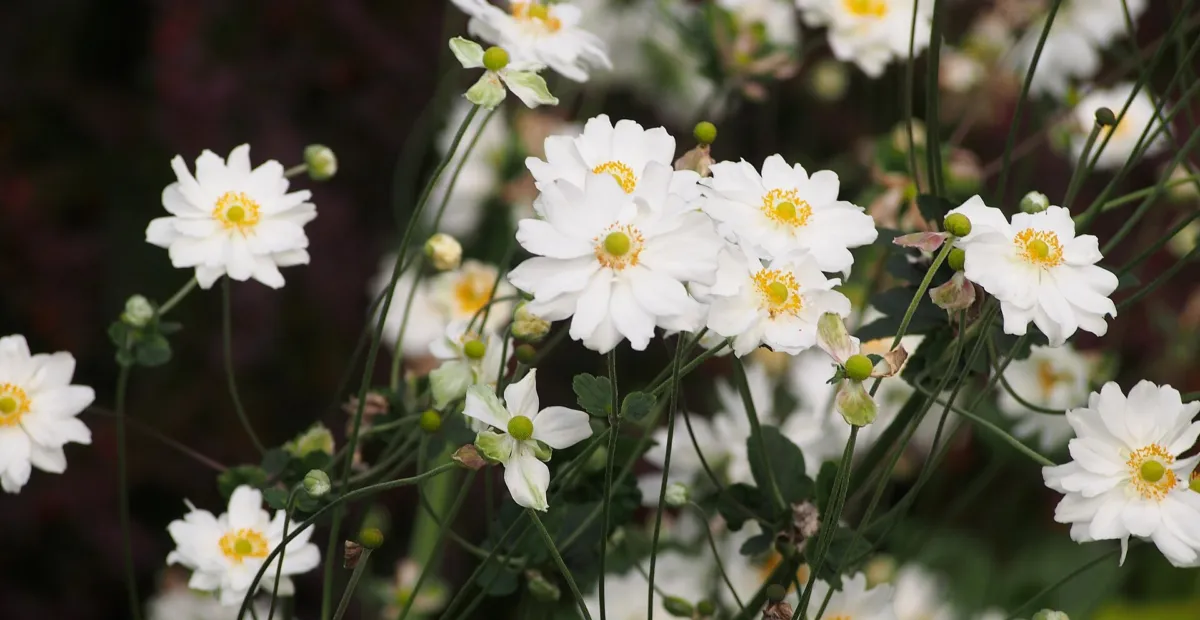
Anemone 'Whirlwind' is a classic fall-blooming hybrid prized for its airy stems and semi-double white flowers. The narrow, slightly twisted petals surround a prominent yellow center and often carry a subtle green tint near the outer petals. Plants form a long-lived clump of dark green, lobed foliage and bloom from late summer into fall. Give this perennial evenly moist, well-drained soil in full sun or partial shade, with room to spread gradually by rhizomes.
Taxonomic classification
Anemone ‘Whirlwind’ care guide
Light and placement
Grow in full sun to partial shade. In cooler climates, morning or all-day sun supports sturdy stems and abundant flowering; in hot-summer regions, afternoon shade helps prevent leaf scorch and moisture loss. Too little light can produce weak, floppy stems and reduced bloom, while intense dry afternoon sun may brown or crisp the foliage.
Watering and humidity
Water deeply when the upper inch of soil begins to dry, keeping the root zone evenly moist during establishment and summer bud formation. Reduce watering after foliage dies back, but do not allow newly planted divisions to dry completely. Mulch lightly to moderate soil temperature while keeping mulch away from the crown.
Soil and growing medium
Use fertile, humus-enriched soil that remains evenly moist but drains freely. Loam is ideal, while clay should be improved with organic matter and drainage should be checked carefully in winter. A mildly acidic to mildly alkaline soil reaction is tolerated; avoid chronically waterlogged ground.
Feeding
Top-dress with compost in spring as growth resumes. If soil is poor, use a balanced slow-release perennial fertilizer at the label rate rather than heavy feeding. Do not fertilize late in the season or push lush growth with excess nitrogen, because weak stems and dense foliage can increase disease problems.
Growth and habit
Plants emerge relatively late in spring, develop a basal mound of foliage, and send up slender flowering stems later in the season. They may be slow to establish after planting or division, but established clumps can broaden through rhizomes. Avoid repeated relocation and provide support if the site is exposed to strong winds.
Planting and repotting
Plant in spring or early fall, setting the crown at soil level rather than burying it deeply. Space plants about 24–36 inches apart to allow the clump to broaden. Water thoroughly after planting and keep the root zone consistently moist during the first growing season while the rhizomatous root system establishes.
Container-grown plants can be moved in spring before active growth. Repot only when roots fill the container, using a moisture-retentive but well-drained potting mix and a container with drainage holes. Mature clumps are generally better planted in the ground than kept permanently in pots.
Propagation and pruning
Propagation
Propagate by division in early spring or early fall, or by root cuttings during dormancy. Lift and separate established clumps carefully because the plant dislikes frequent disturbance and may be slow to re-establish after moving. Division is practical but not especially rapid.
Pruning
Cut flowering stems after display or leave them for winter structure and seed-head interest. Cut the plant back to the ground in late fall or late winter before new shoots emerge. Remove diseased foliage promptly and clean up fallen leaves around the crown.
Overwintering
Plants are hardy in much of the United States. Leave a light mulch over the root zone in colder regions, especially during the first winter, but avoid heavy, wet mulch that holds moisture against the crown. In late fall, stems may be cut back after frost or left standing until late winter.
Uses
Use ‘Whirlwind’ for late-season perennial borders, cottage gardens, woodland-edge plantings, and cut-flower arrangements. Its white flowers provide strong contrast with autumn foliage and darker backgrounds. It is ornamental only; do not use it as food or medicine.
Appearance
The plant forms a basal mound of dark green, palmately lobed leaves. Tall, slender green stems rise above the foliage and carry white semi-double flowers. The narrow petals are often slightly rolled or twisted, with some outer petals showing a greenish tint; the center contains conspicuous yellow stamens.
Flowering
Flowers appear on tall, slender stems from late summer into fall, commonly beginning in September in much of the United States. The semi-double blooms have numerous narrow, somewhat twisted white petals and a central boss of yellow stamens. Flowering is most reliable when plants are not allowed to dry out during summer.
Pollination and visitors
The open central stamens provide accessible pollen for generalist flower visitors. Reliable cultivar-specific visitor records are limited, but hybrid anemones are commonly used in wildlife and pollinator-oriented gardens and may be visited by bees, bumblebees, hoverflies, and other pollen-collecting insects.
Anemone 'Whirlwind' photos
Click any photo for a larger view. Source, author and license are shown separately.
Diseases and pests
Diseases
Watch for powdery mildew and anemone smut, especially where foliage stays crowded or air circulation is poor. Water at the soil surface, avoid persistent overhead wetting, remove heavily infected leaves, and clear dead foliage after frost. Improve spacing and drainage rather than relying on routine fungicide use.
Pests
Slugs, caterpillars, and leaf or bud eelworms may affect plants. Inspect new growth and flower buds, remove caterpillars by hand, reduce slug habitat, and avoid unnecessarily wet mulch against the crown. Dig and discard severely distorted or declining plants when eelworms are suspected, since infested material can spread the problem.
Related diseases and pests
Only Plant Doctor profiles whose host data indicate this plant may be affected are shown here.

Toxicity and pollen
Fresh tissues of Anemone and related Ranunculaceae can contain ranunculin, which forms irritating protoanemonin when plant tissue is crushed or chewed. Sap may cause skin irritation or blistering, while ingestion can irritate the mouth and digestive tract. Wear gloves when handling and keep plant material away from children and animals.
- Typical season
- Late summer through fall
- Pollination / pollen
- Insect-dispersed pollen
The flowers are insect-pollinated and do not produce the large, freely airborne pollen loads typical of wind-pollinated plants. Pollen can still contact sensitive individuals during close handling, but ‘Whirlwind’ is generally a low airborne-pollen concern. Contact irritation from sap is a separate issue from pollen allergy.
Native habitat
This cultivar has no known wild habitat or natural distribution because it is a cultivated hybrid. Its parent group is associated with temperate East Asian fall-blooming anemones, while the selection itself was recorded from a cultivated plant in Rochester, New York. In gardens it favors moist, fertile soils and temperate conditions.
Interesting fact
‘Whirlwind’ is an old cultivar found in Rochester, New York, in 1887. Its flowers are semi-double and made of many narrow, slightly twisted petals. The cultivar has been included in Chicago-area perennial evaluations and is valued for late-season garden performance. Established plants can spread gradually through rhizomes.
Frequently asked questions (FAQ)
The most relevant questions about this plant, with short and direct answers.
🌱Quick care
What is Anemone 'Whirlwind'?⌄
Anemone 'Whirlwind' is a clump-forming hybrid Japanese anemone grown for large, semi-double white flowers in late summer and fall. It is a hardy herbaceous perennial in suitable climates.
How large does Anemone 'Whirlwind' get?⌄
Anemone 'Whirlwind' commonly reaches about 3 to 4 feet tall and 2 to 3 feet wide. Its flower stems may need support in late summer if grown in exposed or fertile sites.
🌤️Environment and placement
How much sun does Anemone 'Whirlwind' need?⌄
Grow Anemone 'Whirlwind' in full sun to partial shade. Partial shade is often preferable in hot climates, while full sun works best when the soil remains evenly moist.
What is the best soil for Anemone 'Whirlwind'?⌄
Plant it in fertile, humus-rich soil that stays moist but drains well. Improve poor soil with compost, and avoid sites that remain waterlogged during winter.
Can Anemone 'Whirlwind' grow in full shade?⌄
Anemone 'Whirlwind' can tolerate some shade but usually flowers less heavily in deep shade. Bright partial shade or filtered light is a better choice.
Is Anemone 'Whirlwind' hardy in the United States?⌄
Anemone 'Whirlwind' is generally hardy in USDA Zones 5–9. In colder areas, apply winter mulch, especially to plants installed late in the season.
💧Care and problems
How often should I water Anemone 'Whirlwind'?⌄
Water Anemone 'Whirlwind' whenever the soil surface begins to dry, keeping the root zone evenly moist. Do not allow the plant to stand in stagnant water.
Does Anemone 'Whirlwind' spread?⌄
Yes, established plants can spread by rhizomes and gradually form large colonies. Give it room, or use edging and periodic division if you want to keep the clump contained.
Is Anemone 'Whirlwind' invasive?⌄
Anemone 'Whirlwind' is not generally treated as a federally invasive plant in the United States, but it can become vigorous or difficult to control in some gardens. Monitor its spread and avoid planting it beside delicate, easily overwhelmed perennials.
Should I mulch Anemone 'Whirlwind' in winter?⌄
Apply a light to moderate layer of mulch in fall, particularly in USDA Zones 5 and colder or after late-season planting. Keep mulch slightly away from the crown to reduce rot risk.
Should I stake Anemone 'Whirlwind'?⌄
Stake it if the flower stems flop, especially in windy locations, rich soil, or partial shade. Install supports before the stems become tall rather than after they have fallen.
What pests affect Anemone 'Whirlwind'?⌄
Slugs, caterpillars, Japanese beetles, and other leaf-feeding insects may damage the foliage or flowers. Damage is usually manageable, but persistent decline can also indicate foliar nematodes or poor drainage.
What diseases can affect Anemone 'Whirlwind'?⌄
Powdery mildew and anemone smut can occur, particularly when foliage is crowded or air circulation is poor. Water the soil rather than the leaves and remove badly affected plant material.
Is Anemone 'Whirlwind' deer resistant?⌄
Anemone 'Whirlwind' is generally considered resistant to deer browsing, although no ornamental plant is completely deer-proof. Hungry deer may still sample it under pressure.
Is Anemone 'Whirlwind' rabbit resistant?⌄
It is generally regarded as rabbit resistant. Protection may still be needed for new plantings if rabbits are abundant in the garden.
🪴Planting and repotting
When should I plant Anemone 'Whirlwind'?⌄
Plant it in spring or early fall when the soil is workable. Spring planting is safer in colder regions because the plant has more time to establish before winter.
How far apart should I plant Anemone 'Whirlwind'?⌄
Space plants about 2 to 3 feet apart to allow for their mature spread and good air circulation. Closer spacing can create a fuller display but may require earlier division.
Can Anemone 'Whirlwind' be grown in a container?⌄
It can be grown in a large container with drainage holes and fertile, moisture-retentive potting mix. Containers dry out faster than garden soil, so check moisture frequently and protect the roots from severe winter cold.
✂️Propagation and pruning
When should I cut back Anemone 'Whirlwind'?⌄
Cut the stems and remaining foliage to the ground in late fall or after the plant has gone dormant. You can leave the seed heads longer if you want added winter texture.
How do I propagate Anemone 'Whirlwind'?⌄
The most practical methods are division in early spring and root cuttings taken during dormancy. Newly divided sections may establish slowly, so keep them evenly moist while they develop roots.
Can I grow Anemone 'Whirlwind' from seed?⌄
Seed propagation is possible but is not the preferred method for preserving this named cultivar. Division or root cuttings are more reliable for producing plants true to 'Whirlwind'.
⚠️Toxicity and safety
Is Anemone 'Whirlwind' toxic to dogs and cats?⌄
Yes, Anemone 'Whirlwind' should be treated as toxic if eaten because anemones contain irritating compounds. Keep pets from chewing the plant and contact a veterinarian or animal poison service if ingestion occurs.
Is Anemone 'Whirlwind' poisonous to people?⌄
Yes, all parts can be harmful if eaten and the sap may irritate skin. Wear gloves when handling or cutting the plant, and keep it away from children who may taste plant material.
Can Anemone 'Whirlwind' irritate skin?⌄
Yes, its sap can cause skin irritation in some people. Wash exposed skin promptly with soap and water and avoid touching the eyes while handling the plant.
🌸Flowering and special interest
When does Anemone 'Whirlwind' bloom?⌄
It typically blooms from late summer through fall, often from August or September into October depending on the local climate. Flowering may continue until hard frost.
What color are the flowers on Anemone 'Whirlwind'?⌄
The flowers are white and semi-double, with narrow, slightly rolled petals and a contrasting yellow center. Some outer petals may show a greenish tint.
Why is my Anemone 'Whirlwind' not flowering?⌄
Insufficient light, drought, root disturbance, or a young plant that is still establishing can reduce flowering. Move or divide it only when necessary, and maintain consistent moisture during active growth.
Is Anemone 'Whirlwind' a good cut flower?⌄
Yes, its tall branching stems and white semi-double blooms can be used as cut flowers. Harvest stems when the flowers are opening and place them in clean water immediately.
Does Anemone 'Whirlwind' flower the first year?⌄
It may flower in the first year if purchased as an established container plant, but newly divided or bare-root plants may spend the first season developing roots. Consistent moisture and minimal disturbance help it establish faster.
Similar plants
 Azure Monkshood (Aconitum carmichaelii) care guideAconitum carmichaelii
 Monkshood (Aconitum ‘Stainless Steel’)Aconitum 'Stainless Steel'
 Monkshood (Aconitum ‘Bressingham Spire’)Aconitum 'Bressingham Spire'
 Golden full moon maple (Acer shirasawanum ‘Aureum’)Acer shirasawanum 'Aureum'
 Globosum (Acer platanoides ‘Globosum’)Acer platanoides 'Globosum'
 Striped maple (Acer pensylvanicum) care guideAcer pensylvanicum