
 Source:
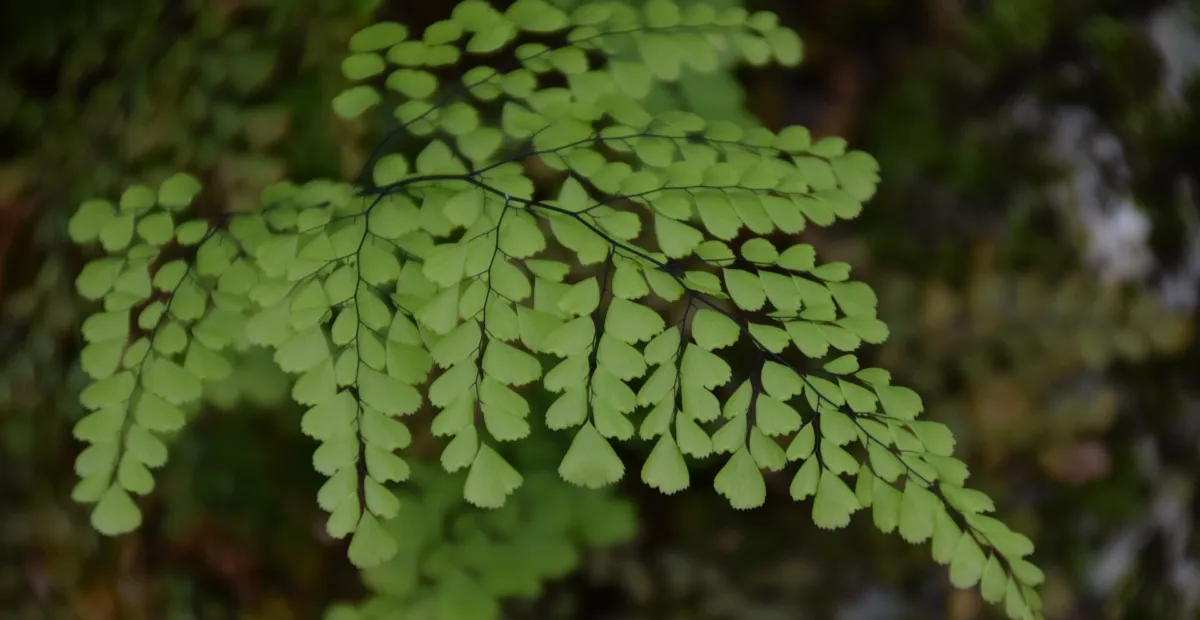
 Evergreen maidenhair (Adiantum venustum) short overview
Adiantum venustum, commonly called evergreen maidenhair, is a compact fern from the Himalayas and western to central China. Its slender, glossy dark stems carry many small, fan-shaped leaflets, while a creeping rhizome gradually forms a refined groundcover. In U.S. gardens it is best suited to sheltered woodland conditions, with evenly moist, humus-rich soil and shade or gentle filtered light. Despite its common name, foliage may become partly deciduous in colder climates.
Taxonomic classification
Evergreen maidenhair (Adiantum venustum) care guide
Light and placement
Best in full shade to partial shade, or bright filtered light under trees. An east- or north-facing position is usually safer than hot afternoon exposure; sheltered west-facing sites can work where summers are mild. Bleached, crisp fronds suggest excess light or dryness, while sparse, weak growth can indicate overly dark conditions.
Watering and humidity
Keep the root zone evenly moist, watering deeply when the surface just begins to dry rather than allowing repeated drought. Check containers frequently during warm weather and reduce watering somewhat during winter, while never letting the rhizome become fully dry. Humidity helps, but air movement is needed to limit fungal problems.
Soil and growing medium
Use a moisture-retentive but porous medium rich in organic matter, such as loam amended with leaf mold, compost, or fine bark. Drainage must remain reliable because saturated, airless soil can damage the rhizome. The species tolerates acid, neutral, and alkaline conditions, so structure and moisture are more important than precise pH correction.
Feeding
During active growth, feed monthly with a balanced liquid fertilizer diluted to half the label rate. Apply to already moist soil, not dry roots. Reduce or stop feeding during winter slowdown, after repotting, or when the plant is stressed by drought, cold, or root damage.
Growth and habit
A thin, creeping rhizome gradually develops a low, spreading clump. Growth is usually steady rather than fast, and the plant benefits from undisturbed rooting. Keep competing groundcovers away from the crown and renew mulch as needed without smothering the rhizome.
Planting and repotting
Plant in spring or early fall after extreme heat has passed. Set the rhizome at the soil surface rather than deeply burying it, and keep the crown from sitting in water. Allow enough room for the creeping habit to spread, while maintaining even moisture during establishment.
Repot container plants in spring only when the root mass or rhizome has filled the pot. Handle the thin rhizomes gently, move into a slightly larger shallow container, and water thoroughly after replanting. Avoid burying the crown deeply.
Propagation and pruning
Propagation
Propagate from spores when mature sori are present, preferably in a clean, sterile sowing medium. Division of established rhizomatous clumps is possible in spring but can be slow to recover; retain several growing points with each section and avoid unnecessary root disturbance.
Pruning
Routine pruning is unnecessary. In spring, remove dead, winter-damaged, or badly browned fronds at the base with clean scissors. Do not cut healthy green fronds merely to reshape the plant, because regrowth is relatively slow.
Overwintering
In Zones 5–6, use a sheltered site with an insulating mulch after the ground cools, keeping mulch away from the crown. Containers are more vulnerable to freezing and should be overwintered in a protected, cool location. Expect some foliage loss after severe cold even where the rhizome survives.
Uses
Used primarily as an ornamental fern for shaded beds, woodland-style plantings, edging, shaded rock gardens, and cool containers. Its spreading rhizome can provide a delicate low groundcover effect where soil remains reliably moist. No culinary or medicinal use is recommended here without stronger species-specific evidence.
Appearance
Fronds are broadly triangular and finely divided into many small, rounded to fan-shaped pinnules. The slender stipes and rachises are glossy castaneous brown to nearly black, while marginal sori occur in shallow notches and are covered by reflexed false indusia. The rhizome creeps close to the soil surface and may form a loose mat.
Pollination and visitors
This fern does not produce flowers, nectar, or pollen-bearing seed structures, so no animal pollinator attraction is documented. Reproduction occurs through spores.
Adiantum venustum photos
Click any photo for a larger view. Source, author and license are shown separately.
Diseases and pests
Diseases
Generally disease-free when air circulation and drainage are adequate. Brown or collapsing fronds often indicate drought, root stress, cold exposure, or excessively wet soil rather than a specific disease. Remove badly damaged foliage and correct the growing conditions.
Pests
Scale insects may occur under glass or in dry indoor conditions. Inspect stems and leaf undersides regularly. Isolate affected plants, remove small infestations manually, and use a labeled horticultural oil or insecticidal product only as directed, testing first because delicate fronds can scorch.
Related diseases and pests
Only Plant Doctor profiles whose host data indicate this plant may be affected are shown here.

Toxicity and pollen
No species-specific toxic effect was identified in the reviewed authoritative horticultural and taxonomic sources. As with any ornamental plant, avoid ingestion and supervise pets or children around plant material. Fern spores are reproductive particles, not pollen.
- Pollination / pollen
- Airborne fern spores, not pollen
Ferns do not produce pollen; they release spores from sori. Spores can become airborne when mature, but this is biologically different from pollen exposure. Species-specific allergy evidence for Adiantum venustum is limited, so sensitive individuals should avoid inhaling concentrated spore dust.
Native habitat
Native from Afghanistan through the Himalayas to western and central China. It occurs in temperate mountain settings, including rocky crevices, slopes, forest margins, and moist shaded sites. Natural populations are associated with cool conditions, organic debris, and dependable moisture rather than exposed dry ground.
Interesting fact
The species name venustum means beautiful or charming.
Its sori sit in marginal notches protected by reflexed leaf tissue.
The dark glossy rachises contrast strongly with the light green pinnules.
It is a terrestrial fern of mountain habitats, not an aquatic plant.
Fern reproduction uses spores rather than flowers and seeds.
Frequently asked questions (FAQ)
The most relevant questions about this plant, with short and direct answers.
🌱Quick care
How do you care for evergreen maidenhair (Adiantum venustum)?⌄
Grow evergreen maidenhair in shade or filtered light, keep the soil evenly moist, and use humus-rich, well-drained soil. Protect it from drying winds, hot afternoon sun, and severe winter exposure.
Is Adiantum venustum evergreen?⌄
Adiantum venustum is usually evergreen in mild climates and sheltered sites, but its fronds may brown or die back during severe cold. New growth can return when conditions improve.
How often should I water evergreen maidenhair?⌄
Water whenever the soil surface begins to dry, keeping the root zone consistently moist but not waterlogged. Do not allow the plant to experience repeated drought, especially while it is becoming established.
🌤️Environment and placement
What light does Adiantum venustum need?⌄
Adiantum venustum grows best in shade to filtered light, such as beneath trees or on a north- or east-facing site. Avoid strong direct afternoon sun, which can scorch its delicate fronds.
Can evergreen maidenhair grow indoors?⌄
Evergreen maidenhair can be grown indoors, but it is often more demanding than outdoor cultivation because it needs steady moisture and humidity. Place it in bright indirect light, away from heating vents, air-conditioning drafts, and hot windows.
What USDA hardiness zones suit Adiantum venustum?⌄
Adiantum venustum is generally grown in USDA Zones 5 through 8, with some fern references extending it into Zone 9. In colder areas, shelter the plant and expect exposed fronds to brown or die back after severe freezes.
Can Adiantum venustum tolerate frost?⌄
Adiantum venustum tolerates frost better than many maidenhair ferns when planted in a protected, moist site. Severe cold or exposed freezing winds can damage or remove the foliage, even if the rhizomes survive.
Where should I plant evergreen maidenhair outdoors?⌄
Plant evergreen maidenhair in a sheltered, shady location with reliable moisture, such as a woodland border, shaded rock garden, or protected area beneath trees. Avoid sites that become dry, exposed, or waterlogged.
💧Care and problems
What soil is best for Adiantum venustum?⌄
Use moist, humus-rich, well-drained loam for Adiantum venustum. Incorporating compost or leaf mold can improve moisture retention and organic matter without creating stagnant, poorly drained conditions.
Why are my Adiantum venustum fronds turning brown?⌄
Brown fronds usually result from drought, low humidity, intense sun, cold exposure, or drying wind. Check the soil and roots, move the plant to a more protected location if needed, and remove fully dead fronds.
Why is my evergreen maidenhair losing leaves?⌄
Evergreen maidenhair may lose fronds after severe cold, drought, transplanting, or sudden environmental changes. If the rhizomes remain healthy and the plant receives steady moisture, it may produce new fronds during the growing season.
Does Adiantum venustum need high humidity?⌄
Adiantum venustum performs best with moderate to high humidity, particularly indoors or in dry climates. Consistently moist soil and a sheltered planting site are generally more important than frequent misting.
What pests affect evergreen maidenhair?⌄
Scale, mites, mealybugs, slugs, and snails can affect maidenhair ferns, although serious infestations are uncommon. Inspect fronds regularly and improve growing conditions before using a treatment.
Can overwatering cause root rot in Adiantum venustum?⌄
Yes, overwatering can cause root rot when the soil remains saturated or drainage is poor. Keep the soil evenly moist, but use a porous planting medium and never leave the container standing in water.
🪴Planting and repotting
When is the best time to plant Adiantum venustum?⌄
Plant Adiantum venustum in spring or early fall, when temperatures are moderate and soil moisture is easier to maintain. Water thoroughly after planting and protect the young plant from drying conditions while it establishes.
Can evergreen maidenhair grow in a container?⌄
Evergreen maidenhair grows well in a container if the pot has drainage holes and the mix remains evenly moist. Use a moisture-retentive but well-drained mix, and protect the container from extreme winter cold.
How far apart should I plant Adiantum venustum?⌄
Space Adiantum venustum about 18 to 24 inches apart when planting several plants as a ground cover. The rhizomes spread gradually, so closer spacing gives faster coverage but increases competition for moisture.
Should I mulch evergreen maidenhair?⌄
A light layer of leaf mold or fine organic mulch helps retain moisture and moderates soil temperature around evergreen maidenhair. Keep mulch slightly away from the crown to reduce the risk of rot.
✂️Propagation and pruning
How do you propagate Adiantum venustum?⌄
Adiantum venustum can be propagated by dividing its rhizomes or by sowing spores. Division is the more practical method for gardeners, while spore propagation is slower and requires consistently humid, sterile conditions.
Can you divide evergreen maidenhair?⌄
Yes, divide evergreen maidenhair in spring as new growth begins or during mild weather. Separate sections with healthy rhizomes and roots, replant them at the original depth, and keep them evenly moist until established.
Can Adiantum venustum be grown from spores?⌄
Adiantum venustum can be grown from spores, but the process is slow and more exacting than division. Sow fresh spores on a moist, sterile, humus-rich medium and maintain high humidity until young plants develop.
Should I cut back evergreen maidenhair in winter?⌄
Cut back only fronds that are fully brown, damaged, or dead. In areas where the plant remains attractive through winter, leave healthy fronds in place and remove old foliage in late winter or early spring.
⚠️Toxicity and safety
Is Adiantum venustum toxic to dogs or cats?⌄
No species-specific toxicity is documented for Adiantum venustum, but evidence is limited and pets should not be encouraged to eat it. Contact a veterinarian or poison service if a pet consumes a large amount or develops symptoms.
Is evergreen maidenhair safe to eat?⌄
Evergreen maidenhair should not be treated as an edible plant. Although traditional medicinal uses are reported for some Adiantum species, safety and dosage are not established for home consumption.
🌸Flowering and special interest
Does Adiantum venustum produce flowers?⌄
No, Adiantum venustum does not produce flowers because it is a fern. It reproduces through spores, which develop in structures called sori on the undersides of fertile fronds.
When does Adiantum venustum produce spores?⌄
Adiantum venustum produces spores on fertile fronds, typically during the growing season when conditions support active growth. The sori appear on the undersides of the frond segments rather than as visible flowers or fruits.
Is Adiantum venustum a good ground cover?⌄
Yes, Adiantum venustum can form a spreading, fine-textured ground cover in shady, moist, humus-rich locations. It establishes gradually and is best suited to sites where the soil does not repeatedly dry out.
Similar plants
 Azure Monkshood (Aconitum carmichaelii) care guideAconitum carmichaelii
 Monkshood (Aconitum ‘Stainless Steel’)Aconitum 'Stainless Steel'
 Monkshood (Aconitum ‘Bressingham Spire’)Aconitum 'Bressingham Spire'
 Golden full moon maple (Acer shirasawanum ‘Aureum’)Acer shirasawanum 'Aureum'
 Globosum (Acer platanoides ‘Globosum’)Acer platanoides 'Globosum'
 Striped maple (Acer pensylvanicum) care guideAcer pensylvanicum