
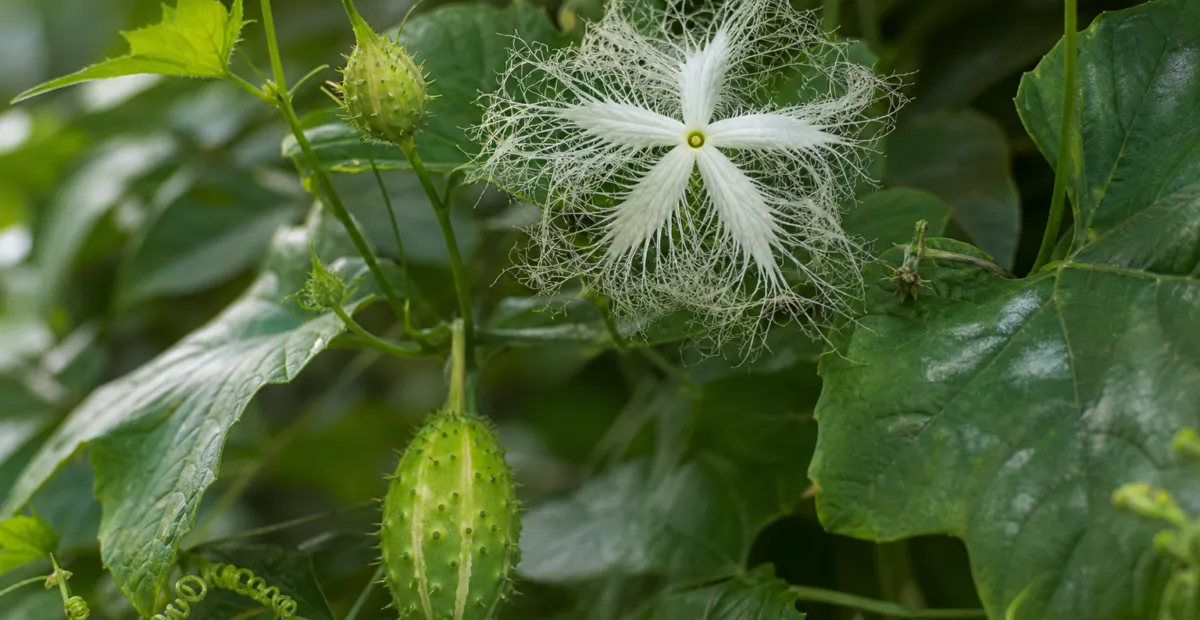
Trichosanthes cucumerina short overview
Trichosanthes cucumerina is a tender annual vine in the cucumber family, native from tropical and subtropical Asia to northern Australia. It climbs with branched tendrils and bears white, finely fringed flowers that are often fragrant at night. Slender fruits develop from greenish white to orange or dark red as they mature; young fruits are used as a cooked vegetable. In the United States, grow it in full sun after the soil and air become reliably warm.
Taxonomic classification
Trichosanthes cucumerina care guide
Light and placement
Give full sun, ideally 8 or more hours daily, with the trellis facing south or southwest where possible. Strong light supports vigorous vines and fruit production. Too little light causes long, weak stems, sparse flowering, and poor fruit set; intense heat combined with drought can cause wilt, scorched leaves, or premature flower drop, so maintain steady moisture.
Watering and humidity
Water deeply when the upper inch of soil begins to dry, keeping the root zone consistently moist but never saturated. Increase frequency during flowering, fruit enlargement, container growing, and hot weather. Mulch around—but not against—the stem to reduce evaporation. Good airflow is important in humid climates; avoid repeatedly wetting the foliage late in the day.
Soil and growing medium
Use fertile, moisture-retentive but well-drained soil with generous organic matter. A loamy garden soil or high-quality container mix is suitable. Slightly acidic to neutral conditions are appropriate; avoid stagnant, waterlogged ground because the vine has vigorous roots but does not tolerate poor drainage.
Feeding
Before planting, incorporate finished compost into the bed. Once vines are established, feed with a balanced vegetable fertilizer at label rates, then repeat lightly when flowering and fruiting begin if growth is pale or weak. Avoid heavy nitrogen after flowering, since it can produce excessive foliage at the expense of fruit. Do not fertilize drought-stressed or waterlogged plants.
Growth and habit
A fast-growing, twining annual that climbs by branched tendrils. It needs an early start or a long frost-free season to reach fruiting maturity in much of the United States. Train young shoots promptly, distribute stems across the support, and harvest regularly to keep the vine productive and manageable.
Planting and repotting
Sow indoors about 4–6 weeks before the expected last frost, or direct-sow after the soil is thoroughly warm. Plant seeds about 1 inch deep, using one seed per cell or spacing stations several feet apart. Harden transplants gradually, then set them beside a strong trellis in full sun. Keep the soil evenly moist during establishment.
Start seeds in individual pots or cell packs to minimize root disturbance. Transplant when the root ball holds together and nighttime temperatures are consistently warm. Containers should be large enough for a vigorous vine and include drainage holes; provide the trellis before the plant becomes crowded.
Propagation and pruning
Propagation
Propagate by seed. Sow fresh or properly stored seed in warm medium; germination is improved by consistent heat and may be helped by lightly nicking or soaking hard seed coats. Direct sowing is practical only after frost danger has passed and the soil is warm. Use vigorous seedlings for the longest United States growing seasons.
Pruning
Guide stems onto the support while young and remove damaged or diseased growth promptly. Once the trellis is filled, selectively shorten overly vigorous side shoots to improve access and air movement. Harvesting usually provides sufficient maintenance pruning; avoid severe cutting during heat or drought stress.
Overwintering
Treat it as an annual outside tropical climates. Harvest remaining usable fruit before the first frost and remove the vine after frost damage. In a heated greenhouse or very bright indoor space, it may be maintained temporarily, but its size, light requirement, and need for pollination make long-term indoor culture difficult.
Uses
Grow it primarily as a warm-season vegetable and ornamental trellis vine. Properly identified immature fruits are commonly cooked in curries, soups, and other vegetable dishes in South and Southeast Asian cuisines. The fringed flowers and colorful mature fruits also have ornamental value. Culinary use should focus on young, non-bitter fruit; medicinal claims are not established here.
Appearance
The vine has slender, furrowed, five-angled stems with branched tendrils and alternate, hairy, often deeply five- to seven-lobed leaves. Male flowers occur in axillary racemes, while female flowers are generally solitary. Fruits are cylindrical and often twisted, changing from pale green or greenish white to orange or dark red as they mature.
Flowering
This monoecious vine bears separate male and female flowers on the same plant. Male flowers are typically arranged in axillary racemes, while female flowers are usually solitary. The white corolla lobes have conspicuous threadlike fringes, and flowers commonly open or become most noticeable at night. Flowering occurs during warm-season growth.
Pollination and visitors
The flowers are insect-pollinated, with nocturnal opening and fragrance likely favoring night-active insects. Available horticultural literature describes pollination as entomophilous, but a specific primary insect species was not sufficiently documented for this profile.
Trichosanthes cucumerina photos
Click any photo for a larger view. Source, author and license are shown separately.
Diseases and pests
Diseases
Prevent disease by using clean seed, rotating cucurbit crops, watering at the soil line, and providing strong air circulation. Watch for powdery mildew, downy mildew, anthracnose, and fruit rots, especially during humid weather. Remove badly affected foliage and avoid overhead irrigation; use locally labeled treatments only when cultural control is insufficient.
Pests
Inspect new growth and developing fruit for aphids, whiteflies, spider mites, cucumber beetles, melon flies, and caterpillars. Use row cover over young plants where appropriate, remove covers when flowers need pollination, hand-pick larger pests, and encourage beneficial insects. Harvest promptly and remove damaged fruit. Apply insecticides only when necessary and according to the label.
Related diseases and pests
Only Plant Doctor profiles whose host data indicate this plant may be affected are shown here.
Toxicity and pollen
The species is cultivated for properly prepared immature fruit, but published records also describe bioactive or potentially toxic compounds in seeds and other plant parts, and mature fruit may become bitter. Do not use roots, concentrated extracts, or medicinal preparations without qualified professional advice. Avoid eating unidentified, unusually bitter, or improperly prepared material; keep seed and plant material away from children and pets.
- Typical season
- Late spring through early fall in warm-season cultivation
- Pollination / pollen
- Insect-borne pollen, not primarily wind-dispersed
This is an insect-pollinated flowering vine, so pollen is generally released from the anthers rather than dispersed in large quantities by wind. Species-specific clinical allergy information is scarce, and insect pollination does not prove zero allergy risk. Sensitive gardeners should avoid handling flowers during peak activity if symptoms occur.
Native habitat
The species is native across tropical and subtropical parts of South and Southeast Asia and extends to northern Australia. It is associated with warm seasonal climates, open disturbed habitats, cultivated plots, and other sites where a climbing annual can use surrounding vegetation or supports. Fertile soils with dependable moisture suit active growth.
Interesting fact
The species is monoecious, producing male and female flowers on one vine. Its flowers have unusually long, hairlike fringes on the corolla lobes. Cultivated forms can produce very long, slender fruits, while wild forms are often much smaller. Mature fruits develop orange to dark red coloration and contain soft red pulp.
Frequently asked questions (FAQ)
The most relevant questions about this plant, with short and direct answers.
🌱Quick care
What is Trichosanthes cucumerina?⌄
Trichosanthes cucumerina is a frost-tender, climbing annual in the cucumber family, Cucurbitaceae. It is native from tropical and subtropical Asia to northern Australia and is grown for its unusual flowers and, in cultivated forms, edible immature fruits.
Is Trichosanthes cucumerina easy to grow?⌄
Trichosanthes cucumerina is moderately easy to grow when given heat, full sun, steady moisture, fertile soil, and a strong trellis. It is more challenging in much of the United States because it grows poorly in cool weather and cannot tolerate frost.
Does Trichosanthes cucumerina come back every year?⌄
In frost-free climates, Trichosanthes cucumerina may behave as a short-lived or perennial-like vine, depending on the form and local conditions. In most U.S. gardens, frost kills it and it is grown as a warm-season annual.
🌤️Environment and placement
How much sun does Trichosanthes cucumerina need?⌄
Give Trichosanthes cucumerina full sun, ideally at least 6 to 8 hours of direct sunlight daily. Strong light supports vigorous vine growth, flowering, and fruit development.
Can Trichosanthes cucumerina grow in partial shade?⌄
Trichosanthes cucumerina can survive in light partial shade, but it generally grows and flowers better in full sun. Too much shade may produce a weak, leafy vine with fewer flowers and fruits.
What USDA hardiness zones are suitable for Trichosanthes cucumerina?⌄
Trichosanthes cucumerina is best treated as a warm-season annual in most of the United States because it is frost tender. It may persist outdoors year-round only in genuinely frost-free tropical or subtropical locations, roughly corresponding to the warmest USDA zones.
What soil is best for Trichosanthes cucumerina?⌄
Use fertile, moisture-retentive, well-drained loam enriched with compost. The soil should hold consistent moisture without becoming waterlogged, because both drought stress and poor drainage can reduce growth.
How large does Trichosanthes cucumerina get?⌄
Trichosanthes cucumerina forms a long, twining vine rather than a compact plant, so it needs substantial vertical and horizontal room. Exact vine length varies with cultivar, climate, soil fertility, and support conditions.
💧Care and problems
How often should I water Trichosanthes cucumerina?⌄
Keep the soil evenly moist throughout the growing season, watering whenever the surface begins to dry. Increase attention during flowering and fruiting, but avoid standing water around the roots.
Does Trichosanthes cucumerina need a trellis?⌄
Yes, Trichosanthes cucumerina is a vigorous climber and should be given a sturdy trellis, fence, arbor, or other support. A strong structure is especially important because mature fruits can become long and heavy.
How do I fertilize Trichosanthes cucumerina?⌄
Amend the soil with compost before planting and use a balanced vegetable fertilizer according to its label during active growth. Avoid excessive nitrogen, which can encourage leaves and vines at the expense of flowers and fruit.
Why does Trichosanthes cucumerina produce flowers but no fruit?⌄
Flowers may fail to produce fruit because female flowers have not appeared yet, pollinators are scarce, temperatures are unfavorable, or the flowers were damaged. If necessary, transfer pollen from a freshly opened male flower to a female flower by hand.
How do I pollinate Trichosanthes cucumerina by hand?⌄
Use a small, clean brush or cotton swab to move pollen from a male flower onto the stigma of a newly opened female flower. Hand-pollinate early in the day while both flowers are fresh, and repeat on nearby female flowers if needed.
How can I keep Trichosanthes cucumerina fruits straight?⌄
Train developing fruits where they have room to hang freely from a strong support. Some production methods use a light, carefully secured weight at the fruit tip, but this should be done cautiously to avoid breaking the vine or fruit stem.
When should Trichosanthes cucumerina fruits be harvested?⌄
Harvest cultivated fruits while they are immature and still tender, using the cultivar’s expected size and color as guides. Mature fruits may become more fibrous and develop colored pulp and seeds, making them less suitable as a vegetable.
What pests affect Trichosanthes cucumerina?⌄
Commonly reported pests include fruit flies and several cucurbit-feeding beetles, including pumpkin and epilachna beetles. Inspect leaves, flowers, and developing fruits frequently and use crop-appropriate integrated pest-management methods rather than routine spraying.
Why are Trichosanthes cucumerina leaves turning yellow?⌄
Yellow leaves may result from overwatering, poor drainage, nutrient deficiency, drought stress, or normal aging of older foliage. Check soil moisture and roots first, then correct drainage and feeding rather than automatically adding more fertilizer.
🪴Planting and repotting
When should I plant Trichosanthes cucumerina in the United States?⌄
Plant Trichosanthes cucumerina outdoors only after the danger of frost has passed and the soil is consistently warm. In short-season areas, start seeds indoors several weeks before the local last frost date and transplant carefully after temperatures stabilize.
Can Trichosanthes cucumerina grow in a container?⌄
Yes, Trichosanthes cucumerina can grow in a large container if it has fertile soil, reliable drainage, consistent moisture, full sun, and a sturdy trellis. Container plants dry out faster than garden plants and may produce less growth or fruit.
Does Trichosanthes cucumerina need winter protection?⌄
Yes, protect Trichosanthes cucumerina from frost and cold temperatures, although outdoor protection is rarely practical once a hard freeze is expected. In colder regions, collect mature seed or grow the plant in a container that can be moved indoors before frost.
✂️Propagation and pruning
How do I grow Trichosanthes cucumerina from seed?⌄
Sow fresh seeds in warm, well-drained seed-starting mix and keep them evenly moist in bright light. Transplant seedlings only after frost danger has passed, because root disturbance and cold conditions can slow establishment.
Can Trichosanthes cucumerina be propagated from cuttings?⌄
Trichosanthes cucumerina is most commonly grown from seed, and reliable home propagation from stem cuttings is not as well documented. Specialized laboratory tissue-culture methods exist, but they are generally unnecessary for ordinary garden production.
How should I prune Trichosanthes cucumerina?⌄
Prune only to remove damaged growth, control the vine, or guide stems onto the support. Avoid heavy pruning during flowering and fruiting, since removing too much productive growth can reduce the crop.
⚠️Toxicity and safety
Can you eat Trichosanthes cucumerina?⌄
Immature fruits of cultivated forms are commonly eaten as a cooked vegetable in parts of South and Southeast Asia. Only eat produce from a confidently identified, food-cultivar plant and follow reliable preparation guidance, because bitterness and safety can vary.
Is Trichosanthes cucumerina poisonous?⌄
Trichosanthes cucumerina warrants moderate caution because different plant parts and concentrated preparations have been associated with medicinal use and potential adverse effects. Do not self-medicate with the roots, leaves, seeds, extracts, or supplements without qualified medical advice.
Are Trichosanthes cucumerina seeds safe to eat?⌄
Do not assume that Trichosanthes cucumerina seeds are safe to eat simply because immature fruits are used as vegetables. Seed safety depends on the plant form and preparation, so avoid consuming them unless a reliable food-specific source confirms appropriate use.
Is Trichosanthes cucumerina safe for dogs and cats?⌄
The safety of Trichosanthes cucumerina for dogs and cats is not sufficiently established for casual ingestion. Keep pets from chewing the plant and contact a veterinarian or pet poison service if any part is eaten, especially if vomiting or diarrhea develops.
Can pregnant or breastfeeding people use Trichosanthes cucumerina medicinally?⌄
Avoid medicinal use of Trichosanthes cucumerina during pregnancy or breastfeeding unless a qualified clinician specifically approves it. Traditional reports and laboratory research are not a substitute for established human safety evidence, and some preparations may have strong biological effects.
🌸Flowering and special interest
Why is my Trichosanthes cucumerina not flowering?⌄
Insufficient sunlight, cool temperatures, drought, excessive nitrogen, or an immature vine can delay flowering in Trichosanthes cucumerina. Provide full sun, consistent moisture, warmth, and support, then allow time for male flowers to appear before expecting fruit.
When does Trichosanthes cucumerina flower?⌄
Trichosanthes cucumerina commonly begins flowering about five weeks after planting under warm growing conditions, although timing varies. Male flowers usually appear first, followed shortly by female flowers on the same plant.
What do Trichosanthes cucumerina flowers look like?⌄
The flowers are white and distinctive, with narrow, threadlike fringes along the petals. Male flowers are typically borne in clusters, while female flowers are generally solitary and develop behind the flower at the ovary.
Are Trichosanthes cucumerina flowers male and female on the same plant?⌄
Yes, Trichosanthes cucumerina is monoecious, meaning one plant produces separate male and female flowers. This allows a single plant to set fruit if pollination occurs, although insect activity and suitable weather still matter.
Similar plants
 Musk cucumber (Sicana odorifera) care guideSicana odorifera
  Bitter Gourd (Momordica charantia) care guideMomordica charantia
 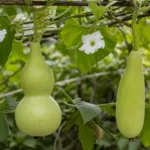 Calabash (Lagenaria siceraria) care guideLagenaria siceraria
 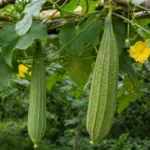 Sponge Gourd (Luffa aegyptiaca) care guideLuffa aegyptiaca
 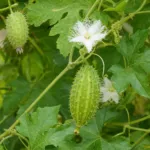 CAIGUA (Cyclanthera pedata) care guideCyclanthera pedata
 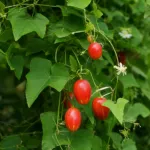 Scarlet gourd (Coccinia grandis) care guideCoccinia grandis