
 AI-generated illustration
Ostara (Nerine bowdenii ‘Ostara’) short overview
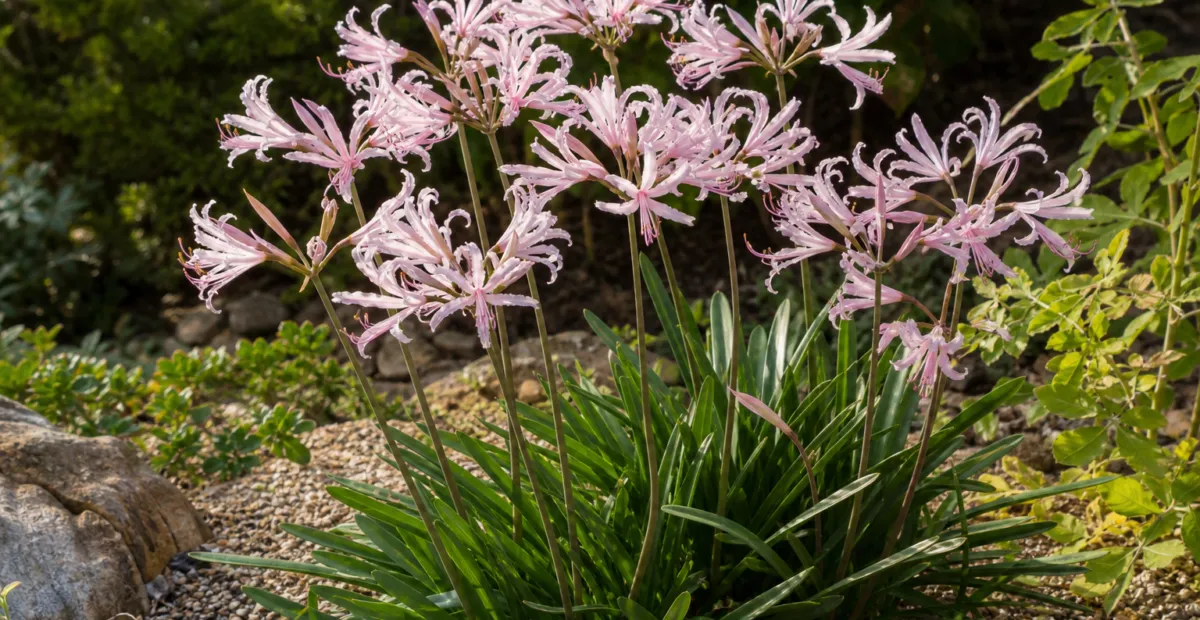
Nerine bowdenii 'Ostara' is a bulbous perennial selected for its elegant, pale pink flowers, which open in autumn on upright, leafless stems. Wavy, reflexed tepals and long stamens give the blooms a delicate spider-like appearance, while strap-shaped green leaves develop around the flowering period. Grow it in full sun, in sharply drained soil, a raised bed, or a container that can be protected from severe winter wet and cold.
Taxonomic classification
Ostara (Nerine bowdenii ‘Ostara’) care guide
Light and placement
Give full sun, ideally in a south- or west-facing, sheltered position with protection from prolonged winter wet. Bright light supports sturdy stems and flowering. Too little light can produce weaker growth and fewer flowers; excessive heat is usually less problematic than poor drainage, provided the plant is watered during active growth.
Watering and humidity
Water thoroughly during active leaf growth, allowing the upper medium to dry somewhat between waterings. Reduce watering as foliage dies back and keep dormant bulbs relatively dry, especially in winter. Containers need more frequent checks than garden soil, but standing water should never remain around the bulb.
Soil and growing medium
Use a gritty, sharply drained soil or container mix. Nerines tolerate a broad pH range, from acidic to alkaline, provided drainage is excellent. Avoid heavy, waterlogged ground, especially during winter dormancy. A raised bed, sandy loam, or bulb compost amended with grit is suitable.
Feeding
Feed sparingly. Apply a balanced, diluted fertilizer once or twice while the leaves are actively growing, or top-dress lightly with mature compost in spring. Do not fertilize dormant bulbs, and avoid high-nitrogen feeding that produces lush foliage at the expense of sturdy flowering.
Growth and habit
This is a summer-growing, deciduous bulb that forms a seasonal clump. Flower stems emerge around the autumn bloom period, with strap-shaped leaves associated with active growth. Avoid unnecessary division because established bulbs commonly perform better when left crowded.
Planting and repotting
Plant in spring once the soil is workable and warming. Set bulbs with the neck at or just above soil level; in colder or wetter areas, keep the upper portion exposed. Space about 3–4 inches apart for a close display, since established bulbs often flower better when slightly crowded.
Repot container-grown bulbs only when crowded or when the medium has deteriorated, preferably while dormant or just before spring growth. Retain the bulb neck above the surface and avoid excessive root disturbance. Bulbs generally flower best when left undisturbed for several years.
Propagation and pruning
Propagation
Divide offsets after flowering or during dormancy, but do so sparingly because crowded bulbs often flower more reliably. Fresh seed can be sown promptly after ripening; seedlings usually require several years before flowering and may not reproduce the cultivar exactly.
Pruning
No routine pruning is required. Remove spent flower stems if seed production is not wanted, and allow healthy leaves to finish naturally before removing yellow or dead foliage. Do not cut green leaves prematurely because they replenish the bulb.
Overwintering
In USDA Zones 7–10, protect bulbs with a dry winter mulch in exposed or colder sites. In colder regions, grow in containers and move them to a cool, frost-protected space after growth declines. Keep dormant bulbs cool and mostly dry, then return them outdoors when severe freezing has passed.
Uses
Use 'Ostara' for late-season color in sunny borders, gravel gardens, raised beds, and containers. Its long-stemmed umbels can be used as cut flowers. It is ornamental only; the bulbs should not be eaten and should be kept away from pets and children.
Appearance
The plant forms a compact bulbous clump with upright, leafless flowering stems and narrow, strap-shaped green leaves. 'Ostara' is recognized by its soft pale pink to silvery pink flowers, wavy reflexed tepals, prominent stamens, and terminal umbels that create a delicate spider-like outline.
Flowering
Flowering occurs in early to mid-fall, commonly from September into October in temperate climates. Upright, leafless stems carry terminal umbels of lily-like flowers. The foliage is associated with the seasonal growth cycle and may persist into winter in mild climates, while plants can become dormant in colder conditions.
Pollination and visitors
Reliable cultivar-specific visitor records were not located. As an insect-pollinated Nerine, the open umbels may be visited by insects, but the strength and identity of visitation should be treated as undocumented for 'Ostara'.
Diseases and pests
Diseases
Usually trouble-free in well-drained conditions. Excess winter moisture can encourage bulb rot. Remove damaged material, improve drainage, avoid overwatering during dormancy, and use clean planting stock. Virus problems are uncommon in garden collections but warrant removal of plants showing persistent streaking or distorted growth.
Pests
Slugs may damage emerging foliage or flowers, especially in damp gardens. Inspect plants regularly, remove hiding places, improve air circulation, and use proportionate slug controls where needed. Avoid keeping containers chronically wet.
Related diseases and pests
Only Plant Doctor profiles whose host data indicate this plant may be affected are shown here.




Toxicity and pollen
The bulbs are considered potentially harmful if eaten. Keep planting material away from children and pets, do not use it as food, and wash hands after handling; gloves are sensible for people with sensitive skin. The available warning applies to ornamental Nerine bulbs rather than documenting a cultivar-specific poisoning profile.
- Typical season
- No reliable US exposure period documented for this cultivar
- Pollination / pollen
- Flower pollen; airborne-allergy behavior not established
No dependable cultivar-specific airborne-pollen or allergy studies were found. The flowers are showy and insect-oriented, but insect pollination does not prove zero allergy risk. People with significant pollen sensitivity should avoid handling flowers during peak bloom if symptoms occur.
Native habitat
The species originates in mountainous regions of South Africa, including the Drakensberg and Eastern Cape. It is adapted to seasonal growth, sunny exposures, and soils that drain freely rather than remaining saturated through winter.
Interesting fact
The cultivar is associated with soft pink flowers rather than the stronger pink commonly seen in the species. Nerines often flower best when bulbs remain undisturbed and slightly crowded. Freshly produced seeds can germinate readily, but seedlings take several years to reach flowering size.
Frequently asked questions (FAQ)
The most relevant questions about this plant, with short and direct answers.
🌱Quick care
What is Nerine bowdenii 'Ostara'?⌄
Nerine bowdenii 'Ostara' is a bulbous perennial in the Amaryllidaceae family, grown for its pale pink, ruffled flowers on upright stems. It is a deciduous plant with strap-shaped foliage and a typical mature height of about 20 inches.
Is Nerine bowdenii 'Ostara' easy to grow?⌄
Yes, Nerine bowdenii 'Ostara' is generally easy to grow when planted in full sun and sharply drained soil. Its main risks are winter wet, hard frost, and overwatering during dormancy.
When does Nerine bowdenii 'Ostara' bloom?⌄
Nerine bowdenii 'Ostara' usually blooms in fall, often from September through November. Flowering can vary with climate, planting conditions, and whether the bulbs are grown in the ground or in containers.
How tall does Nerine bowdenii 'Ostara' get?⌄
Nerine bowdenii 'Ostara' typically reaches about 20 inches tall, although individual plants may vary. Its flower stems rise above the foliage and carry rounded clusters of blooms.
🌤️Environment and placement
Does Nerine bowdenii 'Ostara' need full sun?⌄
Yes, plant Nerine bowdenii 'Ostara' in full sun for the strongest growth and best flowering. A warm, sheltered site is especially useful in areas with cool or wet autumns.
Can Nerine bowdenii 'Ostara' grow in partial shade?⌄
Nerine bowdenii 'Ostara' may tolerate light partial shade, but full sun is more reliable for flowering. Avoid deep shade, which can produce weaker stems and fewer flowers.
What soil is best for Nerine bowdenii 'Ostara'?⌄
Use gritty, well-drained loam, sandy soil, or a free-draining bulb compost. Heavy or waterlogged soil should be amended substantially or avoided because it can cause bulb rot.
Can Nerine bowdenii 'Ostara' grow in containers?⌄
Yes, Nerine bowdenii 'Ostara' grows well in a container filled with gritty, well-drained bulb compost. Container culture is particularly useful where winters are cold or consistently wet.
Is Nerine bowdenii 'Ostara' hardy in the United States?⌄
Nerine bowdenii 'Ostara' is best treated as a protected bulb in colder parts of the United States. In mild areas it may remain outdoors in a sheltered, well-drained site, while colder regions should use containers or winter protection.
Where should I plant Nerine bowdenii 'Ostara' outdoors?⌄
Choose a sunny, sheltered location such as a warm border, gravel garden, or wall-side bed. The site should drain quickly and remain relatively dry while the bulb is dormant.
💧Care and problems
How often should I water Nerine bowdenii 'Ostara'?⌄
Water Nerine bowdenii 'Ostara' moderately while it is actively growing, allowing the soil to dry somewhat between waterings. Reduce watering sharply during dormancy and avoid keeping the bulb wet.
Why is my Nerine bowdenii 'Ostara' not flowering?⌄
Poor flowering is often caused by insufficient sun, excessive summer moisture, recently disturbed bulbs, or immature clumps. Nerines can take a few seasons to settle and often flower better when left undisturbed.
Why are the bulbs of Nerine bowdenii 'Ostara' rotting?⌄
Bulb rot is usually caused by overly wet soil, poor drainage, or excessive watering during dormancy. Move the plant to gritty soil or a free-draining container and water sparingly when inactive.
Does Nerine bowdenii 'Ostara' have common pests?⌄
Nerine bowdenii 'Ostara' is generally trouble-free but may be affected by slugs, especially when new foliage emerges. Inspect plants regularly and keep surrounding areas free of hiding places.
Does Nerine bowdenii 'Ostara' need fertilizer?⌄
Nerine bowdenii 'Ostara' usually needs only moderately fertile soil rather than heavy feeding. If growth is weak, apply a restrained bulb fertilizer during active growth according to the product label.
🪴Planting and repotting
When should I plant Nerine bowdenii 'Ostara' bulbs?⌄
Plant Nerine bowdenii 'Ostara' bulbs in early spring or when they are available and the soil can be worked. Spring planting gives the bulbs time to establish before their fall flowering period.
How deep should I plant Nerine bowdenii 'Ostara' bulbs?⌄
Plant the bulbs shallowly, leaving the neck just above or level with the soil surface. Shallow planting improves drainage and follows the cultivation practice recommended for this nerine.
How far apart should Nerine bowdenii 'Ostara' bulbs be planted?⌄
Space Nerine bowdenii 'Ostara' bulbs about 4 to 6 inches apart. They can be planted closer for a fuller display, but overcrowding should eventually be corrected by division.
Can I plant Nerine bowdenii 'Ostara' in heavy clay soil?⌄
Nerine bowdenii 'Ostara' can grow in clay only if drainage is improved substantially. Incorporate grit or other drainage materials and consider a raised bed or container if the soil remains wet.
Should I repot Nerine bowdenii 'Ostara' every year?⌄
No, Nerine bowdenii 'Ostara' does not need annual repotting and generally flowers better when left undisturbed. Repot only when the container is overcrowded, the compost has degraded, or drainage has declined.
Can Nerine bowdenii 'Ostara' stay in the ground over winter?⌄
It can remain in the ground in mild, sheltered areas with excellent drainage. In colder parts of the United States, protect the planting with a dry mulch or grow the bulbs in containers that can be moved under cover.
✂️Propagation and pruning
How do I propagate Nerine bowdenii 'Ostara'?⌄
Propagate Nerine bowdenii 'Ostara' by separating offsets from an established clump after flowering or when the plant is dormant. Replant the offsets shallowly in sharply drained soil.
When should I divide Nerine bowdenii 'Ostara'?⌄
Divide Nerine bowdenii 'Ostara' after flowering, once the foliage has begun to decline and the bulbs are entering dormancy. Avoid unnecessary disturbance because mature clumps may flower more reliably when left in place.
Should I cut back Nerine bowdenii 'Ostara' after flowering?⌄
Do not cut the foliage immediately after flowering; allow it to yellow and die back naturally so it can replenish the bulb. Remove only completely dead leaves and spent flower stems.
⚠️Toxicity and safety
Is Nerine bowdenii 'Ostara' poisonous to people?⌄
The ornamental bulbs of Nerine bowdenii 'Ostara' are potentially harmful if eaten. Keep bulbs away from children and pets, and wear gloves when handling them if you have sensitive skin.
Is Nerine bowdenii 'Ostara' toxic to pets?⌄
The bulbs should be treated as potentially harmful to pets if eaten. Contact a veterinarian or an appropriate poison resource promptly if a pet chews or swallows any part of the plant.
🌸Flowering and special interest
What do Nerine bowdenii 'Ostara' flowers look like?⌄
The flowers are pale pink to pinkish white, with wavy or ruffled reflexed petals and prominent stamens. They appear in rounded clusters on upright, leafless stems.
Is Nerine bowdenii 'Ostara' fragrant?⌄
Nerine bowdenii 'Ostara' is not generally considered strongly fragrant, and fragrance reports are inconsistent. Its main ornamental feature is the delicate color and ruffled flower form.
Can Nerine bowdenii 'Ostara' be used as a cut flower?⌄
Yes, Nerine bowdenii 'Ostara' makes a useful cut flower because its upright stems and clustered blooms provide a late-season display. Cut stems when the flowers are opening and place them in clean water.
Similar plants
 Large Pink Nerine (Nerine bowdenii) care guideNerine bowdenii
 Zeal Giant (Nerine bowdenii ‘Zeal Giant’)Nerine bowdenii 'Zeal Giant'
 Crape-flower (Nerine undulata) care guideNerine undulata
 Isabel (Nerine bowdenii ‘Isabel’)Nerine bowdenii 'Isabel'
 Alba (Nerine bowdenii ‘Alba’)Nerine bowdenii 'Alba'
 Aphrodite (Nerine bowdenii ‘Aphrodite’)Nerine bowdenii 'Aphrodite'