
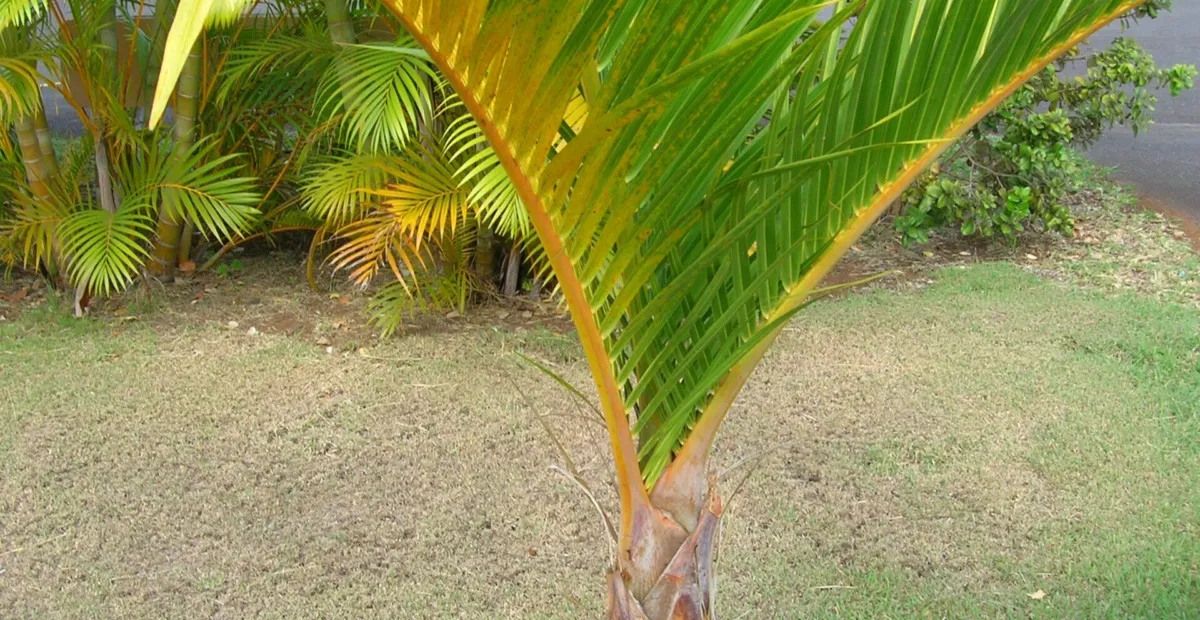
 Source:
Spindle Palm (Hyophorbe verschaffeltii) short overview
Spindle Palm (Hyophorbe verschaffeltii) is a distinctive tropical palm endemic to Rodrigues in the Mascarene Islands. Its solitary trunk swells through the middle like a spindle and supports a smooth green crownshaft with recurved, featherlike fronds. Cream to yellowish flowers emerge beneath the crownshaft and develop into orange-red fruit. In the United States, it suits warm frost-free landscapes, patios, and bright containers, but needs protection from freezing temperatures.
Taxonomic classification
Spindle Palm (Hyophorbe verschaffeltii) care guide
Light and placement
Give full sun for the strongest growth and best trunk form, although partial shade is tolerated, especially in hot inland climates. In containers, place it near a bright south- or west-facing exposure with several hours of direct sun. Too little light causes slower growth and weaker, more open fronds; harsh abrupt exposure after indoor culture can scorch leaves, so acclimate gradually.
Watering and humidity
Water deeply when the upper few inches of soil begin to dry, then allow excess water to drain completely. Keep newly planted palms evenly moist while establishing, but avoid constantly saturated soil. Reduce watering in cool weather and increase it during hot, dry periods. Humidity is helpful indoors, though good airflow remains important.
Soil and growing medium
Use a loose, sharply draining mix based on sand, loam, or coarse mineral material. The species occurs in sandy and limestone-influenced habitats, so drainage is more important than rich organic texture. Neutral to slightly alkaline conditions are acceptable, while stagnant wet soil and compacted clay should be avoided.
Feeding
Feed during warm active growth with a balanced palm fertilizer that includes magnesium and micronutrients, following the product label. Apply to moist soil and water afterward. Do not fertilize during cold, dark, or drought-stressed periods, and avoid heavy applications that can damage roots.
Growth and habit
A solitary, slow-growing palm that develops a stout trunk and a compact crown of pinnate leaves. It is generally self-cleaning in warm landscapes, but old leaves or fallen fruit may still require removal. Growth slows substantially with cool temperatures, low light, or root restriction.
Planting and repotting
Plant outdoors after the soil has warmed and all risk of frost has passed. Set the root flare at the original soil level rather than burying the trunk. Space it as a specimen with room for the crown and trunk, and water consistently during establishment while avoiding prolonged saturation.
Repot container plants only when roots have filled the pot, preferably during warm active growth. Move up one pot size and preserve the root ball as much as practical. Use a heavy, well-drained container because the mature palm becomes top-heavy.
Propagation and pruning
Propagation
Propagate from fresh seed. Clean the fruit, sow in a warm, airy, well-drained medium, and maintain steady moisture without waterlogging. Germination may take several months, and seedlings need warmth and bright light.
Pruning
Remove only dead, damaged, or completely brown fronds with clean tools. Do not cut green leaves or damage the crownshaft. Remove spent inflorescences or fallen fruit when tidiness is important, taking care not to injure the trunk.
Overwintering
Move container plants indoors before freezing weather. Provide the brightest available light, protect the crown from cold drafts, and water sparingly when growth slows. Outdoor specimens in marginal climates need frost cloth, trunk protection, and a warm microclimate, but prolonged freezes may still be fatal.
Uses
Primarily used as an ornamental specimen palm in tropical and subtropical landscapes, courtyards, poolside plantings, and large containers. Its unusual trunk and crownshaft make it especially valuable as a focal plant. It is not recommended as a food plant without authoritative preparation and safety information.
Appearance
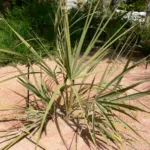
The gray, ringed trunk is notably swollen at mid-height, producing the spindle profile. A smooth green crownshaft rises above it, sometimes showing blue-green tones or vertical color variation. Pinnate leaves carry lance-shaped leaflets at varied angles, giving the crown a feathery but architectural appearance.
Flowering
This monoecious palm produces branched inflorescences below the crownshaft. Male and female flowers occur on the same inflorescence. Flowers are described as white, cream, or yellowish, followed by rounded fruits that mature orange to red.
Pollination and visitors
The flowers are functionally insect-pollinated in the broad botanical sense, but a reliable species-specific visitor or pollinator record was not located. The palm is monoecious, with male and female flowers on the same inflorescence.
Hyophorbe verschaffeltii photos
Click any photo for a larger view. Source, author and license are shown separately.
Diseases and pests
Diseases
Susceptible to lethal yellowing disease in areas where the pathogen occurs. Avoid planting in known disease hotspots, monitor for rapid yellowing and decline, and remove severely affected material according to local extension guidance.
Pests
Inspect for scale insects, mealybugs, mites, and palm-feeding weevils, especially on stressed container plants. Improve airflow, avoid drought stress, and use targeted treatment only when pests are confirmed.
Toxicity and pollen
No clear, authoritative species-specific toxicity assessment for humans, dogs, cats, or children was located. Do not treat the plant as proven edible or proven harmless; discourage chewing and contact a veterinarian or poison-control service after significant ingestion.
- Pollination / pollen
- Pollen produced by flowers; airborne relevance undocumented
This is a flowering palm that produces pollen, but reliable species-specific evidence about airborne pollen levels or allergy importance was not located. Flowering plants can still cause individual sensitivity, so avoid handling inflorescences if they provoke symptoms.
Native habitat
Native to Rodrigues in the Mascarene Islands east of Madagascar. It is associated with seasonally dry tropical conditions, low elevations, sandy soils, and limestone-influenced substrates. In cultivation it performs best with warmth, strong light, excellent drainage, and protection from freezes.
Interesting fact
The species is endemic to Rodrigues, an island in the Indian Ocean. Its common name refers to the trunk, which is widest around the middle and narrows toward both ends. The smooth green crownshaft and recurved pinnate leaves give it a strong architectural silhouette.
Frequently asked questions (FAQ)
The most relevant questions about this plant, with short and direct answers.
🌱Quick care
What is the Spindle Palm?⌄
The Spindle Palm is Hyophorbe verschaffeltii, a slow-growing, single-trunk palm recognized by its spindle-shaped trunk and green crownshaft. It is native to Rodrigues and is grown as a tropical or subtropical landscape specimen.
How much sunlight does a Spindle Palm need?⌄
Spindle Palm grows best in full sun but also tolerates partial shade. Give indoor or container plants the brightest light available, while protecting newly planted palms from sudden intense afternoon sun until they acclimate.
How often should you water a Spindle Palm?⌄
Water a Spindle Palm when the upper layer of soil begins to dry, then water deeply and allow excess moisture to drain. Keep the root zone moderately moist during hot or dry weather, but avoid constantly wet soil.
How cold hardy is a Spindle Palm?⌄
Spindle Palm is frost-tender and should be protected from freezing temperatures. It is generally best suited to warm USDA Zones 10–11, although local microclimates and brief cold exposure can affect survival.
🌤️Environment and placement
Can a Spindle Palm grow indoors?⌄
A Spindle Palm can grow indoors while young if it receives very bright light, good drainage, and adequate humidity. Its eventual size and need for strong sunlight make it better suited to a sunny patio, greenhouse, or warm outdoor landscape.
Where should I plant a Spindle Palm outdoors?⌄
Plant a Spindle Palm in a warm, sunny, sheltered location with excellent drainage and enough room for its mature crown. Avoid exposed sites where cold winds, standing water, or reflected heat may stress the foliage.
Can Spindle Palm tolerate salt spray?⌄
Spindle Palm has useful salt tolerance and can perform near coastal areas, but it still needs well-drained soil and protection from severe wind. Rinse foliage occasionally if salt deposits accumulate during prolonged dry weather.
What soil is best for a Spindle Palm?⌄
Use well-drained sandy or loamy soil for a Spindle Palm. It tolerates limestone-based conditions, but heavy clay or compacted soil should be amended or avoided because poor drainage can damage the roots.
💧Care and problems
Why are Spindle Palm leaves turning yellow?⌄
Yellowing leaves can result from watering stress, nutrient deficiencies, cold injury, pests, or disease. Older lower leaves naturally yellow before they die, but sudden yellowing throughout the crown warrants checking drainage, nutrition, and signs of lethal yellowing.
How do I fertilize a Spindle Palm?⌄
Fertilize Spindle Palm during active growth with a palm fertilizer that supplies potassium and other micronutrients. Follow the product label and avoid applying concentrated fertilizer against the trunk or to dry soil.
What nutrient deficiency is common in Spindle Palm?⌄
Spindle Palm is particularly susceptible to potassium deficiency, which can cause spotting, discoloration, and premature decline of older fronds. Use a complete palm fertilizer rather than treating the symptoms with nitrogen alone.
What pests affect Spindle Palm?⌄
Spindle Palm may be affected by common palm pests such as scale insects, mites, caterpillars, weevils, or other insects recorded on Hyophorbe. Inspect the crown and leaf undersides regularly, and identify the pest before choosing a treatment.
Is Spindle Palm susceptible to lethal yellowing?⌄
Yes, Spindle Palm is susceptible to lethal yellowing-type disease. Avoid planting it where the disease is established, and seek local extension advice if the crown develops rapid yellowing, premature fruit drop, or progressive collapse.
🪴Planting and repotting
When is the best time to plant a Spindle Palm?⌄
Plant a Spindle Palm during the warmest part of the growing season after the risk of freezing has passed. Warm soil helps new roots establish before cooler weather returns, especially outside consistently tropical climates.
Can Spindle Palm grow in a container?⌄
Spindle Palm can be grown in a large container while young or where outdoor conditions are marginal. Use a fast-draining palm mix, choose a pot with drainage holes, and repot only when the roots have filled the existing container.
How deep should I plant a Spindle Palm?⌄
Plant a Spindle Palm at the same soil depth as it was growing in its nursery container. Do not bury the trunk or crownshaft, and water thoroughly after planting while keeping mulch away from the trunk.
✂️Propagation and pruning
How do you propagate Spindle Palm?⌄
Spindle Palm is normally propagated from fresh seed because it is a solitary, non-clumping palm. Sow cleaned seed in a warm, sterile, well-drained medium and keep it evenly moist; germination time can vary.
Can you grow Spindle Palm from cuttings?⌄
No, Spindle Palm is not normally propagated from stem or leaf cuttings. Because it grows as a single-trunk palm without basal offsets, seed propagation is the practical method for producing new plants.
Should I prune Spindle Palm fronds?⌄
Prune only completely dead, damaged, or dangerous fronds from a Spindle Palm. Do not remove green fronds for appearance, use climbing spikes, or cut the crownshaft, because these practices can injure the palm and promote disease.
⚠️Toxicity and safety
Is Spindle Palm toxic to dogs or cats?⌄
No reliable species-specific toxicity classification has been established for Spindle Palm, so it should not be assumed completely non-toxic. Prevent pets from chewing the foliage or fruit, and contact a veterinarian or poison-control service if ingestion causes concern.
Are Spindle Palm fruits edible?⌄
Spindle Palm produces orange to red mature fruits, but their safety as food for people or pets is not reliably established. Treat the fruits as ornamental, avoid ingestion, and remove fallen fruit where children or animals may access it.
🌸Flowering and special interest
When does Spindle Palm bloom?⌄
Spindle Palm can produce branched inflorescences below the crownshaft, with cream to white flowers and colorful developing fruit. In suitable warm climates, flowering is often reported from winter into spring, but timing varies with age and growing conditions.
How long does it take a Spindle Palm to flower?⌄
A Spindle Palm usually needs to reach substantial maturity before flowering, and the exact age depends on climate, light, nutrition, and growing conditions. Young container plants may remain vegetative for many years.
Does Spindle Palm have separate male and female plants?⌄
No, Spindle Palm is monoecious, meaning male and female flowers occur on the same plant. A mature palm can therefore flower and potentially set fruit without a separate male plant nearby, although pollination conditions still matter.
Similar plants
 Oenocarpus bacaba care guideOenocarpus bacaba
 He mangrove fan palm (Licuala spinosa) care guideLicuala spinosa
 Mkambati Palm (Jubaeopsis caffra) care guideJubaeopsis caffra
 Livistona chinensis care guideLivistona chinensis
 Reclining Date Palm (Phoenix reclinata) care guidePhoenix reclinata
 Nannorrhops ritchiana care guideNannorrhops ritchiana