
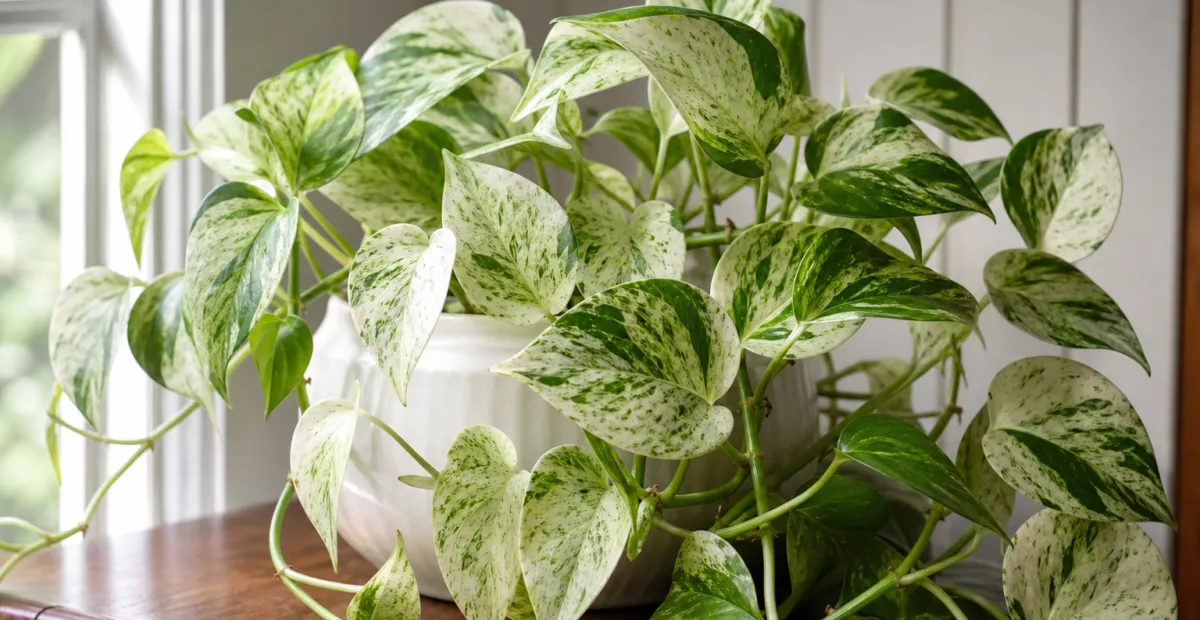
 AI-generated illustration
Snow Queen (Epipremnum aureum ‘Snow Queen’) short overview
Epipremnum aureum 'Snow Queen' is a highly variegated form of a tropical climbing aroid, grown in the United States primarily as an indoor foliage plant. Its heart-shaped leaves combine green with broad white to cream marbling, while its trailing stems can also be trained upward on a support. Provide bright, filtered light, a freely draining potting mix, and water only after the surface begins to dry. Like other pothos, it contains irritating calcium oxalate crystals.
Taxonomic classification
Snow Queen (Epipremnum aureum ‘Snow Queen’) care guide
Light and placement
Give bright filtered light, such as near an east- or west-facing window, or several feet from a bright south-facing window. Gentle morning sun is usually acceptable, but strong unfiltered midday sun can bleach or scorch the pale leaf sectors. Too little light produces long, weak stems and greener leaves; too much direct sun can cause tan patches and crisp edges. Rotate the pot periodically for even growth.
Watering and humidity
Water thoroughly when the top 1–2 inches of mix feels dry, then let excess drain completely. Do not keep the pot standing in water or follow a rigid calendar. Reduce frequency in winter or in dim rooms, and check more often during warm, bright active growth. Average household humidity is adequate, although dry air may increase leaf-edge browning and pest pressure.
Soil and growing medium
Use a loose, airy houseplant mix with a substantial drainage component such as perlite, orchid bark, or coarse pumice. A peat- or coir-based mix amended with organic matter works well, provided excess water can escape quickly. Slightly acidic to neutral conditions are suitable; avoid dense, waterlogged soil and containers without drainage holes.
Feeding
Feed during active spring and summer growth with a balanced liquid houseplant fertilizer diluted to about half the label strength every 4–6 weeks. Do not fertilize newly repotted, severely dry, diseased, or dormant plants. Flush the container occasionally with clean water to reduce soluble-salt buildup, especially in small pots.
Growth and habit
This evergreen aroid produces flexible stems that trail from containers or climb when given a support. Bright light generally helps maintain stronger variegation, while low light can encourage longer internodes and greener leaves. Pruning stimulates branching near cut nodes and can be used to maintain a compact, full presentation.
Planting and repotting
For indoor containers, plant at the same depth as the original root ball and leave the stem nodes near the surface. Space several cuttings close together for a fuller display rather than burying long stems deeply. Establish plants in warm, bright filtered conditions and avoid cold drafts during the first weeks.
Repot in spring or early summer when roots fill the container, water drains unusually slowly, or growth becomes crowded. Move up only one pot size and preserve the existing root ball. Use a fresh, airy mix and water thoroughly once, then allow the surface to dry partly before watering again.
Propagation and pruning
Propagation
Propagate readily from stem cuttings containing at least one healthy node. Root cuttings in water, moist propagation mix, or a similar airy medium during active growth. Keep leaves above the medium, provide warmth and bright filtered light, and pot rooted cuttings once a useful root system has formed.
Pruning
Prune at any time to remove yellow, damaged, or fully reverted growth and to control length. Cut just above a healthy node with clean scissors; the removed sections can be used as cuttings. If a stem becomes mostly green, cutting back to a well-variegated node may encourage more desirable new growth, though variegation is not guaranteed.
Overwintering
Keep indoors before temperatures fall below about 50°F. Protect from frost, cold windows, and drafts. In winter, place the plant in the brightest available filtered light, reduce watering as growth slows, and stop routine feeding until active growth resumes. Avoid placing it directly beside radiators or forced-air vents.
Uses
Used as an indoor ornamental foliage plant in containers, hanging baskets, shelves, offices, and trained vertical displays. It is valued for durable evergreen leaves and tolerance of ordinary indoor conditions. Do not use it as food or medicine; the plant is unsafe to chew and should be kept away from pets and children.
Appearance
Leaves are glossy, heart-shaped, and irregularly patterned with green, white, and cream sectors or marbling. The pale areas may cover a large portion of the blade, while new leaves can vary substantially in pattern. Flexible green stems trail from pots or attach to supports at nodes. Strong reversion toward solid green can occur on individual shoots.
Flowering
Mature Epipremnum aureum can produce a small aroid inflorescence consisting of a spadix surrounded by a spathe, but flowering is exceptionally uncommon in typical indoor cultivation. Commercial houseplants usually remain in the juvenile foliage phase, so this cultivar is grown for its leaves rather than blooms.
Pollination and visitors
No reliable evidence supports meaningful animal-pollinator attraction from ordinary indoor plants of this cultivar. Flowering is rare in cultivation, and the plant is normally maintained in a juvenile foliage phase.
Diseases and pests
Diseases
Prevent disease by using a draining mix, disinfecting cutting tools, and avoiding persistently wet roots or standing water. Root rot is associated with overwatering and poor drainage; remove damaged roots, replace saturated mix, and allow the container to drain fully. Leaf spots or soft stem tissue warrant isolating the plant and removing affected material.
Pests
Monitor undersides of leaves and stem joints for mealybugs, scale, thrips, and spider mites. Quarantine new plants, remove small infestations with a cotton swab or water spray, and use insecticidal soap or horticultural oil according to the label. Avoid treating drought-stressed plants and repeat monitoring after treatment.
Toxicity and pollen
All parts contain insoluble calcium oxalate crystals. Chewing or swallowing plant tissue can cause immediate mouth pain, burning, drooling, irritation, and swelling; larger exposures may require urgent medical or veterinary advice. Keep stems, leaves, and fallen pieces away from children and pets, and wear gloves if sap causes skin irritation.
- Pollination / pollen
- Rarely released from uncommon inflorescences
This plant is rarely induced to flower indoors, so airborne pollen exposure in normal household culture is expected to be very low. The low rating reflects limited flowering and pollen release, not a guarantee of zero allergy risk. Avoid handling unusual inflorescences if personal sensitivity is known.
Native habitat
The species is native to tropical Pacific island environments and grows as a climbing plant in warm, humid, wet tropical vegetation. In nature it can use trees and other supports, while cultivated plants adapt to porous container media. It is not frost tolerant and is treated as an indoor tropical in most of the United States.
Interesting fact
The species was historically placed in other genera, including Pothos, Scindapsus, and Rhaphidophora. Its juvenile climbing stems are the form most often sold as a houseplant. Mature flowering is unusually rare, which helped delay confident taxonomic study. Variegated growth may become greener in low light or on vigorous reverted shoots.
Frequently asked questions (FAQ)
The most relevant questions about this plant, with short and direct answers.
🌱Quick care
How do you care for Epipremnum aureum 'Snow Queen'?⌄
Give it bright filtered light, water when the surface partly dries, and use an airy, well-drained houseplant mix. Protect it from temperatures below 50°F and avoid keeping the roots consistently wet.
Is Epipremnum aureum 'Snow Queen' easy to grow indoors?⌄
Yes, Epipremnum aureum 'Snow Queen' is generally easy to grow indoors when it receives adequate filtered light and careful watering. Its heavy white variegation can make it slower-growing than greener pothos cultivars.
🌤️Environment and placement
How much light does Epipremnum aureum 'Snow Queen' need?⌄
Provide bright filtered or bright indirect light for the best growth and variegation. It can tolerate partial shade, but lower light may produce greener leaves and slower growth.
Can Snow Queen pothos tolerate low light?⌄
It can tolerate partial shade, but low light is not ideal for this highly variegated plant. Move it closer to a bright window with filtered light if growth becomes weak or new leaves lose much of their white pattern.
Can Epipremnum aureum 'Snow Queen' take direct sunlight?⌄
Avoid strong direct sun, especially through a hot window, because the pale leaf areas can scorch. A few hours of gentle morning sun may be tolerated if the plant is acclimated gradually.
Where should I place a Snow Queen pothos indoors?⌄
Place it near an east- or bright north-facing window, or a few feet from a brighter south- or west-facing window behind a sheer curtain. Keep it away from cold drafts, heating vents, and air-conditioning outlets.
What temperature is best for Epipremnum aureum 'Snow Queen'?⌄
Normal indoor temperatures are suitable, but protect the plant from temperatures below 50°F. Cold exposure can cause leaf damage, especially when combined with wet soil or drafts.
Does Snow Queen pothos need high humidity?⌄
It grows well in average household humidity, although moderate humidity can reduce dry leaf tips. Good airflow is more important than enclosing the plant in constantly wet or stagnant conditions.
💧Care and problems
How often should I water Epipremnum aureum 'Snow Queen'?⌄
Water when the surface of the potting mix has partly dried, usually after checking the soil rather than following a fixed schedule. Water thoroughly until excess drains, then empty any water collected beneath the pot.
How can I tell when Snow Queen pothos needs water?⌄
Check the top portion of the mix with your finger and water when it feels partly dry. Slight drooping can indicate dryness, while persistently wet soil, yellowing leaves, and soft stems suggest overwatering.
Why are the leaves on my Snow Queen pothos turning yellow?⌄
Yellow leaves are most commonly linked to overwatering, poor drainage, or soil that stays wet too long. Let the mix partly dry between waterings and check that the container has an open drainage hole.
Why are my Snow Queen pothos leaves turning brown?⌄
Brown tips or edges can result from inconsistent watering, very dry air, excess fertilizer, or direct sun. Check the roots and soil moisture first, then move the plant away from harsh sunlight and correct the watering routine.
Why is my Snow Queen pothos losing its white variegation?⌄
Insufficient light can cause new growth to appear greener and reduce the visible white pattern. Move it gradually to brighter filtered light, but avoid intense direct sun that can scorch the white sections.
Why is my Snow Queen pothos growing slowly?⌄
Heavy variegation naturally limits chlorophyll, so Snow Queen pothos may grow more slowly than mostly green pothos. Low light, cold temperatures, root crowding, and overwatering can slow it further.
What fertilizer is best for Epipremnum aureum 'Snow Queen'?⌄
Use a balanced houseplant fertilizer at reduced strength during active spring and summer growth. Do not fertilize dry or stressed plants, and reduce or pause feeding during slower winter growth.
What pests commonly affect Snow Queen pothos?⌄
Common indoor pests include spider mites, mealybugs, scale, and thrips. Inspect leaf undersides and vine joints regularly, isolate affected plants, and treat promptly with a product labeled for indoor plants.
🪴Planting and repotting
What soil is best for Epipremnum aureum 'Snow Queen'?⌄
Use an airy, well-drained houseplant mix that allows excess water to escape quickly. A regular indoor potting mix amended with materials such as perlite or orchid bark can improve aeration.
When should I repot Snow Queen pothos?⌄
Repot when roots fill the container, water runs through unusually quickly, or growth declines despite suitable care. Choose a pot only about 1 to 2 inches wider than the current container to avoid excess wet soil.
Can Snow Queen pothos grow in a hanging basket?⌄
Yes, it grows well as a trailing plant in a hanging basket. Keep the basket near bright filtered light and make sure it has drainage so the trailing vines do not remain in saturated soil.
Can Epipremnum aureum 'Snow Queen' climb a moss pole?⌄
Yes, it can be trained to climb a moss pole, trellis, or other textured support. Consistent bright filtered light and access to moisture at the support may encourage larger mature foliage, although results vary indoors.
✂️Propagation and pruning
How do you propagate Snow Queen pothos?⌄
Propagate it from stem cuttings that include at least one node, rooting them in water or a lightly moist, well-drained medium. Keep the cutting warm and in bright filtered light until roots develop.
Can you propagate Snow Queen pothos from a leaf?⌄
A leaf without a node generally cannot produce a new vine because the growth point is located at the node. Take a cutting that includes a node and preferably some green stem tissue.
Why is my Snow Queen pothos cutting not rooting?⌄
The cutting may lack a viable node, be too cold, receive too little light, or be rotting from excessive moisture. Use a fresh node cutting, keep it warm in bright filtered light, and change propagation water regularly if rooting in water.
Can an all-white Snow Queen pothos cutting grow?⌄
An all-white cutting may struggle because its tissue contains little chlorophyll to support growth. For more reliable propagation, choose a node with at least some green leaf and stem tissue.
How do I make Snow Queen pothos fuller?⌄
Prune or pinch long vines just above a node and root the cuttings back into the pot. Brighter filtered light also helps prevent stretched growth, but heavily variegated plants may still grow more slowly.
Should I prune green or reverted growth from Snow Queen pothos?⌄
Prune strongly green shoots if your goal is to preserve the plant's highly variegated appearance. A fully green shoot can grow more vigorously and gradually dominate the plant if it is left unchecked.
⚠️Toxicity and safety
Is Epipremnum aureum 'Snow Queen' toxic to cats and dogs?⌄
Yes, it is moderately toxic if chewed and can irritate the mouth and digestive tract of pets. Keep it out of reach and contact a veterinarian promptly if a pet chews or swallows plant material.
Is Snow Queen pothos poisonous to people?⌄
Yes, chewing the leaves or stems can cause mouth irritation and other symptoms because it contains irritating calcium oxalate crystals. Keep it away from children and seek medical or poison-control advice after ingestion.
🌸Flowering and special interest
Does Epipremnum aureum 'Snow Queen' flower indoors?⌄
It rarely flowers indoors and is primarily grown for its variegated foliage. Mature climbing plants may be more likely to flower under specialized conditions, but indoor flowering should not be expected.
What does Snow Queen pothos look like?⌄
Epipremnum aureum 'Snow Queen' has heart-shaped leaves marked with abundant white or cream variegation and green areas. It can grow as a trailing vine or climb a support, with the exact pattern varying from leaf to leaf.
What is the difference between Snow Queen and Marble Queen pothos?⌄
Snow Queen is commonly sold as a more heavily white-variegated form resembling Marble Queen. The distinction is not always applied consistently by sellers, so leaf pattern alone may not reliably confirm the cultivar.
Similar plants
 Marble Queen pothos (Epipremnum aureum ‘Marble Queen’)Epipremnum aureum 'Marble Queen'
 Manjula (Epipremnum aureum ‘Manjula’)Epipremnum aureum 'Manjula'
 Shangri la (Epipremnum aureum ‘Shangri la’)Epipremnum aureum 'Shangri la'
 Jade pothos (Epipremnum aureum ‘Jade’)Epipremnum aureum 'Jade'
 Glacier (Epipremnum aureum ‘Glacier’)Epipremnum aureum 'Glacier'
 Cebu Blue (Epipremnum aureum ‘Cebu Blue’)Epipremnum aureum 'Cebu Blue'