
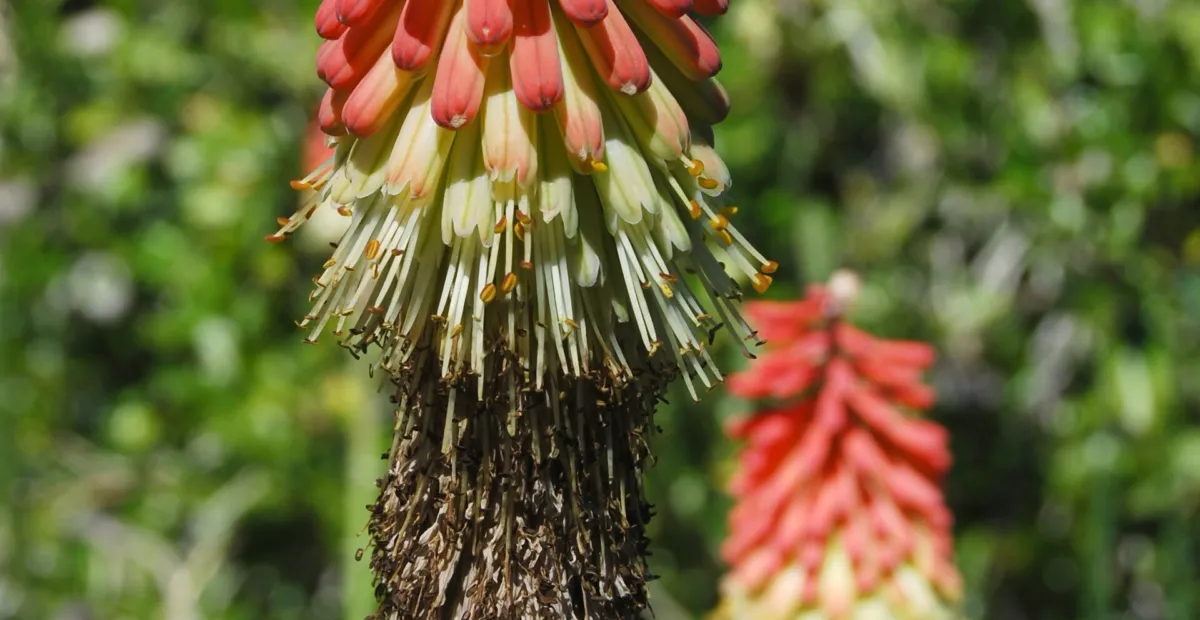
 Source:
Mandarin Poker (Kniphofia triangularis) short overview
Mandarin Poker (*Kniphofia triangularis*) is a compact, evergreen South African perennial forming a neat clump of narrow, keeled, grass-like leaves. In late summer, it produces a dense cylindrical spike of nodding tubular flowers that range from coral red and orange to yellow. Give it full sun, sharply drained soil, and moderate water while it establishes; winter wet is a greater danger than ordinary summer dryness. It suits rock gardens, mixed borders, containers, and cut-flower plantings.
Taxonomic classification
Mandarin Poker (Kniphofia triangularis) care guide
Light and placement
Give full sun, ideally with at least 6 hours of direct light and an open orientation that dries foliage quickly after rain. South- or west-facing sites are suitable where summer heat is not extreme. Insufficient light produces weaker stalks and less flowering; excessive shade can cause floppy, sparse growth. In very hot areas, light afternoon protection may reduce stress without placing the plant in shade.
Watering and humidity
Water deeply when the upper few inches of soil begin to dry during establishment, then allow the surface to dry between applications. Reduce watering in cool weather and especially during winter dormancy. Avoid frequent shallow irrigation and never leave the crown in standing water. Average outdoor humidity is adequate; airflow matters more than added humidity.
Soil and growing medium
Use a porous, sharply drained soil or gritty loam. Sandy, rocky, or gravel-amended beds are suitable, while heavy clay should be improved or avoided. A mildly acidic to mildly alkaline reaction is generally acceptable, but winter saturation around the rhizome can cause decline.
Feeding
Apply a modest balanced perennial fertilizer or a thin compost mulch in spring as new growth starts. Avoid heavy nitrogen feeding, which can produce soft foliage and fewer flower spikes. Do not fertilize drought-stressed, newly divided, or waterlogged plants until they recover.
Growth and habit
A rhizomatous perennial that forms a compact evergreen clump and sends up solitary or sparsely grouped flower stalks. It is most vigorous where roots remain well drained through winter. Remove declining flower stems and old leaves selectively rather than shearing the whole plant indiscriminately.
Planting and repotting
Plant in spring after the soil begins to warm and the worst winter wet has passed. Set the crown at soil level rather than burying it deeply. Allow about 18–24 inches between plants, with extra room for the flower spike and airflow. Water consistently during the first growing season, then reduce once established.
Repot container plants in spring as growth resumes, using a deep pot with generous drainage holes and a gritty, free-draining perennial mix. Move only when the root mass is crowded; unnecessary disturbance can delay flowering.
Propagation and pruning
Propagation
Divide established clumps in spring, separating healthy rhizomatous sections with roots and growing points. Seed is also possible, but seedlings may take several years to reach flowering size and may vary from the parent. Keep seed trays evenly moist but well drained.
Pruning
After flowering, cut spent flower stalks to the base if seed is not wanted. Remove dead or damaged leaves individually in late winter or early spring. Avoid cutting into the crown or removing healthy evergreen foliage unnecessarily.
Overwintering
In USDA Zones 7–9, mulch lightly after the ground cools, keeping mulch away from the crown. In colder or poorly drained locations, grow in a container and overwinter in a cool, bright, frost-protected place, watering sparingly. Winter wet can be more damaging than brief cold.
Uses
Use as a compact focal plant in sunny perennial borders, gravel gardens, rock gardens, raised beds, and large containers. The flower spikes can be cut for arrangements. It is ornamental only; no culinary or medicinal use is established here.
Appearance
Leaves are soft, narrow, arching, and grass-like, with a noticeable keel beneath and sometimes finely toothed margins. The upright flower stalk rises above the foliage and carries a compact, highly visible cylindrical head. The combination of a small evergreen clump and warm-colored poker spike helps distinguish it from larger coarse-leaved cultivars.
Flowering
The flowers are borne in a dense cylindrical raceme on an upright stalk. Individual blooms are nodding, elongated, and tubular, with coral-red to orange-yellow coloring. In U.S. gardens, flowering is generally expected in late summer, though timing varies with climate, elevation, and cultivation.
Pollination and visitors
Tubular, nectar-bearing Kniphofia flowers are associated with animal visitation, and the genus includes bird-pollinated species; bees and bumblebees may also visit. Direct, species-specific pollinator records for K. triangularis are limited, so attraction is rated medium rather than high.
Kniphofia triangularis photos
Click any photo for a larger view. Source, author and license are shown separately.
Diseases and pests
Diseases
Generally trouble-free when drainage is good. Root or crown rot is the main concern in persistently wet soil; improve drainage and remove affected tissue. Leaf spots can occur during prolonged cool, wet weather. Water at the soil line, provide airflow, and remove badly damaged foliage.
Pests
Slugs and snails may damage young foliage in damp conditions. Inspect crowns and leaf bases, remove hiding places, and use proportionate control if damage is persistent. Avoid chronic overwatering, which often causes more trouble than insect pests.
Toxicity and pollen
No strong, species-specific evidence of serious human or domestic-animal toxicity was located. Treat the plant as an ornamental rather than edible, avoid ingestion, and wear gloves when dividing or handling plants if skin is sensitive. Seek medical or veterinary advice after significant ingestion.
- Typical season
- Late summer in regions where it flowers
- Pollination / pollen
- Insect-presented pollen
This is an insect-visited flowering perennial rather than a classic wind-pollinated allergen source. Its pollen is primarily presented within tubular flowers, so airborne exposure is expected to be relatively low, but sensitive individuals can still react to direct flower contact or handling.
Native habitat
Native to South Africa, Lesotho, and adjacent regions, including grassland and upland areas. It occurs in climates with seasonal moisture and open sun, often benefiting from soils that drain freely while retaining some moisture during active growth.
Interesting fact
The species name triangularis refers to the three-angled or keeled cross-section of the leaves. It is a relatively small red hot poker compared with many bold garden hybrids. The rhizomatous rootstock helps established clumps persist and slowly expand.
Frequently asked questions (FAQ)
The most relevant questions about this plant, with short and direct answers.
🌱Quick care
What is Mandarin Poker (Kniphofia triangularis)?⌄
Mandarin Poker is a compact herbaceous perennial in the Asphodelaceae family, commonly grouped with Red Hot Pokers. It forms a clump of narrow, grass-like leaves and produces pendulous orange-red flower spikes.
How much sun does Kniphofia triangularis need?⌄
Kniphofia triangularis grows best in full sun, with at least six hours of direct light daily. Insufficient light can reduce flowering and produce weaker growth.
How often should I water Mandarin Poker?⌄
Water Mandarin Poker moderately, keeping the soil lightly moist while it establishes. Once established, water mainly during prolonged dry spells, and avoid keeping the crown or roots constantly wet.
Is Kniphofia triangularis easy to grow?⌄
Yes, Kniphofia triangularis is generally a low-maintenance perennial when grown in full sun and sharply drained soil. Its main vulnerability is winter wet, especially in cold climates.
🌤️Environment and placement
What USDA hardiness zone is Kniphofia triangularis?⌄
Reliable U.S. hardiness information for the species is limited, so local performance can vary. Treat it as a frost-sensitive or marginally hardy perennial in colder areas and provide winter protection where severe freezes are common.
Where should I plant Mandarin Poker?⌄
Plant Mandarin Poker in a sunny, sheltered location with excellent drainage, such as a raised bed, gravel garden, or sunny perennial border. Protection from cold, drying winter winds is helpful.
Can Kniphofia triangularis grow in partial shade?⌄
Kniphofia triangularis may tolerate light afternoon shade, but full sun is preferable for strong growth and reliable flowering. Deep shade is unsuitable and can prevent blooming.
What type of soil does Mandarin Poker need?⌄
Mandarin Poker prefers fertile, gritty, sharply drained loam that does not remain waterlogged. Incorporating horticultural grit or fine gravel can improve drainage in heavier soil.
Can Kniphofia triangularis grow in clay soil?⌄
It can grow in clay soil only if drainage is improved substantially. Planting on a raised mound and mixing in coarse grit or gravel is safer than leaving the crown in dense, wet clay.
Can Mandarin Poker grow in a container?⌄
Yes, Mandarin Poker can be grown in a large container with drainage holes and a gritty, loam-based potting mix. Containers require closer attention to watering and should be placed in a sheltered spot over winter.
💧Care and problems
How do I care for Kniphofia triangularis in winter?⌄
Keep the crown protected from cold, saturated soil during winter. In colder U.S. regions, apply a dry mulch after the ground cools and move container plants to a sheltered, frost-protected location.
Should I cut back Mandarin Poker after flowering?⌄
Cut off old flower stems after flowering to improve the plant’s appearance and prevent unnecessary seed production. Remove dead or damaged foliage in mid-spring rather than cutting healthy leaves too early.
Why is my Kniphofia triangularis not flowering?⌄
The most common causes are insufficient sun, excessive winter moisture, plant immaturity, or stress from poor drainage. Move or improve the plant’s growing conditions before adding extra fertilizer.
Does Mandarin Poker need fertilizer?⌄
Mandarin Poker usually needs little fertilizer when planted in reasonably fertile soil. A light, balanced spring feed may help weak growth, but excessive nitrogen can produce foliage at the expense of flowers.
What pests affect Kniphofia triangularis?⌄
Kniphofia triangularis may be affected by aphids, thrips, slugs, or snails. Inspect new growth and flower stems regularly, and use targeted control only when damage is significant.
What diseases affect Mandarin Poker?⌄
Mandarin Poker is generally disease-resistant, but root or crown rot can develop in persistently wet soil. Improving drainage and avoiding excessive winter watering are the most important preventive measures.
Why are the leaves of my Kniphofia triangularis turning brown?⌄
Brown leaves may result from frost, drought, old foliage, or root stress caused by poor drainage. Remove only dead tissue and check whether the crown is staying wet or the plant is being exposed to severe cold.
🪴Planting and repotting
When should I plant Mandarin Poker in the United States?⌄
Plant Mandarin Poker in spring after the soil begins warming and the threat of severe frost has passed. Spring planting gives the roots time to establish before the following winter.
How far apart should I plant Kniphofia triangularis?⌄
Space plants about 12 to 18 inches apart, allowing room for the clumps to expand and for air to circulate. Use the larger spacing in rich soil or where plants will receive regular water.
How deep should I plant Mandarin Poker?⌄
Plant Mandarin Poker at the same depth it was growing in its nursery container, keeping the crown at or slightly above the soil surface. Planting the crown too deeply increases the risk of rot.
Can I transplant an established Kniphofia triangularis?⌄
Yes, an established Kniphofia triangularis can be transplanted in spring, but large clumps may take time to recover. Replant divisions promptly at their original depth and water them during dry weather.
✂️Propagation and pruning
How do I propagate Mandarin Poker?⌄
The quickest method is to divide an established clump in spring or separate offsets from the crown. Seed propagation is also possible but generally takes longer to produce flowering plants.
Can Kniphofia triangularis be grown from seed?⌄
Yes, Kniphofia triangularis can be grown from seed in a moist, well-drained, gritty seed-starting mix. Seed-grown plants may vary from the parent and can take several years to reach flowering size.
When should I divide Mandarin Poker?⌄
Divide Mandarin Poker in spring when new growth is beginning and the plant can reestablish quickly. Separate rooted crowns or offsets and replant them immediately at the original depth.
How often should Kniphofia triangularis be divided?⌄
Kniphofia triangularis does not need routine division unless the clump becomes overcrowded, weak, or difficult to manage. Divide only when necessary because disturbance can reduce flowering in the following season.
⚠️Toxicity and safety
Is Mandarin Poker poisonous to people or pets?⌄
No specific serious toxicity is established for Mandarin Poker, but it should still be treated as an ornamental plant rather than an edible one. Keep plant material away from children and pets to avoid possible digestive upset or choking.
🌸Flowering and special interest
When does Mandarin Poker bloom?⌄
Mandarin Poker typically blooms from mid-summer into early fall, although timing depends on climate and growing conditions. Its flower spikes open from reddish buds into orange-red, pendulous tubular flowers.
What do Kniphofia triangularis flowers look like?⌄
The flowers are slender spikes of pendulous tubular blooms, opening from red buds into orange to red-orange tones. They rise above narrow, grassy foliage on upright stems.
Does Mandarin Poker attract pollinators?⌄
Yes, the flowers of Mandarin Poker provide nectar and pollen for bees, butterflies, and nectar-feeding birds. Planting it in full sun can increase flowering and its value to pollinators.
Is Kniphofia triangularis good as a cut flower?⌄
Yes, Kniphofia triangularis can be used as a cut flower, especially when stems are harvested as the lower flowers begin to open. Place freshly cut stems in clean water and remove foliage that would sit below the waterline.
Similar plants
 Lesotho Red-Hot Poker (Kniphofia caulescens) care guideKniphofia caulescens
 Massangeana (Maranta leuconeura ‘Massangeana’)Maranta leuconeura 'Massangeana'
 Satin (Epipremnum aureum ‘Satin’)Epipremnum aureum 'Satin'
 Fascinator (Maranta leuconeura ‘Fascinator’)Maranta leuconeura 'Fascinator'
 Marble Queen pothos (Epipremnum aureum ‘Marble Queen’)Epipremnum aureum 'Marble Queen'
 Red hot poker (Kniphofia ‘Alcazar’)Kniphofia 'Alcazar'