
 Source:
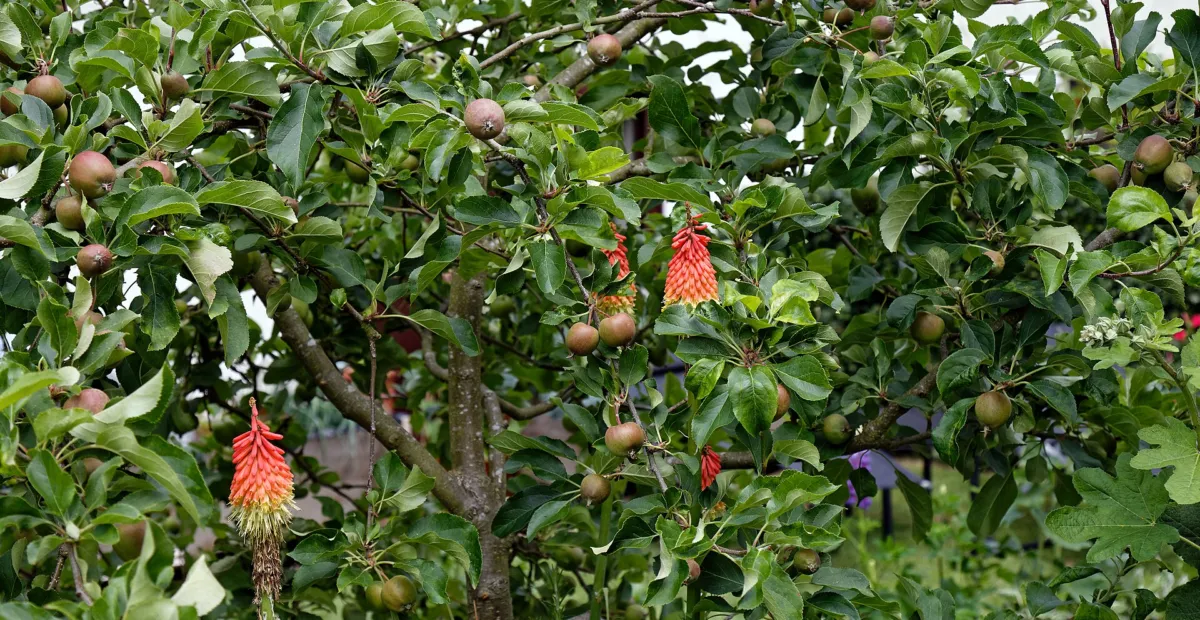
Kniphofia ‘Red Hot Poker’ short overview
Kniphofia 'Red Hot Poker' is an upright, clump-forming perennial grown for tall torch-like spikes of tubular flowers in fiery red, orange, and yellow shades. Its narrow, arching leaves form a strong architectural base, while the flower stems rise above the foliage in summer and may continue into early fall. Plant it in full sun with fertile, sharply drained soil; protect crowns from persistent winter wet and severe cold.
Taxonomic classification
Kniphofia ‘Red Hot Poker’ care guide
Light and placement
Give full sun for the strongest flowering, ideally with a south- or west-facing exposure and shelter from strong wind. Light afternoon shade is tolerated in hot climates, but deep shade commonly produces weak foliage and few flowers. Stretching, sparse flower stems, or reduced color suggests insufficient light; scorched leaf edges usually indicate heat, drought, or reflected light rather than simple sun intolerance.
Watering and humidity
Water deeply when the upper several inches of soil begin to dry, especially during the first growing season and while flower stems are developing. Established plants tolerate short dry periods but flower and foliage quality decline during prolonged drought. Reduce watering in cool weather and keep winter crowns comparatively dry; never allow containers or heavy soil to stay waterlogged.
Soil and growing medium
Use fertile, well-drained soil with good air space around the crown. Sandy loam is especially suitable, but ordinary loam works if it does not remain saturated. A slightly acidic to slightly alkaline reaction is tolerated. Improve heavy clay with organic matter and coarse mineral material, but do not bury the crown deeply.
Feeding
Apply a balanced slow-release perennial fertilizer or a layer of finished compost in spring as growth begins. Avoid heavy nitrogen feeding, which can produce soft foliage and fewer flower stems. Do not fertilize drought-stressed plants or feed late in the season when new tender growth would be vulnerable to cold.
Growth and habit
Forms a basal clump and sends up erect flower scapes above the foliage. Established plants can gradually broaden through offsets or division. Remove spent scapes to maintain a tidy appearance and reduce self-seeding where seed set occurs. Exact vigor and final stature depend strongly on cultivar background and climate.
Planting and repotting
Plant in spring after the soil has begun to warm and the risk of severe frost has passed. Set the crown at soil level rather than deep in the ground. Space plants about 18–24 inches apart, allowing air movement and room for clump expansion. Water regularly during the first growing season while avoiding persistent winter wet.
Repot container plants in spring when new growth begins or when the root mass has filled the pot. Move only one container size larger, use a free-draining perennial mix, and keep the crown at its previous depth. Water thoroughly once after repotting, then allow excess moisture to drain.
Propagation and pruning
Propagation
Divide established clumps or separate offsets in spring as growth resumes. Seed is possible but may not reproduce the parent plant, particularly when the original plant is hybrid or informally labeled. Replant divisions promptly, keeping the crown at the original depth and watering until established.
Pruning
Cut spent flower stalks to the base after flowering. Remove dead or damaged leaves in late winter or early spring, retaining healthy evergreen foliage where present. Avoid cutting healthy foliage prematurely because it helps replenish the crown.
Overwintering
In colder regions, leave healthy foliage until late winter, then remove damaged material. Apply a loose winter mulch around, but not over, the crown after the ground cools. Container plants are more vulnerable than those in the ground; move them to a sheltered, cold but protected location and keep the mix barely moist rather than wet.
Uses
Use as a vertical accent in perennial borders, gravel gardens, cottage-style plantings, and large containers. Flower stems can be cut for arrangements. The nectar-rich flowers may support birds and insect visitors. It is ornamental only; no culinary or medicinal use is recommended.
Appearance
The plant forms a dense basal fan of narrow, strap-like leaves that may arch outward or stand semi-upright. Flower scapes are leafless or nearly so and terminate in conspicuous, densely packed spikes of tubular blooms. The combination of grass-like foliage and brightly colored torch-shaped racemes is the principal identification feature.
Flowering
Dense terminal racemes are made of many tubular flowers that open progressively along the spike. Color patterns vary because the supplied name is used broadly in horticulture; red, orange, yellow, and bicolored forms are associated with red-hot poker plants. Flowering is typically concentrated from summer into early fall, with older spikes fading as new ones open.
Pollination and visitors
Kniphofia flowers commonly receive visits from nectar-feeding birds and insects. Evidence for the genus includes birds, bees, butterflies, and other insects, but the exact visitor community for a plant sold under this broad label cannot be assigned with certainty. North American gardens may receive hummingbird visits where local hummingbirds encounter accessible flowers.
Kniphofia 'Red Hot Poker' photos
Click any photo for a larger view. Source, author and license are shown separately.
Diseases and pests
Diseases
Good drainage and air circulation help prevent crown and root rots. Leaf spots can occur during wet weather; remove affected foliage, avoid overhead irrigation, and clean up fallen leaves. Avoid planting crowns in permanently wet soil, where decline is more likely.
Pests
Slugs and snails may chew young foliage, especially in damp sites. Watch for aphids on flower stems and leaf bases. Encourage airflow, remove debris, and use hand removal or targeted controls only when damage is substantial.
Toxicity and pollen
The ASPCA lists Kniphofia, including torch lily and red hot poker, as non-toxic to dogs and cats. Human-specific clinical toxicity data for this broad horticultural label are limited; avoid eating ornamental plant material, and wash hands after handling if skin irritation occurs.
- Typical season
- When flowering, usually summer to early fall
- Pollination / pollen
- Mostly animal-transferred pollen
This is an insect- and bird-visited flowering perennial, so pollen is generally deposited locally rather than dispersed in large wind-borne clouds. Airborne allergy risk is not well quantified for this exact horticultural identity; sensitive people should still avoid direct contact with pollen or sap and monitor personal reactions.
Native habitat
The genus is native primarily to southern and eastern Africa, where species occupy varied grassland, montane, wetland-margin, and rocky habitats. Cultivated plants generally perform best in sunny sites with seasonal moisture but excellent drainage, rather than in continuously wet ground.
Interesting fact
The genus name honors German physician and botanist Johann Hieronymus Kniphof. Red-hot poker flower spikes are composed of many individual tubular flowers rather than one single bloom. Most cultivated Kniphofia are selections or hybrids, so plants sold under broad common labels can differ substantially in height, color, and hardiness.
Frequently asked questions (FAQ)
The most relevant questions about this plant, with short and direct answers.
🌱Quick care
What is Kniphofia 'Red Hot Poker'?⌄
Kniphofia 'Red Hot Poker' is a clump-forming herbaceous perennial grown for upright spikes of tubular, brightly colored flowers. It is commonly called red hot poker or torch lily, although the exact mature size and flower color can vary by plant selection.
How much sun does Kniphofia 'Red Hot Poker' need?⌄
Give Kniphofia 'Red Hot Poker' full sun, ideally at least 6 hours of direct light daily, for the strongest growth and best flowering. It tolerates light shade but may produce fewer or weaker flower spikes.
How often should I water Kniphofia 'Red Hot Poker'?⌄
Water regularly while Kniphofia 'Red Hot Poker' is becoming established, then allow the soil to dry moderately between waterings. Established plants tolerate some drought, but consistently soggy soil can cause crown or root problems.
What USDA hardiness zones are suitable for Kniphofia 'Red Hot Poker'?⌄
Kniphofia 'Red Hot Poker' is generally grown in USDA Zones 5 through 9, but winter survival depends on the specific cultivar, drainage, exposure, and local conditions. In colder areas, protect the crown from winter wet and extreme cold.
How big does Kniphofia 'Red Hot Poker' get?⌄
The mature size of Kniphofia 'Red Hot Poker' is cultivar-dependent, so check the nursery label for a reliable height and spread. Many red hot pokers form foliage clumps about 2 to 3 feet wide, with flower spikes rising higher.
🌤️Environment and placement
What soil is best for Kniphofia 'Red Hot Poker'?⌄
Plant Kniphofia 'Red Hot Poker' in fertile, well-drained loam or sandy loam. It tolerates moderate moisture during active growth but performs poorly in heavy, waterlogged soil, especially during winter.
Can Kniphofia 'Red Hot Poker' grow in partial shade?⌄
Kniphofia 'Red Hot Poker' can tolerate light or partial shade, but full sun is preferable for compact growth and abundant flowers. Dense shade commonly reduces flowering and may leave the plant stretched or floppy.
Can Kniphofia 'Red Hot Poker' tolerate drought?⌄
Established Kniphofia 'Red Hot Poker' can tolerate short periods of drought, especially in well-drained soil. Water more consistently during prolonged heat, drought, or the first growing season after planting.
Is Kniphofia 'Red Hot Poker' deer resistant?⌄
Kniphofia 'Red Hot Poker' is often considered resistant to deer and rabbits because of its coarse, strap-like foliage. No plant is completely browse-proof, particularly when wildlife pressure is high.
Is Kniphofia 'Red Hot Poker' suitable for containers?⌄
Kniphofia 'Red Hot Poker' can grow in a large container with drainage holes, a well-drained potting mix, and full sun. Choose a container wide and heavy enough to support the mature foliage and flower spikes, and provide extra winter protection in cold climates.
💧Care and problems
Why is my Kniphofia 'Red Hot Poker' not blooming?⌄
The most common causes of poor flowering are insufficient sunlight, excessive shade, immature plants, overcrowding, or winter damage. Improve light and drainage, avoid excessive nitrogen fertilizer, and give newly planted divisions time to establish.
Does Kniphofia 'Red Hot Poker' need fertilizer?⌄
Kniphofia 'Red Hot Poker' usually needs little fertilizer when grown in reasonably fertile soil. If growth is weak, apply a balanced, slow-release fertilizer in spring according to the product label, but avoid heavy nitrogen feeding that can favor leaves over flowers.
What causes yellow leaves on Kniphofia 'Red Hot Poker'?⌄
Yellow leaves on Kniphofia 'Red Hot Poker' may indicate overwatering, poor drainage, aging foliage, nutrient stress, or winter injury. Check the soil moisture first and improve drainage before adding fertilizer.
Why are the leaves of my Kniphofia 'Red Hot Poker' turning brown?⌄
Brown leaf tips or margins can result from drought, wind, winter damage, intense heat, or naturally aging foliage. Remove only badly damaged leaves and keep the plant evenly but not excessively watered.
What pests affect Kniphofia 'Red Hot Poker'?⌄
Kniphofia 'Red Hot Poker' is generally trouble-free, but thrips and occasional chewing pests may occur. Inspect distorted flowers and foliage, improve airflow, and use a least-toxic treatment only when damage is significant.
What diseases affect Kniphofia 'Red Hot Poker'?⌄
Poor drainage can lead to crown or root rot, while leaf spot may develop during prolonged wet conditions. Plant in well-drained soil, avoid overhead watering, remove badly affected foliage, and improve air circulation.
🪴Planting and repotting
When is the best time to plant Kniphofia 'Red Hot Poker'?⌄
Plant Kniphofia 'Red Hot Poker' in spring after the soil becomes workable, or in early fall where plants have time to root before hard freezes. Avoid planting into cold, saturated soil.
How should I plant Kniphofia 'Red Hot Poker'?⌄
Plant Kniphofia 'Red Hot Poker' with the crown at soil level in a sunny site with excellent drainage. Space plants according to the cultivar's mature width, and water thoroughly after planting while keeping the crown from staying wet.
Can Kniphofia 'Red Hot Poker' be grown from a bare-root plant?⌄
Yes, Kniphofia 'Red Hot Poker' can be planted bare-root if the crown is firm and healthy. Plant it promptly with the crown at soil level, spread the roots naturally, and keep the soil lightly moist until new growth appears.
Can Kniphofia 'Red Hot Poker' be grown indoors?⌄
Kniphofia 'Red Hot Poker' is primarily an outdoor perennial and usually does not perform well as a permanent houseplant. It needs strong light, seasonal temperature changes, and excellent drainage to grow and flower properly.
✂️Propagation and pruning
How do I propagate Kniphofia 'Red Hot Poker'?⌄
Propagate Kniphofia 'Red Hot Poker' mainly by dividing established clumps in spring. Seed propagation is possible, but seedlings may not match the parent plant in flower color, height, or flowering time.
Can I divide Kniphofia 'Red Hot Poker'?⌄
Yes, divide Kniphofia 'Red Hot Poker' in spring when new growth begins, separating healthy crowns with roots attached. Division is usually unnecessary unless a clump is overcrowded, declining, or needed for additional plants.
Should I cut back Kniphofia 'Red Hot Poker' after flowering?⌄
Remove spent flower spikes from Kniphofia 'Red Hot Poker' to improve appearance and potentially encourage additional flowering. Leave healthy foliage in place until it naturally declines, particularly in colder regions where it helps protect the crown.
How should I prepare Kniphofia 'Red Hot Poker' for winter?⌄
In USDA Zones 5 and 6, tie the foliage loosely over the crown and add mulch around the plant without covering the crown itself. The most important winter protection is preventing cold, saturated soil from remaining around the crown.
Should I cut Kniphofia 'Red Hot Poker' foliage to the ground in fall?⌄
Do not routinely cut Kniphofia 'Red Hot Poker' completely to the ground in fall, especially in colder climates. Removing dead or damaged leaves in spring usually provides better crown protection through winter.
⚠️Toxicity and safety
Is Kniphofia 'Red Hot Poker' toxic to dogs and cats?⌄
Kniphofia 'Red Hot Poker' is listed as non-toxic to dogs and cats by the ASPCA. Even non-toxic plants can cause mild stomach upset if eaten, so contact a veterinarian if a pet consumes a large amount or shows symptoms.
Is Kniphofia 'Red Hot Poker' edible for people?⌄
Kniphofia 'Red Hot Poker' is not recommended for human consumption. Keep plant material away from children, and seek medical advice if it is swallowed or causes an adverse reaction.
🌸Flowering and special interest
When does Kniphofia 'Red Hot Poker' bloom?⌄
Kniphofia 'Red Hot Poker' typically blooms from late spring or summer into early fall, depending on the cultivar and climate. Flowering may be delayed after planting or reduced by shade, drought, or winter injury.
What do Kniphofia 'Red Hot Poker' flowers look like?⌄
Kniphofia 'Red Hot Poker' produces dense, upright spikes of tubular flowers in warm shades such as red, orange, yellow, or combinations of these colors. Individual flowers often open progressively from the bottom upward.
Do Kniphofia 'Red Hot Poker' flowers change color?⌄
Many red hot poker selections show flowers that change shade as they mature, creating a two-tone effect on the spike. The exact color transition depends on the particular plant sold as Kniphofia 'Red Hot Poker'.
Does Kniphofia 'Red Hot Poker' attract hummingbirds and butterflies?⌄
Yes, the tubular flowers of Kniphofia 'Red Hot Poker' can attract hummingbirds and butterflies when grown in a sunny garden. Planting several nectar-rich species together can make the site more useful to pollinators.
Can I use Kniphofia 'Red Hot Poker' as a cut flower?⌄
Yes, Kniphofia 'Red Hot Poker' flower spikes can be used as cut flowers. Harvest stems when the lower flowers are open, place them in clean water, and remove foliage that would sit below the waterline.
Similar plants
 N Joy (Epipremnum aureum ‘N Joy’)Epipremnum aureum 'N Joy'
 Amabilis (Maranta leuconeura ‘Amabilis’)Maranta leuconeura 'Amabilis'
 Silver Band (Maranta leuconeura ‘Silver Band’)Maranta leuconeura 'Silver Band'
 Lesotho Red-Hot Poker (Kniphofia caulescens) care guideKniphofia caulescens
 Satin (Epipremnum aureum ‘Satin’)Epipremnum aureum 'Satin'
 Pinnuta (Epipremnum aureum ‘Pinnuta’)Epipremnum aureum 'Pinnuta'