
 Source:
Lesotho Red-Hot Poker (Kniphofia caulescens) short overview
Lesotho Red-Hot Poker (*Kniphofia caulescens*) is an evergreen perennial from the high mountain grasslands of Lesotho and South Africa. Its sturdy clumps carry broad, blue-green leaves and upright summer spikes of tubular flowers that open coral red and fade toward soft yellow, creating a distinctive two-tone display. In U.S. gardens, give it full sun, excellent drainage, moderate summer moisture, and winter protection where cold or wet conditions threaten the crown.
Taxonomic classification
Lesotho Red-Hot Poker (Kniphofia caulescens) care guide
Light and placement
Give full sun, ideally with six or more hours of direct light and some shelter from strong wind. A south- or west-facing border is suitable where summers are not excessively hot. Too little light can produce weak, floppy flower stems and fewer spikes; intense reflected heat may scorch foliage, especially in containers, so provide afternoon protection in very hot sites.
Watering and humidity
Water deeply when the upper few inches of soil begin to dry during the first growing season. Once established, maintain moderate moisture during active summer growth but allow the surface to dry between waterings. Reduce irrigation in fall and winter, and never leave the crown in saturated soil. Humidity is not a special requirement; airflow matters more in damp climates.
Soil and growing medium
Use a porous, sharply drained loam or sandy loam enriched with a modest amount of compost. The plant tolerates leaner, rocky ground once established, but heavy winter-wet clay can encourage crown or root problems. A slightly acidic to slightly alkaline soil reaction is acceptable; drainage is more important than exact pH.
Feeding
Apply a balanced, general-purpose perennial fertilizer at label strength in spring as new growth begins, or top-dress lightly with compost. Avoid heavy nitrogen feeding, which can produce soft foliage and reduce flowering quality. Do not fertilize drought-stressed, newly transplanted, or winter-damaged plants until active growth resumes.
Growth and habit
This rhizomatous perennial forms a persistent, upright clump. Mature plants generally remain structurally attractive through winter in mild climates, while colder areas may damage the foliage. Leave established crowns undisturbed when possible; divide only when propagation or rejuvenation is genuinely needed.
Planting and repotting
Plant in spring after the soil can be worked, or in early fall where plants have time to root before hard freezes. Set the crown at soil level rather than burying it. Space about 18–24 inches apart, allowing airflow and room for the clump to broaden. Water regularly during establishment, then reduce irrigation as roots mature.
Repot container plants in spring before vigorous growth, moving them only one container size larger. Handle the rhizomatous crown carefully and keep it at the same depth. Refresh compacted, poorly draining mix rather than repeatedly upsizing the pot.
Propagation and pruning
Propagation
Sow fresh or properly stored seed in a well-drained medium; seedlings may vary and can take time to reach flowering size. Established clumps can be divided in spring, but avoid unnecessary disturbance because mature crowns are best left in place. Division is practical but may be slower to re-establish than seed-grown plants.
Pruning
Remove spent flower spikes after flowering if you want to reduce self-seeding and keep the clump tidy. In cold regions, retain healthy foliage through fall for crown protection, then remove winter-damaged leaves in early spring. Do not cut deeply into the crown.
Overwintering
In USDA Zones 5–6 or exposed sites, tie foliage loosely over the crown in late fall and apply a protective, breathable mulch after the ground cools. Keep winter rain from pooling around the crown. In colder or poorly drained locations, container plants may need a sheltered, cool winter position rather than a warm indoor room.
Uses
Use as a bold specimen, in small groups in perennial borders, sunny rock or alpine gardens, and large naturalistic plantings. The evergreen foliage provides structure outside the flowering season, while the spikes add strong vertical contrast. It is also documented as attractive to hummingbirds and butterflies in garden references. It has no established culinary use in the sources reviewed.
Appearance
The plant forms a dense basal rosette of broad, linear, sword-shaped, keeled leaves with a glaucous blue-green surface. Stout, leafless flower scapes rise above the foliage and end in dense bottlebrush-like spikes. The combination of architectural leaves and red-to-yellow flowers is distinctive even when the plant is not blooming.
Flowering
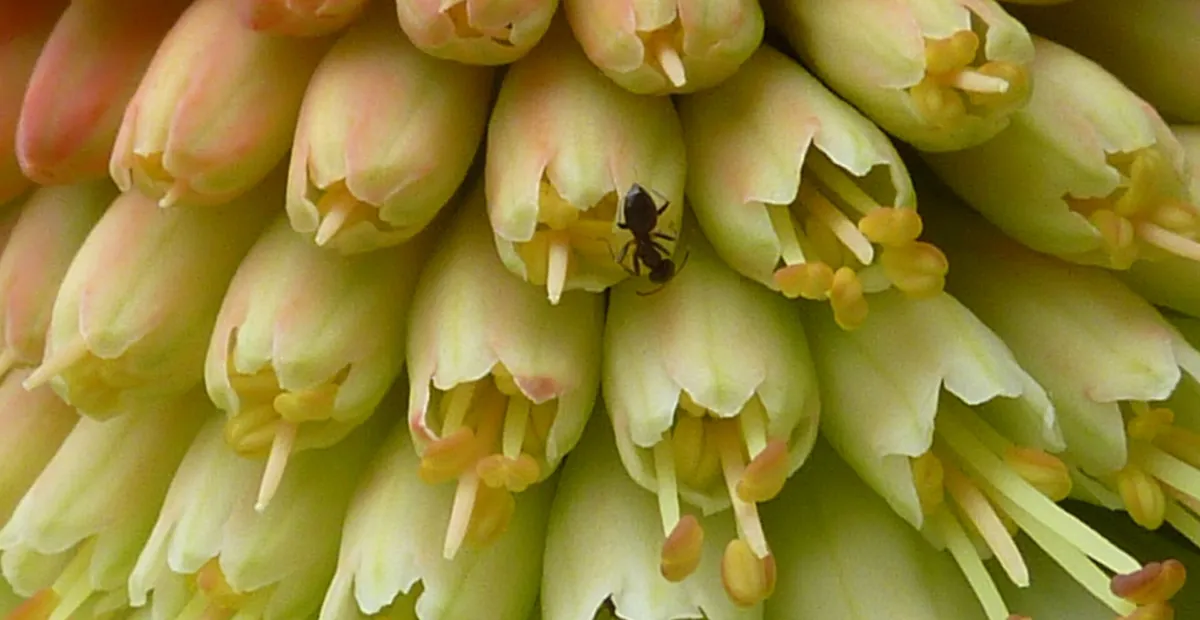
Dense terminal spikes carry numerous short, tubular, drooping flowers. Buds and newly opening flowers are coral red, while older flowers fade toward yellow or pale yellow, producing a changing two-tone effect. In much of the United States, flowering is most commonly reported in July and August, although local climate and form can shift the season.
Pollination and visitors
Species-specific research documents increased fruit and seed production when flowers received both bird and insect visits. Garden references also report hummingbirds and butterflies visiting the nectar-rich tubular flowers. The evidence supports animal pollination, but the relative importance of visitor groups can vary by region.
Kniphofia caulescens photos
Click any photo for a larger view. Source, author and license are shown separately.
Diseases and pests
Diseases
The main concern is crown or root rot in heavy, poorly drained or persistently wet soil, especially during winter. Improve drainage, avoid burying the crown, and remove damaged tissue only with clean tools. Good spacing and careful watering reduce stress. Serious disease problems are not generally reported in cultivation.
Pests
Thrips may occur, and slugs or other foliage-feeding pests can occasionally damage young growth. Inspect leaf bases and flower stems, improve airflow, remove heavily damaged tissue, and use proportionate, locally approved controls only when needed. Avoid chronically wet soil, which is a more serious risk than most insect pests.
Toxicity and pollen
Reliable species-specific toxicology information for humans and pets was not located in the authoritative sources reviewed. Do not treat the plant as edible; prevent ingestion of plant material and monitor children and animals around unfamiliar plants. Seek medical or veterinary advice after significant ingestion or a concerning reaction.
- Typical season
- Summer flowering season
- Pollination / pollen
- Animal-dispersed floral pollen
The flowers produce pollen, but reliable species-specific data on airborne pollen counts or allergy incidence were not found. Because the flowers are primarily animal-pollinated, airborne release is likely less prominent than in wind-pollinated plants, but this should not be interpreted as zero allergy risk for sensitive individuals.
Native habitat
Native populations occur from the Eastern Cape and Free State through Lesotho to KwaZulu-Natal, especially in high mountain grasslands, marshes, wet gullies, and seepage areas. In cultivation, it adapts to sunny, well-drained soils and can tolerate drier conditions after establishment, despite its association with moist native habitats.
Interesting fact
The species name caulescens refers to becoming distinctly stemmed or stalked. Its native populations occur in high-elevation grasslands, marshes, wet gullies, and seepage areas, yet established garden plants can tolerate comparatively dry conditions when drainage is excellent. The flower spike changes color as individual flowers age, creating a moving red-to-yellow display.
Frequently asked questions (FAQ)
The most relevant questions about this plant, with short and direct answers.
🌱Quick care
What is Kniphofia caulescens commonly called?⌄
Kniphofia caulescens is commonly called Lesotho Red-Hot Poker. It is also grouped with the red hot pokers or torch lilies and belongs to the Asphodelaceae family.
Is Lesotho Red-Hot Poker evergreen?⌄
Yes, Lesotho Red-Hot Poker is generally evergreen or semi-evergreen in mild climates. In colder regions, the foliage may suffer winter damage but can regrow in spring.
How much sun does Kniphofia caulescens need?⌄
Plant Kniphofia caulescens in full sun for the strongest growth and best flowering. A sheltered site is helpful where strong winds could damage its tall flower stems.
How often should I water Lesotho Red-Hot Poker?⌄
Water Lesotho Red-Hot Poker moderately while it is establishing and during active summer growth. Once established, it tolerates some dry weather, but the soil should not remain consistently dry during flowering.
How big does Kniphofia caulescens get?⌄
Kniphofia caulescens commonly reaches about 2 to 4 feet tall and 1 to 2 feet wide in cultivation. The flower stems rise above a clump of blue-green, strap-shaped leaves.
🌤️Environment and placement
What USDA hardiness zones suit Kniphofia caulescens?⌄
Kniphofia caulescens is often listed as hardy in USDA Zones 6 through 8, with some sources reporting possible survival in Zone 5. Winter protection is advisable in colder or wet regions.
Can Kniphofia caulescens grow in USDA Zone 5?⌄
Kniphofia caulescens may survive in USDA Zone 5 with excellent drainage and winter protection, but its reliability is less certain than in Zones 6 through 8. Mulch the crown and protect it from prolonged winter wetness.
What type of soil does Lesotho Red-Hot Poker prefer?⌄
Lesotho Red-Hot Poker prefers fertile, well-drained loam or sandy loam. It can tolerate moderate dryness, but heavy soil that stays wet in winter can cause crown or root problems.
Can Kniphofia caulescens grow in clay soil?⌄
Kniphofia caulescens can grow in amended clay soil only if drainage is improved substantially. Incorporate organic matter and coarse material where appropriate, and plant slightly high if winter water tends to collect.
Is Lesotho Red-Hot Poker drought tolerant?⌄
Lesotho Red-Hot Poker has useful drought tolerance once established, especially in well-drained soil. It still performs better with occasional deep watering during prolonged summer heat or drought.
Can Kniphofia caulescens grow in a rock garden?⌄
Yes, Kniphofia caulescens is well suited to a sunny rock garden or gravel garden with deep, sharply drained soil. Give it enough room for its broad foliage and tall flower spikes.
Does Kniphofia caulescens tolerate wet winters?⌄
No, Kniphofia caulescens dislikes cold, waterlogged soil in winter. Choose a well-drained site and avoid planting it where water collects around the crown.
💧Care and problems
Why is my Kniphofia caulescens not flowering?⌄
The most common causes are insufficient sun, excessive shade, immature plants, or winter damage to the crown. Improve light and drainage, avoid overfertilizing with nitrogen, and allow established clumps time to develop.
How do I protect Lesotho Red-Hot Poker in winter?⌄
In colder areas, tie the leaves loosely over the crown and apply a dry winter mulch around, but not directly against, the plant. Good drainage is essential because wet mulch or saturated soil can cause crown rot.
Should I cut back Kniphofia caulescens in fall?⌄
Do not cut all foliage back in fall where the plant needs winter protection. Remove flower stems after flowering, tidy damaged leaves in mid-spring, and cut back badly damaged foliage when new growth begins.
How do I deadhead Lesotho Red-Hot Poker?⌄
Cut spent flower stems down to the base after flowering to improve the plant’s appearance and conserve energy. Leave a few stems if you want to collect seed or allow some self-sowing.
What pests affect Kniphofia caulescens?⌄
Kniphofia caulescens may occasionally attract aphids, thrips, slugs, or snails. The plant is generally low-maintenance, so inspect new growth and flower stems regularly and address infestations early.
What diseases affect Lesotho Red-Hot Poker?⌄
Lesotho Red-Hot Poker is generally disease-resistant, but root or crown rot can develop in poorly drained soil. Improve drainage and avoid frequent shallow watering around the crown.
Do deer or rabbits eat Kniphofia caulescens?⌄
Kniphofia caulescens is generally considered resistant to deer and rabbits, although no plant is completely browse-proof. Young plants may still need protection in areas with heavy wildlife pressure.
🪴Planting and repotting
When should I plant Kniphofia caulescens in the United States?⌄
Plant Kniphofia caulescens in spring after the soil can be worked, especially in colder USDA Zones. In mild regions, early fall planting can also work if roots have time to establish before winter.
How do I plant Lesotho Red-Hot Poker?⌄
Plant Lesotho Red-Hot Poker with the crown at or slightly above soil level in full sun and well-drained soil. Water deeply after planting, then gradually reduce watering as the plant establishes.
Can Kniphofia caulescens grow in a container?⌄
Yes, Kniphofia caulescens can grow in a large container with drainage holes and a gritty, well-drained potting mix. Containers dry and freeze faster than garden soil, so monitor summer moisture and provide extra winter protection.
How far apart should I plant Lesotho Red-Hot Poker?⌄
Space Lesotho Red-Hot Poker about 18 to 24 inches apart, allowing room for its basal foliage to expand. Use wider spacing if you want better air circulation or a more open planting effect.
✂️Propagation and pruning
How do I propagate Kniphofia caulescens?⌄
Propagate Kniphofia caulescens by dividing established clumps or separating offsets from the crown. Growing from seed is also possible, but seedlings may take longer to reach flowering size.
When should I divide Lesotho Red-Hot Poker?⌄
Divide established Lesotho Red-Hot Poker clumps in late spring or after active growth begins. Divide only healthy, well-established plants because frequent disturbance can slow recovery.
Can Kniphofia caulescens be grown from seed?⌄
Yes, Kniphofia caulescens can be grown from seed, although germination and flowering time may vary. Leave selected flower stems in place until seed capsules mature, then sow fresh seed using a well-drained seed-starting mix.
Does Lesotho Red-Hot Poker spread aggressively?⌄
Lesotho Red-Hot Poker can slowly form larger clumps through offsets and may self-seed under favorable conditions. It is not generally regarded as an aggressive spreader, but remove spent stems if you want to limit seedlings.
⚠️Toxicity and safety
Is Kniphofia caulescens toxic to people or pets?⌄
No reliable species-specific toxicity classification was found for Kniphofia caulescens. Because toxicity data are limited, prevent children and pets from chewing the plant and contact a poison-control or veterinary professional if ingestion occurs.
Is Lesotho Red-Hot Poker safe to plant around dogs and cats?⌄
The safety of Lesotho Red-Hot Poker around dogs and cats has not been conclusively established for this exact species. Keep pets from chewing it and seek veterinary advice if a pet eats any part of the plant.
🌸Flowering and special interest
When does Kniphofia caulescens bloom?⌄
Kniphofia caulescens commonly blooms from summer into early fall, although the exact timing varies with climate and growing conditions. Flower spikes may appear later on young or recently transplanted plants.
What color are Lesotho Red-Hot Poker flowers?⌄
Lesotho Red-Hot Poker produces dense spikes that open coral red and fade toward yellow, creating a two-toned effect. The lower flowers usually change color first, while the upper flowers remain red longer.
Do Kniphofia caulescens flowers attract pollinators?⌄
Yes, the tubular flowers of Kniphofia caulescens can attract hummingbirds, bees, butterflies, and other nectar-seeking pollinators. Plant it in full sun where the flower spikes are easy for pollinators to reach.
Why are the leaves of Lesotho Red-Hot Poker turning brown?⌄
Brown leaves may result from winter injury, drought, strong wind, or excess moisture around the crown. Remove only dead or badly damaged foliage, then correct watering and drainage before assuming the plant is dead.
Similar plants
 Pearls and Jade (Epipremnum aureum ‘Pearls and Jade’)Epipremnum aureum 'Pearls and Jade'
 Manjula (Epipremnum aureum ‘Manjula’)Epipremnum aureum 'Manjula'
 Lemon Lime prayer plant (Maranta leuconeura ‘Lemon Lime’)Maranta leuconeura 'Lemon Lime'
 N Joy (Epipremnum aureum ‘N Joy’)Epipremnum aureum 'N Joy'
 Neon (Epipremnum aureum ‘Neon’)Epipremnum aureum 'Neon'
 Silver Band (Maranta leuconeura ‘Silver Band’)Maranta leuconeura 'Silver Band'