
 Source:
Pearls and Jade (Epipremnum aureum ‘Pearls and Jade’) short overview
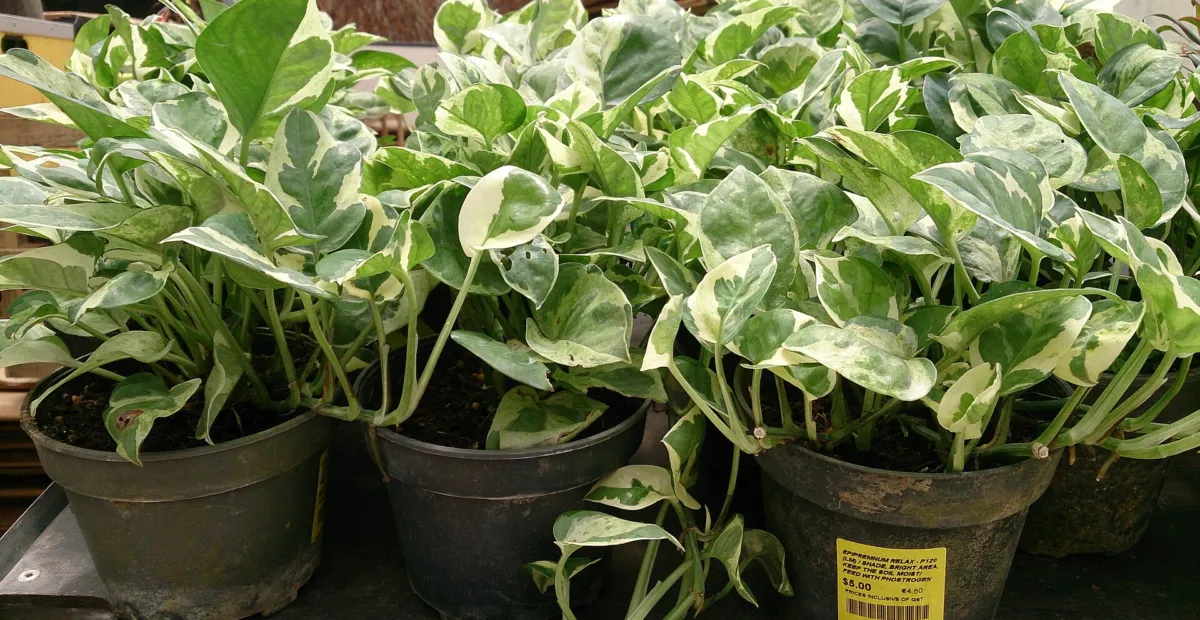
Epipremnum aureum 'Pearls and Jade' is a compact, slow-growing pothos cultivar selected for its narrow, heart-shaped leaves patterned with irregular white, cream, pale-green, and dark-green areas. It is best grown as an indoor foliage plant in bright, filtered light, where stronger illumination helps preserve variegation without scorching the leaves. Allow the potting mix to partly dry between thorough waterings, and provide a support or hanging basket as stems lengthen. Keep it away from pets and children because the plant contains irritating calcium oxalate crystals.
Taxonomic classification
Pearls and Jade (Epipremnum aureum ‘Pearls and Jade’) care guide
Light and placement
Provide bright filtered or indirect light, such as near an east window or several feet from a bright south or west window. Gentle morning sun is usually acceptable, but intense direct afternoon sun can bleach or scorch the variegated sections. Too little light produces longer, weaker stems and may reduce variegation; excessive shade can also slow growth.
Watering and humidity
Water thoroughly when the top 1–2 inches of mix feel dry, then let excess drain fully. Empty saucers and do not leave the pot standing in water. Water somewhat less often in winter or low light, but do not allow the entire root ball to remain bone-dry for long periods. Humidity is helpful but is not a substitute for proper drainage.
Soil and growing medium
Use a loose, airy indoor mix based on peat or coco coir with added perlite, bark, or another coarse component. The container must drain freely. A slightly acidic to neutral reaction is suitable; avoid dense, waterlogged soil, which encourages root damage.
Feeding
Feed during active spring and summer growth with a balanced liquid houseplant fertilizer diluted to about half the label strength every 4–6 weeks. Water first if the mix is dry. Reduce or stop feeding in winter, after repotting, or when growth is weak from low light or root stress.
Growth and habit
This cultivar forms flexible stems that can trail from a basket or climb a support using aerial roots. Its compact, relatively slow habit makes it suitable for smaller containers than vigorous green pothos. Rotate the pot periodically for even growth, and trim long stems to encourage branching and produce cuttings.
Planting and repotting
Plant at the same depth as the original container, with the crown and stem bases above the final soil line. Space individual plants about 6–12 inches apart in a shared container if a fuller display is wanted. Establish in bright filtered light and avoid immediate harsh sun.
Repot in spring or early summer when roots fill the container or the mix breaks down. Move up only one pot size and retain the root ball as much as practical. Ensure the new container has a drainage hole; oversized pots stay wet too long.
Propagation and pruning
Propagation
Root stem cuttings with at least one healthy node in water or a lightly moist, airy propagation medium. Take cuttings during active growth, keep them warm in bright indirect light, and pot them once roots are established. Commercial propagation should respect applicable plant-patent restrictions.
Pruning
Prune at any time to remove yellow, damaged, or weak leaves and to control trailing stems. Cut just above a node with clean shears; several shortened stems can encourage a denser container. Wear gloves if sap irritates your skin and discard cuttings where pets cannot reach them.
Overwintering
Keep indoors before temperatures approach 50°F, and protect completely from frost. Place in bright filtered light during winter, reduce watering as growth slows, and stop routine feeding. Avoid cold drafts, heat vents, and contact with chilled windows.
Uses
Primarily used as an indoor ornamental foliage plant in tabletop pots, hanging baskets, dish gardens, and trellised containers. It can be grown outdoors year-round only in frost-free climates. Do not use it as food or for medicinal purposes, and do not place it where pets or young children can chew it.
Appearance
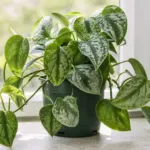
Leaves are narrow-oval to heart-shaped with a pointed tip and irregular white, cream, pale-green, and dark-green marbling or speckling. Variegation is distributed in patches and streaks rather than a uniform central stripe. Stems are flexible and green, with aerial roots at nodes that allow the plant to climb.
Pollination and visitors
No meaningful animal-pollinator interaction is documented for this cultivated, rarely flowering houseplant. Ordinary indoor specimens should be treated as non-pollinator plants.
Epipremnum aureum 'Pearls and Jade' photos
Click any photo for a larger view. Source, author and license are shown separately.
Diseases and pests
Diseases
Prevent problems by using a porous mix, a draining pot, and careful watering. Root and stem problems are most likely when soil remains saturated. Remove damaged tissue, improve airflow, and correct excess moisture; isolate plants if a suspected infection spreads.
Pests
Inspect leaf undersides and stem joints for mealybugs, scale, spider mites, and thrips. Quarantine affected plants, remove light infestations with a cotton swab or water spray, and use insecticidal soap or another labeled treatment when necessary. Avoid chronic drought and dusty foliage, which can worsen mite problems.
Toxicity and pollen
Like other Epipremnum aureum plants, this cultivar contains insoluble calcium oxalate crystals. Chewing can cause immediate oral irritation, burning, drooling, swelling, vomiting, and difficulty swallowing. Keep leaves and pruned material away from children and pets; seek medical or veterinary advice after significant exposure.
- Pollination / pollen
- Not meaningfully released in ordinary indoor cultivation
Because normal indoor plants rarely flower, airborne pollen exposure is expected to be very low. No cultivar-specific airborne-pollen allergy profile was located. A flowering specimen could release pollen, but this is not a usual household condition.
Native habitat
The species is native to tropical Pacific forest environments, including the Solomon Islands, where it grows as a climbing aroid in warm, humid conditions and filtered forest light. The named cultivar is a cultivated selection rather than a wild population and is not intended for frost-prone outdoor landscapes.
Interesting fact
'Pearls and Jade' was developed through a University of Florida foliage-plant breeding program and released as the patented selection 'UFM12'. Its variegation is composed of white and green sectors rather than the broad yellow pattern of Golden pothos. The cultivar is notably compact and slow-growing compared with many green pothos forms.
Frequently asked questions (FAQ)
The most relevant questions about this plant, with short and direct answers.
🌱Quick care
How do you care for Epipremnum aureum 'Pearls and Jade'?⌄
Give it bright filtered light, water when the top 1–2 inches of potting mix dry, and use a loose, well-drained indoor mix. Protect it from freezing temperatures.
Is Epipremnum aureum 'Pearls and Jade' easy to grow indoors?⌄
Yes, Epipremnum aureum 'Pearls and Jade' is generally easy to grow indoors. Its variegated leaves and slower growth make consistent light and careful watering especially helpful.
🌤️Environment and placement
How much light does Epipremnum aureum 'Pearls and Jade' need?⌄
Place it in bright filtered or indirect light. Adequate light helps support growth and preserve its variegation, while harsh direct sun can scorch the pale portions of the leaves.
Can Pearls and Jade pothos grow in low light?⌄
It can tolerate moderate or lower light, but growth may become slower and variegation less pronounced. Bright filtered light is the better choice for healthy, attractive growth.
Can Epipremnum aureum 'Pearls and Jade' get direct sunlight?⌄
It can tolerate a small amount of gentle morning sun, but avoid strong direct afternoon sunlight. The white and cream leaf areas are especially vulnerable to sunburn.
What temperature is best for Pearls and Jade pothos?⌄
Normal warm indoor temperatures are suitable, but protect the plant from cold drafts and freezing temperatures. It is frost tender and should not be left outdoors during freezes.
Does Pearls and Jade pothos need high humidity?⌄
No, average household humidity is usually adequate. Higher humidity may support growth, but it does not compensate for poor light, overwatering, or inadequate drainage.
💧Care and problems
How often should you water Pearls and Jade pothos?⌄
Water when the top 1–2 inches of mix feel dry, then water thoroughly and let excess drain away. Do not follow a fixed weekly schedule because indoor light, temperature, and pot size change drying time.
Why are the leaves on my Pearls and Jade pothos turning yellow?⌄
Yellow leaves are often caused by consistently wet soil or poor drainage. Let the top 1–2 inches dry before watering again and check that the container has a drainage hole.
Why is my Pearls and Jade pothos growing slowly?⌄
Slow growth is normal for this compact, highly variegated cultivar, but insufficient light, cold temperatures, or wet roots can slow it further. Bright filtered light and a drying period between waterings support steadier growth.
Why is my Pearls and Jade pothos losing its variegation?⌄
Insufficient light can produce greener leaves and less noticeable variegation. Move it gradually to a brighter filtered location, but avoid intense direct sun that may burn the pale tissue.
Why does my Pearls and Jade pothos have small leaves?⌄
Small leaves are characteristic of this cultivar and may also reflect its slower growth. Low light, limited root health, or repeated pruning can keep new leaves smaller than expected.
What soil is best for Epipremnum aureum 'Pearls and Jade'?⌄
Use a loose, well-drained, slightly acidic to neutral indoor potting mix. A mix that includes materials such as perlite or fine orchid bark can improve drainage and air space around the roots.
Does Pearls and Jade pothos need fertilizer?⌄
It benefits from light feeding during active growth, but heavy fertilization is unnecessary. Apply a balanced houseplant fertilizer according to its label, preferably at reduced strength if the plant is growing slowly.
🪴Planting and repotting
When should I repot Pearls and Jade pothos?⌄
Repot when roots fill the container, circle densely around the root ball, or emerge from the drainage holes. Choose a pot only slightly larger than the current one to reduce the risk of excess wet soil.
What type of pot is best for Pearls and Jade pothos?⌄
Use a container with drainage holes and a size appropriate for the root ball. Terracotta can help the mix dry faster, while plastic retains moisture longer and may require less frequent watering.
Can Pearls and Jade pothos grow outdoors in the United States?⌄
It can grow outdoors year-round only in warm, frost-free conditions, while it should be treated as a seasonal container plant elsewhere. Bring it indoors before temperatures approach freezing.
✂️Propagation and pruning
How do you propagate Epipremnum aureum 'Pearls and Jade'?⌄
Take a stem cutting with at least one healthy node and root it in water or a moist, well-drained rooting medium. Keep the cutting warm in bright filtered light until roots develop.
Can you propagate Pearls and Jade pothos from a leaf?⌄
A leaf without a stem node normally cannot produce a new vine. Use a cutting that includes at least one node, because the node contains the tissue needed for new roots and shoots.
Why is my Pearls and Jade pothos cutting not rooting?⌄
A cutting may fail when it lacks a node, stays too cold, receives too little light, or remains waterlogged. Use a healthy nodal cutting, provide warmth and bright filtered light, and keep the rooting medium lightly moist rather than saturated.
How do you prune Pearls and Jade pothos?⌄
Prune just above a node with clean scissors to shorten vines or encourage branching. Remove yellow, damaged, or fully dead leaves, and use healthy cuttings for propagation.
Can Pearls and Jade pothos climb?⌄
Yes, it can trail or climb a support such as a moss pole, trellis, or stake. Provide gentle guidance and secure the stems loosely so they are not constricted.
⚠️Toxicity and safety
Is Epipremnum aureum 'Pearls and Jade' toxic to cats and dogs?⌄
Yes, it is toxic to cats and dogs because it contains insoluble calcium oxalates. Chewing the plant can cause mouth irritation, drooling, vomiting, and difficulty swallowing, so keep it away from pets.
Is Pearls and Jade pothos poisonous to people?⌄
Yes, ingestion can irritate the mouth and throat because of insoluble calcium oxalates. Keep it away from children, avoid chewing the leaves, and seek medical or poison-control guidance after ingestion.
Can Pearls and Jade pothos irritate skin?⌄
The sap may irritate sensitive skin, although the main concern is chewing or ingestion. Wear gloves when pruning if you are sensitive to plant sap, and wash exposed skin afterward.
🌸Flowering and special interest
Does Epipremnum aureum 'Pearls and Jade' produce flowers indoors?⌄
It rarely flowers in ordinary indoor conditions. This plant is primarily grown for its variegated foliage, and mature flowering is uncommon without specialized tropical growing conditions.
What does Pearls and Jade pothos look like?⌄
It is a compact, slower-growing vine with small heart-shaped leaves marked by irregular green, gray-green, cream, and white variegation. Individual leaves can differ substantially in the amount and pattern of pale coloration.
Similar plants
 Glacier (Epipremnum aureum ‘Glacier’)Epipremnum aureum 'Glacier'
 N Joy (Epipremnum aureum ‘N Joy’)Epipremnum aureum 'N Joy'
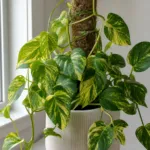 Hawaiian (Epipremnum aureum ‘Hawaiian’)Epipremnum aureum 'Hawaiian'
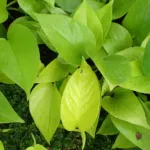 Neon (Epipremnum aureum ‘Neon’)Epipremnum aureum 'Neon'
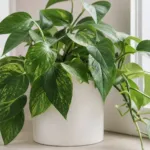 Jade Satin (Epipremnum aureum ‘Jade Satin’)Epipremnum aureum 'Jade Satin'
 Argyraeus (Epipremnum aureum ‘Argyraeus’)Epipremnum aureum 'Argyraeus'