
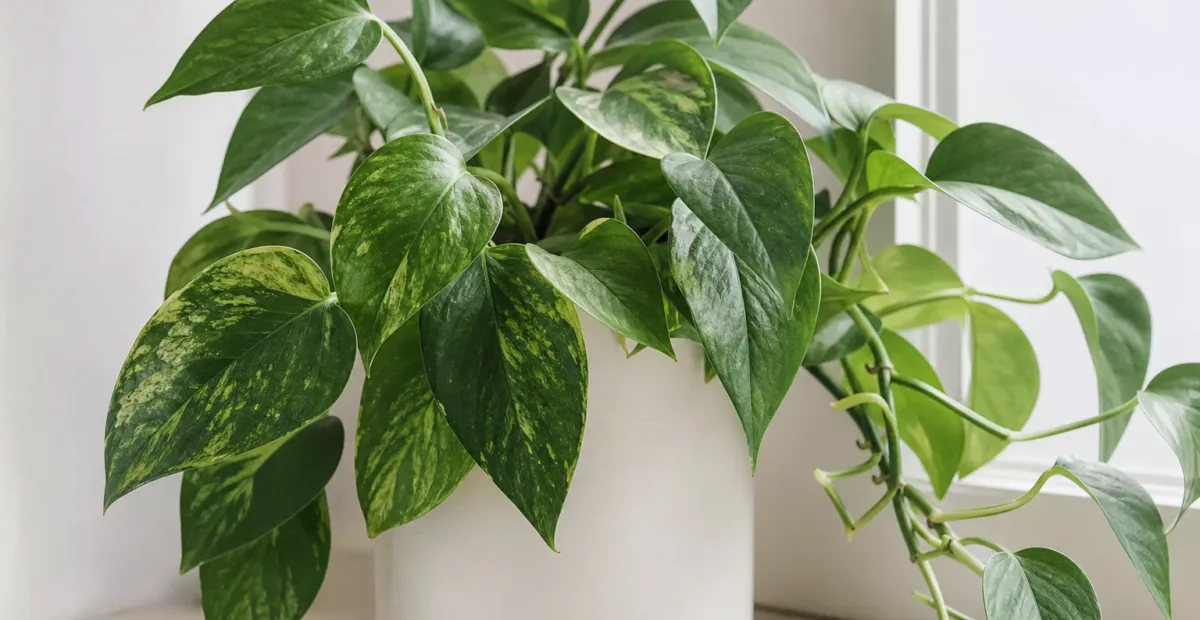
 AI-generated illustration
Jade Satin (Epipremnum aureum ‘Jade Satin’) short overview
Epipremnum aureum 'Jade Satin' is a tropical pothos cultivar grown for its thick stems and heart-shaped green leaves lightly mottled with paler green. It develops a trailing or climbing habit and is especially useful as an indoor foliage plant, hanging basket specimen, or warm-climate groundcover. Provide bright, indirect light, a well-drained mix, and warmth; protect pets and children from its irritating calcium oxalate crystals.
Taxonomic classification
Jade Satin (Epipremnum aureum ‘Jade Satin’) care guide
Light and placement
Place in bright, filtered or indirect light near an east- or west-facing window, or several feet back from strong southern sun. Some lower light is tolerated, but growth becomes slower and more widely spaced. Excess direct sun can bleach or scorch leaves; very dim conditions may produce weak, elongated stems and reduced mottling.
Watering and humidity
Water thoroughly when the top 1–2 inches of mix feel dry, then allow excess water to drain fully. Empty saucers and do not leave the root ball standing in water. Water less often during cool, low-light winter conditions and more often during warm, actively growing periods. Humidity is helpful but is not a substitute for drainage.
Soil and growing medium
Use a loose, well-drained indoor potting mix amended with perlite, orchid bark, or another coarse component. A slightly acidic to neutral reaction is suitable. Avoid dense, waterlogged soil, which encourages root problems and reduces oxygen around the roots.
Feeding
Feed during active spring and summer growth with a balanced liquid houseplant fertilizer diluted to half the label strength about monthly. Water first if the mix is dry. Reduce or stop feeding during slow winter growth and after repotting until roots begin to re-establish.
Growth and habit
This evergreen vine produces flexible stems that trail from containers or climb when given a support. Mature growth may develop larger leaves than juvenile indoor growth, particularly when stems are allowed to climb in warm, bright conditions. Regular tip pruning encourages branching and keeps the plant compact.
Planting and repotting
Plant at the same depth as the original root ball, with the crown and stem bases kept above the wettest part of the mix. In containers, leave space for watering and ensure free drainage. Outdoor planting is appropriate only in frost-free climates with warm soil.
Repot when roots circle the container, emerge from drainage holes, or the mix dries unusually quickly. Move up only one pot size and refresh part of the substrate. Repotting is best during active growth, but indoor plants can be moved whenever conditions are warm and stable.
Propagation and pruning
Propagation
Propagate readily from stem cuttings containing at least one node. Root cuttings in water or a clean, lightly moist propagation mix under warm, bright indirect light. Take cuttings during active growth and avoid burying leaves beneath the medium.
Pruning
Trim long or bare stems just above a node to encourage branching. Remove yellow, damaged, or diseased leaves with clean tools. Pruning can be done year-round indoors, though active spring and summer growth gives the fastest recovery.
Overwintering
Grow indoors before temperatures approach 50°F. Keep away from cold drafts and poorly insulated windows, reduce watering in low winter light, and avoid fertilizing while growth is minimal. In USDA Zones 10–12, outdoor plants still need protection from cold snaps and frost.
Uses
Used as an indoor foliage plant, hanging-basket specimen, desk or shelf plant, and climber trained to a support. In frost-free landscapes it can serve as a tropical vine, filler, or groundcover. Do not use as food or medicinal material, and keep it away from pets and children because of calcium oxalates.
Appearance
The cultivar has thick, robust stems and cordate leaves with narrow to broadly acute tips. Juvenile foliage is green with light green mottling and a relatively smooth, satin-like appearance. It is distinguished from ‘Silver Satin’ by its greener, less gray-mottled leaves and from heavily white-variegated cultivars by the absence of prominent white patches.
Flowering
Small white inflorescences are produced only infrequently, especially on mature, vigorous plants with long stems. Indoor flowering is unusual and should not be expected as a routine ornamental feature.
Pollination and visitors
Flowers are rarely produced in cultivation, and reliable cultivar-specific visitor records are not established. The plant is therefore not rated as a documented pollinator resource.
Diseases and pests
Diseases
Prevent disease by avoiding saturated soil, poor drainage, and prolonged wet foliage. Root and stem rot are the main concerns when watering is excessive. Remove affected tissue, discard badly deteriorated roots, and repot into fresh, airy mix if rot is localized.
Pests
Inspect stems and leaf undersides for mealybugs, scale, spider mites, and thrips. Isolate affected plants, remove small infestations manually, and use insecticidal soap or horticultural oil according to the product label. Avoid chronic stress from drought, overwatering, or low light, which can worsen pest problems.
Toxicity and pollen
Epipremnum aureum contains insoluble calcium oxalate crystals. Chewing or ingesting leaves, stems, or other tissues can cause immediate mouth irritation, drooling, vomiting, and difficulty swallowing; severe swelling is possible. Keep the plant inaccessible to pets and children and seek professional medical or veterinary advice after ingestion.
- Pollination / pollen
- Limited airborne pollen from rare flowers
As a rarely flowering indoor aroid, this cultivar is expected to have little airborne pollen exposure in ordinary household conditions. Do not equate low exposure with guaranteed allergy safety; flowering plants can still release pollen when mature inflorescences occur.
Native habitat
The species is a tropical aroid associated with warm, humid environments and naturally climbs or spreads through vegetation. It requires frost-free conditions outdoors and adapts well to protected indoor culture when supplied with warmth, drainage, and indirect light.
Interesting fact
‘Jade Satin’ originated as a naturally occurring branch mutation of ‘Silver Satin’ in Florida in 2007. Its leaves are green with light green mottling rather than the stronger gray-green mottling of the parent. The cultivar is maintained through vegetative cuttings so its distinctive traits can be preserved.
Frequently asked questions (FAQ)
The most relevant questions about this plant, with short and direct answers.
🌱Quick care
How do you care for Epipremnum aureum 'Jade Satin'?⌄
Give Epipremnum aureum 'Jade Satin' bright indirect to low light, moderate watering, and a loose, well-drained indoor potting mix. Let the soil surface dry slightly before watering again and protect it from temperatures below 50°F.
Is Epipremnum aureum 'Jade Satin' easy to grow indoors?⌄
Yes, Epipremnum aureum 'Jade Satin' is generally an adaptable indoor vine that tolerates low light and occasional watering mistakes. It grows best with bright indirect light, good drainage, and consistent but not soggy moisture.
How often should I water Epipremnum aureum 'Jade Satin'?⌄
Water when the surface of the potting mix has dried slightly, checking the soil rather than following a fixed schedule. Water thoroughly until excess drains from the pot, then empty any water collected in the saucer.
🌤️Environment and placement
What light does Epipremnum aureum 'Jade Satin' need?⌄
Epipremnum aureum 'Jade Satin' grows well in bright indirect light but can tolerate lower-light indoor locations. Protect it from intense direct afternoon sun, which can scorch leaves and dry the soil too quickly.
Can Epipremnum aureum 'Jade Satin' grow in low light?⌄
Yes, it can survive in low light, but growth will usually be slower and the stems may become more widely spaced. Move it closer to a bright window with filtered light if new growth is weak or sparse.
Where should I place Epipremnum aureum 'Jade Satin' in my home?⌄
Place it near an east- or north-facing window, or a few feet from a brighter window with filtered light. Keep it away from cold drafts, heating vents, and temperatures below 50°F.
Does Epipremnum aureum 'Jade Satin' need high humidity?⌄
It can grow in average household humidity, although moderate humidity may support healthier leaves and steadier growth. Avoid placing it in constantly wet conditions or directly beside a humidifier where foliage stays damp.
Can Epipremnum aureum 'Jade Satin' grow outdoors in the United States?⌄
It can be grown outdoors year-round only in warm, frost-free areas roughly comparable to USDA Zones 10–12. In cooler regions, grow it in a container and bring it indoors before temperatures approach 50°F.
💧Care and problems
Why are the leaves of my Epipremnum aureum 'Jade Satin' turning yellow?⌄
Yellow leaves most often indicate consistently wet soil, poor drainage, or insufficient light. Check the roots and potting mix, allow the surface to dry slightly between waterings, and use a container with drainage holes.
Why are the leaves of Epipremnum aureum 'Jade Satin' curling?⌄
Curling leaves can result from underwatering, dry air, heat, root damage, or sudden environmental stress. Check the soil moisture and roots first, then move the plant away from hot sun, drafts, and heating vents.
Why is my Epipremnum aureum 'Jade Satin' not growing?⌄
Slow growth is common in low light, cool conditions, and overly wet or compacted soil. Provide brighter indirect light, keep temperatures warm, and water only after the surface has dried slightly.
How do I fix root rot in Epipremnum aureum 'Jade Satin'?⌄
Remove the plant from its pot, cut away soft or dark roots, and repot the healthy portion in fresh, well-drained mix. Use a pot with drainage holes and reduce watering so the surface dries slightly between applications.
Does Epipremnum aureum 'Jade Satin' need fertilizer?⌄
Fertilizer is optional but can support active growth during spring and summer. Use a balanced houseplant fertilizer at a reduced strength and avoid feeding drought-stressed, newly repotted, or dormant plants.
What pests attack Epipremnum aureum 'Jade Satin'?⌄
Common houseplant pests such as spider mites, mealybugs, scale, and thrips may affect it. Inspect leaf undersides and stems regularly, isolate affected plants, and treat promptly with an appropriate houseplant pest control product.
🪴Planting and repotting
What soil is best for Epipremnum aureum 'Jade Satin'?⌄
Use a loose, well-drained indoor potting mix that retains some moisture without becoming compacted. A mix amended with materials such as perlite or orchid bark can improve aeration and drainage.
When should I repot Epipremnum aureum 'Jade Satin'?⌄
Repot when roots circle the container, emerge from drainage holes, or the mix dries unusually fast. Move it into a pot only one size larger and repot during active growth when possible.
Can Epipremnum aureum 'Jade Satin' grow in a hanging basket?⌄
Yes, its trailing stems make it suitable for a hanging basket or elevated shelf. Use a lightweight, well-drained mix and make sure the container has drainage holes to prevent waterlogged roots.
✂️Propagation and pruning
How do you propagate Epipremnum aureum 'Jade Satin'?⌄
Propagate it from stem cuttings that include at least one healthy node. Root the cutting in water or a lightly moist, well-drained medium, then pot it once a useful root system has formed.
Can you propagate Epipremnum aureum 'Jade Satin' from a leaf?⌄
A leaf without a node will not normally produce a new plant. Use a stem section with a node because the node contains the growth point needed to develop roots and new shoots.
How do you prune Epipremnum aureum 'Jade Satin'?⌄
Prune just above a node with clean scissors to control length and encourage branching. Remove yellow, damaged, or diseased leaves promptly, and use healthy cuttings for propagation.
Why is my Epipremnum aureum 'Jade Satin' getting leggy?⌄
Leggy growth usually means the plant is receiving too little light or has not been pruned. Move it into brighter indirect light and trim long stems above nodes to encourage fuller growth.
⚠️Toxicity and safety
Is Epipremnum aureum 'Jade Satin' toxic to cats and dogs?⌄
Yes, Epipremnum aureum 'Jade Satin' is moderately toxic if chewed or ingested and should be kept away from pets. Chewing may cause mouth irritation, drooling, vomiting, or difficulty swallowing; contact a veterinarian if symptoms occur.
Is Epipremnum aureum 'Jade Satin' toxic to people?⌄
Yes, chewing or ingesting it can irritate the mouth and throat because it contains insoluble calcium oxalates. Keep it away from children, and seek medical or poison-control advice if a significant amount is swallowed.
What temperature is too cold for Epipremnum aureum 'Jade Satin'?⌄
Protect Epipremnum aureum 'Jade Satin' when temperatures fall below 50°F because it is frost-tender. Cold exposure can cause leaf damage, chilling injury, and decline even before an actual freeze occurs.
🌸Flowering and special interest
Does Epipremnum aureum 'Jade Satin' flower indoors?⌄
It rarely flowers indoors and is mainly grown for its foliage. Mature plants may produce small white flowers under unusually favorable conditions, but flowering is not a dependable indoor feature.
How large can Epipremnum aureum 'Jade Satin' get?⌄
Indoors, its size depends heavily on light, support, pruning, and container conditions. It can remain a compact trailing plant when pruned, while mature, supported vines may become considerably longer.
Similar plants
 Manjula (Epipremnum aureum ‘Manjula’)Epipremnum aureum 'Manjula'
 Golden pothos (Epipremnum aureum ‘Golden’)Epipremnum aureum 'Golden'
 Global Green (Epipremnum aureum ‘Global Green’)Epipremnum aureum 'Global Green'
 Hawaiian (Epipremnum aureum ‘Hawaiian’)Epipremnum aureum 'Hawaiian'
 Neon (Epipremnum aureum ‘Neon’)Epipremnum aureum 'Neon'
 Cebu Blue (Epipremnum aureum ‘Cebu Blue’)Epipremnum aureum 'Cebu Blue'