
 AI-generated illustration
Hawaiian (Epipremnum aureum ‘Hawaiian’) short overview
Epipremnum aureum 'Hawaiian' is a vigorous tropical pothos selected for glossy, heart-shaped leaves marked with bold yellow-gold variegation. In U.S. homes it is usually grown as a trailing plant in a hanging basket or trained up a support. Give it bright filtered light, a loose well-drained mix, and water when the surface begins to dry. Keep it away from pets and children because the foliage contains irritating calcium oxalate crystals.
Taxonomic classification
Hawaiian (Epipremnum aureum ‘Hawaiian’) care guide
Light and placement
Provide bright filtered or indirect light, such as near an east- or west-facing window or several feet back from a bright south-facing window. Gentle morning sun may be tolerated, but harsh midday sun can bleach or scorch leaves. Insufficient light produces stretched stems and weaker variegation; excessive shade may reduce yellow coloring and vigor.
Watering and humidity
Water thoroughly when the top 1–2 inches of mix feels dry, then empty the saucer. Do not keep the root ball constantly saturated. Water somewhat less often in winter or in lower light, and more often during warm active growth. Moderate humidity is helpful, but humidity alone cannot compensate for poor drainage.
Soil and growing medium
Use a loose, airy houseplant mix containing peat or coco coir, fine bark, and perlite. The substrate should drain freely while retaining modest moisture. A slightly acidic to neutral reaction is suitable; avoid dense garden soil and containers that remain waterlogged.
Feeding
Feed during active spring and summer growth with a complete liquid houseplant fertilizer diluted to half the label strength about monthly. Water first if the mix is dry. Reduce or stop feeding in cool, dim winter conditions, and avoid fertilizing a recently repotted, stressed, or diseased plant.
Growth and habit
This evergreen vine produces new leaves from flexible nodes and can either trail from a basket or climb when stems contact a support. Regularly rotating the pot promotes even growth. Pinching or selectively cutting long stems encourages branching and allows the grower to maintain a compact display.
Planting and repotting
Plant container-grown specimens at any time indoors, preferably during spring or summer when growth is active. Set the root ball at its original depth and leave the stem bases uncovered. Space multiple cuttings close together for a fuller pot; provide a trellis or pole if climbing growth is desired.
Repot in spring or early summer when roots circle the pot, drainage slows, or the plant dries unusually quickly. Move up only one container size and keep the crown at the same level. Refresh part of the mix rather than heavily disturbing healthy roots.
Propagation and pruning
Propagation
Take stem cuttings with at least one healthy node in spring or summer. Root them in water, moist perlite, or a light potting mix under warm, bright filtered conditions. Keep leaves above the medium and pot several rooted cuttings together for density. Air layering is also possible on a vigorous vine.
Pruning
Prune in spring or summer with clean shears, cutting just above a node to shorten bare or overly long vines and encourage branching. Remove yellow, damaged, or leafless sections. Avoid removing too much foliage at once, especially when light is weak.
Overwintering
Grow indoors whenever temperatures may approach 50°F. Protect from cold windows, drafts, and unheated rooms. During winter, keep the plant in bright light, reduce watering as growth slows, and stop routine fertilizing until active growth resumes.
Uses
Used primarily as an ornamental indoor foliage plant in hanging baskets, tabletop pots, and climbing displays. It can be trained on a moss pole or trellis. Do not use it as food or medicine, and do not plant it outdoors where it may escape in warm, humid regions with invasive-species concerns.
Appearance
The plant has flexible green stems and alternate, glossy, heart-shaped juvenile leaves. 'Hawaiian' is commonly marketed for vivid yellow-gold areas contrasting with green tissue. Variegation can vary among leaves and may diminish in very low light. Mature climbing growth may develop substantially larger, more divided leaves than typical juvenile houseplant foliage.
Flowering
Mature Epipremnum aureum can produce a pale spathe surrounding a spadix, but flowering is exceptionally uncommon in ordinary indoor cultivation. Juvenile plants sold as houseplants normally remain vegetative, and the exact flowering behavior of 'Hawaiian' is not well documented separately.
Pollination and visitors
No dependable evidence was found for regular animal visitation to cultivated 'Hawaiian' plants. Indoor specimens rarely flower, so they should not be marketed as a pollinator plant.
Diseases and pests
Diseases
Prevent disease by using a porous mix, a pot with drainage, and by allowing the surface to dry slightly between waterings. Overwatering can contribute to root or stem rot, shown by soft, dark tissue and yellowing leaves. Remove affected roots, repot into fresh mix, and improve light and airflow.
Pests
Inspect leaf undersides and stems for scale, mealybugs, thrips, and spider mites. Isolate infested plants, wash foliage, and treat persistent soft-bodied pests with insecticidal soap or horticultural oil according to the label. Correct dry air, dust, weak light, and overcrowding that encourage outbreaks.
Toxicity and pollen
All parts contain insoluble calcium oxalate crystals. Chewing can cause immediate burning, oral pain, swelling, drooling, vomiting, or difficulty swallowing; sap may irritate skin and eyes. Keep cuttings and fallen leaves away from pets and children, and seek poison-control or veterinary advice after ingestion.
- Pollination / pollen
- Pollen production is rarely observed in indoor cultivation
Because indoor pothos rarely flowers, airborne pollen exposure is expected to be minimal. No cultivar-specific allergy evidence was located. This low rating refers to likely household pollen exposure, not to the plant's calcium-oxalate toxicity or sap irritation.
Native habitat
The species is tropical and associated with warm, humid forest environments where juvenile vines climb through vegetation. It prefers organic, aerated substrates and protection from prolonged cold. In frost-free areas, escaped plants can persist and climb into surrounding vegetation.
Interesting fact
The name 'Hawaiian' is used horticulturally for a form of Epipremnum aureum with strong yellow variegation, but cultivar-specific scientific documentation is limited. The species changes dramatically between juvenile and mature growth phases. In warm frost-free regions it can escape cultivation and become invasive.
Frequently asked questions (FAQ)
The most relevant questions about this plant, with short and direct answers.
🌱Quick care
How do you care for Epipremnum aureum 'Hawaiian'?⌄
Grow Epipremnum aureum 'Hawaiian' in bright filtered light, water when the soil surface dries slightly, and use an airy, well-drained potting mix. Keep it warm, protect it from frost, and provide a support if you want larger climbing foliage.
Is Epipremnum aureum 'Hawaiian' easy to grow indoors?⌄
Yes, Epipremnum aureum 'Hawaiian' is generally an easy-care indoor vine. It tolerates some neglect, but consistent bright indirect light and avoiding constantly wet soil help preserve vigorous growth and yellow variegation.
Is Epipremnum aureum 'Hawaiian' the same as golden pothos?⌄
Epipremnum aureum 'Hawaiian' is commonly treated as a Hawaiian pothos form or cultivar of the same species as golden pothos, with more pronounced yellow coloration. Trade naming can be inconsistent, so plant tags and appearance may not always distinguish it reliably from highly variegated golden pothos.
🌤️Environment and placement
What light does Epipremnum aureum 'Hawaiian' need?⌄
Epipremnum aureum 'Hawaiian' grows best in bright filtered or indirect light, with some partial shade tolerated. Too little light can reduce growth and variegation, while intense direct sun may scorch the lighter leaf areas.
Can Epipremnum aureum 'Hawaiian' tolerate low light?⌄
It can survive in lower light, but low light is not ideal for Epipremnum aureum 'Hawaiian'. Growth may become slower, leaves may be smaller, and the yellow variegation may become less pronounced.
Can Epipremnum aureum 'Hawaiian' grow in a north-facing window?⌄
Yes, it can grow near a bright north-facing window, although growth may be slower than in brighter filtered light. If the plant becomes sparse or loses variegation, move it closer to a brighter window or add a grow light.
Can Epipremnum aureum 'Hawaiian' grow outside?⌄
Epipremnum aureum 'Hawaiian' can grow outdoors year-round only in warm, frost-free conditions, but it is safest to grow it as an indoor plant in the United States. Avoid planting it outdoors where it could escape or behave invasively, especially in tropical climates.
What temperature is best for Epipremnum aureum 'Hawaiian'?⌄
Keep Epipremnum aureum 'Hawaiian' in a warm indoor range, ideally about 65–80°F. Protect it from cold drafts, abrupt temperature changes, and temperatures near freezing, which can damage the foliage.
💧Care and problems
How often should you water Epipremnum aureum 'Hawaiian'?⌄
Water Epipremnum aureum 'Hawaiian' when the top layer of potting mix feels slightly dry, then drain excess water thoroughly. The exact interval depends on light, pot size, soil, humidity, and season, so check the mix rather than following a fixed schedule.
Why are the leaves of Epipremnum aureum 'Hawaiian' turning yellow?⌄
Yellow leaves usually indicate watering stress, especially soil that stays too wet, although severe dryness can also cause yellowing. Check drainage and root moisture before watering again, and remove leaves that are fully yellow.
Why are the leaves of Epipremnum aureum 'Hawaiian' turning brown?⌄
Brown patches can result from dry soil, low humidity, direct sun, cold exposure, or root damage from overwatering. Move the plant away from harsh sun and drafts, maintain even moisture, and trim only the damaged tissue if desired.
Why is my Epipremnum aureum 'Hawaiian' losing its yellow variegation?⌄
Insufficient light is the most common reason Epipremnum aureum 'Hawaiian' produces less yellow variegation. Move it gradually into brighter filtered light, but avoid strong midday sun that can burn pale areas.
Why is Epipremnum aureum 'Hawaiian' growing slowly?⌄
Slow growth commonly results from inadequate light, cool temperatures, compacted soil, root problems, or the plant’s normal winter slowdown. Provide brighter filtered light, warmth, drainage, and water only when the surface begins to dry.
Does Epipremnum aureum 'Hawaiian' need humidity?⌄
Epipremnum aureum 'Hawaiian' tolerates average indoor humidity, but moderate humidity can support healthier leaves and new growth. Keep it away from drying heat vents, and improve humidity with plant grouping or a humidifier if leaf edges become consistently crisp.
Should you fertilize Epipremnum aureum 'Hawaiian'?⌄
Yes, fertilize Epipremnum aureum 'Hawaiian' lightly during active growth with a balanced houseplant fertilizer diluted according to the label. Avoid fertilizing dry, recently repotted, stressed, or dormant plants, because excess salts can injure the roots.
🪴Planting and repotting
What soil is best for Epipremnum aureum 'Hawaiian'?⌄
Use an airy, well-drained houseplant mix that holds some moisture without remaining soggy, such as potting mix amended with bark and perlite. A slightly acidic to neutral mix is suitable for healthy root growth.
What type of pot does Epipremnum aureum 'Hawaiian' need?⌄
Choose a pot with drainage holes that is only slightly larger than the root ball. A drainage hole is essential because oversized or water-retentive containers can keep the soil wet for too long and increase the risk of root rot.
When should you repot Epipremnum aureum 'Hawaiian'?⌄
Repot Epipremnum aureum 'Hawaiian' when roots circle the container, emerge from drainage holes, or the mix dries unusually fast. Move it into a pot only 1–2 inches wider, preferably during active growth.
Can Epipremnum aureum 'Hawaiian' climb?⌄
Yes, Epipremnum aureum 'Hawaiian' can climb a moss pole, trellis, or other textured support. Climbing under good light may encourage larger leaves, while unsupported vines usually trail and retain smaller juvenile foliage indoors.
✂️Propagation and pruning
How do you propagate Epipremnum aureum 'Hawaiian'?⌄
Propagate Epipremnum aureum 'Hawaiian' from stem cuttings that include at least one node, rooting them in water or a moist, airy medium. Keep the cutting warm in bright indirect light, and plant it after roots are well established.
Can you propagate Epipremnum aureum 'Hawaiian' from a leaf?⌄
No, a leaf without a node generally cannot produce a new Epipremnum aureum 'Hawaiian' plant. Use a stem section containing at least one node, because the node holds the growth tissue needed for rooting and new shoots.
How do you prune Epipremnum aureum 'Hawaiian' to make it bushier?⌄
Prune just above a node to shorten long vines and encourage branching from the remaining stem. Root healthy cuttings and plant them back into the pot to create a fuller container.
Can Epipremnum aureum 'Hawaiian' revert to green leaves?⌄
Yes, a variegated vine can produce greener growth, especially in insufficient light or from a naturally less-variegated stem section. Prune back persistently green shoots to a node with the desired variegation, although a completely green cutting may not regain it.
⚠️Toxicity and safety
Is Epipremnum aureum 'Hawaiian' toxic to cats and dogs?⌄
Yes, Epipremnum aureum 'Hawaiian' is toxic to cats and dogs if chewed or swallowed because it contains insoluble calcium oxalate crystals. Keep it out of reach and contact a veterinarian promptly if a pet develops mouth irritation, drooling, vomiting, or difficulty swallowing.
Is Epipremnum aureum 'Hawaiian' poisonous to people?⌄
Yes, chewing Epipremnum aureum 'Hawaiian' can cause painful irritation and swelling in the mouth and throat because of insoluble calcium oxalate crystals. Keep it away from children, wear gloves when handling damaged plant material if sensitive, and seek medical advice after ingestion.
Can you grow Epipremnum aureum 'Hawaiian' in a home with pets?⌄
You can grow it in a pet household only if the plant is completely inaccessible to animals. Hanging baskets and high shelves should still be checked for fallen leaves or trailing stems that pets could reach.
🌸Flowering and special interest
Does Epipremnum aureum 'Hawaiian' flower indoors?⌄
Epipremnum aureum 'Hawaiian' rarely flowers indoors, and mature flowering is not expected under ordinary houseplant conditions. It is primarily grown for its foliage; mature climbing plants in warm tropical conditions are more likely to produce inflorescences.
What does Epipremnum aureum 'Hawaiian' look like?⌄
Epipremnum aureum 'Hawaiian' is a vining aroid with glossy, heart-shaped green leaves marked by stronger yellow variegation than typical golden pothos. Its exact appearance can vary with light, maturity, climbing support, and the plant’s individual growth.
Similar plants
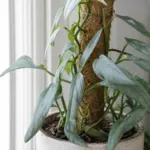 Cebu Blue (Epipremnum aureum ‘Cebu Blue’)Epipremnum aureum 'Cebu Blue'
 Global Green (Epipremnum aureum ‘Global Green’)Epipremnum aureum 'Global Green'
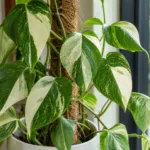 Exotica (Epipremnum aureum ‘Exotica’)Epipremnum aureum 'Exotica'
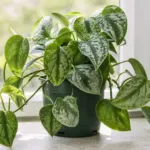 Argyraeus (Epipremnum aureum ‘Argyraeus’)Epipremnum aureum 'Argyraeus'
 Glacier (Epipremnum aureum ‘Glacier’)Epipremnum aureum 'Glacier'
 Green Queen (Epipremnum aureum ‘Green Queen’)Epipremnum aureum 'Green Queen'