
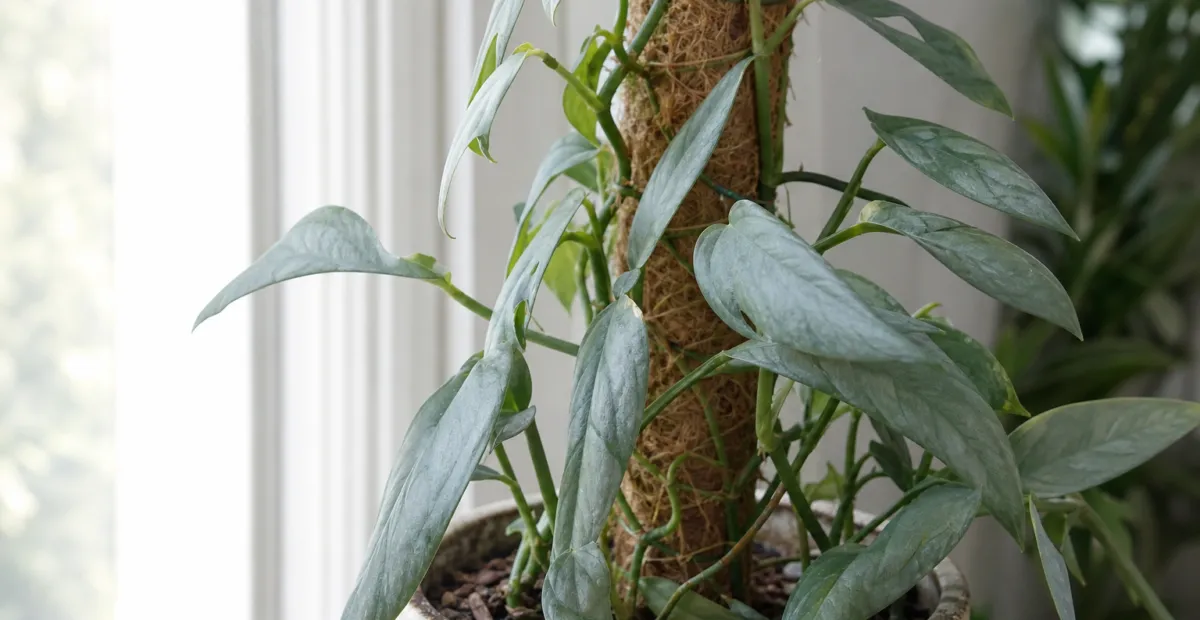
 AI-generated illustration
Cebu Blue (Epipremnum aureum ‘Cebu Blue’) short overview
Epipremnum aureum ‘Cebu Blue’ is a tropical climbing aroid grown in the United States primarily as an indoor foliage plant. Its narrow juvenile leaves have a distinctive blue-gray cast that becomes stronger in bright filtered light. Given a trellis or moss pole, the vine may produce larger, increasingly divided foliage. Keep it warm, water when the upper layer of mix begins to dry, and handle with care because the plant contains irritating calcium oxalate crystals.
Taxonomic classification
Cebu Blue (Epipremnum aureum ‘Cebu Blue’) care guide
Light and placement
Give bright filtered light, ideally near an east- or west-facing window or a few feet back from a bright south-facing window. Gentle morning sun can be useful, but strong afternoon rays may bleach or scorch the blue-gray leaves. Too little light produces longer internodes, smaller leaves, and slower growth; excessive shade can reduce the characteristic coloration.
Watering and humidity
Water thoroughly when the top 1–2 inches of mix feel dry, then let excess drain fully. Do not leave the pot standing in water. Growth may slow in winter, so extend the interval rather than watering by calendar. Humidity matters mainly for vigorous growth and mature foliage; it does not replace good drainage.
Soil and growing medium
Use a loose, airy indoor mix that drains quickly but retains some moisture, such as potting mix amended with orchid bark and perlite. A mildly acidic to neutral reaction is suitable. Avoid dense, waterlogged soil, which can deprive roots of oxygen and promote rot.
Feeding
Feed during active spring and summer growth with a balanced liquid houseplant fertilizer diluted to about half the label strength every 4–6 weeks. Water first if the mix is dry. Reduce or stop feeding during low-light winter conditions, and do not fertilize a wilted, freshly repotted, or root-damaged plant.
Growth and habit
This is a vigorous evergreen vine that can trail from a container or climb when its stems contact a support. Climbing encourages larger, more mature foliage and stronger attachment through aerial roots. Rotate the pot periodically for even growth, and guide stems early rather than making large corrective cuts later.
Planting and repotting
Plant at the same depth as the rooted cutting or nursery plant, with the crown and stem base kept above the surrounding mix. Space is generally unnecessary for a container specimen; instead, provide room for the vine to trail or climb. Establish it in warm conditions away from direct afternoon sun.
Repot in spring or early summer when roots circle the container, the mix breaks down, or growth becomes stagnant. Move up only one pot size and keep the new container well drained. A support can be installed during repotting so aerial roots can attach as the vine matures.
Propagation and pruning
Propagation
Propagate from stem cuttings containing at least one healthy node. Root cuttings in water, sphagnum, or a lightly moist, airy propagation mix under warm, bright filtered light. Once roots are established, pot gently and avoid heavy watering until new growth resumes. Cuttings are the practical method for preserving the cultivar.
Pruning
Prune above a node to control length, encourage branching, or remove damaged growth. Use clean, sharp snips and avoid removing too much foliage at once. Healthy cut sections can be reused for propagation. Wear gloves if contact with sap causes irritation.
Overwintering
Keep indoors before temperatures approach 50°F, and protect the plant from frost, cold windows, and drafts. In winter, place it in the brightest available filtered light, reduce watering as growth slows, and pause fertilizer if light levels are low. Avoid placing it directly beside a heat vent.
Uses
Used as an ornamental indoor foliage plant in hanging baskets, containers, and vertical displays. Its climbing habit makes it suitable for a moss pole or trellis, while trailing stems work well on shelves. It is not an edible or medicinal plant, and all parts should be kept away from children and pets because of calcium oxalates.
Appearance
The juvenile foliage is narrow and elliptic, with a muted blue-gray to silvery blue-green surface. Leaves may develop a few deep divisions and limited perforations as the plant climbs and matures. Green stems carry aerial roots at the nodes, allowing the vine to attach to textured supports. The cultivar is not defined by yellow or white variegation.
Flowering
The exact cultivar is grown for foliage and rarely flowers in ordinary indoor conditions. The parent species is an aroid that produces a spadix surrounded by a spathe, but a dependable indoor flowering season for this cultivar is not documented. Do not use flowering expectations as a routine care target.
Pollination and visitors
No reliable evidence documents regular animal pollinators or visitors for this cultivar in ordinary indoor culture. Its inflorescences are uncommon in homes, so pollinator attraction is best treated as unknown rather than assumed.
Diseases and pests
Diseases
The main risks are root or stem rot from persistently wet media and opportunistic fungal or bacterial leaf spotting. Use a draining mix, avoid wet foliage and stagnant air, remove badly affected tissue with clean tools, and isolate plants showing spreading lesions. Severe decline warrants checking roots for dark, soft tissue.
Pests
Inspect undersides of leaves and stem joints for mealybugs, scale, spider mites, and thrips. Isolate affected plants, remove pests mechanically where practical, and use an appropriate labeled indoor-plant treatment according to its instructions. Avoid chronic overwatering, which weakens roots and can worsen pest stress.
Toxicity and pollen
Epipremnum species contain insoluble calcium oxalate crystals. Chewing or ingesting leaves, stems, or petioles can cause immediate mouth irritation, drooling, vomiting, and swelling; serious complications are uncommon but possible. Keep the plant away from children and pets, wear gloves if sap irritates your skin, and seek medical or veterinary advice after significant exposure.
- Typical season
- Not meaningfully seasonal indoors
- Pollination / pollen
- Pollen is not routinely released in indoor culture
This plant is rarely seen flowering indoors, so airborne pollen exposure is expected to be very low in normal household culture. A precise cultivar-specific allergy rating is not established; avoid claiming zero risk if an unusual inflorescence develops.
Native habitat
The cultivar is associated with Cebu Island in the Philippines and reflects a tropical climbing-aroid growth pattern. Its parentage is adapted to warm, humid forest conditions, where stems use surrounding vegetation for support. In cultivation it performs best in a porous, oxygenated root zone rather than saturated soil.
Interesting fact
The cultivar is associated with Cebu Island in the Philippines. Its blue-gray juvenile leaves are narrow and often only lightly fenestrated. When allowed to climb, mature foliage may become larger and more deeply divided. Older literature and modern horticultural references disagree over whether it belongs under Epipremnum aureum or E. pinnatum.
Frequently asked questions (FAQ)
The most relevant questions about this plant, with short and direct answers.
🌱Quick care
Is Epipremnum aureum 'Cebu Blue' easy to care for?⌄
Yes, Epipremnum aureum 'Cebu Blue' is generally easy to grow indoors when given bright filtered light, airy soil, and moderate watering. Allow the upper layer of soil to begin drying before watering again.
How often should I water Cebu Blue?⌄
Water Cebu Blue when the upper layer of its potting mix begins to dry. Water thoroughly until excess drains from the pot, then empty any standing water.
How much light does Cebu Blue need?⌄
Cebu Blue grows best in bright filtered light. It can tolerate somewhat lower light, but growth may become slower, leggier, and less blue-silver.
Is Cebu Blue a trailing or climbing plant?⌄
Cebu Blue can grow as either a trailing or climbing houseplant. It usually develops larger, more mature foliage when trained upward on a moss pole, trellis, or similar support.
🌤️Environment and placement
Can Cebu Blue grow indoors year-round?⌄
Yes, Cebu Blue is well suited to indoor growing in the United States. Keep it in a warm room and protect it from frost, freezing temperatures, and cold drafts.
Can Cebu Blue tolerate low light?⌄
Cebu Blue can survive in lower light, but it usually performs better in bright filtered light. Low light may cause sparse growth, smaller leaves, and less noticeable blue coloration.
Can Cebu Blue tolerate direct sunlight?⌄
Cebu Blue may tolerate gentle morning or late-afternoon sun, but strong direct sunlight through glass can scorch its leaves. Use filtered light or sheer curtains near bright windows.
Does Cebu Blue need high humidity?⌄
Cebu Blue can adapt to typical indoor humidity, although moderate to higher humidity may support healthier new growth. Good airflow is important, especially in enclosed or very humid spaces.
Can Cebu Blue grow outside in the United States?⌄
Cebu Blue can grow outdoors only in warm, frost-free conditions with filtered light and protection from harsh sun. In most of the United States, grow it indoors or bring it inside before temperatures approach freezing.
💧Care and problems
Why are my Cebu Blue leaves turning yellow?⌄
Yellow leaves commonly indicate excess moisture, poor drainage, or normal aging of older foliage. Check that the pot drains freely and let the upper soil layer begin to dry before watering again.
Why are my Cebu Blue leaves turning brown?⌄
Brown leaf edges can result from dry soil, low humidity, intense direct sun, or fertilizer buildup. Check the roots and watering pattern, then move the plant away from harsh sun and flush accumulated salts if needed.
Why is my Cebu Blue losing leaves?⌄
Leaf loss can follow overwatering, root damage, cold drafts, sudden environmental changes, or insufficient light. Remove damaged foliage and correct the underlying growing conditions rather than increasing water automatically.
Why is my Cebu Blue growing slowly?⌄
Slow growth is often caused by inadequate light, cool temperatures, watering stress, or a depleted root environment. Move it to bright filtered light and keep the mix lightly but evenly managed without staying soggy.
Why are my Cebu Blue leaves small?⌄
Small leaves are common when Cebu Blue is trailing, growing in low light, or still in a juvenile phase. Brighter filtered light and vertical support can encourage larger mature foliage over time.
Why is my Cebu Blue not turning blue?⌄
The blue-silver appearance is strongest under suitable bright filtered light and may look greener in low light or on newer growth. Mature climbing foliage can also change shape and color as the plant develops.
How do I make Cebu Blue leaves split or fenestrate?⌄
Train Cebu Blue to climb a support and provide bright filtered light, steady warmth, and consistent care. Fenestration is not guaranteed indoors, and trailing plants commonly retain narrower, unsplit leaves.
Does Cebu Blue need fertilizer?⌄
Cebu Blue benefits from light feeding during active growth, but fertilizer is not a substitute for proper light and watering. Use a balanced houseplant fertilizer at reduced strength according to its label and avoid feeding dry or stressed roots.
🪴Planting and repotting
What soil is best for Cebu Blue?⌄
Use a loose, airy, well-drained indoor mix that holds some moisture without becoming compacted. A mix amended with materials such as orchid bark, perlite, or coco coir can improve aeration and drainage.
What type of pot is best for Cebu Blue?⌄
Choose a pot with drainage holes that is only slightly larger than the root ball. A container that is too large can retain excess moisture and increase the risk of root problems.
When should I repot Cebu Blue?⌄
Repot Cebu Blue when roots circle the container, emerge from drainage holes, or the mix dries unusually quickly. Move it into a pot only one size larger and refresh the soil without unnecessarily disturbing healthy roots.
✂️Propagation and pruning
How do I propagate Cebu Blue from cuttings?⌄
Take a healthy stem cutting with at least one node, then root it in water or a moist, airy propagation medium. Keep the cutting warm in bright filtered light and plant it into indoor mix after roots are established.
Can I propagate Cebu Blue in water?⌄
Yes, Cebu Blue stem cuttings can root in water when at least one node is submerged and the leaves remain above the water. Change the water regularly and transfer the cutting once it has a useful network of roots.
Can I propagate Cebu Blue from a single leaf?⌄
A leaf without a node normally cannot produce a new Cebu Blue plant. Use a stem section that includes a node, because the node contains the growth tissue needed for new shoots.
Where should I prune Cebu Blue?⌄
Prune Cebu Blue just above a healthy node to shorten vines and encourage branching. Remove yellow, damaged, or leafless sections with clean scissors, and use healthy cuttings for propagation.
How do I make Cebu Blue fuller?⌄
Prune long vines above nodes and root the cuttings back into the same pot to increase density. Bright filtered light and regular rotation also help new growth develop more evenly.
⚠️Toxicity and safety
Is Cebu Blue toxic to cats and dogs?⌄
Yes, Cebu Blue should be treated as toxic to cats and dogs if chewed or ingested. Its calcium oxalate crystals can cause mouth irritation, drooling, vomiting, or difficulty swallowing, so keep it away from pets.
Is Cebu Blue toxic to humans?⌄
Yes, Cebu Blue is toxic if chewed or ingested. Keep it away from children, and seek medical advice or contact poison-control services if part of the plant is swallowed or causes mouth irritation.
Can I keep Cebu Blue in a home with pets?⌄
You can keep Cebu Blue in a pet household only if it is placed where animals cannot reach or chew it. Contact a veterinarian promptly if a pet eats any part of the plant or develops drooling, vomiting, or mouth swelling.
🌸Flowering and special interest
Does Cebu Blue flower indoors?⌄
Cebu Blue rarely flowers as a typical indoor houseplant. Flowering is more likely only on a mature, vigorously growing plant under warm, bright, and humid conditions, so it is primarily grown for its foliage.
Similar plants
 Bright Eyes garden phlox (Phlox paniculata ‘Bright Eyes’)Phlox paniculata 'Bright Eyes'
 Samson (Phlox subulata ‘Samson’)Phlox subulata 'Samson'
 Argyraeus (Epipremnum aureum ‘Argyraeus’)Epipremnum aureum 'Argyraeus'
 G F Wilson (Phlox subulata ‘G F Wilson’)Phlox subulata 'G F Wilson'
 Maischnee (Phlox subulata ‘Maischnee’)Phlox subulata 'Maischnee'
 Amazing Grace (Phlox subulata ‘Amazing Grace’)Phlox subulata 'Amazing Grace'