
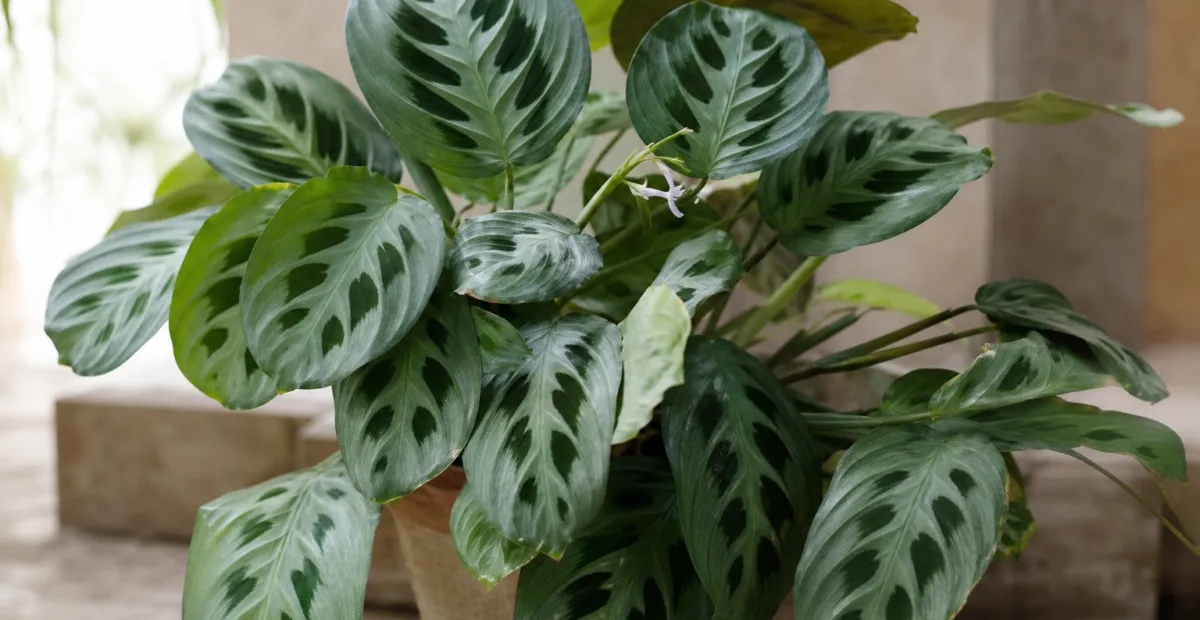
 AI-generated illustration
Massangeana (Maranta leuconeura ‘Massangeana’) short overview
Maranta leuconeura 'Massangeana' is a tropical prayer-plant cultivar grown primarily for its richly patterned foliage and compact, gently spreading habit. It performs best indoors with bright filtered light, warm temperatures, high humidity, and consistently moist but well-drained potting mix. Protect it from direct midday sun, cold drafts, mineral-heavy water, and prolonged drying, which can cause curled or browned leaf edges.
Taxonomic classification
Massangeana (Maranta leuconeura ‘Massangeana’) care guide
Light and placement
Provide bright, filtered light or gentle partial shade. An east-facing window is often suitable; use a sheer curtain at a brighter south- or west-facing window. Too much direct sun bleaches or scorches the patterned leaves, while too little light causes slower growth, duller markings, and more widely spaced foliage.
Watering and humidity
Keep the mix evenly and lightly moist during active growth. Water thoroughly when the surface is just beginning to dry, then empty drainage water. Reduce frequency somewhat in winter but do not allow the root ball to become fully dry. Use room-temperature, low-mineral water when possible; humidity above 50% helps limit curling and brown edges.
Soil and growing medium
Use a loose, moisture-retentive but well-drained houseplant mix containing peat or coco coir, fine bark, and perlite. A slightly acidic to neutral reaction is suitable. Avoid compacted or waterlogged soil, and use a container with a drainage hole. Mineral-heavy water can contribute to leaf-edge damage and surface deposits.
Feeding
Feed during active growth in spring and summer with a balanced liquid houseplant fertilizer diluted to about half the label strength, generally every two to four weeks. Do not fertilize a dry, wilted, recently repotted, or dormant plant. Flush the container periodically to reduce salt accumulation, especially when using tap water.
Growth and habit
This rhizomatous perennial forms a low, clumping-to-spreading canopy from underground stems. Growth is strongest in warm, humid conditions with steady moisture. Older stems can become crowded, making division useful during repotting; avoid placing the plant where its leaves will be repeatedly brushed or damaged.
Planting and repotting
In the United States this tropical plant is normally grown as a container houseplant rather than planted outdoors. Set the root mass at its existing depth in spring or early summer, leaving space around the crown and ensuring rapid drainage. Outdoor placement is suitable only during warm, frost-free weather in a sheltered, shaded location.
Repot in spring when roots fill the container or the mix breaks down, usually every one to two years. Move up only one pot size and keep the rhizomes at their previous depth. Water thoroughly after repotting, then keep the plant warm and out of harsh light while it re-establishes.
Propagation and pruning
Propagation
Divide mature rhizomes or root sections during spring repotting, ensuring each division has roots and active shoots. Stem cuttings with nodes may also root in warm, humid conditions, though division is generally more dependable. Keep new propagules evenly moist and protected from direct sun.
Pruning
Remove yellow, badly damaged, or diseased leaves at the base with clean scissors. Trim individual brown tips only for appearance; avoid heavy cutting unless stems are damaged or the plant needs reshaping. Sterilize tools between plants when disease is suspected.
Overwintering
Grow indoors year-round in the United States unless outdoor temperatures remain reliably warm and frost-free. Keep above 55°F, reduce watering slightly in winter, and place away from radiators, forced-air vents, and cold windows. Maintain humidity with a humidifier or naturally humid room rather than frequent misting alone.
Uses
Used as an ornamental indoor foliage plant, terrarium subject, shaded patio container, or humidity-loving display plant. Its patterned leaves provide visual interest without requiring direct sun. It has no established culinary or medicinal use for this cultivar, and plant material should not be intentionally consumed.
Appearance
The cultivar has broad, oval, entire leaves carried on slender petioles from a rhizomatous base. Maranta foliage is recognized by contrasting leaf markings and the ability of leaves to alter their angle between day and night. Exact color intensity and pattern can vary with light, nutrition, age, and the authenticity of the cultivar.
Flowering
This species can produce very small flowers on slender inflorescences, but flowering is secondary to the foliage and is less common under ordinary indoor conditions. Individual flowers open in small numbers, and outdoor observations record extended flowering during warm, rainy periods. Exact flowering timing for 'Massangeana' indoors is not reliably documented.
Pollination and visitors
Wild Maranta leuconeura flowers are visited by several insect groups, with documented effective pollination by specialized bees and flies in Brazilian field studies. Evidence does not show that the 'Massangeana' cultivar attracts pollinators indoors, so its practical garden value for wildlife is limited.
Diseases and pests
Diseases
Prevent disease by avoiding stagnant water, wet foliage overnight, and poor air circulation. Root and rhizome rot is the principal concern in saturated mix; remove affected tissue and replace the medium if decay occurs. Leaf-spot symptoms warrant isolating the plant, improving airflow, and removing badly affected leaves.
Pests
Spider mites, thrips, mealybugs, and scale may occur, especially in dry indoor air. Inspect leaf undersides and new growth regularly. Isolate infested plants, wash foliage when appropriate, and use insecticidal soap or another labeled treatment according to directions. Correcting low humidity and plant stress helps reduce recurring infestations.
Toxicity and pollen
Reliable references generally treat prayer plants in this group as non-toxic to cats and dogs, but the exact cultivar is not independently listed in every poison-control database. Chewing any ornamental plant can still cause mild gastrointestinal upset, and plant material should not be intentionally eaten. Seek medical or veterinary advice if symptoms are persistent or severe.
- Typical season
- No meaningful indoor pollen season documented
- Pollination / pollen
- Limited, insect-carried pollen
The plant is insect-pollinated and its tiny indoor flowers are unlikely to create substantial airborne pollen exposure. No cultivar-specific allergy studies were located, so low rather than zero is the cautious classification. People with known plant allergies should avoid direct contact if irritation occurs.
Native habitat
Maranta leuconeura is associated with warm, humid tropical forest environments in Brazil, where filtered light, organic forest-floor substrates, and regular moisture are typical. It is not frost tolerant and is adapted to protected understory conditions rather than exposed, dry sites.
Interesting fact
Maranta leaves change angle over the day in response to light and darkness, creating the familiar prayer-plant movement. The species has a specialized floral trigger mechanism associated with explosive pollen release. 'Massangeana' is a horticultural cultivar name applied to Maranta leuconeura rather than a separate accepted species.
Frequently asked questions (FAQ)
The most relevant questions about this plant, with short and direct answers.
🌱Quick care
What is Maranta leuconeura 'Massangeana' commonly called?⌄
Maranta leuconeura 'Massangeana' is commonly sold as Black Maranta or Massangeana Prayer Plant. Some botanical references treat Massangeana as a form or synonym within Maranta leuconeura rather than a separate species.
How much light does Maranta leuconeura 'Massangeana' need?⌄
Give Maranta leuconeura 'Massangeana' bright, filtered light or partial shade. Protect its dark foliage from strong direct afternoon sun, which can bleach or scorch the leaves.
How often should I water Maranta leuconeura 'Massangeana'?⌄
Water when the surface of the mix begins to feel slightly dry, keeping the root zone evenly moist but never waterlogged. Reduce watering somewhat during low-light winter conditions, but do not let the plant stay dry for prolonged periods.
What temperature is best for Maranta leuconeura 'Massangeana'?⌄
Keep Maranta leuconeura 'Massangeana' in a warm indoor location, ideally above 65°F, and protect it from temperatures below 55°F. Avoid cold drafts, air-conditioning vents, and sudden temperature changes.
Is Maranta leuconeura 'Massangeana' easy to grow indoors?⌄
Maranta leuconeura 'Massangeana' can grow well indoors but is less forgiving of dry air, inconsistent watering, and poor-quality water than many common houseplants. Stable moisture, filtered light, warmth, and moderate to high humidity produce the best results.
🌤️Environment and placement
Where should I place Maranta leuconeura 'Massangeana' indoors?⌄
Place it near an east- or north-facing window, or several feet from a brighter window with filtered light. Keep it away from direct hot sun and drafts from doors, heaters, and air-conditioning vents.
Does Maranta leuconeura 'Massangeana' need high humidity?⌄
Yes, Maranta leuconeura 'Massangeana' performs best with moderate to high humidity, especially in heated or air-conditioned homes. A humidifier or grouping plants together is generally more effective than occasional misting.
Can Maranta leuconeura 'Massangeana' grow in a bathroom?⌄
Maranta leuconeura 'Massangeana' can grow in a warm, bright bathroom if it receives adequate filtered light and has some air circulation. A dark bathroom or one with repeated cold drafts is unsuitable.
Can Maranta leuconeura 'Massangeana' grow under a grow light?⌄
Yes, it grows well under a grow light when the light is bright but not intense enough to heat or bleach the leaves. Keep the fixture at an appropriate distance according to its output and provide a consistent daily schedule.
Why do the leaves of Maranta leuconeura 'Massangeana' fold at night?⌄
The leaves fold upward at night because Maranta has a natural daily movement called nyctinasty. Healthy leaves usually open again during the day when the plant receives suitable light and moisture.
💧Care and problems
Why are the leaves of my Maranta leuconeura 'Massangeana' turning brown at the edges?⌄
Brown edges usually result from dry air, inconsistent watering, salt buildup, or excessive light. Improve humidity, keep watering more consistent, flush accumulated salts from the mix, and move the plant away from harsh direct sun.
Why are the leaves of Maranta leuconeura 'Massangeana' curling?⌄
Leaf curling commonly indicates underwatering, dry air, heat stress, or root problems caused by overly wet soil. Check the moisture several inches down, inspect the roots if the mix stays wet, and keep the plant warm and humid.
Why is my Maranta leuconeura 'Massangeana' losing color?⌄
Fading or washed-out coloration is most often caused by excessive direct light. Move the plant into bright filtered light, although newly emerging leaves may still vary naturally in color and pattern.
Why is Maranta leuconeura 'Massangeana' turning yellow?⌄
Yellow leaves commonly result from overwatering, poor drainage, cold stress, or normal aging of older foliage. Let excess water drain completely, check the roots for damage, and make sure the plant stays above 55°F.
Why is my Maranta leuconeura 'Massangeana' drooping?⌄
Drooping can indicate dry soil, root stress from saturated soil, cold temperatures, or sudden environmental change. Check the mix and drainage first, then correct the underlying condition rather than watering automatically.
What water is best for Maranta leuconeura 'Massangeana'?⌄
Filtered, distilled, rain, or otherwise low-mineral water can help prevent brown leaf tips on Maranta leuconeura 'Massangeana'. If using tap water, allow it to reach room temperature and periodically flush the pot to reduce mineral buildup.
Does Maranta leuconeura 'Massangeana' need fertilizer?⌄
Feed Maranta leuconeura 'Massangeana' during active growth with a balanced houseplant fertilizer diluted to half strength, typically about once a month. Avoid heavy feeding in winter or when the plant is stressed, newly repotted, or sitting in dry soil.
What pests attack Maranta leuconeura 'Massangeana'?⌄
Spider mites, mealybugs, scale, and thrips can attack Maranta leuconeura 'Massangeana', especially when the air is dry. Inspect leaf undersides and new growth regularly, isolate infested plants, and treat promptly with an appropriate houseplant pest control method.
🪴Planting and repotting
What soil is best for Maranta leuconeura 'Massangeana'?⌄
Use a loose peat-based or coco-coir houseplant mix amended for excellent drainage, such as with perlite or fine bark. The mix should retain even moisture without becoming dense or waterlogged.
What type of pot does Maranta leuconeura 'Massangeana' need?⌄
Choose a pot with drainage holes that is only slightly larger than the root ball. Maranta has relatively shallow roots and is more likely to suffer in an oversized pot that stays wet for too long.
When should I repot Maranta leuconeura 'Massangeana'?⌄
Repot Maranta leuconeura 'Massangeana' in spring or when roots circle the pot, emerge from drainage holes, or the mix dries unusually fast. Move it only one pot size larger and disturb the shallow roots as little as possible.
How do I prevent root rot in Maranta leuconeura 'Massangeana'?⌄
Prevent root rot by using a well-draining mix, a pot with drainage holes, and a watering schedule based on soil moisture rather than a fixed calendar. Never leave the container standing in drained water.
✂️Propagation and pruning
How do I propagate Maranta leuconeura 'Massangeana'?⌄
Propagate Maranta leuconeura 'Massangeana' by dividing a healthy established clump during repotting. Each division should have roots and several attached stems, then be planted in a lightly moist, well-draining mix.
Can Maranta leuconeura 'Massangeana' grow from a leaf cutting?⌄
A single leaf without a node will not reliably produce a new Maranta leuconeura 'Massangeana' plant. Division is the dependable method because new growth develops from connected stems and rhizome sections.
Can I prune Maranta leuconeura 'Massangeana'?⌄
Yes, prune damaged, yellow, or brown leaves at the base with clean scissors. You can also shorten excessively long stems to maintain a compact shape, and healthy cuttings may encourage fuller regrowth from the plant’s base.
How do I make Maranta leuconeura 'Massangeana' bushier?⌄
Trim excessively long stems just above the soil line and provide steady warmth, filtered light, moisture, and humidity. New shoots generally emerge from the clump rather than from the middle of a cut leaf.
⚠️Toxicity and safety
Is Maranta leuconeura 'Massangeana' toxic to cats?⌄
Maranta leuconeura 'Massangeana' is generally regarded as non-toxic to cats. Even non-toxic plants can cause mild stomach upset if eaten, so contact a veterinarian if your cat shows concerning symptoms.
Is Maranta leuconeura 'Massangeana' toxic to dogs?⌄
Maranta leuconeura 'Massangeana' is generally regarded as non-toxic to dogs. Prevent chewing when possible, because ingesting plant material may still cause minor digestive upset in some pets.
Is Maranta leuconeura 'Massangeana' safe for children?⌄
Maranta leuconeura 'Massangeana' is generally considered non-toxic, but it should not be treated as edible. Keep houseplants out of reach of young children and seek medical advice if a substantial amount is swallowed.
🌸Flowering and special interest
Does Maranta leuconeura 'Massangeana' flower indoors?⌄
Yes, Maranta leuconeura 'Massangeana' can produce small white flowers indoors, although flowering is less prominent than its foliage and is not guaranteed. Mature, healthy plants receiving suitable light and care are most likely to bloom.
Why is my Maranta leuconeura 'Massangeana' not flowering?⌄
Maranta leuconeura 'Massangeana' may not flower because it is young, stressed, receiving insufficient light, or growing under inconsistent conditions. Flowering is optional for a healthy houseplant, so prioritize stable moisture, warmth, and filtered light rather than forcing blooms.
Similar plants
 N Joy (Epipremnum aureum ‘N Joy’)Epipremnum aureum 'N Joy'
 Shangri la (Epipremnum aureum ‘Shangri la’)Epipremnum aureum 'Shangri la'
 Hawaiian (Epipremnum aureum ‘Hawaiian’)Epipremnum aureum 'Hawaiian'
 Pinnuta (Epipremnum aureum ‘Pinnuta’)Epipremnum aureum 'Pinnuta'
 Jade pothos (Epipremnum aureum ‘Jade’)Epipremnum aureum 'Jade'
 Prayer plant (Maranta leuconeura ‘Kerchoveana’)Maranta leuconeura 'Kerchoveana'