
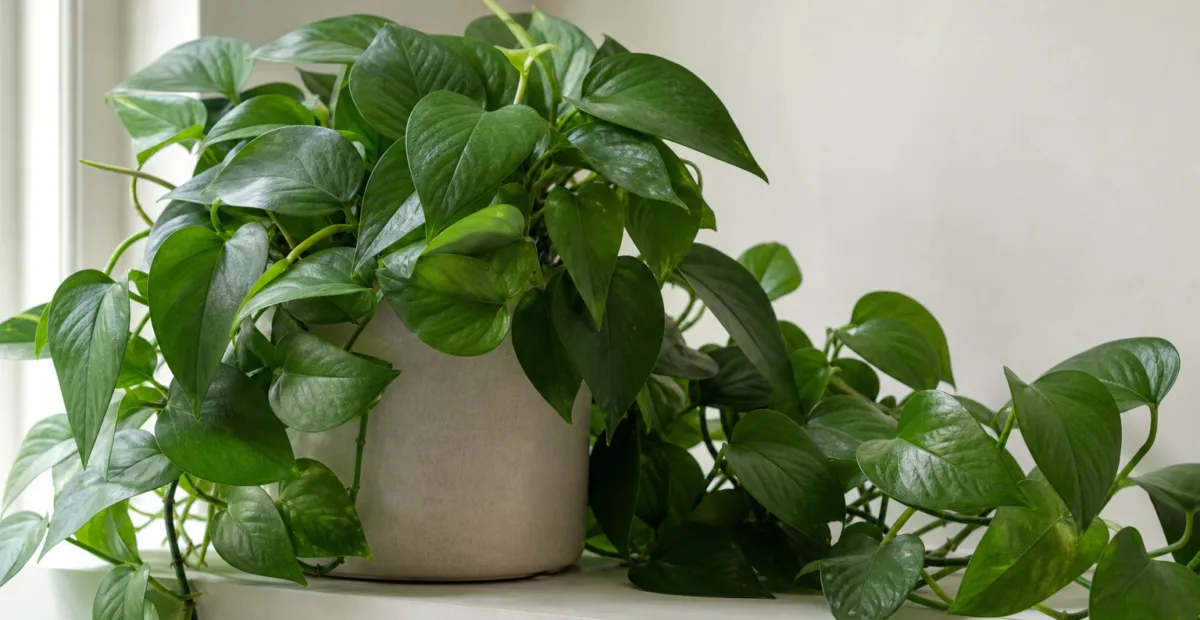
 AI-generated illustration
Green Queen (Epipremnum aureum ‘Green Queen’) short overview
Epipremnum aureum 'Green Queen' is a lush, solid-green pothos cultivar grown primarily as an indoor foliage plant in the United States. Its flexible stems trail from hanging baskets or climb a support, while heart-shaped leaves remain attractive in moderate to bright indirect light. Let the potting mix partly dry between waterings, provide warmth, and keep the plant away from pets and children because chewed tissue contains irritating calcium oxalate crystals.
Taxonomic classification
Green Queen (Epipremnum aureum ‘Green Queen’) care guide
Light and placement
Provide bright, filtered or indirect light for compact growth and healthy deep-green leaves. An east- or north-facing window is suitable; near stronger south or west light, place the plant several feet back or diffuse the sun. Too little light can produce sparse, elongated growth and smaller leaves, while harsh direct sun may bleach or scorch foliage.
Watering and humidity
Water thoroughly until excess drains, then empty the saucer. Wait until the top 1–2 inches of mix feel dry before watering again; do not follow a rigid calendar. Growth usually needs more frequent watering in spring and summer and less in cool, dim winter conditions. Avoid leaving roots continuously wet.
Soil and growing medium
Use a loose, peat-free or peat-based indoor mix amended with perlite, bark, or another aerating component. The container must drain freely. A slightly acidic to neutral reaction is suitable; avoid dense, waterlogged soil, which commonly causes root decline.
Feeding
Feed during spring and summer when the plant is actively producing leaves, using a complete balanced liquid houseplant fertilizer diluted to about half the label strength every 4–6 weeks. Water first if the mix is dry. Reduce or stop feeding in dim winter conditions or after repotting until roots recover.
Growth and habit
This is a vigorous evergreen vine. Young stems trail naturally, while contact with a support can encourage climbing and larger, more mature foliage. Pinching growing tips promotes branching; long bare sections can be shortened and replanted from healthy nodes.
Planting and repotting
Plant or pot up after the last frost when growing outdoors seasonally, or at any time indoors when temperatures are stable. Set the root ball at its original depth; do not bury stems deeply. Space plants according to container size and allow airflow around the foliage.
Repot in spring or early summer when roots circle the pot, the mix stays wet for too long, or growth slows. Move up only 1–2 inches in pot diameter and retain the root ball structure. Always use a drainage hole.
Propagation and pruning
Propagation
Propagate readily from stem cuttings containing at least one node. Root cuttings in water, moist propagation mix, or sphagnum under warm, bright indirect light. Take cuttings during active growth and keep the medium lightly moist until roots and new shoots develop.
Pruning
Trim long, sparse, or damaged stems just above a healthy node with clean shears. Regular tip pruning encourages branching and keeps a hanging basket dense. Healthy cut sections can be saved for propagation. Remove yellow leaves at the base rather than stripping healthy foliage.
Overwintering
Keep indoors before nighttime temperatures approach 50°F. Protect from cold drafts, frost, and chilled wet soil. In winter, place in the brightest available indirect light, reduce watering as growth slows, and pause fertilizer if the plant is not actively growing.
Uses
Primarily used as an indoor foliage plant in containers, hanging baskets, shelves, and trained displays. It can be grown outdoors seasonally in warm US climates but must be protected from frost. It is not an edible or medicinal plant, and the foliage should not be used in food or home remedies.
Appearance
Leaves are glossy, heart-shaped, and predominantly solid green, carried on flexible green stems with aerial-root-producing nodes. The cultivar is distinguished by its non-variegated appearance and vigorous vine habit. Mature climbing growth may develop larger leaves than unsupported juvenile trailing stems.
Flowering
Mature Epipremnum aureum can produce aroid inflorescences, but flowering is exceptionally uncommon in ordinary indoor culture. The cultivar is grown for foliage, and a dependable flowering season is not established for 'Green Queen'.
Pollination and visitors
No dependable documentation supports meaningful pollinator attraction by this cultivar in normal indoor cultivation. The species flowers rarely in cultivation, so visitor records should not be assumed from its foliage use.
Diseases and pests
Diseases
The main risks are root and stem rots associated with saturated mix, poor drainage, or cool conditions. Use a clean, free-draining substrate, discard standing water, and remove soft or blackened tissue promptly. Isolate plants with suspicious symptoms and avoid propagating from diseased stems.
Pests
Watch for mealybugs, scale, spider mites, and thrips, especially on stressed or dusty plants. Inspect leaf undersides and stem joints regularly. Isolate affected plants, remove pests with a damp swab or water spray, and use an appropriately labeled insecticidal soap or horticultural oil according to the product directions.
Toxicity and pollen
The species contains insoluble calcium oxalate crystals that can cause immediate mouth and throat irritation, drooling, vomiting, and difficulty swallowing if chewed. Keep all plant parts away from pets and young children; seek medical or veterinary advice after significant exposure or breathing difficulty.
- Pollination / pollen
- Rarely produced in indoor cultivation
This plant rarely flowers indoors, so airborne pollen exposure is expected to be minimal in ordinary household culture. No cultivar-specific allergy profile was located; flowering plants should still be handled normally by people with known pollen sensitivity.
Native habitat
The species is a tropical aroid associated with warm, humid forest environments where stems can climb trees and root at nodes. It favors filtered light, organic substrates, and consistent moisture with good aeration rather than prolonged saturation.
Interesting fact
The species is a member of the arum family and produces a spadix-and-spathe inflorescence rather than a typical showy flower. Its juvenile and mature growth can look substantially different, especially when allowed to climb. 'Green Queen' is valued for stable, solid-green foliage rather than contrasting variegation.
Frequently asked questions (FAQ)
The most relevant questions about this plant, with short and direct answers.
🌱Quick care
How do you care for Epipremnum aureum 'Green Queen'?⌄
Give Epipremnum aureum 'Green Queen' bright indirect to moderate light, water when the top 1–2 inches of potting mix dry, and use a loose, well-drained indoor mix. Protect it from frost and prolonged cold.
Is Epipremnum aureum 'Green Queen' easy to grow indoors?⌄
Yes, Epipremnum aureum 'Green Queen' is generally an easy-care indoor vine. It tolerates moderate light and occasional drying, but growth is usually stronger with brighter indirect light and consistent watering.
🌤️Environment and placement
What light does Epipremnum aureum 'Green Queen' need?⌄
Epipremnum aureum 'Green Queen' grows best in bright indirect light but also tolerates moderate light. Avoid intense direct afternoon sun, which can scorch the leaves, especially near an unfiltered south- or west-facing window.
Can Epipremnum aureum 'Green Queen' grow in low light?⌄
Epipremnum aureum 'Green Queen' can survive in lower light, but growth may become slower and stems may stretch between leaves. Move it closer to a bright window with filtered light if the vine becomes sparse.
Where should I place Epipremnum aureum 'Green Queen' indoors?⌄
Place Epipremnum aureum 'Green Queen' near an east- or north-facing window, or a few feet from a brighter south- or west-facing window. Keep it away from cold drafts, heating vents, and temperatures near freezing.
What temperature is best for Epipremnum aureum 'Green Queen'?⌄
Normal indoor temperatures are suitable for Epipremnum aureum 'Green Queen', provided the plant is protected from frost and cold drafts. Bring it indoors before outdoor temperatures approach freezing.
💧Care and problems
How often should I water Epipremnum aureum 'Green Queen'?⌄
Water Epipremnum aureum 'Green Queen' when the top 1–2 inches of potting mix feel dry. Water thoroughly until excess drains from the pot, then empty any water collected in the saucer.
Why are the leaves of my Epipremnum aureum 'Green Queen' turning yellow?⌄
Yellow leaves on Epipremnum aureum 'Green Queen' are commonly associated with overly wet soil, poor drainage, or watering too frequently. Let the upper layer of mix dry before watering again and check that the pot has drainage holes.
Why are the leaves of Epipremnum aureum 'Green Queen' turning brown?⌄
Brown leaf tips or edges on Epipremnum aureum 'Green Queen' can result from underwatering, very dry air, salt buildup, or excessive direct sun. Check the root-zone moisture, flush the mix occasionally, and move the plant away from harsh sunlight.
Why is my Epipremnum aureum 'Green Queen' drooping?⌄
Drooping usually means Epipremnum aureum 'Green Queen' is either too dry or staying too wet at the roots. Check the soil before watering; water if the top 1–2 inches are dry, but allow excess water to drain completely.
How fast does Epipremnum aureum 'Green Queen' grow?⌄
Epipremnum aureum 'Green Queen' can grow steadily during the warm, bright part of the year, but its rate depends on light, temperature, watering, and nutrition. Growth typically slows in lower light and during winter indoors.
Does Epipremnum aureum 'Green Queen' need fertilizer?⌄
Epipremnum aureum 'Green Queen' benefits from a balanced houseplant fertilizer during active growth. Follow the product label and avoid heavy fertilizing when the plant is dormant, stressed, or growing in low light.
🪴Planting and repotting
What soil is best for Epipremnum aureum 'Green Queen'?⌄
Use a loose, well-drained indoor potting mix for Epipremnum aureum 'Green Queen'. A mix amended with materials such as perlite or orchid bark can improve aeration and reduce the risk of waterlogged roots.
What type of pot does Epipremnum aureum 'Green Queen' need?⌄
Choose a pot with drainage holes for Epipremnum aureum 'Green Queen' and avoid moving it into an oversized container. A pot only slightly larger than the root ball helps the mix dry at a manageable rate.
When should I repot Epipremnum aureum 'Green Queen'?⌄
Repot Epipremnum aureum 'Green Queen' when roots circle the pot, emerge from drainage holes, or the mix dries unusually fast. Repotting during active growth is generally least stressful, using fresh, well-drained mix.
✂️Propagation and pruning
How do you propagate Epipremnum aureum 'Green Queen'?⌄
Propagate Epipremnum aureum 'Green Queen' from stem cuttings that include at least one node. Root the cutting in water or a consistently lightly moist propagation medium, then pot it after a healthy root system develops.
Can you propagate Epipremnum aureum 'Green Queen' from a leaf?⌄
A single leaf without a node generally cannot produce a new Epipremnum aureum 'Green Queen' plant. Use a cutting containing a node, because the node is where new roots and shoots can develop.
How do I prune Epipremnum aureum 'Green Queen' to make it fuller?⌄
Prune Epipremnum aureum 'Green Queen' just above a node to encourage branching from the remaining stem. Regularly trimming long, bare sections and rooting the cuttings back into the pot can create a denser container.
Can Epipremnum aureum 'Green Queen' climb?⌄
Yes, Epipremnum aureum 'Green Queen' can trail or climb. Attach its stems to a moss pole, trellis, or similar support and provide suitable light; climbing growth may produce larger leaves as the plant matures.
⚠️Toxicity and safety
Is Epipremnum aureum 'Green Queen' toxic to cats and dogs?⌄
Yes, Epipremnum aureum 'Green Queen' should be treated as toxic to cats and dogs if chewed or eaten. It contains insoluble calcium oxalate crystals that can cause oral pain, drooling, swelling, vomiting, or difficulty swallowing.
Is Epipremnum aureum 'Green Queen' poisonous to people?⌄
Yes, Epipremnum aureum 'Green Queen' is toxic if chewed or swallowed because it contains insoluble calcium oxalate crystals. Keep it away from children and seek medical or poison-control advice if significant ingestion or breathing difficulty occurs.
Can touching Epipremnum aureum 'Green Queen' irritate skin?⌄
The sap of Epipremnum aureum 'Green Queen' may irritate sensitive skin. Wear gloves when pruning if you are prone to irritation, and wash exposed skin with soap and water after handling cut stems.
🌸Flowering and special interest
Does Epipremnum aureum 'Green Queen' flower indoors?⌄
Epipremnum aureum 'Green Queen' rarely flowers in ordinary indoor conditions. It is primarily grown for its foliage, and indoor plants usually remain in the juvenile vining form.
Similar plants
 Glacier (Epipremnum aureum ‘Glacier’)Epipremnum aureum 'Glacier'
 Cebu Blue (Epipremnum aureum ‘Cebu Blue’)Epipremnum aureum 'Cebu Blue'
 Argyraeus (Epipremnum aureum ‘Argyraeus’)Epipremnum aureum 'Argyraeus'
 Global Green (Epipremnum aureum ‘Global Green’)Epipremnum aureum 'Global Green'
 Exotica (Epipremnum aureum ‘Exotica’)Epipremnum aureum 'Exotica'
 Golden pothos (Epipremnum aureum ‘Golden’)Epipremnum aureum 'Golden'