
 AI-generated illustration
Daddy longlegs orchid (Brassavola cucullata) short overview
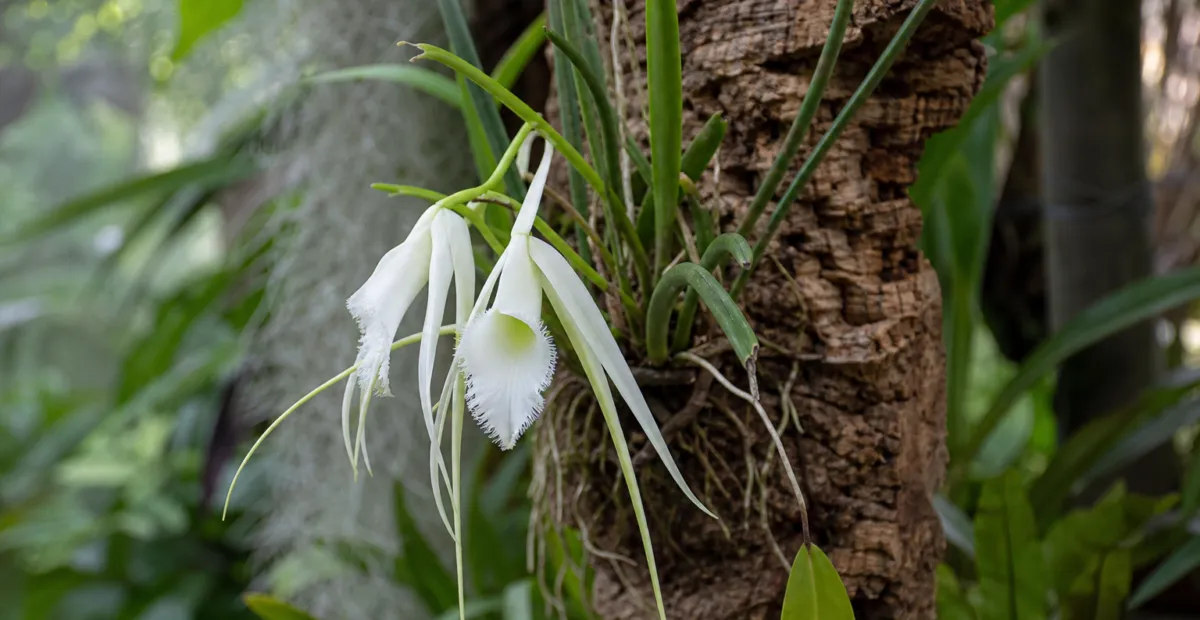
Brassavola cucullata, commonly called the daddy longlegs orchid, is a distinctive tropical orchid native to the Caribbean and northern South America. It grows attached to trees or rocks, producing clusters of slender, cylindrical leaves and short-stemmed, drooping white flowers with finely fringed lips. The flowers release a strong fragrance at night. In the United States, it is usually grown mounted or in a very open orchid medium under warm, humid, frost-free conditions.
Taxonomic classification
Daddy longlegs orchid (Brassavola cucullata) care guide
Light and placement
Provide bright filtered light or gentle partial shade, with several hours of strong ambient light and protection from harsh midday sun behind glass. An east- or bright west-facing window, greenhouse bench, or lightly shaded outdoor position is suitable in frost-free weather. Too much light can bleach or scorch leaves; too little produces weak, elongated growth and poor flowering.
Watering and humidity
Water thoroughly when the mount or upper medium is nearly dry, then let excess water drain completely. Mounted plants may need watering several times weekly in hot, dry weather; potted plants usually need less frequent watering. Increase watering during active growth and reduce it during cool, dim periods without allowing prolonged desiccation. Maintain humidity with airflow rather than stagnant, constantly wet conditions.
Soil and growing medium
Use a very open, rapidly draining epiphytic orchid medium such as coarse bark, tree fern, charcoal, or a mounted cork surface. The roots need abundant air and should not remain saturated. A slightly acidic to near-neutral root environment is suitable, but exact species-specific pH data are limited.
Feeding
Feed with a complete orchid fertilizer at about one-quarter to one-half the label strength during active growth, typically every one to two weeks, after the roots or medium have been moistened. Reduce feeding during cooler, darker periods and do not fertilize a dehydrated or recently divided plant.
Growth and habit
This orchid is an evergreen epiphyte or lithophyte that produces successive slender, jointed growths and can develop into a spreading clump. Mounted culture follows its natural habit and improves root aeration, but mounts dry faster and require closer watering attention than pots.
Planting and repotting
Plant or mount during active root growth, preferably after flowering. Do not bury the rhizome or pseudostem bases deeply; keep the plant attached at the surface with roots exposed to air. Allow room for the clump to expand and provide immediate support until new roots grip the mount.
Repot only when the medium has decomposed or the plant has clearly outgrown its mount or container. Handle the roots carefully, because unnecessary disturbance can delay establishment. Secure the plant firmly to cork or another long-lasting mount, or use a small pot with coarse orchid material.
Propagation and pruning
Propagation
Seed propagation requires sterile flask culture and is normally handled by specialist laboratories. Mature plants may be divided when a large clump has several healthy growths, with each division retaining viable roots. Divide at the start of active growth and keep newly divided sections slightly drier until rooting resumes.
Pruning
Remove only dead, damaged, or diseased leaves and roots with sterile tools. Do not cut healthy green leaves or living growths after flowering; old stems and sheaths can be removed once fully dry and loose.
Overwintering
Keep above about 50°F, with bright light and reduced watering during cool, low-light periods. In most of the United States, grow indoors or in a heated greenhouse through winter. Avoid cold, wet roots and sudden temperature drops; resume stronger watering and feeding as warmth and new growth return.
Uses
Primarily grown as a collectible ornamental orchid for its unusual flowers, strong evening fragrance, and epiphytic growth habit. It is well suited to cork mounts, orchid baskets, warm greenhouses, and conservatories. It has no established culinary or medicinal use for home cultivation.
Appearance
The plant has slender, erect to ascending, jointed stems covered by pale papery sheaths. Each growth bears a single long, cylindrical to slightly fleshy leaf, giving the plant a wiry, architectural appearance. Short flowering stems emerge near the leaf base and carry unusual nodding flowers with narrow, trailing segments and a fringed lip.
Flowering
Short inflorescences usually carry one or a few unusual, nodding flowers. The flowers are predominantly white, with narrow, elongated segments and a fringed lip. Fragrance is strongest at night and may persist weakly into daylight. Exact flowering timing varies with provenance and cultivation conditions.
Pollination and visitors
The flowers are nectarless or deceptive according to published floral descriptions, and fruit production depends on pollinator visits. A strong nocturnal fragrance, pale flowers, and elongated floral tubes indicate adaptation to night-flying moth visitors, but a specific pollinator species is not securely documented.
Brassavola cucullata photos
Click any photo for a larger view. Source, author and license are shown separately.
Diseases and pests
Diseases
Prevent fungal and bacterial problems with strong air movement, quick drainage, clean tools, and watering early enough for foliage and mounts to dry before night. Watch for soft, darkening tissue or leaf spotting; isolate affected plants, remove badly damaged tissue with sterile tools, and correct prolonged wetness.
Pests
Check leaf bases, sheaths, roots, and mounts for scale, mealybugs, thrips, and spider mites. Remove small infestations manually or use an orchid-safe treatment according to its label. Quarantine new plants and avoid chronic stress from low humidity, stagnant air, or excessive nitrogen.
Toxicity and pollen
No reliable species-specific evidence was found establishing Brassavola cucullata as toxic to people, dogs, or cats. As with any ornamental plant, avoid ingestion and prevent exposure to potting media, fertilizers, and pesticides. Seek professional advice after a significant ingestion or adverse reaction.
- Typical season
- Not well documented for the United States; exposure would mainly occur during flowering
- Pollination / pollen
- Compact pollinia, not freely shed airborne pollen
As an orchid with insect-pollinated flowers, its pollen is packaged into pollinia rather than released as a large airborne cloud. This suggests low routine airborne exposure, but species-specific allergy studies are lacking, so a zero-allergy claim would be unwarranted.
Native habitat
Brassavola cucullata occurs in wet tropical regions of the Caribbean, Colombia, and Venezuela, generally attached to trees or rocks. It is associated with humid forest and coastal or lowland environments, although documented populations can occur across a broad elevation range. Roots experience rapid drainage and frequent airflow rather than waterlogged soil.
Interesting fact
The species helped establish the genus Brassavola in the early nineteenth century. Its flowers have a distinctive dangling, long-limbed appearance unlike the rounded form of many familiar orchids. It can grow on trees or rocks and may form substantial clusters of shoots.
Frequently asked questions (FAQ)
The most relevant questions about this plant, with short and direct answers.
🌱Quick care
How do you care for a daddy longlegs orchid (Brassavola cucullata)?⌄
Grow Brassavola cucullata in bright filtered light, warm conditions, an airy orchid medium or cork mount, and water regularly while allowing the roots to approach dryness. Good airflow is essential because its roots need oxygen and should not remain soggy.
What does Brassavola cucullata look like?⌄
Brassavola cucullata is an epiphytic orchid with slender, cylindrical growths, narrow fleshy leaves, and unusual pale, spidery flowers with a fringed or hooded lip. Its pendant habit gives rise to the common name daddy longlegs orchid.
Is Brassavola cucullata the same plant as Brassavola appendiculata?⌄
Brassavola appendiculata is a name that has been used for plants associated with Brassavola cucullata, and some orchid references still discuss the names together. Plant labels can therefore be inconsistent, so verify the accepted name with a current botanical or orchid authority.
🌤️Environment and placement
How much light does Brassavola cucullata need?⌄
Brassavola cucullata prefers bright filtered light or partial shade. A little gentle morning or late-afternoon sun can help flowering, but intense midday sun may scorch the slender leaves.
Can Brassavola cucullata grow indoors?⌄
Yes, Brassavola cucullata can grow indoors near a bright window or under a grow light. Provide strong indirect light, moving air, and enough humidity without keeping the roots constantly wet.
What temperature does Brassavola cucullata need?⌄
Keep Brassavola cucullata generally above 50°F, with intermediate-to-warm daytime temperatures around 70–85°F. Protect it from frost and prolonged cold, especially when the plant or roots are wet.
What humidity is best for Brassavola cucullata?⌄
Moderate to high humidity with strong air movement suits Brassavola cucullata. Humidity around 50–80% can work if ventilation is good and the roots are allowed to dry appropriately between waterings.
Can Brassavola cucullata survive winter outdoors in the United States?⌄
Only in reliably frost-free areas with mild winters can Brassavola cucullata remain outdoors year-round. Bring it inside or into a protected greenhouse before temperatures approach 50°F, and never expose it to frost.
💧Care and problems
How often should you water Brassavola cucullata?⌄
Water Brassavola cucullata thoroughly when the mount or medium is nearing dryness, then let excess water drain away. Mounted plants may need watering several times a week in warm, dry weather, while potted plants usually need less frequent watering.
Should Brassavola cucullata dry out between waterings?⌄
Yes, the roots should approach dryness between waterings, but the plant should not remain severely dehydrated for long periods. The correct interval depends on temperature, airflow, potting material, and whether the orchid is mounted.
Why are the leaves on my Brassavola cucullata wrinkled?⌄
Wrinkled leaves usually indicate insufficient water uptake, commonly from underwatering, damaged roots, or an overly dry mount. Check the roots and watering routine before increasing humidity or watering frequency.
Why are Brassavola cucullata roots rotting?⌄
Root rot is usually caused by stagnant moisture, poor airflow, or a dense medium that dries too slowly. Remove dead roots, use a very open orchid mix or mount, and resume watering only when the remaining roots are approaching dryness.
Why is my Brassavola cucullata turning yellow?⌄
Yellowing can result from aging leaves, excessive light, overwatering, root loss, or nutritional stress. A single old yellow leaf may be normal, but rapid or widespread yellowing requires checking the roots and growing conditions.
How should you fertilize Brassavola cucullata?⌄
Feed Brassavola cucullata lightly and regularly with a balanced orchid fertilizer during active growth, following the product label and flushing the medium periodically with plain water. Avoid strong fertilizer concentrations, especially when the roots are dry or damaged.
🪴Planting and repotting
What is the best potting medium for Brassavola cucullata?⌄
Use a very open epiphytic orchid mix made from materials such as coarse bark, or grow Brassavola cucullata on cork or another suitable mount. Avoid fine, moisture-retentive soil and oversized pots.
Is Brassavola cucullata better mounted or potted?⌄
Brassavola cucullata can be grown either mounted or potted, but a cork mount closely suits its epiphytic growth habit. Mounted plants dry faster and need more frequent watering, while pots require especially careful drainage and aeration.
When should you repot Brassavola cucullata?⌄
Repot or remount Brassavola cucullata when the medium has broken down, the mount is no longer practical, or new roots are beginning to grow. Timing the work around new root growth helps the plant establish more quickly.
Does Brassavola cucullata dislike having its roots disturbed?⌄
Yes, Brassavola cucullata can be set back when healthy roots are unnecessarily disturbed. Repot only when needed, handle the roots gently, and avoid forcing them into a container that is too small or too large.
Can you grow Brassavola cucullata on a tree outdoors?⌄
Yes, Brassavola cucullata can be grown outdoors on a tree or cork-like mount in frost-free parts of the United States. Choose bright filtered light, secure the plant firmly, and provide extra water during hot, dry weather.
✂️Propagation and pruning
How do you propagate Brassavola cucullata?⌄
The practical home method is dividing a mature, multi-growth plant into sections that each retain healthy roots and at least one active growth. Seed propagation requires specialized orchid culture and is not a simple household method.
Can Brassavola cucullata be propagated from a leaf or flower spike?⌄
No, Brassavola cucullata is not normally propagated from individual leaves or flower spikes. Propagation is generally by division, while seed propagation is performed under sterile laboratory conditions.
Should you cut off old Brassavola cucullata flower spikes?⌄
Remove a flower spike only after it has fully dried or clearly finished producing flowers and new buds. If it remains green, leave it in place because some orchids may produce additional flowers from existing growth points.
⚠️Toxicity and safety
Is Brassavola cucullata toxic to cats or dogs?⌄
There is no reliable species-specific toxicity classification available for Brassavola cucullata. Keep the plant and fertilizer out of reach of pets and contact a veterinarian or poison-control service if ingestion occurs.
Is Brassavola cucullata safe to touch?⌄
Brassavola cucullata is generally handled as a non-irritating orchid, but individual sensitivity is possible. Wash your hands after handling the plant, roots, potting materials, or fertilizer.
🌸Flowering and special interest
Why is my Brassavola cucullata not blooming?⌄
Insufficient light is a common reason Brassavola cucullata fails to bloom, although immature growth, weak roots, temperature stress, or inconsistent care can also contribute. Increase bright filtered light gradually and maintain strong, healthy new growth.
Does Brassavola cucullata have fragrant flowers?⌄
Yes, Brassavola cucullata is reported to produce fragrance at night, when its pale, spidery flowers are open. Fragrance intensity can vary with clone, temperature, light, and the time of evening.
When does Brassavola cucullata bloom?⌄
Brassavola cucullata does not have one dependable bloom month in cultivation and may flower at different times under different conditions. Mature, well-lit plants can bloom more than once in a year, but timing varies by plant and climate.
How long do Brassavola cucullata flowers last?⌄
Individual flowers commonly last for several days to a few weeks, depending on temperature, humidity, pollination, and plant condition. Cooler, stable conditions may help flowers remain attractive longer.
Similar plants
 Clowes’ Tulip Orchid (Anguloa clowesii) care guideAnguloa clowesii
 Lady of the nigh (Brassavola nodosa) care guideBrassavola nodosa
 Hyacinth Orchid (Bletilla striata) care guideBletilla striata
 Cymbidium ‘Yellow Moon’Cymbidium 'Yellow Moon'
 Warty Brassia (Brassia verrucosa) care guideBrassia verrucosa
 Fairy-slipper Orchid (Calypso bulbosa) care guideCalypso bulbosa