
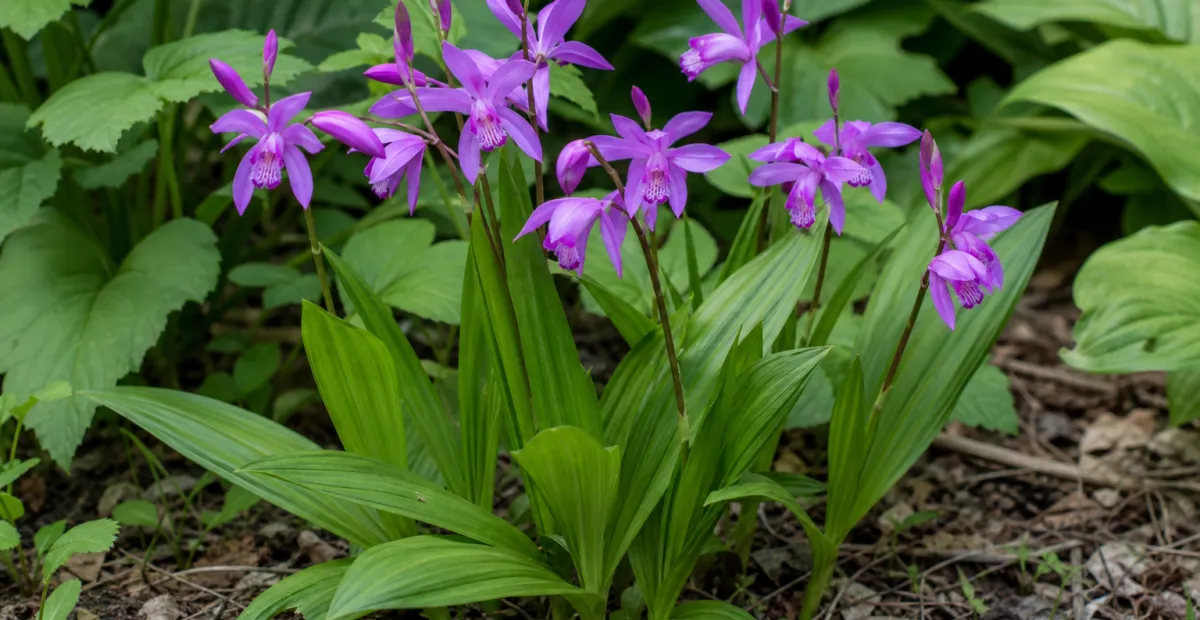
 AI-generated illustration
Hyacinth Orchid (Bletilla striata) short overview
Hyacinth Orchid is a deciduous terrestrial orchid that forms clumps of pleated, sword-shaped leaves and upright racemes of pink, purple, or white flowers in late spring and early summer. Native to parts of East Asia, it grows best in bright filtered light or partial shade, evenly moist but well-drained soil, and a sheltered garden position. In colder regions, mulch or container culture can improve winter survival.
Taxonomic classification
Hyacinth Orchid (Bletilla striata) care guide
Light and placement
Provide bright filtered light or partial shade, such as morning sun with protection from strong afternoon rays or light shade beneath open-canopy trees. Too much intense sun can bleach or scorch the leaves and shorten flower life; too little light produces weak growth and fewer blooms. In cool northern climates, more direct morning light is usually beneficial, while hot southern sites need stronger afternoon protection.
Watering and humidity
Water deeply when the upper inch of soil begins to dry during active growth, keeping the root zone consistently moist without leaving it saturated. Reduce watering as foliage yellows and dies back, then keep dormant rhizomes only slightly dry to prevent winter rot. Container plants may need more frequent checks than plants in the ground. Humidity is not usually limiting outdoors if air circulation is good.
Soil and growing medium
Use a fertile loam amended with compost or leaf mold, but maintain dependable drainage around the pseudobulbs and roots. Soil should hold moisture during spring and summer without becoming waterlogged in winter. A slightly acidic to neutral mix is a useful target, although the plant can tolerate a broader pH range when structure and drainage are favorable. Heavy clay should be loosened with organic matter and, where necessary, planted in a raised position.
Feeding
Apply a dilute, balanced fertilizer when new shoots are expanding and repeat lightly during active summer growth. Compost or leaf mold can be used as a surface mulch in spring. Stop routine feeding by late summer so the plant can mature before dormancy. Do not fertilize dry, dormant, newly divided, or waterlogged plants, and flush container media occasionally to limit salt buildup.
Growth and habit
This orchid emerges from underground corm-like pseudobulbs in spring and gradually forms a compact clump. Foliage remains attractive through the growing season before dying back for winter dormancy. Avoid disturbing emerging shoots, because new roots may lag behind the first appearance of leaves. Good spacing, restrained winter moisture, and a sheltered position help clumps remain vigorous.
Planting and repotting
Plant after the danger of severe frost has passed, setting the corm-like pseudobulbs in loose, fertile soil with the growth points oriented upward. Keep planting shallow, generally no more than 4 inches deep, and avoid pockets that collect winter water. Space plants about 8–12 inches apart so clumps can expand without crowding. Water thoroughly after planting, then maintain even moisture while new roots establish.
Repot container plants when the medium breaks down, drainage declines, or the clump has outgrown its pot. Divide and refresh the medium during dormancy or before spring growth begins. Use a free-draining terrestrial-orchid or loamy mix, choose a container with drainage holes, and avoid burying the pseudobulbs deeply. Water sparingly until fresh roots are active.
Propagation and pruning
Propagation
The practical garden method is division of established clumps during dormancy or just before active spring growth, ensuring each division has healthy pseudobulbs and a viable growth point. Seed propagation is possible but is specialized and slow because orchid seeds require suitable fungal or laboratory conditions. Keep divisions lightly moist while they re-establish, not wet.
Pruning
Remove spent flower stems after blooming if seed production is not desired. Allow leaves to remain until they yellow naturally, because late-season foliage helps replenish the underground pseudobulbs. Cut back dead foliage only after it has fully browned, using clean shears and taking care not to damage dormant growth points.
Overwintering
In Zones 5–6, apply a loose winter mulch of leaves or similar organic material after the ground cools, while keeping the crown from remaining soggy. Containers are more vulnerable to freeze-thaw injury and should be moved to a cold, frost-free or minimally heated shelter when necessary. In wet-winter regions, prioritize drainage over heavy covering and reduce watering after dormancy.
Uses
Useful as an accent or edging plant in woodland borders, Asian-inspired gardens, shaded perennial beds, and containers. Its flowers provide a distinctive orchid display while its pleated foliage adds structure during the growing season. Container culture is practical where winter drainage is poor or cold protection is needed. Culinary or medicinal use is not recommended for garden material without specialist identification and safety guidance.
Appearance
Identification features include three to five pale green, pleated, sword-shaped leaves arising from underground pseudobulbs and upright, mostly leafless flower scapes. The orchid-like flowers have a prominently marked lip with stripes or ridges, reflected by the species epithet striata. Plants are deciduous, with the above-ground foliage disappearing during winter dormancy.
Flowering
Flower scapes rise above the foliage and carry several showy, downward-facing to spreading flowers in a raceme. The usual display is pink to purple-lavender, though white forms occur. Bloom is generally concentrated from late spring into early summer in temperate U.S. gardens, with timing shifting earlier in warm regions and later in cool climates.
Pollination and visitors
The flowers are insect-pollinated and present orchid pollinia, but a consistently documented principal pollinator for this exact species in United States gardens was not established from the available sources. Do not assume strong bee or butterfly attraction solely from the presence of showy flowers.
Bletilla striata photos
Click any photo for a larger view. Source, author and license are shown separately.
Diseases and pests
Diseases
The main prevention strategy is excellent drainage, restrained winter watering, clean tools, and good air movement. Soft rot or crown rot is suggested by collapsing, foul-smelling, water-soaked tissue and is favored by saturated media. Remove affected material, discard badly rotted plants, replace contaminated medium, and correct watering or drainage problems. Avoid routine fungicide use without a confirmed diagnosis.
Pests
Watch for slugs and snails feeding on emerging shoots and tender leaves, especially in damp, shaded beds. Hand-pick, reduce hiding places, and use barriers or a labeled control product according to its U.S. label. Monitor container plants for aphids, scale, or mites, though these are less characteristic than moisture-related problems. Quarantine and inspect new divisions before placing them with established plants.
Related diseases and pests
Only Plant Doctor profiles whose host data indicate this plant may be affected are shown here.


Toxicity and pollen
Reliable, plant-specific human and pet toxicity information was not confirmed from authoritative U.S. poison-control or veterinary references during this review. The species has a history of traditional use in some regions, but that does not establish safety for ingestion. Treat all parts as ornamental, prevent children and pets from chewing the plant, and seek professional advice after ingestion or an adverse reaction.
- Typical season
- Late spring to early summer during flowering
- Pollination / pollen
- Pollinia packaged in sticky masses rather than freely airborne grains
As an orchid, Bletilla striata packages pollen into pollinia rather than releasing large quantities of loose, wind-borne grains. This suggests relatively low airborne pollen exposure compared with wind-pollinated plants, but it is not proof of zero allergy risk. Sensitive people should avoid handling flowers if they notice symptoms and should seek medical advice for persistent reactions.
Native habitat
In its native East Asian range, this terrestrial orchid occurs in seasonally moist, open or lightly shaded habitats such as grassy slopes, forest margins, and cool mountain environments. It favors soils that remain moist during active growth but drain sufficiently during dormancy. Its deciduous cycle reflects seasonal conditions rather than tropical evergreen growth.
Interesting fact
The species epithet striata refers to the striped or ridged markings on the flower lip. Underground corm-like pseudobulbs store resources and support winter dormancy. Bletilla striata is one of the more commonly cultivated hardy terrestrial orchids. White-flowered forms are known in horticulture.
Frequently asked questions (FAQ)
The most relevant questions about this plant, with short and direct answers.
🌱Quick care
What is the Hyacinth Orchid?⌄
The Hyacinth Orchid is the documented common name for Bletilla striata, a deciduous terrestrial orchid that grows from tuber-like pseudobulbs. It is also often sold in the United States as a hardy orchid or Chinese ground orchid.
Is Bletilla striata easy to grow?⌄
Yes, Bletilla striata is considered one of the easier garden orchids to grow when planted in partial shade, evenly moist but well-drained soil, and a sheltered location. Its main challenges are winter protection in colder areas and avoiding soggy soil.
How often should I water Bletilla striata?⌄
Water Bletilla striata whenever the soil surface begins to dry, keeping the root zone evenly moist during active growth. Reduce watering after the foliage dies back, but do not leave the dormant pseudobulbs in saturated soil.
What soil is best for the Hyacinth Orchid?⌄
Use rich, moisture-retentive but well-drained loam with plenty of organic matter. Improve heavy clay or poorly drained soil with compost and coarse material, because constantly wet conditions can cause pseudobulb and root problems.
🌤️Environment and placement
Does Bletilla striata need full sun or shade?⌄
Bletilla striata grows best in partial shade to bright filtered light, such as morning sun with afternoon shade. Too much intense afternoon sun can scorch the foliage, while dense shade may reduce flowering.
Can I grow Bletilla striata indoors?⌄
Yes, Bletilla striata can be grown indoors in a bright, cool location with filtered light and a container that drains freely. It is a terrestrial orchid, so use a moisture-retentive but well-aerated mix rather than keeping the roots constantly wet.
Where should I plant Bletilla striata outdoors?⌄
Plant it in a sheltered partial-shade bed, woodland garden, or patio container protected from harsh afternoon sun and drying winds. A site beneath high-branched trees or near a shaded border is usually suitable if drainage remains good.
What USDA zones can grow Bletilla striata?⌄
Bletilla striata is listed for USDA Zones 5a through 9b, but winter survival is less dependable in the coldest zones. Use heavy fall mulch or grow it in a container that can be protected or stored frost-free in colder regions.
Can Bletilla striata tolerate frost?⌄
Established plants can tolerate frost and cold dormancy with protection, but emerging spring foliage and flower buds may be damaged by a hard freeze. Mulch the planting in late fall and protect containers from repeated freezing and thawing.
💧Care and problems
Why are my Bletilla striata leaves turning yellow?⌄
Yellow leaves can be a normal sign of seasonal dormancy if they appear in fall, but yellowing during active growth often indicates excessive moisture, poor drainage, or root damage. Check the pseudobulbs and roots before increasing or reducing water.
Why is my Bletilla striata not blooming?⌄
The most common causes are insufficient light, immature or recently divided pseudobulbs, drought during active growth, or winter damage. Give the plant bright filtered light, steady moisture through summer, and time to establish before expecting reliable flowering.
Should I fertilize Bletilla striata?⌄
Lightly fertilize Bletilla striata during active spring and summer growth with a balanced, diluted fertilizer. Stop or greatly reduce feeding as the foliage yellows and the plant enters winter dormancy.
What pests affect the Hyacinth Orchid?⌄
Slugs and snails are the main occasional garden pests reported on Bletilla striata, especially when new shoots emerge in spring. Inspect plants at night and use barriers or a labeled slug control product when necessary.
What should I do about brown spots on Bletilla striata leaves?⌄
Remove badly affected foliage, improve air circulation, and avoid wetting the leaves late in the day. Persistent or spreading brown spots may indicate a fungal or bacterial leaf-spot problem, so keep the plant less crowded and avoid overhead watering.
🪴Planting and repotting
When should I plant Bletilla striata pseudobulbs?⌄
Plant Bletilla striata pseudobulbs in spring after the danger of severe frost has passed, or in fall where winters are mild and the soil drains well. In colder climates, spring planting or protected container culture is safer.
How deep should I plant Bletilla striata?⌄
Plant the pseudobulbs shallowly, generally about 2 to 4 inches deep, with the growth buds facing upward. Avoid burying them too deeply because excessive soil over the crown can delay emergence and encourage rot.
Can Bletilla striata be grown in containers?⌄
Yes, Bletilla striata grows well in containers, especially in areas north of USDA Zone 5 or where winter drainage is poor. Choose a pot with drainage holes and protect or move it to a cool, frost-free location during severe winter weather.
When should I repot Bletilla striata?⌄
Repot Bletilla striata when the container is crowded or the growing medium has broken down, preferably during dormancy or as new growth begins. Handle the pseudobulbs gently and replant them at their previous depth.
✂️Propagation and pruning
How do I propagate Bletilla striata?⌄
Propagate Bletilla striata mainly by dividing established clumps or separating pseudobulbs that have viable buds. Division is more practical for home gardeners than seed, because orchid seed generally requires specialized conditions for reliable germination.
When is the best time to divide Bletilla striata?⌄
Divide Bletilla striata in fall during dormancy or in early spring as new growth begins. Make sure each division includes at least one healthy pseudobulb or growth bud, then replant it promptly in well-drained soil.
Should I cut back Bletilla striata after flowering?⌄
Do not cut back the green leaves after flowering, because they continue producing and storing energy for the pseudobulbs. Remove spent flower stems and wait until the foliage naturally turns yellow before clearing it away.
Does Bletilla striata spread?⌄
Yes, Bletilla striata gradually expands into clumps as its pseudobulbs multiply underground. It is usually a moderate, manageable spreader rather than an aggressive groundcover, and overcrowded clumps can be divided.
⚠️Toxicity and safety
Is Bletilla striata toxic to people or pets?⌄
The toxicity of Bletilla striata to people and pets has not been firmly established in commonly available horticultural references. Prevent children and animals from eating it, and contact a medical professional or veterinarian if ingestion causes symptoms.
Can I use Bletilla striata as an herbal remedy?⌄
Do not consume Bletilla striata grown as an ornamental plant or use it medicinally without qualified professional guidance. Although its pseudobulbs have a history in traditional Chinese medicine, preparation, identification, dosage, and safety are not interchangeable with garden use.
🌸Flowering and special interest
When does Bletilla striata bloom?⌄
Bletilla striata usually blooms in spring to early summer, producing small orchid-like flowers on upright stems. Bloom timing varies with climate, winter conditions, light exposure, and how quickly the plant resumes growth.
What color are Hyacinth Orchid flowers?⌄
The typical flowers are purplish pink to deep rose, while cultivated forms may produce white or other variations. Individual flowers are usually marked or striped on the lip, reflecting the meaning of the species name striata.
How long do Bletilla striata flowers last?⌄
Individual flowers generally last longer in cool, sheltered conditions than in hot sun or drying wind, while the entire flowering display may continue for several weeks. Keeping the plant evenly moist during bloom helps prevent premature decline.
Will Bletilla striata bloom again after flowering?⌄
Bletilla striata normally flowers once each growing season rather than repeatedly from the same stem. After blooming, maintain moisture and foliage health so the pseudobulbs can store energy for the following year's flowers.
Similar plants
 Azure Monkshood (Aconitum carmichaelii) care guideAconitum carmichaelii
 Monkshood (Aconitum ‘Stainless Steel’)Aconitum 'Stainless Steel'
 Monkshood (Aconitum ‘Bressingham Spire’)Aconitum 'Bressingham Spire'
 Golden full moon maple (Acer shirasawanum ‘Aureum’)Acer shirasawanum 'Aureum'
 Globosum (Acer platanoides ‘Globosum’)Acer platanoides 'Globosum'
 Striped maple (Acer pensylvanicum) care guideAcer pensylvanicum