
 Source:
 Lilacbush (Aubrieta deltoidea) short overview
Lilacbush (Aubrieta deltoidea) is a compact, evergreen perennial that spreads into cushions of gray-green foliage and bright spring flowers. Native to rocky regions from central Greece through Crete and western Türkiye, it is especially effective in rock gardens, gravel beds, wall crevices, and sunny containers. Give it excellent drainage, full sun, and only moderate water after establishment; trimming after bloom helps preserve a dense, tidy mat.
Taxonomic classification
Lilacbush (Aubrieta deltoidea) care guide
Light and placement
Provide full sun, ideally in a south- or west-facing position with open air circulation. The plant tolerates light shade but flowers less heavily and may become looser. Pale, elongated growth or sparse bloom suggests inadequate light; scorched foliage or crown collapse more often indicates drought stress, reflected heat, or poor drainage rather than excess sun alone.
Watering and humidity
Water deeply when newly planted, then allow the upper soil to dry before watering again. After establishment, irrigate during prolonged summer drought, especially in containers, but keep the crown from staying wet. Reduce watering in cool weather and winter. Extra humidity is unnecessary and poor airflow around wet foliage can increase disease risk.
Soil and growing medium
Use a lean, sharply drained mix based on loam, sand, grit, or other mineral material. Neutral to slightly alkaline conditions are suitable, and calcareous soils are tolerated. Avoid heavy clay and sites that remain saturated around the crown, especially through winter.
Feeding
This plant performs best without heavy feeding. Incorporate a small amount of mature compost when preparing poor soil, then apply a restrained, balanced perennial fertilizer in early spring only if growth is weak or foliage is unusually pale. Avoid high-nitrogen feeding, which can produce softer growth and fewer flowers.
Growth and habit
Aubrieta deltoidea forms a slowly spreading, cushion-like mat of evergreen shoots. It is useful where a low plant can soften stone edges or cover small gaps without becoming tall. Good drainage is the main maintenance requirement; prolonged wetness can thin or kill the crown.
Planting and repotting
Plant in spring or early fall when soil is workable. Set the crown level with the surrounding soil rather than deeply buried. Space plants about 8–12 inches apart for a continuous mat, and water regularly during the first growing season while allowing the surface to dry between irrigations.
Repot container plants in early spring or soon after flowering, only when the rootball is crowded or drainage has declined. Move the plant into a shallow, slightly larger pot with a gritty, free-draining mix. Handle the crown gently and avoid burying the stems.
Propagation and pruning
Propagation
Sow seed in containers when fresh or use a cold period when required by the seed lot. Softwood or semi-hardwood cuttings are practical from late spring through summer. Keep cuttings evenly moist but never waterlogged, and provide bright light without harsh midday heat until rooted.
Pruning
Cut back lightly after flowering to remove spent stems and keep the mat compact. Avoid cutting deeply into old, leafless woody material. Remove winter-damaged portions in spring once new growth shows where needed.
Overwintering
In USDA Zones 5–8, plants can overwinter outdoors when drainage is sharp. Avoid heavy winter mulch over the crown, as it can trap moisture. In colder or very wet regions, use a raised, gritty site or container protection from prolonged saturation; do not bring the plant into a warm indoor room unless necessary.
Uses
Use Lilacbush for rock gardens, gravel gardens, dry slopes, wall crevices, borders, edging, troughs, and sunny containers. Its evergreen mat provides off-season structure and its spring flowers support visiting insects. It is an ornamental plant, not a documented culinary or medicinal crop.
Appearance
The plant has small, hairy, gray-green leaves on low, branching shoots. Stems spread outward and may root or layer against the ground, creating a dense cushion. In bloom, the foliage is partly concealed by many bright, cross-shaped flowers. Evergreen leaves provide modest structure outside the flowering season.
Flowering
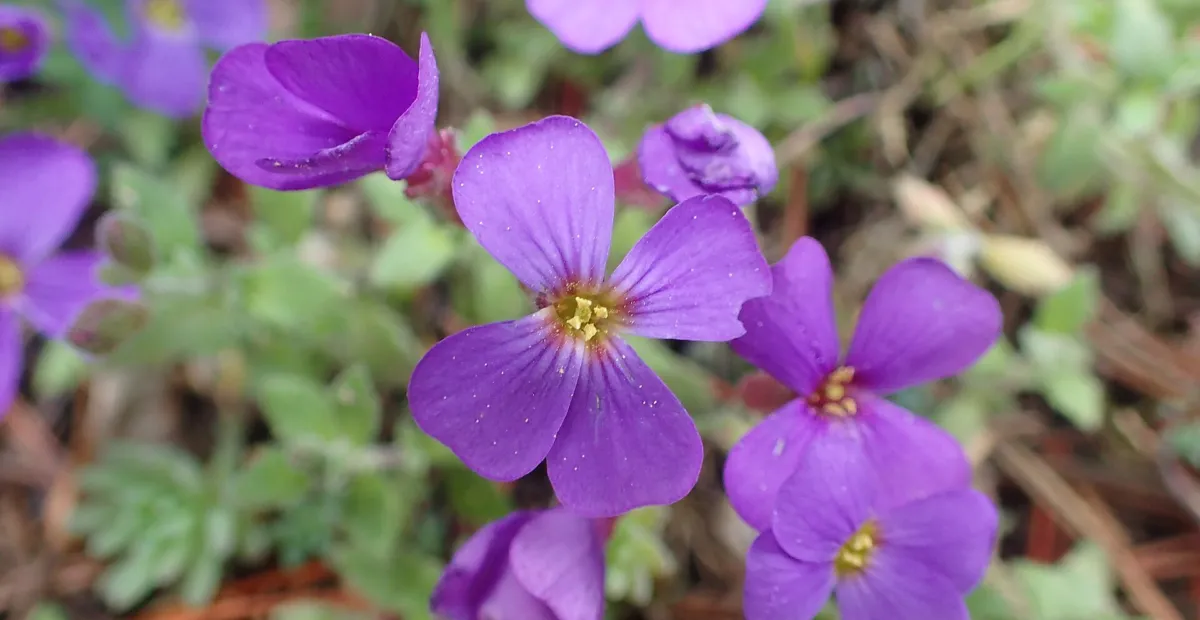
Small four-petaled flowers are borne in short racemes and can cover the low foliage in mid-spring through early summer. The species is naturally variable, with flowers commonly described in mauve, purple, lilac, pink, or occasionally red-toned forms. Flowering is strongest with full sun and restrained fertility.
Pollination and visitors
The open, four-petaled spring flowers are listed in recognized pollinator-oriented plant resources and are suitable for visiting bees, bumblebees, and hoverflies. No single pollinator species was sufficiently documented to assign a species-level Latin name.
Aubrieta deltoidea photos
Click any photo for a larger view. Source, author and license are shown separately.
Diseases and pests
Diseases
White blister and other moisture-favored diseases may occur where foliage stays wet or air circulation is poor. Improve drainage, avoid overhead irrigation, remove badly affected material, and do not compost diseased debris. Persistent crown decline usually indicates winter wet rather than a need for more water.
Pests
Aphids, flea beetles, and leaf or bud eelworms may occur. Inspect new growth and flower buds regularly; encourage beneficial insects, use fine insect netting where flea-beetle pressure is severe, and remove heavily affected material. Avoid routine broad-spectrum insecticides during bloom.
Toxicity and pollen
Reliable, authoritative species-specific toxicity records for humans, dogs, cats, and children were not located in the sources reviewed. Do not treat that absence as proof of safety: prevent routine ingestion, supervise children and pets around ornamental plantings, and seek professional advice after a significant exposure or unexplained symptoms.
- Typical season
- Spring flowering period
- Pollination / pollen
- Insect-dispersed pollen; airborne relevance not established
A species-specific airborne-pollen or clinical allergy profile was not located. Because the plant produces pollen during flowering, a zero-allergy claim would be unjustified. People with strong seasonal sensitivities should observe their own response and avoid handling flowering plants unnecessarily.
Native habitat
The accepted species is native from central Greece through western Crete and western Türkiye. It is associated with temperate Mediterranean and Balkan landscapes, especially rocky, open, well-drained sites. Its garden performance reflects adaptation to mineral soils, bright light, and periodic dryness.
Interesting fact
The genus Aubrieta commemorates French botanical artist Claude Aubriet. The species is naturally variable and has contributed to many cultivated aubrieta selections. Its mat-forming habit lets it spill over walls and occupy narrow rocky crevices where taller perennials are less effective.
Frequently asked questions (FAQ)
The most relevant questions about this plant, with short and direct answers.
🌱Quick care
What is Lilacbush (Aubrieta deltoidea)?⌄
Lilacbush is a low, mat-forming perennial in the mustard family, Brassicaceae. It is grown for dense evergreen or semi-evergreen foliage and abundant four-petaled flowers in spring.
How large does Aubrieta deltoidea get?⌄
Lilacbush commonly grows about 6 to 12 inches tall and spreads roughly 2 feet wide, although named cultivars may be smaller or more vigorous. Its trailing mats can spill over rocks and low walls.
🌤️Environment and placement
How much sun does Lilacbush need?⌄
Lilacbush grows best in full sun, meaning at least 6 hours of direct sunlight daily. It can tolerate light shade, but reduced light usually produces fewer flowers and looser growth.
What USDA hardiness zones are suitable for Aubrieta deltoidea?⌄
Aubrieta deltoidea is generally hardy in USDA Zones 4 through 9. Cultivar performance can vary, especially in regions with hot, humid summers or poorly drained winter soil.
Can Lilacbush grow in a rock garden or stone wall?⌄
Yes, Lilacbush is especially well suited to rock gardens, gravel beds, wall crevices, slopes, and spaces between paving stones. The planting site must drain quickly so its crown and roots do not remain wet.
Is Lilacbush evergreen?⌄
Lilacbush is usually evergreen or semi-evergreen in mild climates and may retain foliage through winter. In colder regions, foliage can thin or suffer winter damage before regrowing in spring.
Is Lilacbush invasive in the United States?⌄
Lilacbush has limited invasive potential in the available horticultural references, although it can self-sow in some gardens. Remove unwanted seedlings and check local invasive-plant guidance before planting near natural areas.
What plants grow well with Aubrieta deltoidea?⌄
Pair Lilacbush with other sun-loving, well-drained rock-garden plants such as low bulbs, basket-of-gold, or snow-in-summer. Choose companions with similar moisture needs so the soil does not have to remain wet for neighboring plants.
💧Care and problems
How often should I water Aubrieta deltoidea?⌄
Water Lilacbush regularly during its first growing season while the roots establish, then allow the soil to dry somewhat between waterings. Established plants need relatively little supplemental water but are not suited to prolonged drought or extreme dryness.
Does Lilacbush tolerate drought?⌄
Established Lilacbush tolerates short dry periods, particularly in gritty soil, but it is not a highly drought-tolerant plant. Water it during extended heat or drought, especially if grown in a container.
Why is my Lilacbush turning yellow or dying?⌄
Persistent yellowing or decline is often caused by poor drainage, overwatering, or heavy soil around the crown. Move or replant it in a sunny, gritty site and avoid letting water collect around the roots.
Should I deadhead Lilacbush?⌄
Deadheading is optional but useful for removing faded flower stems and improving the plant’s appearance. Trimming after bloom can also help prevent a mature mat from becoming open or straggly.
What pests affect Lilacbush?⌄
Lilacbush may be affected by aphids, flea beetles, and certain leaf or bud eelworms, also called nematodes. Inspect new growth regularly and remove severely damaged material while avoiding unnecessary insecticide use.
What diseases affect Aubrieta deltoidea?⌄
White blister is a reported disease problem, and excess moisture can contribute to general root or crown decline. Good air circulation, full sun, and excellent drainage are the main preventive measures.
🪴Planting and repotting
What type of soil is best for Lilacbush?⌄
Use gritty, sharply drained loam or sandy, calcareous soil for Lilacbush. It performs especially well in alkaline or neutral soil and may decline in heavy clay or consistently wet ground.
When is the best time to plant Lilacbush?⌄
Plant container-grown Lilacbush in spring or fall when temperatures are moderate. Choose a sunny location and improve drainage rather than enriching the site with large amounts of moisture-retaining organic matter.
How should I plant Lilacbush in heavy clay soil?⌄
Do not plant Lilacbush directly into poorly draining clay without correcting the site. Build a raised or sharply amended bed using grit and well-drained soil, or choose a rockery, slope, or container instead.
Can Lilacbush be grown in a container?⌄
Yes, Lilacbush grows well in a container with drainage holes and a gritty, fast-draining potting mix. Place the container in full sun and water when the mix has partly dried, while protecting the roots from prolonged winter saturation.
✂️Propagation and pruning
How do I keep Lilacbush compact and full?⌄
Cut Lilacbush back after flowering to remove spent stems and encourage dense, compact growth. Avoid severe cutting into old, leafless wood unless the plant has enough leafy growth to recover.
How do I grow Aubrieta deltoidea from seed?⌄
Sow Lilacbush seed in a cold frame or protected container in fall or spring, using a well-drained seed-starting mix. Seedlings may vary in flower color and form, particularly when collected from cultivated hybrids.
Can Lilacbush be propagated from cuttings?⌄
Yes, softwood or semi-hardwood cuttings are reliable ways to propagate Lilacbush and preserve the characteristics of a selected plant. Take cuttings from healthy, nonflowering growth and keep the medium lightly moist but never waterlogged.
Can Aubrieta deltoidea be divided?⌄
Lilacbush can sometimes be divided, but division is generally less reliable than cuttings because its low, woody mats may have limited root sections. Handle divisions carefully and replant them immediately in sharply drained soil.
⚠️Toxicity and safety
Is Lilacbush safe for dogs, cats, or people?⌄
Species-specific toxicity evidence for Lilacbush is uncertain, so it should not be treated as definitively safe to eat. Keep pets and children from chewing the plant, and contact a veterinarian or poison-control service if ingestion causes symptoms.
Is Aubrieta deltoidea edible?⌄
Do not eat Lilacbush unless a qualified authority has identified the plant and confirmed a safe preparation. Reliable species-specific evidence supporting food use was not located, and ornamental plants may also be exposed to garden chemicals.
🌸Flowering and special interest
When does Lilacbush bloom?⌄
Lilacbush generally blooms in spring, often from April through June in temperate parts of the United States. Flowering time varies with USDA Zone, local weather, and cultivar.
What colors do Aubrieta deltoidea flowers come in?⌄
The species and its cultivated forms produce flowers in shades of lavender, purple, lilac, pink, red, and white. Plants sold as hybrids may show a broader range of colors than true species seedlings.
Can Aubrieta deltoidea bloom again after pruning?⌄
A light cutback after the main spring display can encourage fresh foliage and may support some later flowering. A second flush is not guaranteed, especially in hot climates or when the plant is stressed.
Does Lilacbush attract bees and butterflies?⌄
Lilacbush flowers can provide forage for bees and may attract other flower-visiting insects during its spring bloom. Its value is greatest when planted in a sunny location without broad-spectrum pesticide treatments.
Similar plants
 Azure Monkshood (Aconitum carmichaelii) care guideAconitum carmichaelii
 Monkshood (Aconitum ‘Stainless Steel’)Aconitum 'Stainless Steel'
 Monkshood (Aconitum ‘Bressingham Spire’)Aconitum 'Bressingham Spire'
 Golden full moon maple (Acer shirasawanum ‘Aureum’)Acer shirasawanum 'Aureum'
 Globosum (Acer platanoides ‘Globosum’)Acer platanoides 'Globosum'
 Striped maple (Acer pensylvanicum) care guideAcer pensylvanicum