
 Source:
 Anemone ‘Frilly’ short overview
Anemone 'Frilly' is treated here as a horticultural or trade identity associated with the marine sea-anemone genus Phymanthus, rather than as a verified cultivar of the terrestrial windflower genus Anemone. Public references commonly use “frilly anemone” for Phymanthus forms, but I found no authoritative source establishing ‘Frilly’ as a formally registered cultivar or confirming the species-level assignment to Phymanthus crucifer. Identification and care should therefore follow the supplied taxonomic constraint with caution.
Taxonomic classification
Anemone ‘Frilly’ care guide
Light and placement
Provide moderate, stable reef lighting with a gradual dawn-to-dusk cycle. Position the animal where it can expand without being shaded by corals, but avoid placing it directly under intense lighting until its response is known. Excess light may cause contraction, paling or bleaching; insufficient light may produce persistent stretching, poor expansion or color loss.
Watering and humidity
Not applicable as terrestrial watering. Maintain stable, fully marine aquarium water with strong biological filtration, appropriate salinity, temperature, oxygenation and gentle-to-moderate flow. Avoid blasting the oral disc directly. Make gradual water changes and prevent abrupt shifts in salinity, temperature or pH.
Soil and growing medium
Do not pot in garden soil. Provide a secure attachment point among live rock, porous reef material or coral rubble. The base should be protected from abrasive movement and inaccessible to pumps. Stable substrate and clean, well-oxygenated saltwater are more important than soil texture or terrestrial pH.
Feeding
If the specimen accepts food, offer very small marine foods such as finely chopped seafood or suitable frozen invertebrate preparations sparingly, allowing the animal to capture food naturally. Photosynthetic specimens may require less feeding. Remove uneaten material and do not feed a stressed, detached or severely contracted animal.
Growth and habit
Phymanthus-type anemones are attached, contractile animals that can expand considerably beyond their contracted size. They may relocate until a suitable crevice or attachment surface is found. Keep pumps guarded, allow generous clearance from neighboring cnidarians and monitor for movement, detachment or tissue damage.
Planting and repotting
Not planted like a terrestrial plant. Acclimate the animal slowly to the aquarium, place it near stable porous rock or rubble, and allow it to attach naturally. Keep the foot away from sharp edges, exposed pump intakes and unstable decorations.
No repotting. If relocation is essential, move the supporting rock or rubble rather than pulling on the pedal disc. Never forcibly detach an attached sea anemone.
Propagation and pruning
Propagation
No reliable propagation method is documented for the exact identity ‘Frilly’. Do not attempt cutting or fragmentation unless the specimen is positively identified and the method is supported by specialist marine-animal guidance.
Pruning
Never prune or cut the animal. Remove damaged material only if it detaches naturally and can be safely removed without tearing living tissue.
Overwintering
No terrestrial wintering. Maintain the aquarium as a year-round tropical marine system and prevent exposure to cold room temperatures, heater failure or rapid seasonal temperature changes.
Uses
Primarily an ornamental marine-aquarium animal and an educational example of a symbiotic cnidarian. It is not a terrestrial garden plant, food crop or medicinal species. Its stinging cells can harm neighboring aquarium animals and may irritate human skin.
Appearance
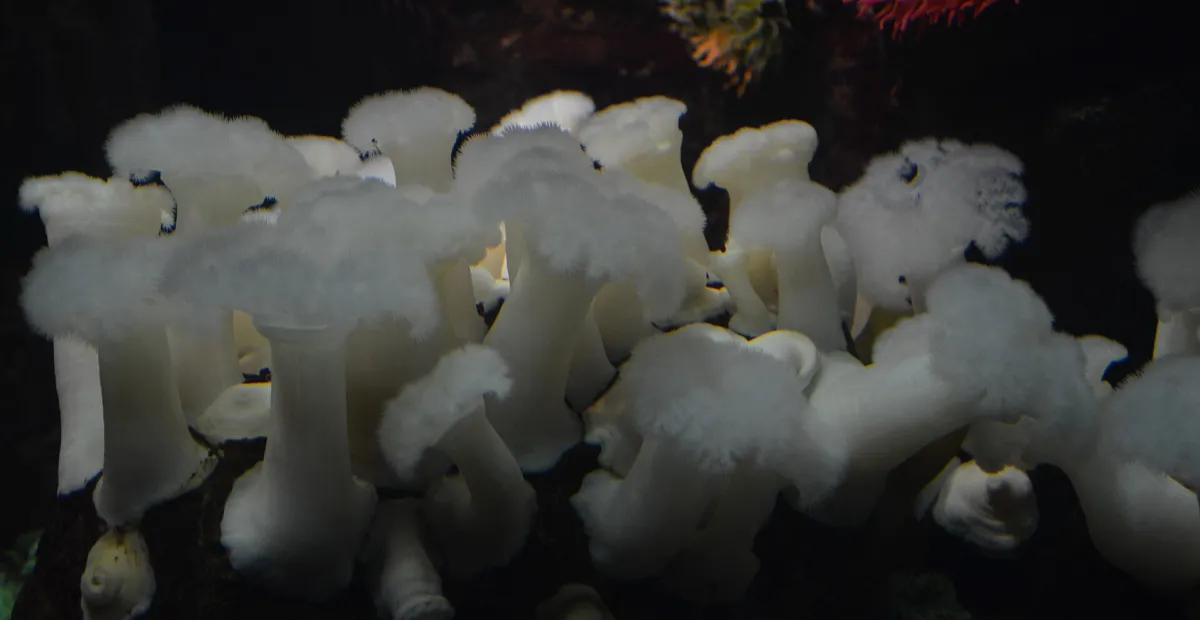
The supplied identity is associated with a frilly Phymanthus form: a broad oral disc surrounded by numerous tentacles bearing branched or pinnate side outgrowths. Color can vary substantially among specimens. The animal can contract its tentacles and oral disc into a much smaller profile when disturbed.
Pollination and visitors
Sea anemones are not pollinated like flowering plants. Phymanthus-type anemones capture animal prey with stinging cells and may host photosynthetic symbionts; the exact ecological interactions of ‘Frilly’ are undocumented.
Diseases and pests
Diseases
Prevent problems with stable water quality, adequate oxygenation, protected pump intakes and gradual acclimation. Persistent failure to expand, bleaching, tissue deterioration, foul odor or repeated detachment requires checking temperature, salinity, ammonia, nitrite, flow and lighting. Remove decaying tissue only with specialist guidance.
Pests
Possible problems are usually aquarium-related rather than plant pests, including predation, physical damage, nuisance organisms and incompatible tank mates. Inspect new rock and livestock, quarantine where practical, and protect the animal from fish or invertebrates that nip, harass or consume its tissue.
Related diseases and pests
Only Plant Doctor profiles whose host data indicate this plant may be affected are shown here.
Toxicity and pollen
Phymanthus-type sea anemones possess cnidocytes that inject venom when tentacles contact suitable prey or human skin. The exact medical significance of this identity is unverified, but direct handling can cause painful irritation or an allergic reaction. Use aquarium gloves and tools, avoid bare-hand contact, and seek medical advice for severe or persistent symptoms.
- Typical season
- Not applicable
- Pollination / pollen
- No pollen; this is a marine cnidarian
This is a marine cnidarian, not a seed plant, so it produces no pollen. Aquarium aerosol exposure is not expected to be a meaningful pollen-allergy pathway; skin contact with stinging tissues is a separate risk.
Native habitat
Phymanthus-type frilly anemones occur in warm marine environments, including areas associated with coral rubble, rocky crevices and hard attachment surfaces. Their natural distribution is uncertain for this exact identity, and the supplied Phymanthus crucifer assignment should not be treated as a confirmed locality record.
Interesting fact
The name “frilly” describes branched tentacle outgrowths rather than a botanical flower form. Phymanthus-type anemones can contract dramatically when disturbed. Some members of the group harbor photosynthetic dinoflagellate symbionts commonly called zooxanthellae. Sea anemones can provide shelter or habitat for small marine animals.
Frequently asked questions (FAQ)
The most relevant questions about this plant, with short and direct answers.
🌱Quick care
What is Anemone 'Frilly'?⌄
Anemone 'Frilly' is a marine sea anemone sold under a horticultural or aquarium trade label within the genus Phymanthus. The exact cultivar or species identity is not clearly standardized in published sources, so it should not be treated as a terrestrial flowering plant.
Is Anemone 'Frilly' a freshwater or saltwater species?⌄
Anemone 'Frilly' requires saltwater and belongs in a marine reef aquarium. Freshwater exposure, including acclimation in untreated freshwater, can be fatal.
What type of aquarium does Anemone 'Frilly' need?⌄
Anemone 'Frilly' needs a stable, mature marine aquarium with biological filtration, dependable salinity, live rock or coral rubble, and moderate reef lighting. It is not suitable for an uncycled or rapidly fluctuating system.
How difficult is Anemone 'Frilly' to keep?⌄
Anemone 'Frilly' is best considered moderately demanding because it depends on stable marine conditions and careful placement. Its care is generally more predictable in an established reef aquarium than in a new tank.
🌤️Environment and placement
How much light does Anemone 'Frilly' need?⌄
Anemone 'Frilly' generally needs moderate reef lighting rather than intense direct illumination. Provide a gradual acclimation period after introduction, especially when moving it from lower light or transport conditions.
Where should Anemone 'Frilly' be placed in a reef tank?⌄
Place Anemone 'Frilly' on stable live rock, coral rubble, or another firm reef surface where its body can settle into a crevice. Leave open space around it because its stinging tentacles can contact nearby animals.
Does Anemone 'Frilly' prefer rock or sand?⌄
Anemone 'Frilly' is most appropriately anchored among live rock, coral rubble, or a stable reef substrate rather than planted in ordinary aquarium sand. It may use crevices or hard surfaces for attachment.
How much water flow does Anemone 'Frilly' need?⌄
Provide gentle-to-moderate, indirect water movement that keeps the tentacles moving without folding or repeatedly blasting the animal. Avoid placing it directly in the output of a powerhead or return nozzle.
How large does Anemone 'Frilly' get?⌄
Published field observations of frilly Phymanthus anemones report expanded diameters of roughly 3–5 inches, although aquarium specimens can vary. Allow additional clearance because the tentacles extend beyond the central oral disc.
Can Anemone 'Frilly' move around the aquarium?⌄
Yes, Anemone 'Frilly' can relocate until it finds a suitable combination of attachment, light, and flow. Protect pumps and overflow openings with guards before adding it, because wandering anemones can be injured by equipment.
💧Care and problems
What should Anemone 'Frilly' eat?⌄
Anemone 'Frilly' can obtain energy from symbiotic algae and may also consume appropriately sized meaty marine foods. Offer small portions such as finely chopped shrimp or marine seafood only when the animal is fully expanded and accepting food.
How often should Anemone 'Frilly' be fed?⌄
Supplemental feeding can usually be offered about once or twice weekly, but it is not a substitute for stable water quality and suitable lighting. Remove uneaten food promptly if the anemone rejects it.
Why is Anemone 'Frilly' closed or shrinking?⌄
Temporary closure can follow feeding, waste release, relocation, or normal day-night behavior, but persistent shrinking often indicates stress from unstable salinity, poor water quality, unsuitable flow, or inadequate acclimation. Check the aquarium before increasing food or light.
Why is Anemone 'Frilly' losing color?⌄
Color loss may indicate prolonged stress, insufficient usable light, poor nutrition, or unsuitable water conditions. Correct the underlying aquarium problem gradually rather than moving the anemone repeatedly or changing lighting intensity abruptly.
Can Anemone 'Frilly' recover after shrinking dramatically?⌄
Anemone 'Frilly' may recover if its pedal disc remains attached and its mouth and tissue are intact. Recovery is less likely when the animal is disintegrating, remains detached for an extended period, or develops a persistently gaping mouth.
What water conditions does Anemone 'Frilly' require?⌄
Maintain stable, fully mixed marine aquarium water with consistent reef-tank salinity, temperature, alkalinity, and nutrient levels. Stability is more important than chasing a single number, and sudden changes should be avoided.
Can Anemone 'Frilly' be kept in a new aquarium?⌄
Anemone 'Frilly' should not be added to a newly established aquarium that has not demonstrated stable biological filtration and water chemistry. Waiting until the reef system is mature reduces the risk associated with ammonia, salinity, and other fluctuations.
🪴Planting and repotting
How do you attach Anemone 'Frilly' to live rock?⌄
Do not glue or force Anemone 'Frilly' into place; set it gently on suitable live rock or coral rubble and let it attach naturally. A protected crevice with indirect flow often encourages secure attachment.
Can Anemone 'Frilly' be moved after it is attached?⌄
Move Anemone 'Frilly' only when necessary, because pulling on an attached pedal disc can cause serious injury. If relocation is essential, encourage detachment without force and handle the animal with wet, gloved hands.
✂️Propagation and pruning
How does Anemone 'Frilly' reproduce?⌄
Frilly Phymanthus anemones are reported to reproduce sexually, and aquarium anemones may also reproduce asexually in some circumstances. Reliable propagation methods for the exact trade form Anemone 'Frilly' are not well documented.
Can Anemone 'Frilly' be cut to make clones?⌄
Cutting Anemone 'Frilly' should not be attempted because dependable propagation guidance for this exact trade form is lacking and the procedure can cause severe injury or death. Allow natural reproduction unless experienced species-specific evidence supports another method.
⚠️Toxicity and safety
Is Anemone 'Frilly' poisonous or dangerous?⌄
Anemone 'Frilly' is a stinging marine animal, not a poisonous terrestrial plant. Its nematocysts can injure other aquarium animals and may irritate human skin, so use aquarium gloves and avoid direct contact.
Can Anemone 'Frilly' sting corals?⌄
Yes, Anemone 'Frilly' can sting corals and other sessile invertebrates that it touches. Give it a generous buffer from neighboring colonies and monitor its reach after full expansion.
Can Anemone 'Frilly' sting fish or shrimp?⌄
Anemone 'Frilly' can immobilize small marine animals that contact its tentacles, although some fish or shrimp may avoid or tolerate it. Do not assume compatibility solely because a tank mate is commonly kept with other anemone species.
Will clownfish host in Anemone 'Frilly'?⌄
Clownfish hosting is possible but should not be expected because hosting preferences vary by species and individual fish. The anemone should be selected and cared for as a marine invertebrate even if no clownfish uses it.
How can Anemone 'Frilly' be protected from aquarium pumps?⌄
Cover powerhead intakes, overflow openings, and exposed pump impellers with appropriate guards or mesh. This is essential because Anemone 'Frilly' may move and can be pulled into equipment while searching for a better position.
Can Anemone 'Frilly' be handled with bare hands?⌄
Bare-hand handling is best avoided because Anemone 'Frilly' has stinging cells and aquarium contaminants can also enter small cuts. Use clean, wet aquarium gloves and support the animal without squeezing its body or tentacles.
Similar plants
 Azure Monkshood (Aconitum carmichaelii) care guideAconitum carmichaelii
 Monkshood (Aconitum ‘Stainless Steel’)Aconitum 'Stainless Steel'
 Monkshood (Aconitum ‘Bressingham Spire’)Aconitum 'Bressingham Spire'
 Golden full moon maple (Acer shirasawanum ‘Aureum’)Acer shirasawanum 'Aureum'
 Globosum (Acer platanoides ‘Globosum’)Acer platanoides 'Globosum'
 Striped maple (Acer pensylvanicum) care guideAcer pensylvanicum