
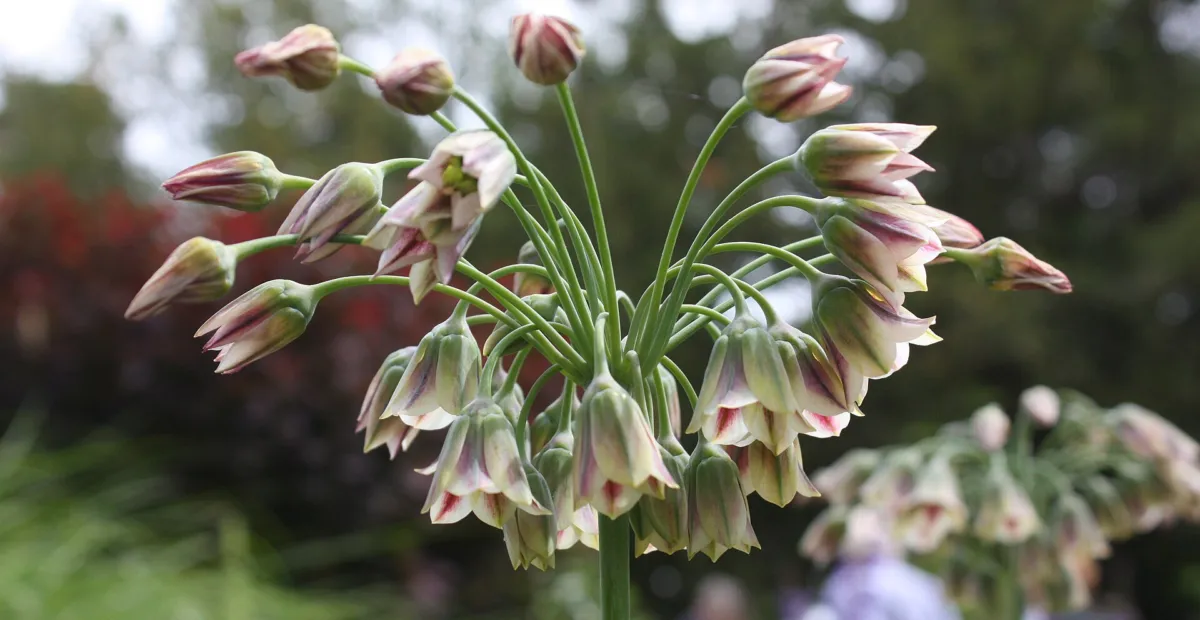
 Source:
 Allium ‘Siculum’ short overview
Allium 'Siculum' is a distinctive bulbous perennial for sunny or lightly shaded beds. Its twisted blue-green leaves emerge in late winter or early spring, followed by tall, smooth stems carrying loose umbels of nodding cream, pink, and green-tinted bells. The flowers mature into upright, shuttlecock-like seedheads that extend the season of interest. Plant bulbs in well-drained soil and allow the foliage to fade naturally after flowering.
Taxonomic classification
Allium ‘Siculum’ care guide
Light and placement
Grow in full sun for strongest flowering, though light shade is tolerated and can be useful in hotter climates. East-, west-, or south-facing beds are suitable; bright north-facing positions may also work. Sparse growth and weak stems suggest insufficient light, while scorched foliage usually indicates excessive heat combined with drought.
Watering and humidity
Water thoroughly after planting and during active winter-to-spring growth whenever the upper soil begins to dry. Keep soil moderately moist but never waterlogged. Reduce irrigation as foliage yellows and stop routine watering during summer dormancy unless prolonged drought threatens container bulbs.
Soil and growing medium
Use moderately fertile, well-drained soil with a loose structure. Sand, loam, clay, and calcareous soils are tolerated when drainage is reliable. A broad pH range is acceptable, from acidic through alkaline, but saturated winter soil can cause bulb decline.
Feeding
In average garden soil, heavy feeding is unnecessary. Incorporate a modest amount of mature compost before planting, then apply a balanced bulb fertilizer at label rate in spring as growth begins if soil fertility is poor. Do not fertilize heavily after flowering or while bulbs are dormant.
Growth and habit
This bulbous perennial forms a basal clump in the cool growing season, then sends up a largely leafless flowering stem. Foliage declines after bloom as the bulb enters summer dormancy. Allow leaves to yellow naturally so the bulb can replenish reserves; remove only fully spent foliage.
Planting and repotting
Plant bulbs in fall, preferably before the ground freezes. Set them about 2 inches deep, or roughly one to two bulb diameters deep, with the pointed end up. Space bulbs about 4–6 inches apart for grouped displays, and water after planting to settle the soil.
Repot only when container-grown bulbs are overcrowded or the medium has become compacted. Lift and divide during summer dormancy, replanting offsets promptly at the same depth in fresh, sharply drained potting mix.
Propagation and pruning
Propagation
Sow fresh seed in fall or spring in containers kept in a cold frame; germination and flowering require patience. Established clumps can also be divided and offsets removed during summer dormancy. Seedlings may vary and can self-sow freely.
Pruning
No routine pruning is required. Remove flower stems after the seedheads have finished if self-sowing is unwanted, or leave them standing for ornamental structure. Cut foliage only after it has naturally yellowed and loosened from the bulb.
Overwintering
Leave bulbs outdoors in the ground in suitable USDA Zones 4–8, using well-drained soil to prevent winter rot. In colder exposed sites, apply a light mulch after the ground freezes. Container bulbs are more vulnerable to temperature swings; shelter pots against a wall or overwinter them cold and protected.
Uses
Use in flower borders, gravel gardens, informal beds, wildlife gardens, and as a cut or dried flower. The seedheads retain ornamental value after bloom. Despite its relationship to edible onions and garlic, this ornamental identity should not be harvested or eaten without verified cultivar-specific food guidance.
Appearance
The plant has narrow, keeled or triangular blue-green leaves that twist along their length and form an untidy basal clump. A smooth, gray-green, mostly leafless stem rises above the foliage. Its hanging bells combine pale and muted colors, while the later upright seed capsules provide a distinctive shuttlecock-like silhouette.
Flowering
A leafless, smooth flowering stem carries a terminal umbel of long-stalked, nodding bell-shaped flowers. The blooms hang downward at first and are followed by erect, decorative seed capsules in late summer. Flowering is normally concentrated from May into June in much of the United States.
Pollination and visitors
Published observations for the taxon describe open insect pollination involving hymenopteran visitors, especially bees and bumblebees. The nodding, nectar-bearing flowers can contribute to late-spring insect forage, but a consistently documented single pollinator species was not established.
Allium 'Siculum' photos
Click any photo for a larger view. Source, author and license are shown separately.
Diseases and pests
Diseases
Usually trouble-free, but poorly drained soil can encourage bulb and root rots. Reduce risk with free-draining soil, careful irrigation, and good air circulation. Remove diseased bulbs and avoid replanting immediately in the same contaminated pocket.
Pests
Generally pest-resistant because of its onion-like odor, though bulb-feeding pests and slugs may occasionally cause damage. Keep planting areas free of debris, avoid excessive moisture, and inspect bulbs for soft tissue before planting.
Toxicity and pollen
Species-specific toxicology for this exact horticultural identity is limited. Because it is an Allium, ingestion should be treated cautiously: Allium compounds can damage red blood cells in dogs and cats, especially after larger or repeated exposures. Do not use it as food, and seek veterinary advice after significant ingestion.
- Typical season
- May–June
- Pollination / pollen
- Insect-dispersed pollen
Allium 'Siculum' is insect-pollinated, so its pollen is not generally released in large airborne clouds like wind-pollinated plants. Airborne allergy evidence for this exact identity is sparse, and sensitive people may still react to plant contact or strong onion-like odors.
Native habitat
The species is native from Mediterranean Europe toward Romania and occurs in damp woods and fields among rocks. It favors temperate seasonal conditions, winter-to-spring growth, and soils that retain some moisture during active growth but drain well during dormancy.
Interesting fact
The species name reflects its historical association with Sicily. Each umbel may contain up to about 30 hanging flowers. The narrow leaves are keeled or triangular in cross-section and twist noticeably. After blooming, the flower stalk develops an unusual upright seedhead.
Frequently asked questions (FAQ)
The most relevant questions about this plant, with short and direct answers.
🌱Quick care
What is Allium 'Siculum'?⌄
Allium 'Siculum' is an ornamental bulbous perennial grown for its unusual clusters of pendant, bell-shaped flowers. It is also widely discussed under the botanical name Allium siculum and related names such as Nectaroscordum siculum.
Is Allium 'Siculum' easy to grow?⌄
Yes, Allium 'Siculum' is generally easy to grow when planted in well-drained soil with adequate sun. The main cultivation risk is bulb rot caused by persistently wet conditions.
🌤️Environment and placement
How much sun does Allium 'Siculum' need?⌄
Allium 'Siculum' grows best in full sun but tolerates partial shade. More sun usually promotes sturdier stems and better flowering, especially in areas with hot, humid summers.
What type of soil is best for Allium 'Siculum'?⌄
Use well-drained loam, sand, clay, or chalk soil for Allium 'Siculum'. Heavy or compacted soil should be improved with drainage rather than enriched with moisture-retaining material.
Can Allium 'Siculum' grow in clay soil?⌄
Yes, Allium 'Siculum' can grow in clay soil if excess water drains away quickly. Planting slightly high or amending the site to improve drainage can reduce the risk of rotting bulbs.
Is Allium 'Siculum' hardy in the United States?⌄
Allium 'Siculum' is hardy to about 0°F, approximately USDA Zone 7, although sheltered conditions and local microclimates can affect survival. In colder areas, winter protection and reliable drainage may be helpful.
💧Care and problems
How often should I water Allium 'Siculum'?⌄
Water Allium 'Siculum' moderately while it is actively growing, allowing the soil to dry somewhat between waterings. Reduce watering during summer dormancy and avoid saturated soil around the bulbs.
Why is my Allium 'Siculum' not blooming?⌄
Poor flowering can result from insufficient light, immature bulbs, overcrowding, or excessive moisture. Newly planted bulbs may need a full growing season to establish before producing their best display.
Why are the leaves of Allium 'Siculum' turning yellow?⌄
Yellowing leaves are often a normal sign that Allium 'Siculum' is finishing its seasonal growth after flowering. Yellowing accompanied by soft bulbs or foul-smelling soil may instead indicate rot from poor drainage.
Does Allium 'Siculum' need fertilizer?⌄
Allium 'Siculum' usually needs little fertilizer if grown in reasonably fertile soil. A light application of balanced bulb fertilizer or compost at planting can support growth, but avoid heavy feeding.
What pests or diseases affect Allium 'Siculum'?⌄
Allium 'Siculum' generally has few serious pest problems, but bulbs can rot in wet soil and may be affected by common allium pests such as thrips, bulb mites, or onion maggots. Good drainage and clean planting material are the best preventive measures.
🪴Planting and repotting
When should I plant Allium 'Siculum' bulbs?⌄
Plant Allium 'Siculum' bulbs in fall, several weeks before the ground freezes. Fall planting allows roots to develop before winter and generally supports flowering the following late spring or early summer.
How deep should Allium 'Siculum' bulbs be planted?⌄
Plant Allium 'Siculum' bulbs about 2 inches deep, or roughly one to two times the bulb’s height depending on bulb size and soil conditions. Set the pointed end upward and use well-drained soil.
How far apart should Allium 'Siculum' bulbs be planted?⌄
Space Allium 'Siculum' bulbs about 6 to 8 inches apart for a naturalized clump or more widely for individual specimens. Allow enough room for offsets to develop without creating overcrowding.
Can Allium 'Siculum' be grown in containers?⌄
Yes, Allium 'Siculum' can be grown in a container with drainage holes and a free-draining potting mix. Protect the container from prolonged freezing because bulbs in pots are less insulated than bulbs planted in the ground.
Can Allium 'Siculum' be transplanted?⌄
Yes, transplant Allium 'Siculum' after the foliage has died back and the plant is dormant, preferably in fall. Replant the bulbs promptly at their original depth and avoid keeping them wet while out of the ground.
✂️Propagation and pruning
How do you propagate Allium 'Siculum'?⌄
Allium 'Siculum' can be propagated by offsets or seed. Offsets are usually the faster method for flowering-size plants, while seed-grown plants may take several years to mature and bloom.
Does Allium 'Siculum' self-seed?⌄
Allium 'Siculum' can produce seed and may self-sow modestly in favorable garden conditions. Remove developing seedheads before seed dispersal if you want to limit natural spread.
Should I cut back Allium 'Siculum' after flowering?⌄
Remove spent flowerheads if you want to prevent self-seeding, but leave the foliage in place until it yellows and dies back naturally. The dried seedheads can also provide ornamental interest if they are left standing.
⚠️Toxicity and safety
Are Allium 'Siculum' bulbs poisonous to dogs and cats?⌄
Allium 'Siculum' should be treated as potentially toxic to dogs and cats, as are many ornamental Allium species. Keep bulbs and plant material away from pets, and contact a veterinarian or poison-control service if ingestion is suspected.
Is Allium 'Siculum' poisonous to people?⌄
Allium 'Siculum' should not be eaten because ornamental bulbs may cause adverse effects and are not reliably identified as culinary Alliums. Wear gloves when handling bulbs if you have sensitive skin, and keep them away from children.
🌸Flowering and special interest
When does Allium 'Siculum' bloom?⌄
Allium 'Siculum' typically blooms in late spring to early summer, depending on climate and planting conditions. In much of the United States, flowering commonly occurs around May or June.
What do Allium 'Siculum' flowers look like?⌄
Allium 'Siculum' produces a tall stem topped by a loose cluster of pendant, bell-shaped flowers in green, cream, pink, or maroon tones. The flowers later turn upward as the seedhead develops, creating additional ornamental interest.
How tall does Allium 'Siculum' grow?⌄
Allium 'Siculum' commonly reaches about 24 to 36 inches tall when in bloom. Stem height varies with cultivar identity, soil fertility, available light, and growing conditions.
Is Allium 'Siculum' good for pollinators?⌄
Yes, the flowers of Allium 'Siculum' can provide nectar for bees and other flower-visiting insects. Its unusual bell-shaped blooms also add vertical and architectural interest to pollinator-friendly borders.
Can Allium 'Siculum' be used as a cut flower?⌄
Yes, Allium 'Siculum' can be cut for fresh arrangements or dried for decorative use. Harvest stems when the flowers are open or when the seedheads have developed, and expect the characteristic onion-like scent when the stems are bruised.
Similar plants
 Giant Allium (Allium giganteum) care guideAllium giganteum
 Bunching onion (Allium fistulosum) care guideAllium fistulosum
 Allium stipitatum care guideAllium stipitatum
 Ornamental onion (Allium ‘Purple Sensation’)Allium 'Purple Sensation'
 Allium christophii care guideAllium christophii
 Allium neapolitanum care guideAllium neapolitanum