
 Source:
 Florida Keys Indian mallow (Abutilon hirtum) short overview
Florida Keys Indian mallow (Abutilon hirtum) is a warm-climate flowering subshrub in the mallow family, recognized by its softly hairy foliage and small yellow to orange-yellow flowers. It is native across tropical and subtropical regions of the Old World and has been introduced to Florida, including the Keys. Grow it in full sun, fertile well-drained soil, and a protected frost-free position; detailed toxicity and allergy evidence is limited.
Taxonomic classification
Florida Keys Indian mallow (Abutilon hirtum) care guide
Light and placement
Give full sun, ideally with at least 6 hours of direct light. A south- or west-facing position is suitable where summers are not excessively scorching; in very hot inland sites, morning sun with light afternoon protection may reduce stress. Sparse, stretched stems and weak flowering indicate insufficient light, while scorched leaves and rapid wilt suggest excessive heat, drought, or root restriction rather than a simple need for shade.
Watering and humidity
Water deeply when the upper inch of soil begins to dry, then allow excess water to drain fully. Keep newly planted specimens evenly moist while roots establish; mature plants can tolerate a modestly drier interval in seasonally dry weather. Reduce watering in cool or low-light conditions, especially for overwintered containers, and never leave the pot standing in water.
Soil and growing medium
Use fertile, porous soil that drains freely after watering but does not become excessively dry. A loam-based mix amended with compost is suitable for containers and beds. The species is associated with seasonally dry tropical habitats, so avoid waterlogged ground. A slightly acidic to neutral reaction is a reasonable horticultural target, although species-specific pH trials are not well documented.
Feeding
Feed during active warm-season growth with a balanced, diluted fertilizer according to the product label, or top-dress lightly with mature compost. Avoid heavy nitrogen applications, which can produce soft leafy growth and fewer flowers. Do not fertilize stressed, recently repotted, dormant, or cold-damaged plants until active growth resumes.
Growth and habit
Abutilon hirtum is an upright, branching subshrub or shrub with a warm-season growth pattern. In suitable climates it can be maintained as a compact landscape plant or container specimen. Regular light pruning can encourage branching, but hard cutting should be reserved for active warm weather so regrowth is rapid.
Planting and repotting
Plant outdoors only after the danger of frost has passed and nighttime temperatures remain reliably warm. Set the plant at the same depth as it was growing in its container, firm the soil gently, and water deeply during establishment. Leave enough room for an upright, branching subshrub and avoid sites that remain saturated after rain.
Repot container plants when roots fill the pot or growth slows, preferably at the beginning of active warm-season growth. Move up only one pot size and use a fresh, free-draining loam-based mix. Handle the root ball carefully, then water thoroughly and protect the plant from intense afternoon stress while it re-establishes.
Propagation and pruning
Propagation
Propagate from seed or stem cuttings. Sow fresh seed in a warm, lightly covered medium and keep it evenly moist until emergence. Softwood or semi-ripe cuttings may be taken during active growth; use a clean cutting, a porous rooting medium, and steady warmth. Exact species-specific rooting protocols are not well standardized.
Pruning
Prune during active warm-season growth to remove weak, damaged, or crossing stems and to maintain a compact branching framework. Light tip pruning encourages fuller growth. Avoid severe pruning immediately before cool weather, and sanitize tools between plants.
Overwintering
Protect from frost and freezing temperatures. In colder US climates, grow it in a container and move it indoors before nighttime temperatures fall sharply. Keep the overwintering plant in the brightest available window, water less often, inspect for pests, and return it outdoors gradually after settled warm weather.
Uses
Use as a warm-climate ornamental subshrub, specimen, or container plant where it can be protected from cold. It may also contribute to habitat plantings in suitable frost-free regions, but its documented pollinator value in the United States is limited. Although regional sources report food or medicinal uses, home consumption should not be recommended without authoritative species-specific safety guidance.
Appearance
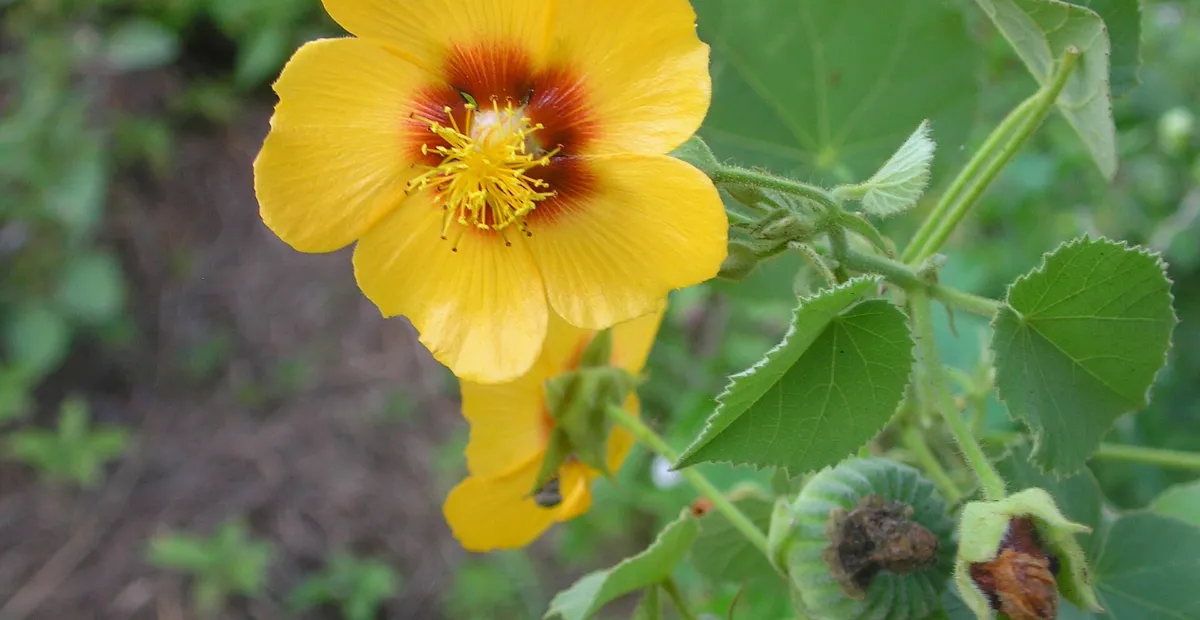
The plant forms a branching, somewhat woody subshrub. Leaves are green, alternate, and noticeably hairy or velvety, with a broadly ovate to shallowly lobed outline and serrated margins. Small mallow-like flowers appear from the leaf axils, followed by dry segmented schizocarpic fruits typical of the family.
Flowering
This is a true flowering angiosperm in the mallow family. Flowers are borne singly or in the leaf axils and have the open, five-petaled form typical of Abutilon and related malvaceous plants. Exact flowering months for the United States are not consistently documented; in frost-free climates, flowering may occur over an extended warm season.
Pollination and visitors
The flowers are structurally consistent with insect visitation, but reliable species-specific records identifying the main pollinator or visitor groups were not found in the reviewed sources. Do not treat general Abutilon observations as proof for this exact species.
Abutilon hirtum photos
Click any photo for a larger view. Source, author and license are shown separately.
Diseases and pests
Diseases
Avoid persistently wet foliage and poorly drained soil, which can encourage root and stem problems. Provide air circulation, remove affected tissue, and correct irrigation or drainage before considering treatment. Species-specific disease profiles are not well documented.
Pests
Inspect new growth and leaf undersides for aphids, whiteflies, spider mites, and scale, especially on container plants moved indoors. Improve light and air circulation, isolate affected plants, and use water sprays or appropriately labeled low-impact products before stronger controls.
Related diseases and pests
Only Plant Doctor profiles whose host data indicate this plant may be affected are shown here.
Toxicity and pollen
Reliable species-specific human and pet toxicity evidence was not located in the reviewed authoritative sources. Do not assume safety from the absence of reports: prevent ingestion, supervise children and pets around unfamiliar plant material, and seek professional advice after exposure. The plant has documented food and medicinal uses in some regions, but those uses do not establish safety for home consumption.
- Pollination / pollen
- Pollen details not sufficiently documented
Species-specific airborne pollen and allergy data are not well established. As a flowering plant, it produces pollen, but the extent of airborne release and clinical allergy relevance for Abutilon hirtum are uncertain. People with significant pollen sensitivity should avoid handling flowers during peak bloom if symptoms occur.
Native habitat
The species is native to tropical and subtropical parts of Africa and Asia and is associated with seasonally dry tropical environments. It also occurs as an introduced plant in Florida and other warm regions. It can occupy disturbed upland settings and favors warmth, sun, and soils that drain between periods of rainfall.
Interesting fact
Kew accepts Abutilon hirtum as a distinct species.
Frequently asked questions (FAQ)
The most relevant questions about this plant, with short and direct answers.
🌱Quick care
What is Florida Keys Indian mallow?⌄
Florida Keys Indian mallow is the documented common name for Abutilon hirtum, a hairy, flowering subshrub in the mallow family, Malvaceae. It produces axillary yellow to orange flowers, often with a dark reddish center.
Is Abutilon hirtum a flowering maple?⌄
Abutilon hirtum is an Indian mallow, not the commonly cultivated flowering maple Abutilon pictum or Abutilon hybridum. The plants are related and share maple-like foliage and bell-shaped flowers, which can cause confusion.
How much sun does Florida Keys Indian mallow need?⌄
Grow Florida Keys Indian mallow in full sun for the strongest growth and flowering. A location with at least 6 hours of direct sunlight is generally appropriate, especially in the United States.
How often should I water Abutilon hirtum?⌄
Give Abutilon hirtum moderate water, watering when the surface of the soil begins to dry. Keep the root zone from staying saturated, because poorly drained conditions can encourage root problems.
Is Abutilon hirtum frost hardy?⌄
No, Abutilon hirtum is frost tender and should be protected from freezing temperatures. In areas with frost, grow it in a container that can be moved under cover or treat it as a seasonal plant.
🌤️Environment and placement
Where should I plant Florida Keys Indian mallow outdoors?⌄
Plant it in a warm, sunny location with fertile, well-drained loam. A sheltered site near a wall or patio can reduce exposure to cold winds, but avoid spots where water collects.
Can Abutilon hirtum grow in containers?⌄
Yes, Abutilon hirtum can be grown in a container if it receives full sun and has a freely draining potting mix. Container growing is particularly useful in frost-prone parts of the United States because the plant can be moved indoors or under cover.
What USDA zones can grow Abutilon hirtum outdoors?⌄
A precise USDA hardiness-zone range is not well established for this species, but its frost-tender nature makes it best suited to frost-free or nearly frost-free climates. Elsewhere, grow it as a container plant or protect it during cold weather.
What kind of soil does Florida Keys Indian mallow prefer?⌄
Florida Keys Indian mallow prefers fertile, well-drained loam that retains some moisture without becoming waterlogged. Improve heavy soil with organic matter and drainage amendments rather than planting directly into compacted ground.
How large does Abutilon hirtum get?⌄
Abutilon hirtum is a subshrub or shrub that can reach roughly 2 to 8 feet in favorable conditions. Size varies with climate, soil, pruning, and whether it is grown in the ground or a container.
💧Care and problems
Why is my Abutilon hirtum dropping leaves?⌄
Leaf drop can result from cold exposure, drought, sudden environmental changes, or waterlogged roots. Check the soil moisture and drainage first, then move the plant to a warmer, brighter, more sheltered position if temperatures have fallen.
Why is Florida Keys Indian mallow not flowering?⌄
Insufficient sunlight is a common reason Florida Keys Indian mallow fails to flower. Move it to full sun, avoid excessive nitrogen fertilizer, and maintain steady but not excessive moisture during active growth.
Does Abutilon hirtum need fertilizer?⌄
Yes, feed Abutilon hirtum lightly during active growth with a balanced fertilizer intended for flowering plants. Fertilize only when the plant is actively growing, and avoid heavy applications that produce foliage at the expense of flowers.
What pests attack Florida Keys Indian mallow?⌄
Aphids, whiteflies, spider mites, and other sap-feeding insects may affect Florida Keys Indian mallow, particularly when it is stressed or grown indoors. Inspect new growth and the undersides of leaves, and use a labeled insecticidal soap or horticultural oil when appropriate.
How do I prune Abutilon hirtum?⌄
Prune Abutilon hirtum to remove dead or damaged growth and to maintain a compact shape. Lightly shortening long stems after a flush of growth can encourage branching, but avoid severe pruning immediately before cold weather.
🪴Planting and repotting
When should I plant Abutilon hirtum outdoors?⌄
Plant Abutilon hirtum outdoors after the threat of frost has passed and the soil has warmed. In frost-free areas, planting can be done during a mild growing period when regular watering is practical.
How do I repot Florida Keys Indian mallow?⌄
Repot it when roots have filled the container, moving it into a pot only slightly larger than the current one. Use a fertile, well-drained mix, keep the root ball intact, and water moderately while the plant re-establishes.
✂️Propagation and pruning
How is Abutilon hirtum propagated?⌄
Abutilon hirtum is commonly propagated from seed, and stem cuttings may also be attempted. Sow fresh seed in a warm, well-drained medium, or place healthy cuttings in a moist, airy rooting mix.
Can I grow Florida Keys Indian mallow from seed?⌄
Yes, Florida Keys Indian mallow can be grown from seed produced in its dry fruit capsules. Collect mature capsules before they split fully, sow the seeds in warmth, and keep the medium lightly moist rather than wet.
⚠️Toxicity and safety
Is Abutilon hirtum toxic to people or pets?⌄
Species-specific toxicity information for Abutilon hirtum is unknown, so it should not be considered confirmed safe to eat. Keep the plant away from children and pets, and seek medical or veterinary advice if any part is swallowed.
Can Abutilon hirtum irritate the skin?⌄
The hairy stems and leaves may feel rough or sticky and could irritate sensitive skin through mechanical contact. Wear gloves when pruning or handling the plant, and wash exposed skin afterward.
Is Florida Keys Indian mallow invasive in Florida?⌄
Florida Keys Indian mallow is listed by the University of Florida IFAS as not currently considered a problem species in Florida, although it is documented as non-native in Florida Keys conservation materials. Prevent unwanted spread by removing mature seed capsules where necessary.
🌸Flowering and special interest
What do Abutilon hirtum flowers look like?⌄
The flowers are usually yellow to orange, five-petaled, and borne singly in the leaf axils, often with a dark reddish or purplish central mark. Some flowers may appear plain yellow or orange.
Does Florida Keys Indian mallow attract pollinators?⌄
Its open, colorful flowers can be visited by insects, but species-specific pollinator information for Abutilon hirtum in United States gardens is limited. Avoid broad-spectrum insecticides during flowering if you want to encourage flower-visiting insects.
Similar plants
 Saucer Magnolia (Magnolia soulangeana) care guideMagnolia soulangeana
 Magnolia × loebneri ‘Merrill’Magnolia × loebneri 'Merrill'
 Magnolia loebneri care guideMagnolia loebneri
 Sweetbay magnolia (Magnolia virginiana) care guideMagnolia virginiana
 Star magnolia (Magnolia stellata) care guideMagnolia stellata
 Magnolia sprengeri care guideMagnolia sprengeri