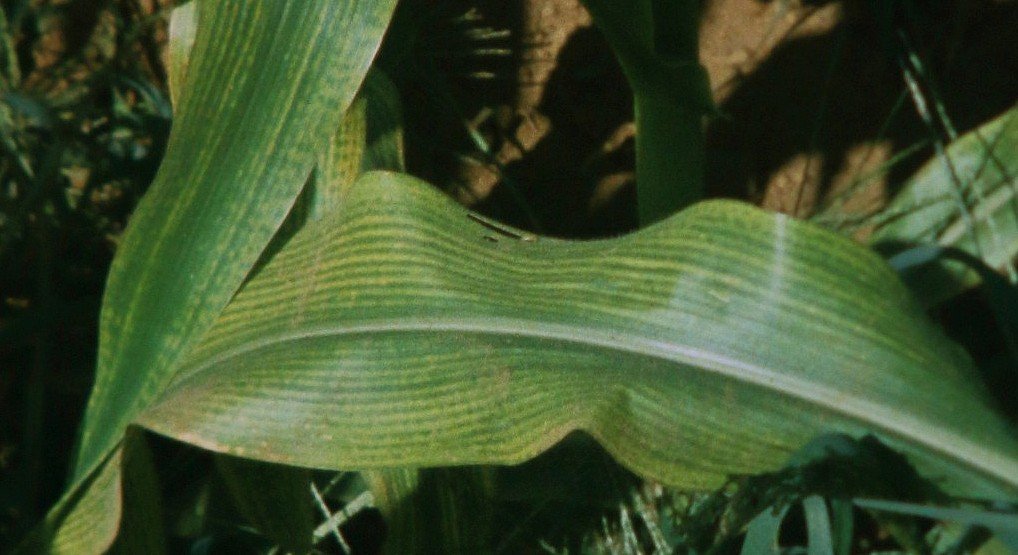
Magnesium deficiency
Magnesium deficiency overview
Magnesium deficiency is a nutritional disorder rather than an infectious disease. Because magnesium moves within plants, symptoms commonly begin on older, lower leaves as yellow-green tissue develops between otherwise green veins. Acid sandy soil, excessive potassium, unsuitable root-zone pH, low-magnesium irrigation water, or restricted roots can contribute. Confirm the diagnosis with soil or tissue testing before applying amendments.
Typical conditions
Overview
Magnesium is an essential macronutrient and the central atom in chlorophyll. It also supports enzyme activity, photosynthesis, carbohydrate movement, and normal plant metabolism. Deficiency is most likely where soil magnesium is low, especially in acid, coarse-textured or sandy soils, but symptoms can also result from nutrient imbalance, excessive potassium, unfavorable root-zone conditions, low-magnesium irrigation water, or damaged roots.
In the United States, magnesium deficiency is not universal and should not be assumed from yellow leaves alone. Iron deficiency usually appears first on young leaves, whereas magnesium deficiency more often begins on older or lower foliage. Nitrogen deficiency, potassium problems, disease, herbicide injury, drought, waterlogging, and natural leaf aging can look similar.
Symptoms and identification
Early symptoms usually appear on older leaves. The tissue between veins becomes pale green, yellow-green, or yellow while the veins remain greener. In corn, yellow striping may extend lengthwise along lower leaves. In potatoes, discoloration can begin at the tips of lower leaves and move inward between veins.
As deficiency progresses, interveinal areas may develop brown dead flecks or larger necrotic patches, leaves may curl downward, growth may be reduced, and premature leaf death can occur. Symptoms may be uneven across a planting when soil texture, root distribution, fertilizer placement, or irrigation varies.
Symptoms alone are insufficient for confirmation. Check whether the newest leaves remain relatively green, inspect roots and moisture conditions, review recent fertilizer use, and submit representative soil or plant tissue samples when the diagnosis affects a major amendment decision.
Causes and spread
This disorder does not spread between plants. It arises from site or management conditions, including low exchangeable magnesium, acid sandy soil, repeated cropping, leaching, excessive potassium fertilization, low-magnesium irrigation water, restricted roots, compaction, drought, waterlogging, or unsuitable root-zone pH.
Different crops and cultivars vary in sensitivity. A uniform pattern across a bed suggests a soil, water, or fertilizer issue; irregular patches may reflect variable soil texture, drainage, root injury, or localized fertilizer placement. High salt concentrations can also damage roots and reduce nutrient uptake without representing magnesium deficiency itself.
Life cycle and persistence
Magnesium deficiency has no pathogen lifecycle or contagious spread. It develops when plant demand exceeds the amount of magnesium available to roots or when uptake is restricted. Since magnesium is mobile in the plant, the plant can move it from older leaves to actively growing tissues, causing older leaves to show symptoms first.
Symptoms may intensify during rapid growth, heavy cropping, prolonged wet or dry soil, or after repeated applications of a competing nutrient such as potassium. Corrected plants cannot repair already dead tissue, but healthy new growth should show improvement if magnesium was the limiting factor and root conditions are suitable.
Treatment and control
First confirm the diagnosis with a soil test, and use plant tissue analysis when symptoms are ambiguous or the crop is valuable. Correct the underlying soil or root-zone problem rather than treating leaf color alone.
For acidic soil with confirmed low magnesium, incorporate the recommended amount of dolomitic limestone and allow time for it to react. If pH is already suitable, use a labeled magnesium fertilizer or amendment selected from the soil-test recommendation. In containers or hydroponic systems, correct the nutrient solution according to a crop-specific formulation and verify water quality.
Foliar magnesium can provide temporary support in some production systems, but it does not replace correction of the root zone and should be used only when the product label and crop recommendation support it. Remove severely dead leaves only when necessary for sanitation or access; existing chlorosis will not reverse.
Low-impact and biological control
Organic management begins with confirmation. Use a laboratory soil test appropriate for the crop and region; tissue testing can help when soil results and symptoms do not agree. Improve drainage and irrigation consistency, protect roots from compaction, and maintain organic matter without assuming that compost alone will supply enough magnesium.
Where a test and crop recommendation indicate a need, dolomitic limestone is generally appropriate for acidic soil because it supplies calcium and magnesium while raising pH. In soil that does not need liming, a permitted magnesium source such as magnesium sulfate or potassium-magnesium sulfate may be more suitable. In certified organic production, verify that the product and use comply with current USDA National Organic Program requirements and that the deficiency is documented when required.
Do not use large amounts of Epsom salt as a general tonic. Excess soluble salts and magnesium can interfere with nutrient balance and may move into runoff.
Prevention
- Test soil before planting and periodically thereafter, especially in sandy, acidic, intensively cropped, or container-growing systems.
- Follow the laboratory recommendation for the specific crop rather than applying a fixed magnesium rate.
- Use dolomitic limestone when both soil acidity and magnesium need correction; do not substitute it automatically for calcitic lime.
- Avoid excessive potassium fertilization and account for magnesium supplied by irrigation water and complete fertilizers.
- Maintain even soil moisture, good drainage, adequate organic matter, and uncompacted root zones.
- Keep fertilizer off foliage unless a crop-specific, label-directed foliar use is appropriate.
Interesting facts
- Magnesium is located at the center of the chlorophyll molecule, so deficiency can reduce photosynthetic capacity and produce chlorosis.
- Because magnesium is mobile inside plants, older leaves commonly show symptoms before new leaves.
- There is no universally correct calcium-to-magnesium ratio for every soil; adequate crop-available magnesium and a crop-specific soil test are more useful than chasing a fixed ratio.
- High potassium inputs can contribute to magnesium uptake problems even when total soil magnesium is not extremely low.
No pesticide controls magnesium deficiency. Use only fertilizers or soil amendments legally authorized for the specific crop and use in the United States, and follow the current product label. Avoid routine Epsom-salt or foliar applications without a confirmed need, because excess magnesium can disrupt nutrient balance and runoff can harm water quality.
Affected plants
The plants below are linked to this problem by structured host-plant data. The list updates automatically as new plant profiles are added.