
 Source:
 Bissett’s bamboo (Phyllostachys bissetii) short overview
Bissett's bamboo is a cold-hardy, evergreen running bamboo native to Sichuan and Zhejiang, China. Its dense canopy of narrow green leaves and dark green culms makes it useful for privacy screens, wind protection, and large containers in much of the United States. Growth is vigorous rather than clumping, so install a robust rhizome barrier or monitor the planting regularly to prevent unwanted spread.
Taxonomic classification
Bissett’s bamboo (Phyllostachys bissetii) care guide
Light and placement
Grow in full sun for the densest, strongest screen, or partial shade where afternoon heat is intense. An east- or south-facing position is generally suitable if soil moisture is maintained. Sparse foliage, weak culms, and slow spread can indicate inadequate light; scorched leaf margins or excessive drying may indicate harsh reflected heat, wind, or insufficient water rather than simple excess light.
Watering and humidity
Water deeply when the upper few inches of soil begin to dry, especially during the first two growing seasons and during summer heat. Established plants tolerate short dry periods but look best with consistent moisture. Increase watering in hot, windy weather; reduce it in cool wet periods while never allowing containers to stand in water. Humidity is not usually a special requirement outdoors.
Soil and growing medium
Use fertile loam or clay-loam that holds moisture without remaining saturated. Incorporate compost before planting if the soil is poor, and improve drainage where water stands. Sources describe the plant as tolerant of acid, neutral, and alkaline soils; a broadly adaptable soil reaction is therefore reasonable, but extreme pH can reduce nutrient availability.
Feeding
Feed established plants in spring as new shoots begin, using a balanced slow-release fertilizer according to the product label. A light compost mulch can support soil structure, but keep mulch off the culms. Avoid heavy late-season nitrogen, which can encourage soft growth and reduce winter readiness. Water after fertilizing if rainfall is insufficient.
Growth and habit
This is a vigorous, monopodial running bamboo that expands through underground rhizomes rather than forming a restrained clump. New shoots emerge seasonally and culms gradually create a dense screen. Containment, annual perimeter checks, and removal of unwanted shoots are central maintenance tasks, especially in warm, fertile sites.
Planting and repotting
Plant in spring after the soil can be worked, or in early fall where winters are moderate. Set the root ball at the same depth it was growing and water deeply to settle the soil. Allow roughly 4–6 feet between plants for a dense screen, while recognizing that mature size varies by climate and management. Install a strong rhizome barrier before backfilling.
Move container plants into a larger pot when roots become crowded or rhizomes circle the container. Divide and refresh the root mass in spring, using a heavy, durable container with drainage holes. Containers restrict height and spread but do not eliminate the need for occasional division.
Propagation and pruning
Propagation
Propagate by division of established rhizome sections in spring, retaining viable culms and roots. Replant divisions immediately, keep them evenly moist, and protect new divisions from drying winds. Rhizome cuttings are possible but require suitable healthy material and careful aftercare.
Pruning
Remove dead, damaged, weak, or unwanted culms at ground level with a clean saw or loppers. Thin older culms to improve access and light, and cut back encroaching shoots before they establish. Wear gloves and eye protection because foliage and cut culm edges can be sharp.
Overwintering
Plants in the ground are generally winter hardy in suitable climates, but young divisions and container specimens are more vulnerable to root freezing and winter desiccation. Mulch the root zone after the ground cools, shelter containers from prevailing wind, and water before the soil freezes if conditions are dry. Avoid heavy nitrogen late in the season.
Uses
Primarily ornamental: dense screening, wind protection, architectural foliage, and large-container planting. Because it spreads by vigorous rhizomes, use a professionally installed root barrier, a suitably sized container, or regular perimeter inspection. Do not describe shoots as food unless they are correctly identified and prepared using authoritative culinary guidance.
Appearance
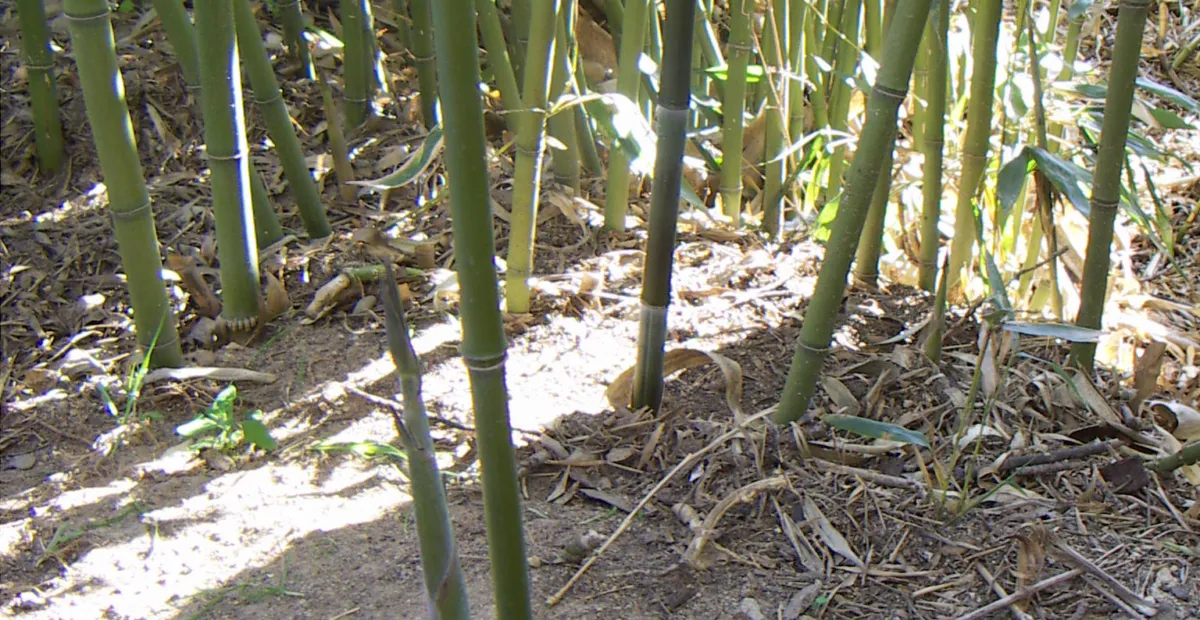
Dense evergreen foliage is carried on slender, lance-shaped leaves. Culms are typically dark green and form a thick, upright-to-spreading canopy. The combination of persistent green leaves, closely spaced culms, and a dense visual screen helps distinguish it horticulturally from more open bamboos. New shoots and culms emerge from underground rhizomes.
Flowering
Bamboo flowering is rarely observed in ordinary garden culture, and a dependable United States flowering schedule for this species was not located. As a grass, it produces inconspicuous grass flowers rather than showy ornamental blooms. Do not treat its foliage or culms as evidence of annual flowering.
Pollination and visitors
No reliable species-specific documentation was found showing characteristic animal pollinators or visitor groups. Its inconspicuous, rarely observed flowering should not be marketed as a pollinator feature.
Phyllostachys bissetii photos
Click any photo for a larger view. Source, author and license are shown separately.
Diseases and pests
Diseases
Maintain airflow, avoid chronically waterlogged soil, and remove damaged culms or leaves. Watch for fungal leaf spots and sooty growth associated with sap-feeding insects. Improve sanitation and growing conditions first; use a product labeled for bamboo only when a diagnosis warrants treatment.
Pests
Inspect culms and leaf undersides for aphids, scale, mites, and bamboo mites. Symptoms can include stippling, yellowing, sticky honeydew, or weakened new growth. Wash light infestations from foliage, encourage beneficial insects, prune heavily infested material, and choose a labeled treatment only after confirming the pest.
Toxicity and pollen
Reliable authoritative evidence specific to Phyllostachys bissetii was not located for human or companion-animal poisoning. Avoid presenting the plant as edible, and do not allow children or pets to chew unfamiliar plant material. The main practical hazard is physical injury from sharp cut culm or leaf edges, not documented poisoning.
- Pollination / pollen
- Grass pollen; release characteristics for this species uncertain
Bamboo is a flowering grass and therefore produces pollen when it flowers, but this species is reported to flower rarely and a species-specific airborne-pollen or allergy profile was not located. Allergy sensitivity cannot be ruled out solely because flowering is uncommon. Avoid making a zero-allergen claim.
Native habitat
In its native China, the species occurs in temperate regions of Sichuan and Zhejiang. It is associated with a climate that supports seasonal growth and moist, fertile soils. In cultivation it tolerates a broad soil reaction and performs best where roots remain moist but drainage is reliable.
Interesting fact
This species is native to Sichuan and Zhejiang in China and belongs to the running-bamboo genus Phyllostachys. It is considered one of the hardier Phyllostachys bamboos in cultivation. Its dense foliage can form a remarkably dark, light-blocking canopy. The plant is often smaller in containers than in open ground.
Frequently asked questions (FAQ)
The most relevant questions about this plant, with short and direct answers.
🌱Quick care
How do you care for Bissett's bamboo (Phyllostachys bissetii)?⌄
Grow Bissett's bamboo in full sun to partial shade, fertile well-drained soil, and evenly moist conditions. Water during dry periods, especially while plants establish, and maintain a mulch layer without piling it against the culms.
How tall does Bissett's bamboo get?⌄
Bissett's bamboo can reach roughly 20 to 25 feet in favorable landscapes, though height depends on climate, soil, water, and available growing space. New culms may be shorter after harsh winters or during establishment.
🌤️Environment and placement
Is Bissett's bamboo evergreen?⌄
Yes, Bissett's bamboo is generally evergreen in mild climates. Severe cold, drying winds, or winter injury can cause leaf browning or temporary foliage loss, but the rhizomes may remain alive and resprout.
What USDA hardiness zones are suitable for Bissett's bamboo?⌄
Bissett's bamboo is commonly grown from about USDA Zone 6 upward, although performance can vary with exposure, snow cover, wind, and plant maturity. In colder areas, protect the root zone with several inches of mulch.
Does Bissett's bamboo grow in full sun?⌄
Yes, Bissett's bamboo grows well in full sun and also tolerates partial shade. Full sun generally supports denser growth, while some afternoon shade can reduce water stress in hot, dry locations.
💧Care and problems
How much water does Bissett's bamboo need?⌄
Provide moderate, consistent moisture, keeping the soil evenly moist but not waterlogged. Water deeply during drought, because established running bamboo can show leaf curl or browning when the soil becomes too dry.
Is Bissett's bamboo a running bamboo?⌄
Yes, Bissett's bamboo is a running bamboo that spreads through underground rhizomes. It should be planted only where lateral spread can be monitored or contained.
How often should Bissett's bamboo be fertilized?⌄
Feed Bissett's bamboo in spring with a balanced fertilizer or compost applied according to the product label. Avoid excessive nitrogen, which can encourage weak, overly lush growth and does not replace adequate moisture or soil drainage.
Why are the leaves on my Bissett's bamboo curling?⌄
Leaf curling usually indicates water stress caused by dry soil, hot weather, drying wind, or damaged roots. Check soil moisture several inches below the surface, water deeply when needed, and investigate drainage or winter damage if the soil is already wet.
Why is my Bissett's bamboo turning brown?⌄
Brown foliage can result from drought, winter burn, excessive wind, root damage, or natural replacement of older leaves. Check the culms and rhizome area before removing the plant, because living bamboo may recover and produce new growth in the growing season.
🪴Planting and repotting
What soil is best for Bissett's bamboo?⌄
The best soil is moist, fertile, and well drained, especially loam or clay-loam amended with organic matter. Avoid sites that stay saturated because poor drainage can weaken the rhizomes and roots.
How do you keep Bissett's bamboo from spreading?⌄
Control spread with a properly installed rhizome barrier, a large durable container, or regular inspection and removal of escaped rhizomes and shoots. A barrier must form a continuous perimeter and extend deeply enough to prevent rhizomes from passing underneath.
Can Bissett's bamboo be grown in a container?⌄
Yes, Bissett's bamboo can be grown in a large, sturdy container, but it requires more frequent watering and periodic root or rhizome management than plants in the ground. Choose a heavy pot with excellent drainage and inspect it for escapes.
When should you plant Bissett's bamboo?⌄
Plant Bissett's bamboo in spring or early fall, when soil moisture is reliable and extreme heat or cold is less likely. Spring planting is preferable in colder parts of the United States because it allows more time for root establishment before winter.
How far apart should Bissett's bamboo be planted for a privacy screen?⌄
For a screen, spacing depends on the desired speed and final density, but plants are often set several feet apart rather than tightly crowded. Because this species spreads by rhizomes, plan spacing together with a containment strategy instead of relying on spacing alone.
✂️Propagation and pruning
How do you prune Bissett's bamboo?⌄
Remove dead, damaged, or unwanted culms at ground level with clean loppers or a saw. Thin crowded stems selectively to improve appearance and access, but avoid removing more live foliage than necessary.
How do you propagate Bissett's bamboo?⌄
Bissett's bamboo is usually propagated by division or by transplanting sections of rhizome with viable buds and roots. Division is most successful during mild weather when the plant can be kept consistently moist after planting.
Can Bissett's bamboo be grown from seed?⌄
Seed propagation is uncommon because Phyllostachys bamboos flower infrequently and viable seed is not reliably available. Division or rhizome propagation is the practical method for producing new plants.
⚠️Toxicity and safety
Is Bissett's bamboo invasive in the United States?⌄
Bissett's bamboo has a spreading habit and is classified by some U.S. horticultural sources as a plant that requires caution. Local invasive-plant rules vary, so check your state or county guidance before planting and use containment where appropriate.
Is Bissett's bamboo toxic to dogs or cats?⌄
Species-specific poisoning evidence for Bissett's bamboo is limited, so its toxicity cannot be confirmed with certainty. Prevent pets from chewing large amounts of plant material, and contact a veterinarian or poison-control service if ingestion causes symptoms.
Are Bissett's bamboo shoots edible?⌄
Although bamboo shoots are eaten in some species, reliable species-specific food-safety guidance for Bissett's bamboo is limited. Do not eat shoots unless they have been positively identified and prepared according to guidance from a qualified edible-bamboo source.
🌸Flowering and special interest
Does Bissett's bamboo flower?⌄
Bissett's bamboo may flower, but flowering is rare and may occur only after many years. Species-specific flowering intervals and what happens to every clone afterward are not reliably predictable, so flowering should not be expected as a routine seasonal event.
Similar plants
 Scabrida bamboo (Fargesia scabrida) care guideFargesia scabrida
 Moso Bamboo (Phyllostachys edulis) care guidePhyllostachys edulis
 Giant timber bamboo (Bambusa oldhamii) care guideBambusa oldhamii
 Alphonse Karr Bamboo (Bambusa multiplex) care guideBambusa multiplex
 Palmate Bamboo (Sasa palmata) care guideSasa palmata
 Arrow Bamboo (Pseudosasa japonica) care guidePseudosasa japonica