
 Source:
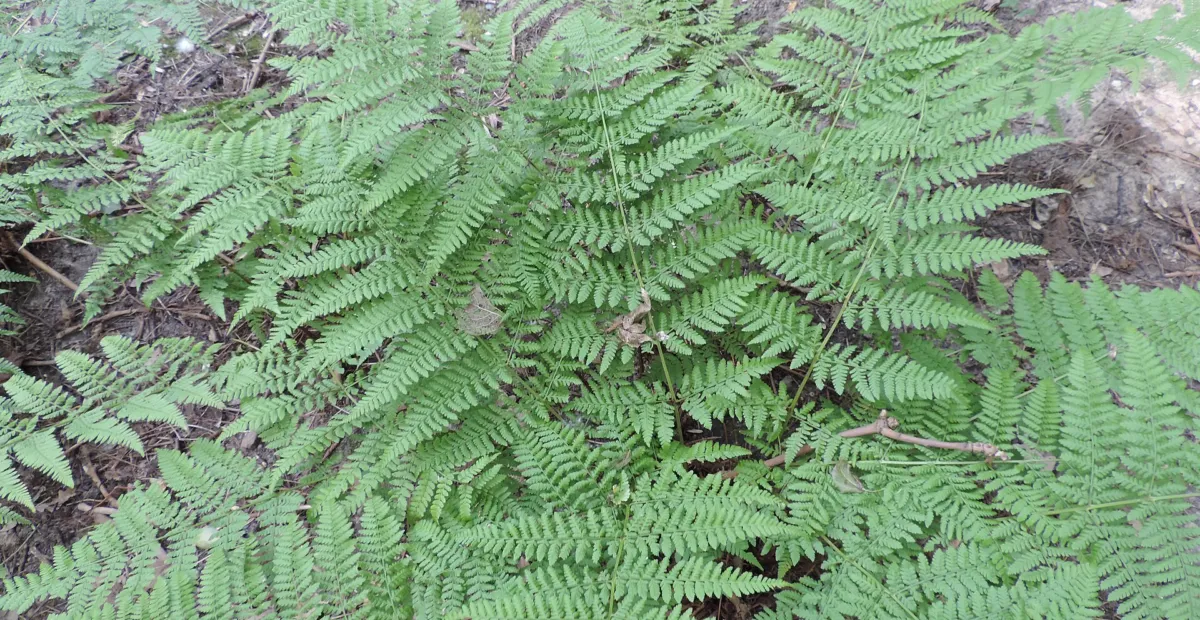
 Broad buckler-fern (Dryopteris dilatata) short overview
Broad buckler-fern (Dryopteris dilatata) is a robust temperate woodland fern valued for its broad, finely divided fronds and graceful shuttlecock-like form. In U.S. gardens it performs best in dappled to deep shade with consistently moist, humus-rich, well-drained soil. The fronds may remain attractive into winter in mild climates, while autumn can bring warm yellow tones before dormancy. It is primarily an ornamental foliage plant rather than a flowering species.
Taxonomic classification
Broad buckler-fern (Dryopteris dilatata) care guide
Light and placement
Provide dappled light, partial shade, or deep shade, with protection from hot afternoon sun and drying wind. An east- or north-facing bed is often suitable. Too much direct sun can scorch or bleach fronds and increase water stress; too little light may produce looser, weaker growth, although the species tolerates substantial shade.
Watering and humidity
Keep the root zone consistently moist but never stagnant. Water deeply when the surface begins to dry, checking more often during the first growing season, heat, and drought. Apply water at the soil line when possible. A 2–3 inch organic mulch helps moderate moisture, but keep it slightly away from the crown.
Soil and growing medium
Use a moisture-retentive but well-drained soil rich in leaf mold, compost, or other organic matter. Loam or clay-loam can work if drainage is improved. Slightly acidic to neutral conditions are suitable; avoid prolonged waterlogging and very dry, sharply alkaline sites.
Feeding
Top-dress with finished compost, leaf mold, or a thin organic mulch in spring. If growth is weak, use a dilute balanced fertilizer once during active growth, following the product label. Avoid heavy feeding, fresh manure, and late-season nitrogen, which can produce soft growth and reduce winter readiness.
Growth and habit
Forms a crown of upright and outward-curving fronds, creating a broad shuttlecock-like clump. Growth is strongest in cool, evenly moist woodland conditions. Remove damaged or collapsed fronds as needed, but avoid disturbing the crown; overcrowded plants can be divided in spring.
Planting and repotting
Plant in spring or early fall when temperatures are moderate. Set the crown level with the soil surface rather than burying it. Water deeply after planting and maintain even moisture through the first growing season. Space plants about 24–36 inches apart, allowing room for the mature fronds to arch outward.
Repot container-grown plants in spring when the root mass has filled the pot. Move only one container size larger, retain the crown at its original level, and use a moisture-retentive but free-draining woodland-style mix. Water thoroughly after transplanting and keep the plant shaded while it re-establishes.
Propagation and pruning
Propagation
Propagate from spores, a specialist method requiring sterile or very clean conditions and steady moisture. Established clumps may also be divided in spring before strong frond expansion, ensuring each division has a healthy crown and roots. Division is generally the more practical method for home gardeners.
Pruning
Cut away yellowed, brown, or collapsed fronds in late winter or early spring before new croziers expand. In mild climates, leave attractive fronds through winter for protection and habitat, removing them only when they become untidy or interfere with emerging growth.
Overwintering
In USDA Zones 5–8, outdoor plants generally need no special winter covering once established. Leave healthy fronds in place through cold weather where they remain attractive, then remove collapsed foliage in late winter. Container plants are more exposed to freezing and should be sheltered or grouped in a protected location during severe cold.
Uses
Use as an ornamental foliage fern in woodland gardens, shaded borders, naturalized plantings, foundation beds, and large containers. Its broad, finely cut fronds provide texture and seasonal structure beneath trees or shrubs. It has no established culinary use in this profile, and fern material should not be consumed.
Appearance
Fronds are broad, finely cut, and usually two- to three-pinnate, rising upward and then spreading outward from a central crown. Young fronds tend to be triangular, while mature blades become oval to lance-shaped. The stipes and rachises carry conspicuous dark brown scales, and the overall clump has a shuttlecock-like silhouette.
Pollination and visitors
As a fern, this species does not produce flowers or nectar and is not documented here as an animal-pollinated plant. Reproduction occurs through spores and the gametophyte stage rather than through visits by bees, butterflies, or other flower visitors.
Dryopteris dilatata photos
Click any photo for a larger view. Source, author and license are shown separately.
Diseases and pests
Diseases
Usually trouble-free when grown in suitable shade and evenly moist soil. Leaf spots, rust, and occasional leaf gall can occur, especially in crowded or persistently wet conditions. Improve air circulation, remove badly affected fronds, avoid overhead watering when disease is active, and clean away fallen foliage at season’s end.
Pests
Slugs and snails may damage emerging fronds, particularly in damp gardens. Inspect new growth, reduce hiding places, remove debris, and use barriers or other proportionate controls where needed. Avoid excessive nitrogen and drought stress, which can weaken foliage and increase general pest problems.
Toxicity and pollen
No species-specific evidence of significant human or companion-animal toxicity was located in the authoritative horticultural sources reviewed. Do not treat this absence as proof of edibility or complete safety. Avoid ingestion, supervise children and pets around unfamiliar plants, and seek professional advice if plant material is eaten or causes irritation.
- Pollination / pollen
- Air-dispersed fern spores, not pollen
Dryopteris dilatata produces spores rather than pollen because it is a fern. Spores can become airborne when mature, but this profile found no reliable species-specific evidence establishing a significant airborne-allergy risk. People with strong sensitivities should still avoid inhaling concentrated spore dust during handling.
Native habitat
Native populations occur across temperate parts of Europe and into northern and central Asia, including moist woodland, montane, heath, and other cool shaded habitats. It favors organic soils with dependable moisture, good drainage, and protection from intense heat, drying wind, and prolonged summer drought.
Interesting fact
The specific epithet dilatata refers to the plant’s expanded or spreading form. Young fronds are more distinctly triangular before becoming broader and more lance-shaped. Dark brown scales along the stipes and rachises are useful identification features. The species is tetraploid and naturally occupies temperate woodland habitats across a broad Eurasian range.
Frequently asked questions (FAQ)
The most relevant questions about this plant, with short and direct answers.
🌱Quick care
What is Dryopteris dilatata commonly called?⌄
Dryopteris dilatata is commonly called broad buckler-fern. It is also sometimes listed as broad wood fern.
Is broad buckler-fern easy to grow?⌄
Yes, broad buckler-fern is generally easy to grow when given shade, steady moisture, and humus-rich soil. It is a clumping perennial that needs little routine maintenance once established.
How much light does broad buckler-fern need?⌄
Grow broad buckler-fern in partial shade to full shade, preferably with dappled light. Protect it from hot afternoon sun, especially if the soil may dry out.
How often should I water broad buckler-fern?⌄
Water broad buckler-fern whenever the soil surface begins to dry, keeping the root zone evenly moist. Do not let newly planted ferns dry out while they establish.
How big does broad buckler-fern get?⌄
Broad buckler-fern commonly reaches about 2 to 4 feet tall and wide in U.S. gardens. Mature size depends on moisture, soil quality, climate, and available shade.
🌤️Environment and placement
Where should I plant broad buckler-fern?⌄
Plant broad buckler-fern in a shaded woodland garden, beneath trees, along a north-facing foundation, or in another sheltered area. Choose a site with moist, well-drained soil and protection from strong wind.
Can broad buckler-fern grow in deep shade?⌄
Yes, broad buckler-fern tolerates deep shade and is well suited to woodland conditions. Growth may be less vigorous if the site is both extremely dark and dry.
Can broad buckler-fern grow in full sun?⌄
Broad buckler-fern can tolerate more light only when soil moisture remains reliably high, but full sun is generally not recommended. Part shade or shade produces safer, more consistent growth.
What USDA hardiness zones are suitable for broad buckler-fern?⌄
Broad buckler-fern is commonly listed as hardy across approximately USDA Zones 4 or 5 through 8, depending on the source and local conditions. Winter protection may be useful in exposed sites at the colder edge of its range.
What type of soil does broad buckler-fern prefer?⌄
It prefers moist, humus-rich, well-drained loam or clay-loam. Soil may be acidic to neutral, but good organic matter and consistent moisture are more important than a narrowly defined pH.
Does broad buckler-fern tolerate clay soil?⌄
Yes, broad buckler-fern can grow in clay soil if it contains organic matter and drains adequately. Improve compacted clay with compost and avoid sites that remain stagnant and waterlogged.
Can broad buckler-fern grow under trees?⌄
Yes, it is well suited to planting beneath trees in woodland-style conditions. Monitor moisture because tree roots can compete strongly for water during dry weather.
💧Care and problems
Why are the fronds on my broad buckler-fern turning brown?⌄
Brown fronds usually indicate drought stress, excessive sun, wind exposure, or winter damage. Check the soil moisture and move or protect the plant if it is receiving hot, drying light.
Why is my broad buckler-fern wilting?⌄
Wilting usually means the root zone is too dry, although damaged roots or severe heat can also contribute. Water deeply and improve mulch or shade, but do not leave the soil permanently saturated.
Does broad buckler-fern need fertilizer?⌄
Broad buckler-fern usually needs little fertilizer when planted in organically rich soil. A light spring application of a balanced, slow-release fertilizer is sufficient if growth is weak.
Should I mulch around broad buckler-fern?⌄
Yes, apply a 2- to 3-inch layer of leaf mold, compost, or fine bark around the plant without covering the crown. Mulch helps conserve moisture and moderates soil temperature.
What pests or diseases affect broad buckler-fern?⌄
Broad buckler-fern is generally low-maintenance and seldom has serious pest problems. Rust, leaf spots, and leaf galls may occur, particularly where foliage stays wet and air circulation is poor.
🪴Planting and repotting
When is the best time to plant broad buckler-fern?⌄
Plant broad buckler-fern in spring or fall when the soil is naturally moist and temperatures are moderate. Water it regularly during the first growing season.
How do I plant broad buckler-fern in the garden?⌄
Dig a hole slightly wider than the root ball, set the crown at the same depth it was growing, backfill with moisture-retentive soil, and water thoroughly. Finish with mulch while keeping it away from the crown.
Can broad buckler-fern be grown in a container?⌄
Yes, broad buckler-fern can be grown in a large container placed in shade, provided the potting mix stays evenly moist but drains freely. Use a container with drainage holes and allow room for its spreading crown.
How far apart should I plant broad buckler-ferns?⌄
Space broad buckler-ferns about 2 to 3 feet apart for individual clumps, adjusting for the expected mature width. Give extra room if you want an open, naturalized appearance.
✂️Propagation and pruning
How do I propagate broad buckler-fern?⌄
The practical method is division of an established crown, usually in spring. Propagation from spores is also possible but is slower and requires more controlled conditions.
Can broad buckler-fern be grown from spores?⌄
Yes, broad buckler-fern reproduces from spores rather than flowers or fruit. Sow fresh, ripe spores on a clean, consistently moist growing medium and expect a slower process than division.
When should I divide broad buckler-fern?⌄
Divide broad buckler-fern in spring as new growth begins or when conditions are cool and moist. Separate healthy crown sections with roots and replant them immediately.
Should I cut back broad buckler-fern in winter?⌄
Remove dead, damaged, or badly weathered fronds in late winter or early spring before new growth expands. Do not cut healthy green fronds simply to tidy the plant.
⚠️Toxicity and safety
Is broad buckler-fern toxic to people or pets?⌄
No documented significant toxicity was located for broad buckler-fern, but it should not be eaten. Keep all ornamental plants away from children and pets because individual reactions and misidentification are possible.
🌸Flowering and special interest
Does broad buckler-fern produce flowers?⌄
No, broad buckler-fern does not produce flowers or fruits. It reproduces through spores formed on the undersides of its fronds.
When does broad buckler-fern produce spores?⌄
Broad buckler-fern produces spores on mature fronds, typically during the growing season. The small spore-bearing structures may appear as dots or lines on the undersides of the leaflets.
Is broad buckler-fern evergreen?⌄
Broad buckler-fern is semi-evergreen to deciduous, depending on climate and winter conditions. Fronds may remain attractive in mild areas but can die back after cold weather.
What color does broad buckler-fern turn in fall?⌄
The fronds may develop golden-yellow tones in fall before declining. Color and persistence vary with climate, exposure, and winter temperatures.
Similar plants
 Azure Monkshood (Aconitum carmichaelii) care guideAconitum carmichaelii
 Monkshood (Aconitum ‘Stainless Steel’)Aconitum 'Stainless Steel'
 Monkshood (Aconitum ‘Bressingham Spire’)Aconitum 'Bressingham Spire'
 Golden full moon maple (Acer shirasawanum ‘Aureum’)Acer shirasawanum 'Aureum'
 Globosum (Acer platanoides ‘Globosum’)Acer platanoides 'Globosum'
 Striped maple (Acer pensylvanicum) care guideAcer pensylvanicum