
 AI-generated illustration
Cowflock (Caltha palustris) short overview
Cowflock (Caltha palustris) is a hardy, rhizomatous perennial of wet meadows, stream margins, pond edges, and rain gardens across much of the temperate and subarctic Northern Hemisphere. It forms rounded, glossy green leaves and produces bright yellow, buttercup-like blooms in spring. Give it consistently moist to wet soil and sun or partial shade; in hot summer climates, some afternoon shade can help prevent premature dormancy.
Taxonomic classification
Cowflock (Caltha palustris) care guide
Light and placement
Choose full sun for the strongest flowering, especially in cool climates. In regions with hot summers, morning sun or full sun with afternoon shade can reduce stress and delay summer dormancy. Sparse flowering and stretched growth usually indicate insufficient light; scorched foliage or early dieback in a hot site suggests excessive summer exposure rather than a need for more water.
Watering and humidity
Keep the root zone consistently moist and do not allow the planting to dry deeply. Water slowly when the surface begins to lose its sheen, adjusting frequency upward during hot, windy weather and downward during cool, rainy periods. It can tolerate standing water or saturated margins when planted in suitable soil, but newly divided plants should be monitored closely until rooted.
Soil and growing medium
Use moisture-retentive soil containing loam, clay, organic matter, or a naturally wet sandy substrate. Good structure matters even in wet ground: compacted stagnant soil can encourage root problems, while sharply drained beds require excessive irrigation. Slightly acidic to neutral conditions are suitable; avoid allowing the root zone to become dry and alkaline.
Feeding
Cowflock generally needs little fertilizer in fertile wetland soil. Apply a thin layer of compost in early spring, or use a balanced, slow-release fertilizer at label strength as growth begins. Avoid heavy nitrogen feeding, which can produce lush foliage at the expense of sturdy flowering and may encourage soft growth in persistently wet conditions.
Growth and habit
This low-maintenance perennial expands gradually from rhizomes and can form broad clumps in favorable wet soil. It may spread by seed as well as division, so remove developing pods if a tidier colony is wanted. Foliage can decline or go dormant during hot summer weather, especially in full sun; this is a normal seasonal response rather than necessarily a watering failure.
Planting and repotting
Plant as soon as the soil can be worked in spring, or establish divisions in fall where winters are dependable. Set the crown at soil level and place rhizomes just below the surface rather than burying them deeply. Space plants 12–18 inches apart for a continuous colony, and keep the site evenly wet during the first growing season.
Use a wide container with drainage holes and a moisture-retentive medium. Repot or divide when the clump fills the container, preferably in early spring or fall. Do not let the root ball dry during the transition, and place the container where runoff or a water tray can maintain steady moisture without creating unsafe stagnant conditions indoors.
Propagation and pruning
Propagation
Divide established rhizomes in early spring as growth resumes, or in fall in regions with adequate establishment time before hard freezing. Seed can be sown fresh because viability may decline with storage; keep the seedbed consistently moist. Division is usually the quicker and more predictable method for garden planting.
Pruning
Remove spent flowering stems or developing seed pods if you want to limit self-sowing. Allow foliage to remain until it naturally yellows or collapses, because the leaves help replenish the rhizomes. Cut back dead foliage in late fall or early spring before new growth begins.
Overwintering
Outdoor plants are normally winter hardy through cold USDA zones and need no special protection once established. A thin layer of leaf mold or compost can protect exposed crowns without smothering them. Container plants are more vulnerable to root freezing and should be overwintered in a sheltered location or sunk into the ground in cold climates.
Uses
Useful for pond margins, rain gardens, wet meadows, streamside plantings, bog gardens, and damp woodland edges. It supplies early-season floral resources and can contribute to native wetland plantings. Some traditional sources mention cooked young greens, but raw tissue is unsafe and home consumption is not recommended because the plant contains irritating toxic compounds.
Appearance
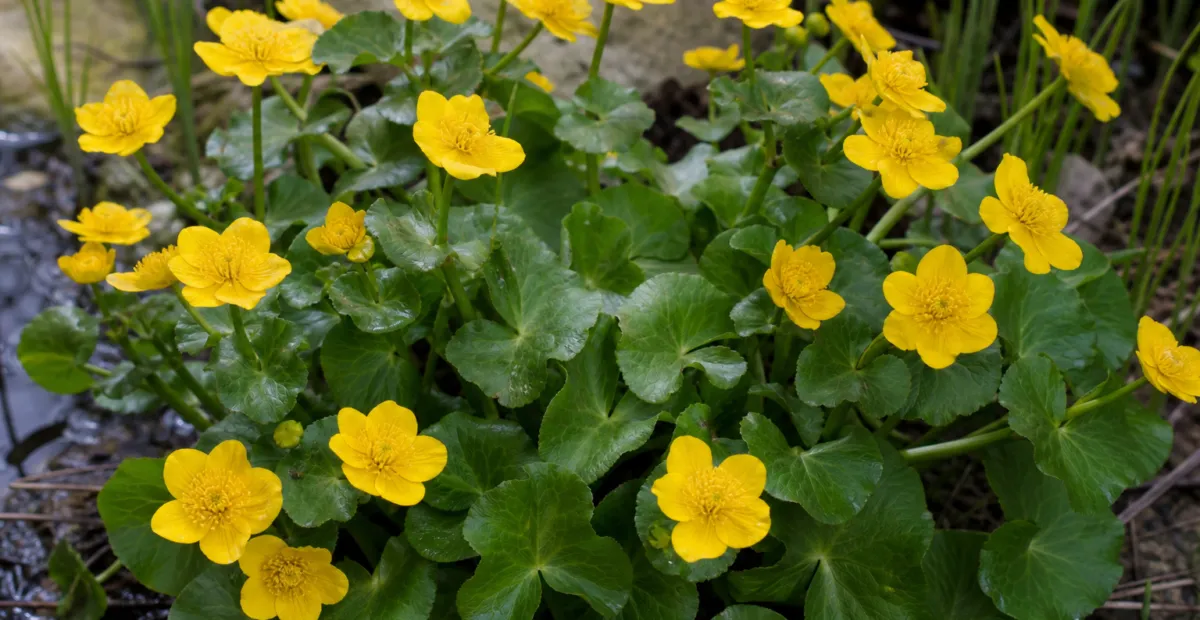
The plant has smooth, hollow, branching flowering stems and long-stalked, rounded to heart-shaped basal leaves. Leaves are glossy green, usually with shallowly toothed or crenulate margins; smaller, stalkless leaves occur higher on the stems. The shiny yellow blooms are made mainly of petal-like sepals, giving the plant a buttercup-like appearance.
Flowering
Flowers appear early in spring on upright, branching stems, often before the foliage reaches full summer size. Each bloom is typically 1–2 inches across and consists of five to nine glossy yellow sepals rather than true petals. After flowering, follicles develop and split open to release the seeds.
Pollination and visitors
The open yellow blooms provide pollen and nectar to early-season insects, including bees and bumblebees; other small flower-visiting insects may also visit. The species is included in wetland and pollinator-planting recommendations, and its early flowering can be valuable when few other plants are in bloom.
Caltha palustris photos
Click any photo for a larger view. Source, author and license are shown separately.
Diseases and pests
Diseases
Powdery mildew and rust are reported problems, particularly where foliage stays crowded and air movement is poor. Space plants adequately, avoid wetting foliage late in the day, and remove heavily infected leaves. Improve circulation and sanitation before considering a labeled fungicide; do not overfertilize with nitrogen.
Pests
Serious pest pressure is not a defining problem, and the foliage is generally deer resistant. Inspect new growth for chewing insects, aphids, or slugs in persistently damp sites. Hand-pick or rinse minor infestations, remove hiding debris, and use targeted, label-approved controls only when damage is persistent.
Toxicity and pollen
Raw plant tissue contains protoanemonin-related irritants. Ingestion, especially of leaves in larger amounts, can cause burning of the throat, vomiting, bloody diarrhea, dizziness, fainting, or convulsions. Do not eat any part raw, keep children and pets from chewing it, and seek poison-control or medical advice after ingestion.
- Typical season
- Spring, typically April–June in the United States
- Pollination / pollen
- Insect-released pollen; not typically dispersed in large airborne clouds
This insect-pollinated species does not usually release pollen in large airborne clouds, so airborne exposure is expected to be low. Individual sensitivity is still possible, and low airborne dispersal should not be interpreted as a guarantee of zero allergy risk.
Native habitat
Cowflock occurs in marshes, wet meadows, stream margins, springs, seepage areas, damp woodland openings, and other sites with persistent soil moisture. It is native across broad portions of the Northern Hemisphere, including many northern and eastern regions of the United States. It favors cool to moderate climates and soils that remain wet without becoming completely stagnant.
Interesting fact
The showy yellow structures are sepals, not petals. The species is rhizomatous and can spread into colonies. Its common name is misleading because it is not a true marigold. Seed pods open to release mature seeds. Summer dormancy is common in hot, exposed sites.
Frequently asked questions (FAQ)
The most relevant questions about this plant, with short and direct answers.
🌱Quick care
What is Cowflock (Caltha palustris)?⌄
Cowflock is a cold-hardy, herbaceous perennial in the Ranunculaceae family that grows naturally in marshes, wet meadows, swamps, springs, and stream margins. It forms clumps of rounded leaves and bright yellow, buttercup-like flowers.
Is Cowflock a perennial plant?⌄
Yes, Cowflock is a long-lived herbaceous perennial. Its rhizomes survive winter and produce new growth in spring.
🌤️Environment and placement
How much sunlight does Cowflock need?⌄
Cowflock grows in full sun to partial shade, with full sun generally producing the best flowering. In regions with hot summers, afternoon shade can help prevent midsummer dormancy.
Where should I plant Caltha palustris?⌄
Plant Caltha palustris beside a pond, stream, spring, rain garden, bog garden, or another location that stays consistently wet. It is not a good choice for ordinary dry garden beds.
Can Cowflock grow in standing water?⌄
Yes, Cowflock can tolerate periodically or consistently standing water when planted at a shallow pond edge or in a wetland margin. Avoid burying the crown deeply or placing it in stagnant, excessively deep water.
What soil is best for Cowflock?⌄
Use moist to wet soil with strong moisture retention, including loam, clay, or sandy soil enriched with organic matter. The soil should remain wet rather than merely becoming damp after rain.
What USDA hardiness zones can grow Cowflock?⌄
Cowflock is very cold hardy and is commonly listed for USDA Zones 3 through 7. Performance in warmer areas depends on providing reliable moisture and protection from intense summer heat.
Can Cowflock grow in a rain garden?⌄
Yes, Cowflock is well suited to the wettest part of a rain garden, especially where water collects but does not remain deeply flooded for long periods. Do not place it in a section that regularly dries out.
💧Care and problems
How often should I water Cowflock?⌄
Water Cowflock whenever necessary to keep the soil consistently wet. Plants in containers or locations that dry quickly may need frequent watering during warm or windy weather.
Why is my Cowflock going dormant in summer?⌄
Cowflock may naturally go dormant in midsummer when temperatures rise or the soil becomes less favorable. Afternoon shade and dependable moisture can delay dormancy, but seasonal dieback is not necessarily a problem.
Why is my Cowflock not flowering?⌄
Insufficient moisture, excessive shade, transplant stress, or a site that becomes too hot can reduce flowering. Move or divide the plant only when appropriate, and provide bright light with consistently wet soil.
Does Cowflock need fertilizer?⌄
Cowflock usually needs little fertilizer when grown in moisture-retentive soil rich in organic matter. Excess fertilizer can encourage soft growth and nutrient runoff near ponds or wetlands.
Is Cowflock deer resistant?⌄
Cowflock is generally considered deer resistant, although deer resistance is not absolute and browsing can vary by location and food availability. Young plants may still need protection in heavily browsed gardens.
What pests or diseases affect Cowflock?⌄
Cowflock is usually low maintenance, but plants under stress may experience common garden pests or foliage problems. Keeping the soil wet, avoiding overcrowding, and removing badly damaged foliage can help maintain plant health.
🪴Planting and repotting
Can I grow Cowflock in a container?⌄
Yes, Cowflock can be grown in a large container if the potting medium stays consistently wet and the container has enough room for its spreading rhizomes. A water-garden container or shallow bog planter is more suitable than a standard dry patio pot.
When is the best time to plant Cowflock?⌄
Plant Cowflock in spring or fall when the soil is cool and reliably moist. Fall planting can work especially well in cold climates because roots establish before the next growing season.
How do I plant Cowflock near a pond?⌄
Set Cowflock in moist soil at the pond margin, with the crown at or slightly above the surrounding soil level. Keep the roots wet, but avoid placing the entire crown or foliage deeply underwater.
How far apart should Cowflock plants be planted?⌄
Space Cowflock plants about 12 to 18 inches apart for a natural clump-forming display. Allow additional room if you want each plant to develop a broad mound of foliage.
✂️Propagation and pruning
Can Cowflock be propagated by division?⌄
Yes, division is one of the most practical ways to propagate Cowflock. Separate established clumps while the plant is dormant or after flowering, making sure each division retains healthy rhizomes and growing points.
Can Cowflock be grown from seed?⌄
Yes, Cowflock can be grown from seed, although seedlings may take longer to reach flowering size than divisions. Sow fresh seed in a consistently moist medium and expect germination requirements and timing to vary by seed source.
When should Cowflock be divided?⌄
Divide Cowflock in early spring before vigorous growth begins or in early fall after flowering and active summer growth have finished. Replant divisions immediately and do not allow their roots or rhizomes to dry out.
Should I cut back Cowflock after flowering?⌄
Remove spent flower stems if you want a tidier appearance, but leave healthy foliage until it naturally declines. The leaves help replenish the rhizomes for the following season.
⚠️Toxicity and safety
Is Cowflock poisonous to humans?⌄
Yes, Cowflock is a low-severity poisonous plant, and raw plant material should not be eaten. Ingestion can cause burning of the throat, vomiting, diarrhea, dizziness, fainting, or more serious symptoms.
Can dogs, cats, or livestock eat Cowflock?⌄
No, pets and livestock should not be allowed to eat Cowflock. Keep animals away from the plant because raw leaves and other tissues contain irritating compounds associated with poisoning.
Can I eat Cowflock leaves or flowers?⌄
Do not eat Cowflock raw, because uncooked plant parts can be poisonous and may cause severe irritation or gastrointestinal symptoms. Traditional preparation claims vary, so the safest practice is to treat the entire plant as inedible.
Does Cowflock irritate the skin?⌄
Cowflock is primarily a poisoning concern when ingested, and it is not generally listed as a significant contact-dermatitis plant. Wear gloves when handling any unfamiliar plant material and wash your hands afterward.
🌸Flowering and special interest
When does Cowflock bloom?⌄
Cowflock generally blooms in spring, often from April through June in much of the United States. Bloom timing varies with latitude, elevation, weather, and local growing conditions.
What do Cowflock flowers look like?⌄
Cowflock produces shiny yellow flowers about 1 to 3 inches across, with petal-like sepals rather than true petals. The flowers rise above rounded or heart-shaped green leaves on hollow, branching stems.
Does Cowflock attract pollinators?⌄
Yes, Cowflock flowers provide pollen and nectar for bees, hoverflies, and other early-season insects. Its spring bloom makes it useful in wetland, rain-garden, and native-plant settings.
Does Cowflock flower in shade?⌄
Cowflock can flower in partial shade, but flowering is usually strongest with more direct sunlight. In hot climates, some afternoon shade may be beneficial even though deep shade can reduce blooms.
Similar plants
 Azure Monkshood (Aconitum carmichaelii) care guideAconitum carmichaelii
 Monkshood (Aconitum ‘Stainless Steel’)Aconitum 'Stainless Steel'
 Monkshood (Aconitum ‘Bressingham Spire’)Aconitum 'Bressingham Spire'
 Golden full moon maple (Acer shirasawanum ‘Aureum’)Acer shirasawanum 'Aureum'
 Globosum (Acer platanoides ‘Globosum’)Acer platanoides 'Globosum'
 Striped maple (Acer pensylvanicum) care guideAcer pensylvanicum