
 Source:
 Borage (Borago officinalis) short overview
Borage is a bristly annual herb prized for its vivid blue, star-shaped flowers and cucumber-scented foliage. Native to the western and central Mediterranean, it grows readily in sunny beds, herb gardens, containers, and wildlife plantings across much of the United States. The flowers provide abundant nectar and pollen for bees, while the young leaves and flowers are traditional culinary ingredients that should be used sparingly because the plant contains pyrrolizidine alkaloids.
Taxonomic classification
Borage (Borago officinalis) care guide
Light and placement
Place borage where it receives at least 6 hours of direct sun, ideally with a south- or west-facing exposure. Partial afternoon shade is useful in hot, dry climates but may reduce flowering and produce looser growth. Pale, stretched stems and sparse flowers indicate insufficient light; scorched foliage usually reflects heat or drought rather than excessive sun alone.
Watering and humidity
Water deeply when the upper inch of soil is dry, then allow the surface to dry again. Established plants tolerate short dry periods, but consistent moisture during flowering supports better growth and nectar production. Reduce watering in cool weather and avoid constantly wet soil, which encourages root problems. Normal outdoor humidity is adequate.
Soil and growing medium
Use average garden soil that drains freely. Borage tolerates sand, loam, clay, and chalk, including relatively poor soil, but performs best when roots are not kept saturated. Incorporate compost only where soil is very compact or infertile; excessive fertility can encourage floppy vegetative growth. A broad acidic-to-alkaline tolerance is documented.
Feeding
Usually no regular fertilizer is needed in moderately fertile soil. Add a thin layer of compost before spring sowing if the bed is poor, or use a balanced fertilizer once at low strength after establishment. Avoid repeated high-nitrogen feeding, which can produce lush leaves and weaker stems without improving flowering.
Growth and habit
Borage forms a coarse, branched, spreading annual and commonly reseeds itself. Plants may become untidy after peak bloom, especially in rich soil. Allow a few flowers to mature if you want volunteer seedlings, or cut plants back after flowering to limit spread and encourage fresher foliage.
Planting and repotting
Direct sowing is preferred because borage dislikes transplanting. Scatter or sow seeds in prepared soil, cover lightly, and keep the seedbed evenly moist until emergence. Thin crowded seedlings to roughly 12–18 inches. Choose a permanent location because mature plants develop a substantial root and quickly occupy their space.
Container-grown borage should be moved only while young and handled with minimal root disturbance. Use a deep container with drainage holes and a free-draining potting mix. Repotting mature plants is generally unrewarding because the species develops a strong root and is best grown from fresh seed.
Propagation and pruning
Propagation
Propagate from seed, preferably by direct sowing in the final location in early spring. Cover seeds lightly and keep them moist until germination. Allowing some flowers to set seed is the easiest way to establish recurring volunteer plants.
Pruning
Cut back spent or untidy plants by about one-half in midsummer if fresh growth is wanted, or remove the plant after flowering to reduce self-seeding. Leave selected stems standing until seeds mature when natural regeneration is desired.
Overwintering
There is no need to overwinter mature plants indoors because borage is annual. In cold regions, let selected plants self-seed before frost or collect mature seed. Volunteer seedlings may survive light frosts, but hard freezes usually end the current plant.
Uses
Use borage in herb gardens, cottage borders, informal beds, wildlife gardens, and pollinator plantings. Young leaves can be used sparingly in salads, drinks, or cooked dishes, and flowers are used as garnishes or frozen in ice cubes. Culinary use should be limited because the plant contains pyrrolizidine alkaloids; do not treat borage as a medicinal remedy or consume concentrated preparations without qualified medical guidance.
Appearance
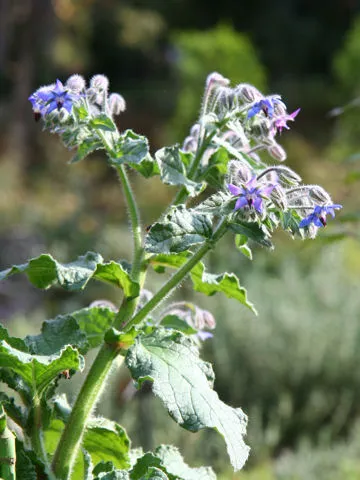
The plant is readily identified by its rough, bristly stems and wrinkled, dull gray-green leaves. Leaves are simple and oval to broadly lance-shaped, with larger basal leaves and smaller upper leaves. Nodding blue flowers hang from branched, curled clusters, giving mature plants a relaxed cottage-garden appearance.
Flowering
The flowers are borne in loose, branched, often drooping clusters and open progressively over a long summer period. Each bloom is typically short-lived, but plants produce many flowers over time. Blue is the normal species color; white-flowered forms are cultivated. Flowering is strongest in sun with adequate, but not excessive, moisture.
Pollination and visitors
Borage is a documented bee-pollinated plant that supplies accessible nectar and pollen. Field studies report frequent visits by honey bees, halictid bees, and bumblebees; bumblebees can be especially effective at transferring pollen. Flower rewards and visitation decline under combined heat and water stress.
Borago officinalis photos
Click any photo for a larger view. Source, author and license are shown separately.
Diseases and pests
Diseases
Powdery mildew can develop on crowded or poorly ventilated plants, especially when foliage stays dry while roots experience stress. Improve spacing and airflow, water at the soil surface, and remove badly affected foliage. Avoid persistently wet soil and excessive nitrogen.
Pests
Slugs and snails may chew young foliage, while leaf-mining flies can tunnel within leaves. Protect seedlings with physical barriers and remove heavily mined leaves. Encourage natural predators and avoid broad-spectrum insecticides during bloom, when bees are actively visiting.
Toxicity and pollen
Borage contains pyrrolizidine alkaloids, compounds associated with liver injury when consumed repeatedly or in concentrated amounts. Occasional culinary use of small amounts is not equivalent to medicinal dosing, but leaves and flowers should be used sparingly. Avoid borage preparations during pregnancy and breastfeeding and seek professional advice before internal use.
- Typical season
- Typically June–August in much of the United States
- Pollination / pollen
- Heavy, insect-carried pollen released within open flowers
Borage pollen is primarily released within the flower and transported by visiting insects, so it is less likely to become broadly airborne than pollen from wind-pollinated plants. Nevertheless, flowers and pollen can contact skin, eyes, or the respiratory tract during handling, and sensitive people should use practical precautions such as gloves and avoiding close contact during peak bloom.
Native habitat
The species is native to Mediterranean climates and commonly occupies disturbed ground, field margins, roadsides, gardens, and other open sunny habitats. It tolerates a wide range of mineral soils, including poor or dry ground, provided drainage is adequate. In the United States it is cultivated and naturalized in scattered regions rather than being native.
Interesting fact
Borage flowers are usually blue and nod downward from curled flower clusters. The rough hairs cover both leaves and stems and help give the plant its characteristic texture. Plants often return through self-sown seedlings even though each individual is annual. The flowers can be frozen in ice cubes for decorative drinks.
Frequently asked questions (FAQ)
The most relevant questions about this plant, with short and direct answers.
🌱Quick care
What is borage?⌄
Borage (Borago officinalis) is a frost-tolerant annual herb in the Boraginaceae family, grown for its cucumber-scented foliage and star-shaped blue flowers. It commonly reseeds itself, so it may return without being a true perennial.
Is borage easy to grow?⌄
Yes, borage is generally easy to grow in average, well-drained soil with full sun or partial shade. It tolerates drought and relatively poor soil once established.
🌤️Environment and placement
How much sun does borage need?⌄
Borage grows best in full sun, although it tolerates partial shade. Plants may become shorter and produce less abundant growth in low light.
Can borage grow in partial shade?⌄
Yes, borage can grow in partial shade, but it usually flowers and grows more vigorously with at least several hours of direct sunlight. Avoid deep shade, which can produce weak, sprawling plants.
What type of soil is best for borage?⌄
Borage prefers well-drained soil, including sandy, loamy, clay, or chalky soil. It tolerates a broad range of pH conditions, but permanently wet soil can cause problems.
💧Care and problems
Is borage drought tolerant?⌄
Yes, established borage tolerates dry conditions and usually needs only moderate watering. Give newly planted seedlings more consistent moisture until their roots develop.
How often should I water borage?⌄
Water borage when the soil has begun to dry, keeping moisture moderate rather than constantly wet. During hot, dry weather, container plants and young seedlings may need more frequent watering than plants in the ground.
Does borage need fertilizer?⌄
Borage usually needs little fertilizer when grown in reasonably fertile soil. Excessive feeding can encourage lush, floppy growth instead of a sturdy plant with good flowering.
Why is my borage wilting?⌄
Borage may wilt because of drought, heat, root damage, or poorly drained soil. Check the soil several inches down: water if it is dry, but improve drainage if it remains soggy.
Why are my borage leaves turning white?⌄
White, powdery patches on borage leaves are commonly caused by powdery mildew. Improve air circulation, avoid wetting the foliage, and remove severely affected annual plants after flowering.
What pests affect borage?⌄
Borage has few serious pest problems, but slugs, snails, and leaf-mining flies may damage the foliage. Powdery mildew is a more common late-season issue than severe insect damage.
Does borage need staking?⌄
Borage usually does not need staking, but its tall, branching stems can flop in rich soil, shade, or windy locations. Growing it in full sun and avoiding excess fertilizer helps maintain a sturdier habit.
🪴Planting and repotting
When should I plant borage seeds in the United States?⌄
Sow borage seeds directly outdoors in spring after the soil can be worked, or start them indoors several weeks earlier. In mild regions, additional sowings may be possible in summer or early fall.
Can I direct-sow borage?⌄
Yes, direct-sowing is usually the best method because borage develops a taproot and dislikes disturbance. Sow the seeds in prepared soil and thin seedlings after emergence.
How deep should borage seeds be planted?⌄
Plant borage seeds about one-half inch deep in prepared soil. Keep the seedbed lightly moist until germination, which commonly occurs in roughly one to three weeks under suitable conditions.
Can borage grow in containers?⌄
Yes, borage can grow in a large container with drainage holes and a well-drained potting mix. Choose a container with enough depth for its taproot and expect the plant to become top-heavy as it matures.
Does borage transplant well?⌄
Borage does not transplant especially well because of its taproot. If starting indoors, sow seeds in individual biodegradable pots and transplant young plants carefully with minimal root disturbance.
✂️Propagation and pruning
How do I propagate borage?⌄
Propagate borage from seed, since seed is the practical and reliable method for this annual species. Collect mature seeds or allow some flowers to set seed and reseed naturally.
Does borage self-seed?⌄
Yes, borage self-seeds readily when mature seeds are allowed to fall. New seedlings may appear near the parent plant the following season, although their survival depends on local weather and soil conditions.
Should I deadhead borage?⌄
Deadhead borage to reduce self-seeding and keep the plant looking tidier, or leave spent flowers if you want volunteer seedlings. Removing flowers can also reduce the supply of blooms for pollinators.
Should I prune borage?⌄
Borage generally needs no formal pruning. Remove damaged growth, cut back plants that become unruly, or pull them after flowering if you do not want them to reseed.
⚠️Toxicity and safety
Are borage flowers edible?⌄
Borage flowers are commonly used as decorative garnishes in salads, desserts, and cold drinks. Use only correctly identified flowers from plants grown without unsafe pesticide applications, and consume them sparingly.
Are borage leaves edible?⌄
Borage leaves have a cucumber-like flavor and have traditionally been eaten young or cooked, but repeated or concentrated ingestion is a safety concern. Avoid making borage leaves a regular food or herbal-infusion ingredient.
Is borage poisonous to humans?⌄
Borage presents moderate safety concern because the plant can contain hepatotoxic pyrrolizidine alkaloids, especially when consumed repeatedly or in concentrated forms. Avoid borage leaf teas, medicinal preparations, and frequent large servings.
Can you drink borage tea?⌄
Borage leaf tea is not recommended because herbal infusions can concentrate pyrrolizidine alkaloids. For culinary use, occasional small amounts of properly identified flowers are a safer choice than concentrated leaf preparations.
Is borage safe during pregnancy or breastfeeding?⌄
Borage supplements, teas, and medicinal preparations should be avoided during pregnancy or breastfeeding because safety is not established and pyrrolizidine alkaloids may pose risks. Ask a qualified healthcare professional before using any borage product.
Is borage oil safe to take?⌄
Borage seed oil should not be assumed safe because products may contain unsaturated pyrrolizidine alkaloids and can interact with health conditions or medicines. If considering it, use only a product independently tested as free of these compounds and consult a healthcare professional.
🌸Flowering and special interest
Is borage an annual or perennial?⌄
Borago officinalis is an annual, although it can appear year after year through self-seeding. It is frost-tolerant, but individual plants are not reliably perennial.
When does borage bloom?⌄
Borage typically blooms from late spring or early summer into summer, with timing varying by planting date and climate. The flowers are usually bright blue and star-shaped, though white-flowered cultivars also exist.
Is borage good for bees and pollinators?⌄
Yes, borage flowers are highly attractive to bees and other pollinating insects. Its long flowering period and open, nectar-rich blooms make it useful in pollinator gardens and informal vegetable gardens.
How tall does borage get?⌄
Borage commonly grows about 1 to 3 feet tall and forms a broad, branching plant. Dry soil, poor fertility, late sowing, and limited light can produce shorter plants.
Why is my borage not flowering?⌄
Borage may fail to flower because it was planted late, receives too much shade, or is producing excessive leafy growth in rich soil. Move or grow it in a sunnier location and avoid heavy fertilization.
Similar plants
 Azure Monkshood (Aconitum carmichaelii) care guideAconitum carmichaelii
 Monkshood (Aconitum ‘Stainless Steel’)Aconitum 'Stainless Steel'
 Monkshood (Aconitum ‘Bressingham Spire’)Aconitum 'Bressingham Spire'
 Golden full moon maple (Acer shirasawanum ‘Aureum’)Acer shirasawanum 'Aureum'
 Globosum (Acer platanoides ‘Globosum’)Acer platanoides 'Globosum'
 Striped maple (Acer pensylvanicum) care guideAcer pensylvanicum