
 Source:
 Bergenia purpurascens short overview
Bergenia purpurascens is an evergreen perennial from high-elevation Himalayan and southwestern Chinese habitats. It forms clumps of thick, leathery basal leaves, often flushed purple when young or exposed to cold, and produces branched stems of deep purple to magenta flowers. In U.S. gardens, provide partial shade, humus-rich but sharply drained soil, and steady moisture while plants establish. An evergreen rhizomatous perennial with thick basal leaves and purple flowers, best suited to cool partial shade and well-drained soil.
Taxonomic classification
Bergenia purpurascens care guide
Light and placement
Grow in partial shade with bright, indirect light or gentle morning sun. An east- or north-facing bed, open woodland edge, or cool rock garden is suitable. Strong afternoon sun can scorch or bleach the leathery leaves, especially in hot climates. Excessive shade may produce weaker stems and reduced flowering; pale, stretched growth suggests insufficient light.
Watering and humidity
Water deeply when the upper inch of soil begins to dry, then allow excess water to drain. Keep plants evenly moist during establishment and flowering, with less frequent irrigation in cool fall and winter. Established plants tolerate short dry periods, but drought followed by saturation can stress the rhizome. Avoid standing water around the crown.
Soil and growing medium
Use a humus-rich, porous soil that holds moderate moisture without remaining saturated. A loam amended with compost and fine mineral material suits the species well, especially in rock gardens or alpine-style beds. Drainage is important around the rhizomes. It tolerates acidic, neutral, and slightly alkaline soils, but avoid chronically waterlogged ground.
Feeding
Top-dress with compost in spring or apply a dilute, balanced perennial fertilizer as growth begins. Avoid heavy nitrogen feeding, which can produce soft foliage and reduce the compact, sturdy habit. Do not fertilize drought-stressed, newly divided, or dormant plants.
Growth and habit
This rhizomatous perennial gradually forms a dense clump of basal foliage. Mature plants generally remain compact and benefit from occasional division when the center becomes crowded or flowering weakens. Good drainage around the crown is more important than frequent disturbance.
Planting and repotting
Plant in spring or early fall, setting the crown or rhizome at soil level rather than burying it deeply. Space plants about 12–20 inches apart, allowing the clump to broaden. Water thoroughly after planting and maintain even moisture through the first growing season while roots establish.
Repot container plants in spring when the rhizome mat becomes crowded. Lift and divide only when necessary, retaining healthy roots and setting the rhizome at the same depth as before. Use a sturdy pot with drainage holes and a porous, moisture-retentive mix.
Propagation and pruning
Propagation
Divide established clumps in spring or early fall, replanting rhizome sections with healthy roots and at least one growing point. Seed propagation is possible but slower and less uniform; sow fresh seed in a well-drained medium and provide cool conditions for emergence.
Pruning
Cut flower stems back after flowering if a tidy appearance is desired. Remove damaged or diseased leaves at any time, but retain healthy evergreen foliage through winter because it protects the crown and supports early-season growth.
Overwintering
Plants in Zones 4–8 can usually overwinter outdoors. Leave healthy foliage in place, mulch lightly after the ground cools, and avoid burying the crown under wet organic material. Container plants experience colder root temperatures than in-ground plants; move them to a sheltered location or insulate the pot in severe cold.
Uses
Use as an evergreen foliage perennial for shaded borders, woodland plantings, cool rock gardens, alpine displays, and containers. Its dense clumping habit can provide low groundcover where summers are not excessively hot. Traditional medicinal use is documented in its native range, but that does not establish safe home preparation or medical efficacy.
Appearance
The plant has thick, scaly rhizomes and a basal rosette of leathery, obovate to narrowly elliptic leaves. Leaves are typically glossy green, with purple coloration possible in new growth or cold conditions. Upright flowering stems are glandular-hairy and rise above the foliage, carrying branched clusters of purple flowers.
Flowering
Flowers are borne in branched cymose clusters on upright stems. The petals are purple and broadly ovate, with flowers hanging or facing outward from the inflorescence. In the United States, flowering is generally reported from spring into early summer, although timing varies with climate and elevation.
Pollination and visitors
The flowers are structurally consistent with insect visitation, but a reliable species-specific U.S. pollinator record was not located. Pollinator attraction is therefore left unclassified rather than inferred from flower color alone.
Bergenia purpurascens photos
Click any photo for a larger view. Source, author and license are shown separately.
Diseases and pests
Diseases
Prevent crown and rhizome problems by planting in well-drained soil and avoiding persistent overhead wetness. Watch for leaf spotting or rot during prolonged cool, wet weather; remove affected foliage, improve air circulation, and correct drainage rather than using routine fungicides.
Pests
Inspect leaves and crowns for slugs, snails, and occasional chewing damage. Remove hiding places, hand-pick pests, and keep dense debris away from the crown. Avoid stressing plants with drought followed by heavy irrigation, which can worsen foliage decline.
Related diseases and pests
Only Plant Doctor profiles whose host data indicate this plant may be affected are shown here.

Toxicity and pollen
No reliable authoritative source located for a species-specific human or companion-animal toxicity profile. Do not treat the plant as edible or medicinal for home use despite documented traditional use in its native range. Prevent ingestion, and seek professional advice if a person or pet consumes an unusual amount.
- Pollination / pollen
- Insect-associated floral pollen; airborne relevance undocumented
Bergenia purpurascens produces pollen as a flowering angiosperm, but dependable data on airborne pollen quantities, allergenicity, and U.S. clinical relevance were not located. Because insect-mediated pollen transfer does not prove zero allergy risk, the allergy rating remains unknown.
Native habitat
Native populations occur from the central Himalaya through Tibet and southwestern China to northern Myanmar. The species inhabits forests, scrub, alpine meadows, and alpine rock crevices at approximately 2,700–4,800 m. Sites are cool, seasonally moist, rocky, and often exposed to strong mountain weather.
Interesting fact
The species grows naturally at elevations of roughly 8,900–15,700 feet. Its thick rhizomes and leathery basal leaves reflect adaptation to cold, exposed mountain environments. Flora of China records a chromosome number of 2n = 34.
Frequently asked questions (FAQ)
The most relevant questions about this plant, with short and direct answers.
🌱Quick care
What is Bergenia purpurascens?⌄
Bergenia purpurascens is an evergreen, rhizomatous perennial in the Saxifragaceae family. It forms clumps of large leathery leaves and produces drooping deep pink to purplish-red flowers in spring.
How much light does Bergenia purpurascens need?⌄
Bergenia purpurascens grows best in partial shade to shade. It can tolerate more sun in cool-summer regions if the soil stays consistently moist, but hot afternoon sun may scorch the leaves.
How often should I water Bergenia purpurascens?⌄
Water Bergenia purpurascens regularly enough to maintain moderate, even moisture. Established plants tolerate brief dry periods, but their foliage looks best when the soil does not dry out for extended periods.
Is Bergenia purpurascens easy to grow?⌄
Yes, Bergenia purpurascens is generally a low-maintenance perennial when planted in shade and well-drained, humus-rich soil. Its main routine needs are watering during dry weather, removing spent flower stems, and clearing damaged foliage.
Is Bergenia purpurascens deer resistant?⌄
Bergenia purpurascens is generally considered resistant to deer and rabbits, although no plant is completely browse-proof. Hungry wildlife may still feed on it, especially when preferred food sources are scarce.
🌤️Environment and placement
Where should I plant Bergenia purpurascens?⌄
Plant Bergenia purpurascens in a shaded border, woodland garden, rock garden, or as ground cover beneath shrubs. Choose a site protected from intense afternoon heat with soil that retains moisture without becoming waterlogged.
Can Bergenia purpurascens grow in full shade?⌄
Yes, Bergenia purpurascens tolerates full shade, although flowering may be less abundant than in bright partial shade. Morning light or filtered light usually provides a good balance between flowers and foliage quality.
Can Bergenia purpurascens grow in full sun?⌄
Bergenia purpurascens can grow in full sun mainly where summers are cool and soil moisture is reliable. In hot U.S. climates, partial shade is safer and helps prevent leaf scorch and drought stress.
What soil is best for Bergenia purpurascens?⌄
The best soil for Bergenia purpurascens is humus-rich, well-drained loam that remains moderately moist. It tolerates several soil types and pH levels, but performs poorly in soil that stays saturated or becomes extremely dry.
Is Bergenia purpurascens cold hardy?⌄
Yes, Bergenia purpurascens is frost hardy and is commonly listed for USDA Zones 4 through 8, with some horticultural sources extending it farther. Winter leaf color and survival can vary with snow cover, exposure, and local temperatures.
Does Bergenia purpurascens tolerate drought?⌄
Bergenia purpurascens tolerates brief periods of drought after it is established. Extended dryness can reduce vigor and make the large leaves look scorched or weathered, especially in sunny locations.
💧Care and problems
Why are the leaves of Bergenia purpurascens turning red?⌄
Red to beet-red foliage is a normal seasonal feature of Bergenia purpurascens, especially during fall and winter. Cold temperatures can intensify the coloration, although severe winter exposure may also cause browning or tissue damage.
Why is my Bergenia purpurascens not flowering?⌄
Bergenia purpurascens may fail to flower because of insufficient light, drought stress, young age, overcrowding, or winter damage to developing flower stems. Give it bright shade, steady moisture, and avoid removing healthy foliage too early.
What pests affect Bergenia purpurascens?⌄
Bergenia purpurascens may be affected by slugs, snails, vine weevils, aphids, thrips, caterpillars, or mealybugs. Inspect leaves and the plant base regularly, particularly where foliage is dense and conditions stay cool and damp.
What diseases affect Bergenia purpurascens?⌄
Leaf spot is the main disease issue reported for Bergenia purpurascens. Improve air circulation, avoid wetting the foliage when watering, and remove badly affected leaves without composting diseased material.
How much fertilizer does Bergenia purpurascens need?⌄
Bergenia purpurascens usually needs little fertilizer if it grows in fertile, humus-rich soil. A spring application of compost or a balanced, slow-release perennial fertilizer is generally sufficient; excessive nitrogen can encourage weak, leafy growth.
🪴Planting and repotting
When is the best time to plant Bergenia purpurascens?⌄
The best planting times are spring or early fall, when temperatures are moderate and soil moisture is easier to maintain. In colder regions, spring planting gives the rhizomes more time to establish before winter.
How far apart should I plant Bergenia purpurascens?⌄
Space Bergenia purpurascens about 18 to 24 inches apart for a ground-cover planting. The clumps spread slowly by rhizomes, so closer spacing gives faster coverage while wider spacing allows each plant more room to develop.
Can Bergenia purpurascens grow in containers?⌄
Yes, Bergenia purpurascens can grow in a container with drainage holes and moisture-retentive but well-drained potting mix. Use a container large enough for its rhizomes and protect the pot from more extreme winter cold than plants in the ground experience.
✂️Propagation and pruning
How do you propagate Bergenia purpurascens?⌄
The easiest way to propagate Bergenia purpurascens is by dividing established rhizomatous clumps. Division can be done in spring after flowering or in fall, with each section retaining healthy roots and growing points.
Can Bergenia purpurascens be grown from seed?⌄
Yes, Bergenia purpurascens can be grown from seed, but germination may be slow and less predictable than division. Sow fresh seed on the surface of moist growing medium, keep it from drying out, and provide light shade.
Should I prune Bergenia purpurascens?⌄
Bergenia purpurascens needs only light pruning. Remove faded flower stalks after blooming, and cut away brown or winter-damaged leaves in late winter or early spring while preserving healthy evergreen foliage.
⚠️Toxicity and safety
Is Bergenia purpurascens toxic to people or pets?⌄
Species-specific toxicity information for Bergenia purpurascens is unclear, so it should be treated as potentially unsafe to ingest. Keep plant material away from children and pets, and contact a poison-control or veterinary professional if ingestion occurs.
Can Bergenia purpurascens be eaten or used medicinally?⌄
Do not eat or use Bergenia purpurascens medicinally without authoritative species-specific guidance. Some Bergenia species have traditional or research-related uses, but that information should not be assumed to establish safety for this exact species.
🌸Flowering and special interest
When does Bergenia purpurascens bloom?⌄
Bergenia purpurascens typically blooms in mid to late spring, often around April or May in much of the United States. Drooping deep pink to purplish-red flowers rise above the foliage on reddish stems.
What do Bergenia purpurascens flowers look like?⌄
The flowers of Bergenia purpurascens are bell-shaped, deep pink to purplish-red, and usually hang in clusters from upright reddish stems. They are held above the leathery foliage and provide a strong spring color display.
Similar plants
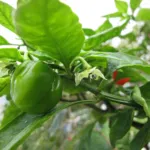 Yellow lantern chili (Capsicum chinense) care guideCapsicum chinense
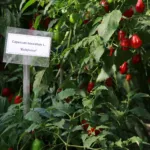 Capsicum baccatum care guideCapsicum baccatum
 Serrano (Capsicum annuum ‘Serrano’)Capsicum annuum 'Serrano'
 Purple Beauty (Capsicum annuum ‘Purple Beauty’)Capsicum annuum 'Purple Beauty'
 Numex Twilight (Capsicum annuum ‘Numex Twilight’)Capsicum annuum 'Numex Twilight'
 Explosive Ember Chili Pepper (Capsicum annuum ‘Explosive Ember’)Capsicum annuum 'Explosive Ember'